
Self-Care Routine for Busy Women is essential for maintaining physical, mental, and emotional well-being, especially when balancing work, family, and personal responsibilities. Many women put their own needs last, but practicing a few simple self-care habits every day can reduce stress, improve energy levels, and create a healthier, happier lifestyle. In this guide, you’ll discover 12 easy daily habits that fit into even the busiest schedule and help you prioritize your well-being without feeling overwhelmed.
Let’s be honest: when your days are packed with work, family, errands, and a never-ending to-do list, “self-care” can feel like one more thing you don’t have time for. But here’s the truth — self-care isn’t about expensive spa days or hour-long bubble baths. It’s about small, consistent habits that keep you from running on empty. And the busier you are, the more you actually need it.
So many women spend their days pouring into everyone and everything else — their jobs, their kids, their partners, their parents — until there’s nothing left for themselves. Over time, that catches up with you in the form of exhaustion, irritability, and burnout. The good news? A real self-care routine can fit into even the most hectic schedule. In this complete guide, you’ll learn what self-care really means, why it matters most when life is chaotic, and 12 simple daily habits that genuinely help — plus a sample daily routine, tips for your specific situation, ideas for when you have zero free time, and self-care that costs nothing at all.
What Is Self-Care, Really?
Self-care is any intentional action you take to support your physical, mental, and emotional well-being. It’s not selfish, and it’s not a luxury — it’s basic maintenance for being a functioning human. Think of it like charging your phone: you wouldn’t expect it to run all day on 5% battery, yet so many of us try to run our lives that way, then wonder why we feel drained and overwhelmed.
The bubble-bath-and-face-mask version of self-care gets a lot of attention online, but real self-care is much broader — and often far less glamorous. It’s the unglamorous basics done consistently: sleeping enough, drinking water, moving your body, setting boundaries, and giving your mind a rest. It generally falls into a few key areas:
- Physical: sleep, movement, nourishing food, drinking water, and rest
- Emotional: processing your feelings, journaling, setting boundaries, and asking for help
- Mental: taking breaks, unplugging from screens, learning, and quieting a busy mind
- Social: spending time with people who fill you up — and limiting time with those who drain you
You don’t need to master all of these at once. In fact, trying to overhaul everything overnight is the fastest way to give up. Even tending to one area a little better can noticeably shift how you feel day to day.
Why Self-Care Matters (Especially When You’re Busy)
When you’re constantly giving to everyone else, you slowly deplete your own reserves. Chronic, unmanaged stress doesn’t just make you feel frazzled in the moment — over time it takes a real toll on your body and mind. It can leave you feeling exhausted, irritable, foggy, and disconnected, and it’s linked to poor sleep, low mood, weakened immunity, headaches, and more. Ignoring your own needs doesn’t make you stronger; it just runs you down faster.
Taking small moments to care for yourself isn’t indulgent — it’s what allows you to keep showing up. When you’re rested and grounded, you’re more patient with your kids, more focused at work, and more present for the people you love. You make better decisions, react more calmly, and simply enjoy life more. The old saying really is true: you can’t pour from an empty cup. Self-care is the practice of refilling yours, so you have something left to give.
Signs You Might Be Running on Empty
Sometimes we’re so busy that we don’t realize we’re burning out until we hit a wall. Your body and mind usually send signals long before that point. Here are some gentle signs it might be time to put yourself higher on the list:
- You feel tired no matter how much you sleep
- You’re more irritable, anxious, or short-tempered than usual
- Small, ordinary tasks suddenly feel overwhelming
- You can’t seem to focus, relax, or “switch off”
- You’ve stopped doing the things you used to enjoy
- You feel guilty or restless whenever you try to rest
- You’re getting sick more often or dealing with frequent headaches
If several of these sound familiar, that’s not a personal failing — it’s a signal worth listening to. The habits below are a simple, realistic place to start turning things around.
12 Simple Self-Care Habits for Busy Women
You don’t need to overhaul your whole life or add hours to your day. Pick a few of these habits that feel doable, start small, and build from there.
1. Start Your Morning Without Your Phone
How you spend the first few minutes of your day shapes the hours that follow. The moment you grab your phone, you hand your attention over to emails, notifications, social media, and everyone else’s priorities — before you’ve even had a chance to wake up. That instant flood of information spikes stress and puts you in reactive mode from the start. Instead, try protecting the first 10 to 15 minutes for yourself. Keep your phone across the room or on airplane mode overnight so it’s not the first thing you reach for. Use that time to stretch in bed, take a few slow breaths, drink some water, or simply sit quietly with your coffee. Even ten screen-free minutes lets you begin the day calm and intentional rather than rushed and frazzled.

2. Drink a Glass of Water First Thing
You’ve just gone seven or eight hours without a sip of water, so your body wakes up mildly dehydrated — and that dehydration often shows up as morning grogginess, headaches, and low energy that people mistake for needing more caffeine. Drinking a glass of water before your coffee rehydrates you, gently wakes up your system, and helps you feel more alert naturally. Make it effortless by keeping a full glass or water bottle on your nightstand the night before, so it’s literally the first thing within reach. If plain water feels boring, add a squeeze of lemon or a few slices of cucumber. It’s one of the smallest habits on this list, but it sets a healthy tone for everything that follows.

3. Move Your Body for 10 Minutes
Movement is one of the most powerful mood boosters there is, but the belief that it has to mean an hour at the gym is exactly what stops busy women from doing it. The truth is, even ten minutes of movement releases feel-good endorphins, eases muscle tension, and clears mental fog. A brisk walk around the block, a short stretching routine, a few yoga poses, or dancing while you make breakfast all count. The key is to stop treating exercise as all-or-nothing. Pick something you actually enjoy so it doesn’t feel like a chore, and tie it to a part of your day you never skip — like a walk right after lunch. Done consistently, these small bursts add up to real benefits for both your body and your mind.


4. Take Real Breaks During the Day
Many of us wear “pushing through” like a badge of honor, but working nonstop actually drains your focus and leaves you more exhausted by the end of the day. Your brain simply isn’t built to concentrate for hours without rest — it needs short pauses to recharge. Try stepping away from your screen every hour or so, even if it’s just to stretch, refill your water, or look out a window for a minute. A simple rhythm like working for 50 minutes and then taking a 5-minute break can do wonders for both your productivity and your mood. The goal is to return to your tasks feeling refreshed instead of running on fumes. Breaks aren’t wasted time — they’re what make the rest of your work sustainable.

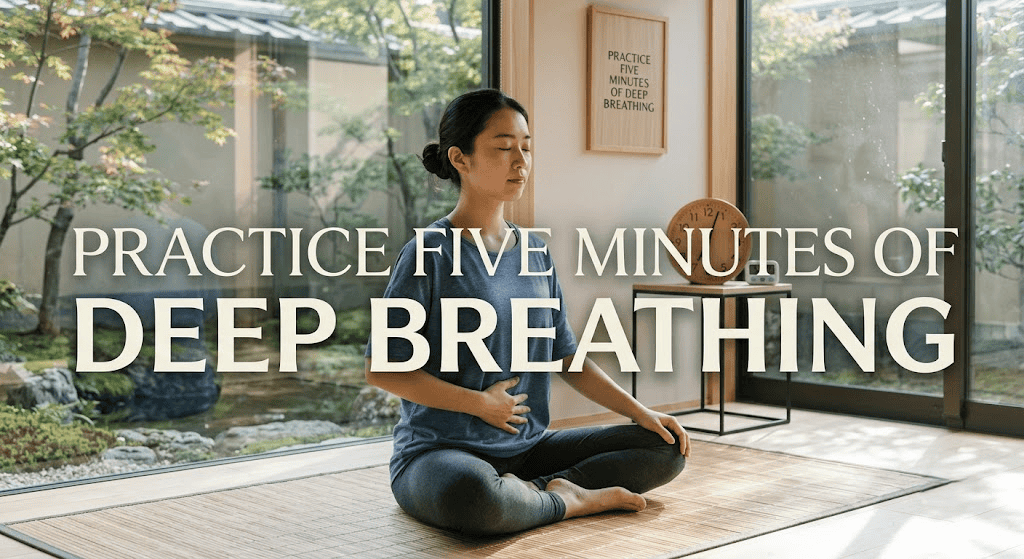
5. Practice Five Minutes of Deep Breathing
When you’re stressed or anxious, your breathing automatically becomes quick and shallow, which keeps your body locked in “fight or flight” mode. Slow, deliberate breathing is a free, instant way to flip that switch and tell your nervous system it’s safe to relax. One simple technique is box breathing: breathe in for four counts, hold for four, exhale for six, and repeat for a few rounds. You can do this anywhere — at your desk, in the car, or in bed before sleep — and no one will even notice. Within a minute or two, you’ll likely feel your shoulders drop and your mind start to settle. Keeping a calming practice like this in your back pocket gives you something steady to reach for whenever stress starts to build.
6. Set Boundaries and Learn to Say No
If you’re the person everyone relies on, chances are you say yes far more often than you should — and every unnecessary yes chips away at your time and energy. Learning to set boundaries is one of the most freeing forms of self-care, even though it can feel uncomfortable at first. You’re allowed to decline an invitation, ask for help with the housework, or tell someone you’ll get back to them later. A kind but firm “I can’t take that on right now” is a complete sentence — no lengthy justification required. Remember that every time you say no to something that drains you, you’re saying yes to your own well-being and to the things that truly matter. Protecting your energy isn’t selfish; it’s what keeps you from burning out.

7. Get Some Sunlight and Fresh Air
Spending nearly all day indoors — especially under artificial light — can quietly drag down your mood and throw off your sleep. Natural daylight helps regulate your body’s internal clock and supports better rest at night, while fresh air and a change of scenery can lift your spirits almost instantly. You don’t need a long hike to feel the benefit; just a few minutes outside makes a difference. Take your morning coffee onto the porch, eat lunch in the yard, walk around the block between tasks, or simply step outside and breathe deeply for a moment. If you work indoors all day, try to sit near a window for more natural light. These tiny doses of nature are simple, free, and surprisingly restorative.

8. Protect Your Sleep
Sleep is the foundation that everything else is built on. When you’re short on rest, your mood dips, your focus slips, your patience wears thin, and your physical health suffers over time. Yet sleep is usually the first thing busy women sacrifice to squeeze more into the day. Treat it as non-negotiable instead. Aim for a consistent bedtime and wake-up time, even on weekends, so your body settles into a natural rhythm. Build a simple wind-down routine in the hour before bed: dim the lights, put your phone away, and do something calming like reading or gentle stretching. Keep your bedroom cool, dark, and quiet. Protecting your sleep isn’t lazy — it’s one of the most impactful things you can do for your energy, mood, and long-term health.

9. Eat to Fuel Yourself, Not Just to Fill Up
When life gets hectic, eating often becomes an afterthought — you skip meals, grab whatever’s quickest, or run on coffee until you crash. But food is fuel, and what you eat has a direct impact on your energy, focus, and mood. You don’t need a strict or “perfect” diet to feel better. Simply aim for regular, balanced meals with some protein, whole grains, fruits, and vegetables to keep your energy steady through the day. Prepping a few simple things ahead of time — like washed fruit, boiled eggs, or overnight oats — makes healthy choices easier when you’re rushed. And try to actually pause and enjoy your food instead of eating on the go. Nourishing yourself well is a quiet but powerful act of self-respect.

10. Stay Connected With People Who Lift You Up
Human connection is one of the most underrated pillars of well-being, yet it’s easy to let friendships slide when you’re busy. Meaningful relationships lower stress, boost happiness, and remind you that you’re not carrying everything alone. You don’t need hours of free time to nurture them — a quick phone call on your commute, a thoughtful text, a voice note, or a short coffee date all go a long way. Be intentional about spending time with people who leave you feeling energized rather than drained, and don’t be afraid to lean on them when you need support. Reaching out isn’t a burden on others; most people are genuinely glad to hear from you. Prioritizing your relationships is prioritizing your own emotional health.

11. Do a “Brain Dump”
When your mind is juggling a dozen to-dos, worries, and reminders at once, it’s no wonder you feel scattered and tense. A “brain dump” is the simple act of getting everything out of your head and onto paper — and it brings surprising relief. Keep a notebook or notes app handy and write down whatever’s swirling around: tasks, worries, ideas, things you don’t want to forget. Seeing it all in one place makes it feel far more manageable and frees up mental space. You can do this in the morning to plan your day, or at night to clear your mind before sleep so you’re not lying awake replaying your list. It takes just a few minutes, costs nothing, and can quiet a racing mind almost instantly.

12. Schedule One Thing That Brings You Joy
In the rush of responsibilities, the things that actually make us happy are usually the first to get cut — hobbies, creativity, downtime, fun. But joy isn’t a luxury you earn only after every task is done; it’s an essential part of a healthy, balanced life. Make a point to schedule at least one thing each day or week that’s purely for you, whether that’s reading a few pages of a book, gardening, painting, watching your favorite show, or returning to a hobby you’ve set aside. Put it on your calendar like any other appointment so it doesn’t quietly get pushed away. It doesn’t have to be long — even 20 minutes of something you love can recharge you. Protecting time for joy is what keeps life from feeling like one endless checklist.

How to Build a Self-Care Routine That Actually Sticks
Knowing what to do is one thing; making it a lasting habit is another. Here’s how to turn self-care from a nice idea into a real, repeatable part of your life:
- Start ridiculously small. Pick just one habit to begin with. One glass of water or one short walk is far more sustainable than an ambitious ten-step plan you’ll abandon by Friday.
- Attach it to something you already do. “Habit stacking” makes new routines stick. Do your deep breathing right after you brush your teeth, or stretch while your coffee brews — link the new habit to an existing one.
- Be realistic about your time. Five minutes you’ll actually do beats an hour you’ll keep skipping. Build your routine around the life you have, not the one you wish you had.
- Aim for consistency, not perfection. You’ll miss days — that’s completely normal. The goal isn’t a flawless streak; it’s simply returning to it without guilt.
- Track it if that helps. Some people stay motivated by checking a box or jotting a quick note each day. Seeing your progress can keep you going.
- Drop the guilt. Taking care of yourself doesn’t take away from the people you love — it makes you more present and patient for them.
A Sample Daily Self-Care Routine
You don’t need to do all twelve habits every single day. Here’s how a realistic self-care day might look when you weave just a few of them in naturally — no extra hours required.
Morning: Wake up and drink the glass of water by your bed before reaching for your phone. Give yourself ten quiet minutes to stretch, breathe, or sip your coffee in peace. Fit in a short walk or a few minutes of movement, and eat a balanced breakfast to fuel the day ahead.
Midday: Take real breaks between tasks instead of powering straight through. Step outside for fresh air and sunlight during your lunch, and choose something nourishing to eat rather than grabbing junk on the run. If stress starts to build, pause for a minute of deep breathing to reset before moving on.
Evening: Do a quick brain dump to clear your mind, reach out to a friend or loved one, and make time for one thing you genuinely enjoy. An hour before bed, begin your wind-down routine — dim the lights, put your phone away, and let yourself rest. A consistent bedtime sets you up for a better tomorrow.
Self-Care Tips for Your Situation
Self-care looks different depending on the season of life you’re in. Here’s how to make it work for your reality.
For Working Women
When your day is dominated by deadlines and meetings, build micro-breaks into your schedule — a two-minute stretch, a walk to refill your water, or a few deep breaths between calls. Set clear boundaries around your work hours so your job doesn’t bleed into every evening, and protect at least one screen-free pocket of time each day to mentally clock out and recharge.
For Busy Moms
Caring for children is constant, so self-care often has to happen in small windows. Trade off with a partner, family member, or friend so you get even brief stretches to yourself. Involve your kids in healthy habits — take family walks or cook together — and let go of the pressure to do everything perfectly. A rested, calmer you is genuinely the best thing for your family.
For Students and Young Women
Juggling classes, work, and a social life can feel overwhelming. Protect your sleep instead of pulling all-nighters, take real breaks while studying, and don’t skip meals when you’re busy. Make time for friends and movement, and be mindful of how much time you spend comparing yourself to others on social media — it’s a quiet but real drain on your mental health.
For Women Caring for Family
Caregiving — whether for aging parents or other loved ones — can be deeply draining, and it’s easy to put yourself last. Accept help when it’s offered, take short breaks whenever you can, and lean on your support network without guilt. Looking after your own health isn’t taking away from the people you care for; it’s exactly what allows you to keep caring for them over the long haul.
Self-Care Ideas for When You Have No Time
Some days, free time simply doesn’t exist. On those days, micro self-care is the answer. These quick resets take almost no time but still make a difference:
- 2 minutes: Take five slow, deep breaths. Stretch your neck and shoulders. Step outside for a breath of fresh air.
- 5 minutes: Write a quick brain dump. Sip a cup of tea mindfully. Send a text to a friend. Splash water on your face and reset.
- 15 minutes: Take a short walk. Tidy one small space. Listen to a few favorite songs. Sit quietly with no screens at all.
These tiny pauses add up over the course of a day. You don’t need hours — you just need a few intentional moments scattered through your day.
Self-Care on a Budget
Self-care doesn’t have to cost a thing. In fact, some of the most restorative practices are completely free:
- Going for a walk outdoors
- Taking a warm shower or bath
- Journaling or writing a quick gratitude list
- Calling or visiting a friend
- Stretching, light yoga, or simply lying down to rest
- Reading a book from the library
- Unplugging from screens for an hour
- Sitting in the sun with a cup of coffee or tea
The best self-care isn’t about spending money — it’s about paying attention to what you need and giving yourself permission to meet that need.
Common Self-Care Mistakes to Avoid
- Waiting until you’re completely burned out. Self-care works best as prevention, not just damage control after you’ve crashed.
- Treating it as all-or-nothing. A few minutes still counts. You don’t need a perfect, hour-long routine to benefit.
- Comparing your routine to others’. What works for someone online may not work for you — and that’s perfectly okay.
- Feeling guilty for resting. Rest isn’t laziness; it’s a basic human need, just like food and water.
- Only focusing on the physical. Don’t forget your emotional and mental needs — they matter just as much as sleep and exercise.
- Going big and burning out. Starting with too much at once usually backfires. Small and consistent always wins.
Frequently Asked Questions
What’s the difference between self-care and being selfish?
Self-care is taking care of your own needs so you can stay healthy and show up for others — it’s not about ignoring everyone else. Being selfish means consistently putting yourself first at others’ expense. Caring for yourself so you don’t burn out actually benefits the people around you, because you have more energy and patience to give.
How do I practice self-care when I have no time?
Focus on micro-moments. A few deep breaths, a glass of water, a short walk, or two phone-free minutes all count. Self-care doesn’t require big blocks of time — small, intentional pauses sprinkled throughout the day can make a real difference in how you feel.
What are some quick self-care ideas?
Try deep breathing, stepping outside for fresh air, stretching, journaling a quick brain dump, drinking water, texting a friend, or listening to a favorite song. Each takes only a few minutes but can reset your mood and energy when you’re feeling stretched thin.
How often should I practice self-care?
Ideally, a little every day. Self-care works best as a regular habit rather than an occasional treat. Small daily actions — like sleep, movement, water, and short breaks — keep you balanced far more effectively than a once-in-a-while reset day.
Can self-care really help with stress and anxiety?
Yes — habits like deep breathing, movement, good sleep, and connection can genuinely lower everyday stress and help you feel more grounded. That said, self-care isn’t a replacement for professional help. If you’re dealing with persistent anxiety or low mood, talking to a doctor or therapist is a wise and caring step.
What if I feel guilty taking time for myself?
That guilt is incredibly common, especially for women who are used to caring for everyone else. But rest and self-care aren’t things you have to earn. Reminding yourself that taking care of you helps you take care of others can make it much easier to let the guilt go.
This article is for general informational and educational purposes only and isn’t a substitute for professional medical or mental health advice. If you’re consistently struggling with stress, anxiety, or low mood, please consider reaching out to a qualified healthcare provider or mental health professional for support.


Leave a Comment
Share your thoughts or questions about this article!