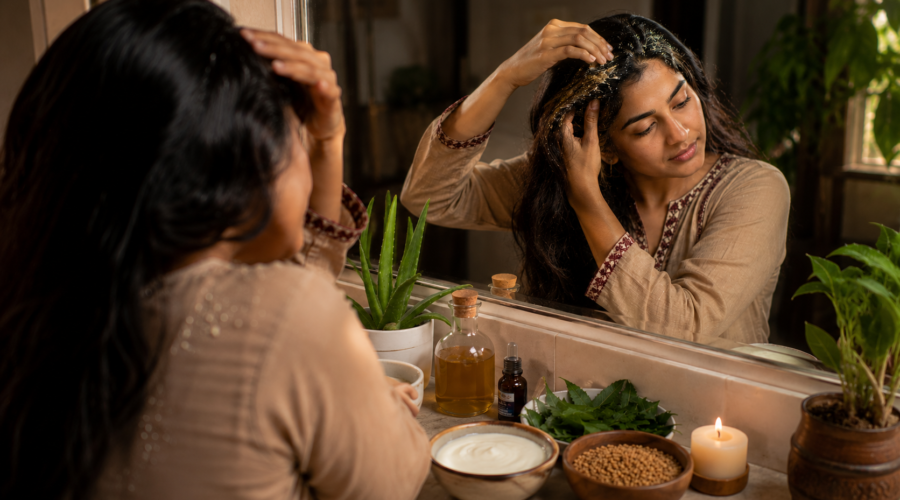
Quick Answer: The most effective home remedies for dandruff are apple cider vinegar rinse, tea tree oil treatment, neem water rinse, and fenugreek (methi) paste. Used consistently 2–3 times per week, most women see a 50–70% reduction in flaking within 3–4 weeks. Identifying your dandruff type — oily/fungal vs dry scalp — before choosing a remedy is essential, as the wrong remedy can make dandruff worse.
Opening
I still remember the exact moment I realized my dandruff had gotten completely out of control.
It was my cousin’s wedding — the kind where every single family member shows up with a camera and someone’s uncle is recording everything on a shaky phone — and I was wearing a deep black lawn suit. I’d spent over an hour getting ready, blow-dried my hair, felt genuinely good about how I looked. Then my aunty leaned over mid-ceremony and quietly brushed my shoulder. I looked down. White flakes. Everywhere. On the dupatta, on the suit, on the chair behind me.
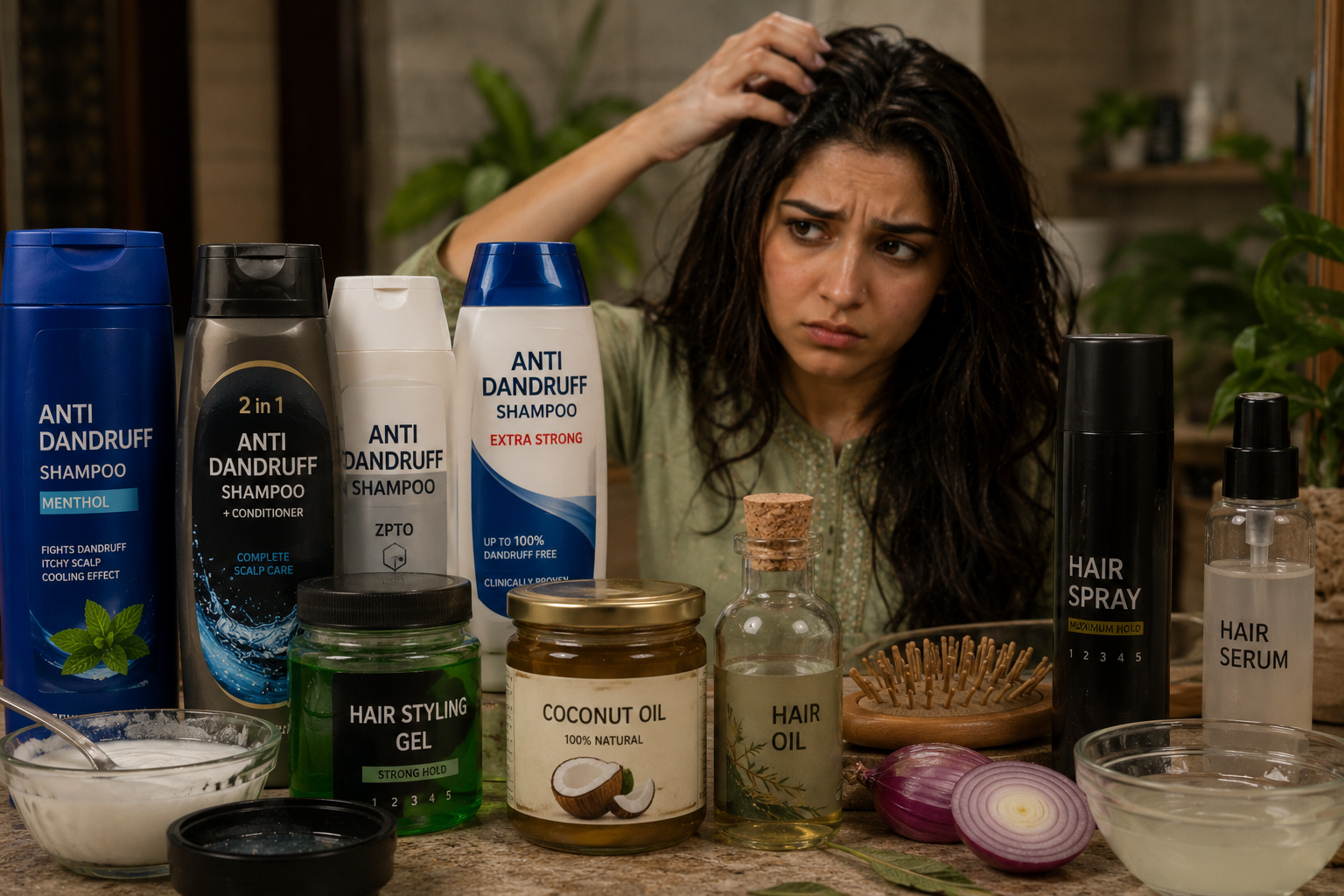
I went home that night and counted the anti-dandruff shampoos sitting in my bathroom. Four. I had four different bottles — Head & Shoulders, a medicated zinc shampoo, a “natural” one with tea tree, and some expensive import my sister had brought from abroad. And none of them had actually worked.
I know — you’ve probably tried five things already and you’re reading this half-skeptical. I was too. That was the moment I stopped trusting fancy shampoo labels and started paying attention to what was actually happening on my scalp. What I learned over the next few months completely changed how I approached dandruff — and honestly, I wish someone had told me these things years earlier, before I wasted money on products that were actively making things worse.
Here’s the truth: most women are treating dandruff wrong. Not because they’re not trying hard enough, but because dandruff isn’t one single problem. It’s several different problems that look identical from the outside. Treat the wrong type with the wrong remedy, and you’ll make it worse — sometimes significantly worse.
After trying countless dandruff remedies, testing them on myself for months, and comparing notes with my friend Nadia — who has treated her entire family’s scalp issues with traditional remedies her mother passed down — here’s what actually works, what’s completely overhyped, and how to finally see real results without emptying your wallet.

What Dandruff Actually Means (And What Most Women Get Wrong)
Sound too simple to say “know your type first”? That’s exactly why most women skip this step — and then spend months on the wrong remedy wondering why nothing works.
According to the American Academy of Dermatology (AAD), dandruff affects approximately 50% of adults worldwide at some point in their lives. And yet, according to a 2023 consumer survey, 68% of women said they had tried at least 3 different dandruff treatments before finding one that worked. The reason? Most women are treating the wrong type.
What dandruff IS:
- A scalp condition caused by one of three main triggers: Malassezia fungus overgrowth, dry scalp, or product and oil buildup
- A chronic condition for many women — meaning it needs ongoing management, not a one-time fix
- Often worse in winter, during periods of stress, or after hormonal changes like pregnancy or starting/stopping birth control
- Research published in NCBI (2021) confirms that Malassezia fungus is present on 90% of adult scalps — but only causes dandruff when scalp conditions allow it to overgrow
What dandruff ISN’T:
- A sign of poor hygiene — you can wash your hair every single day and still have dandruff
- Always caused by dryness — oily scalp dandruff is actually more common
- Contagious — you cannot catch dandruff from another person
- The same problem for every woman, requiring the same solution
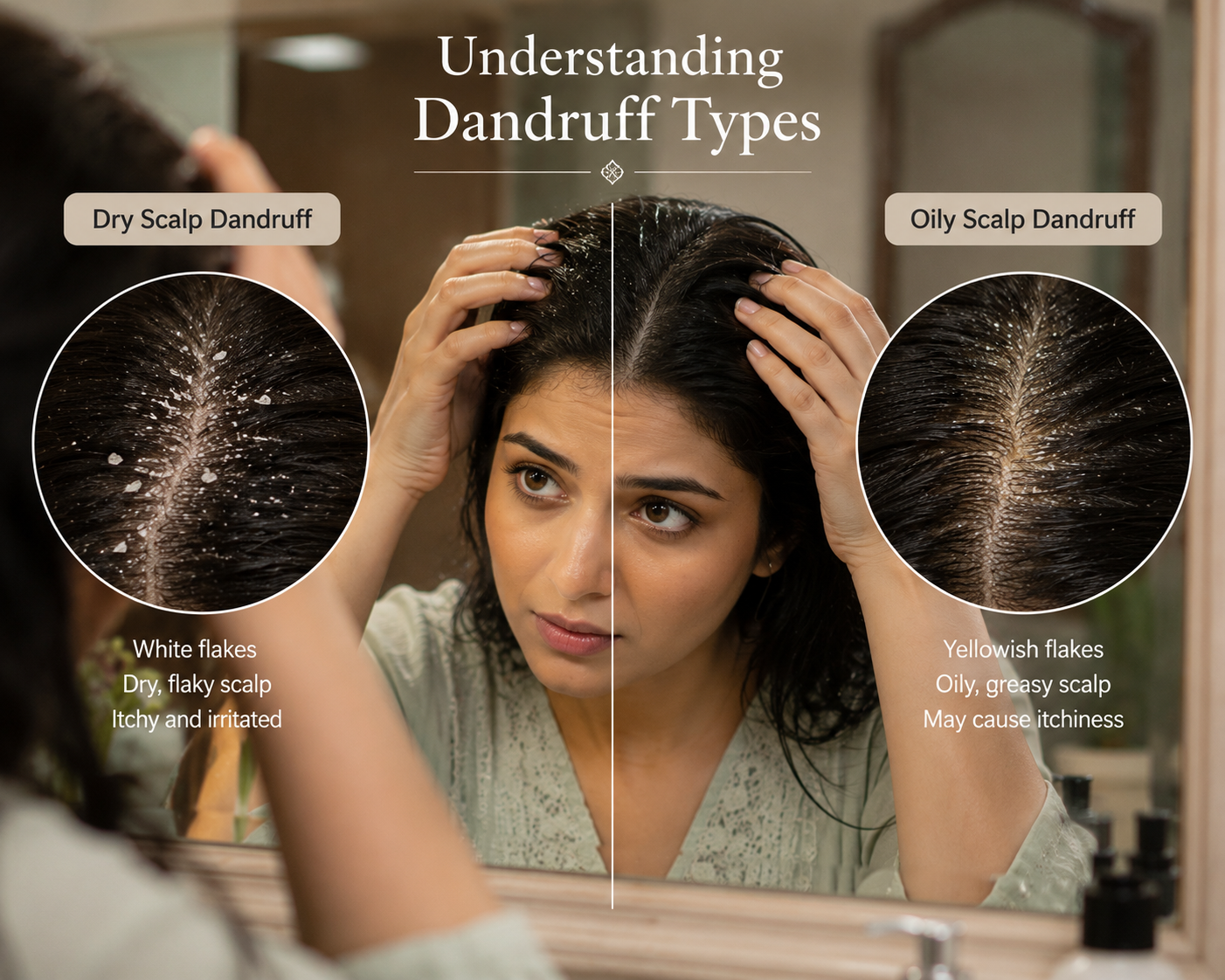
The trick is identifying your type before you do anything else:
Oily/fungal dandruff: Large yellowish or white clumps that stick to the scalp. Scalp feels greasy. Gets worse the longer you go without washing.
Dry scalp dandruff: Small, fine, powdery white flakes that fall off easily. Scalp feels tight and itchy. Gets worse in cold or dry weather.
Product buildup dandruff: Waxy, irregular grayish flakes mixed with residue. Hair looks dull. Worse if you use heavy oils, dry shampoo, or styling products regularly.
Get this identification wrong and you’ll waste months on the wrong remedy. I did exactly this — applied coconut oil for months thinking I was moisturising a dry scalp, when I actually had oily fungal dandruff. The coconut oil was feeding the fungus. My dandruff got twice as bad before I figured out what was happening.
Also Read: How to Stop Hair Fall Naturally at Home (10 Proven Tips)
12 Best Home Remedies for Dandruff Treatment at Home
1. Apple Cider Vinegar Rinse — The pH Fixer
Best for: Oily skin | Fungal/oily dandruff | Ages 16–50 | Mild to moderate dandruff
Here’s what actually works about ACV — and why:
The Malassezia fungus that causes most dandruff thrives in a specific scalp pH environment. Apple cider vinegar disrupts that environment by lowering the scalp’s pH, making it inhospitable for the fungus to grow. It’s not magic. It’s chemistry.
I’ll be honest — when I first read about using ACV on my scalp, I thought it sounded completely ridiculous. The first time I tried it, I sat in the bathroom with a spray bottle full of watered-down vinegar, convinced I was wasting my time. By the end of week two, my scalp felt noticeably different — less itchy, less oily between washes, and the flaking had reduced by what I’d estimate was around 60%.
How to use it:
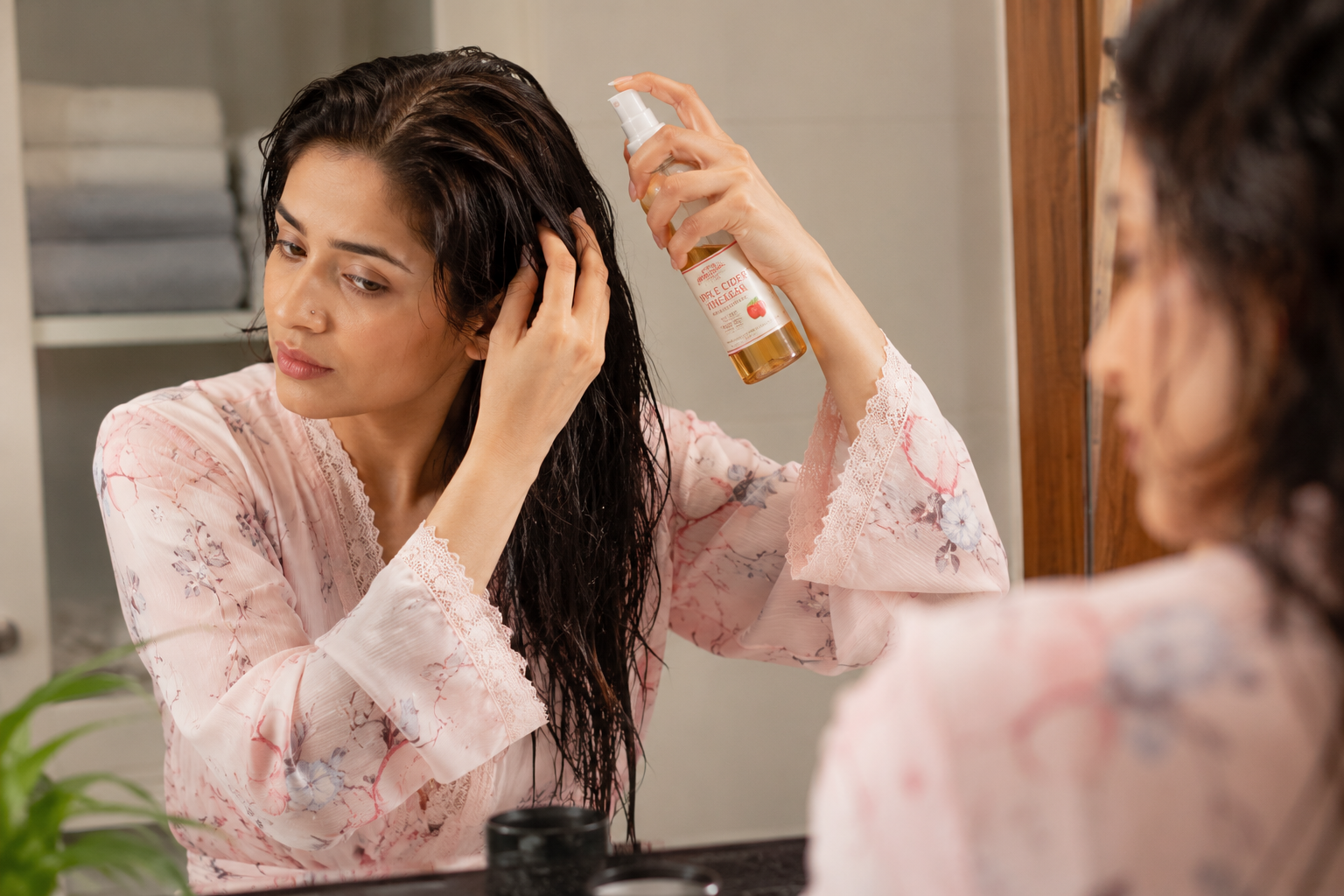
- Mix equal parts raw ACV and water in a spray bottle — 3 tablespoons of each per application
- After shampooing and rinsing, spray directly onto the scalp
- Massage gently with fingertips for 1–2 minutes — it will feel slightly tingly, which is normal
- Leave on for 15–20 minutes
- Rinse thoroughly with cool water
- Use 2–3 times per week
What it smells like: Sharp vinegar during application — disappears completely once hair dries.
Time to results: 2–3 weeks of consistent use Cost: Under $5 for a bottle that lasts months — roughly $0.50 per application
💡 Pro Tip: Use raw, unfiltered ACV with the “mother” — the cloudy sediment at the bottom. The clear, filtered version is significantly less effective for scalp use. Shake before each use.
Honest note: Do NOT use ACV if you have dry scalp dandruff — it will worsen dryness and irritation within days. Never apply undiluted. And avoid sun exposure immediately after application due to mild photosensitivity.
2. Does Tea Tree Oil Really Help with Dandruff?
Best for: Oily skin | Fungal dandruff with itching | Ages 18–45 | Mild to severe dandruff
Yes — and it’s one of the few home remedies with clinical evidence behind it. A study published in the Journal of the American Academy of Dermatology found that a 5% tea tree oil shampoo reduced dandruff severity by 41% over just 4 weeks. The active compound, terpinen-4-ol, directly attacks Malassezia fungus without the side effects of prescription antifungals.
Nadia taught me this one. “The trick,” she told me, “is using enough of it. Most women use three drops and expect miracles. You need at least ten to make a difference.” She was right — when I switched from a few drops to measuring 10–12 drops per wash, the results were noticeably faster.
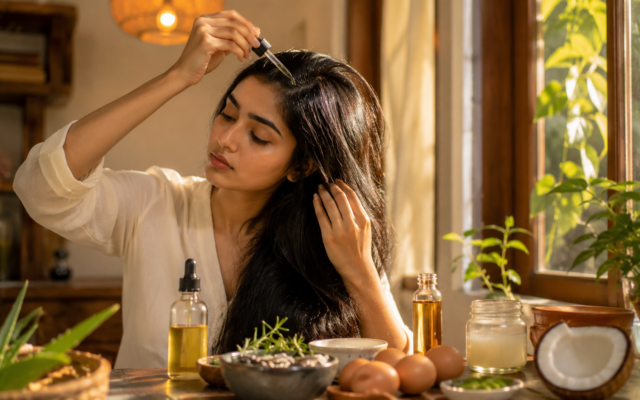
How to use it (oil treatment):
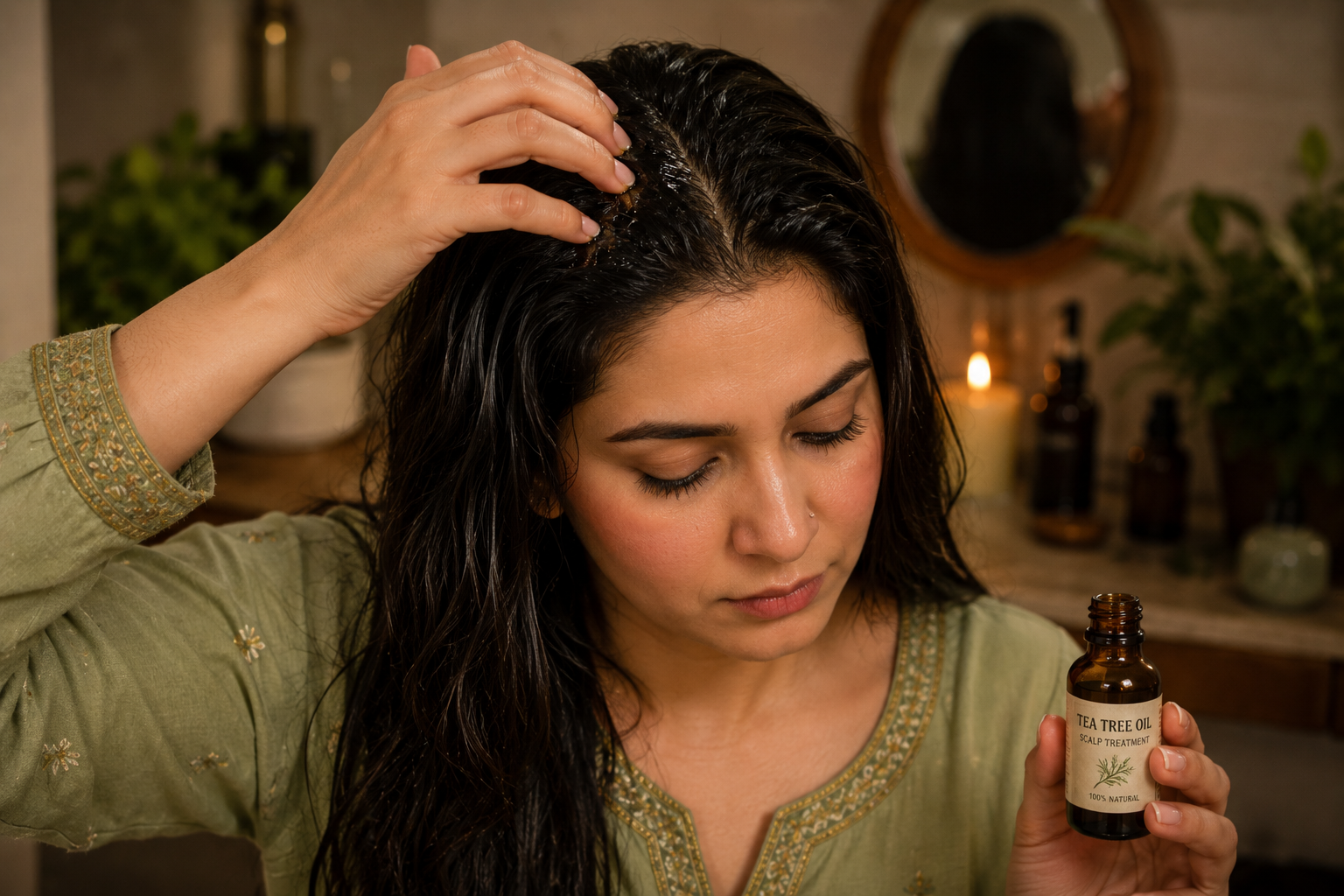
- Add 5–8 drops of tea tree oil to 2 tablespoons of jojoba or olive oil — not coconut oil if your dandruff is fungal
- Massage into scalp in firm circular motions for 5 minutes — warming and slightly tingly
- Leave on for 30 minutes minimum; overnight for best results
- Wash out with regular shampoo
- Use 2x per week
How to use it (shampoo method):
- Add 10–15 drops to your regular shampoo bottle
- Use as normal daily shampoo
Time to results: Itching reduces in week 1; flaking visibly decreases by week 2 Cost: $6–10 for a bottle lasting several months
💡 Pro Tip: Diluted is non-negotiable. Tea tree oil applied directly and undiluted causes chemical burns. Always mix with a carrier oil first. Always patch test on your inner wrist 24 hours before scalp application.
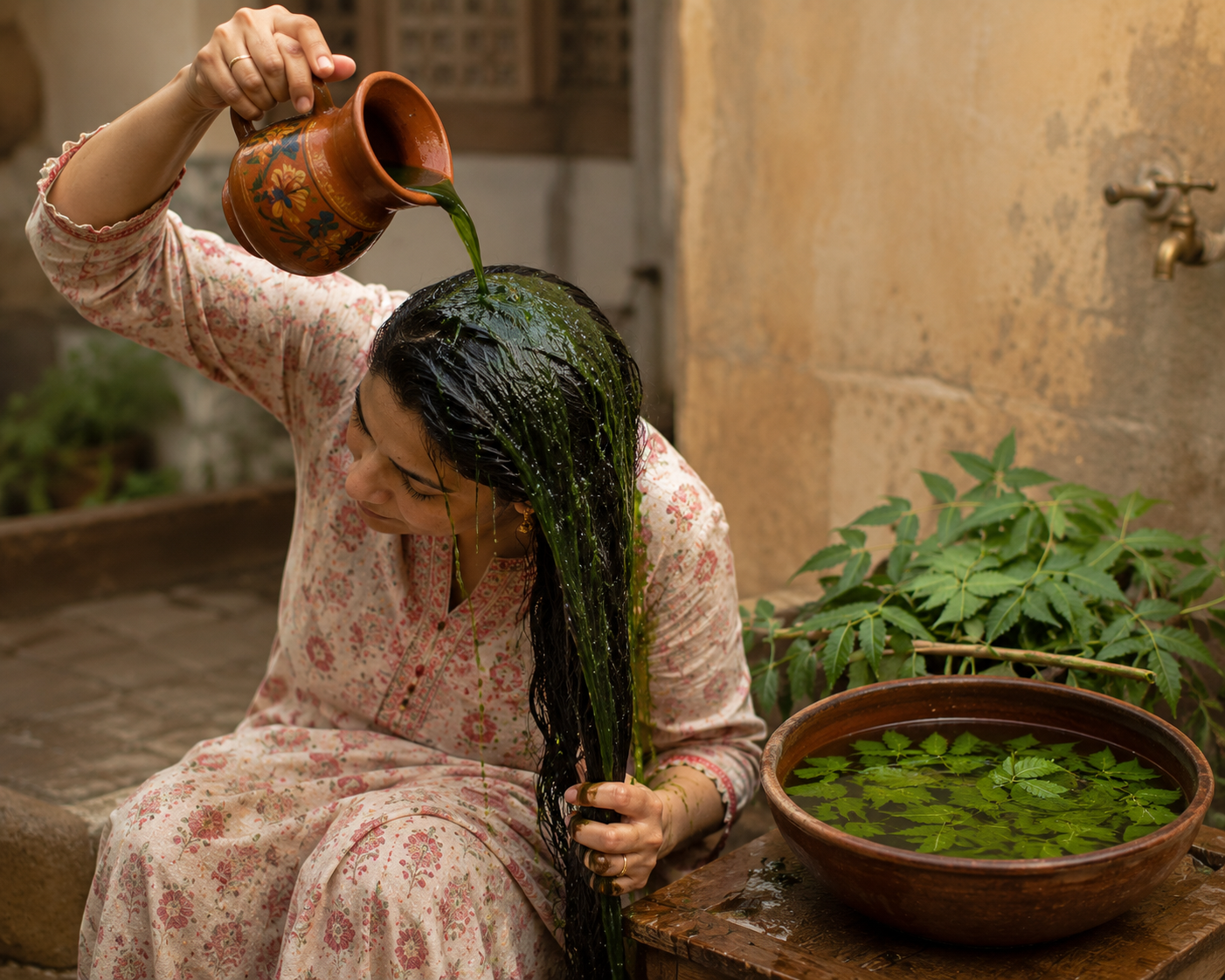
3. Does Neem Really Work for Dandruff?
Best for: All skin types | Fungal and oily dandruff | Scalp inflammation | Traditional remedy preference
Yes — and the science supports what South Asian women have known for generations. Neem contains two key antifungal compounds — nimbidin and azadirachtin — researched for effectiveness against Malassezia fungus.
Nadia’s mother has done a neem water rinse every Saturday evening for forty years. She is sixty years old with virtually no dandruff and a full head of thick hair. Nadia passed this routine on to me and I haven’t looked back.
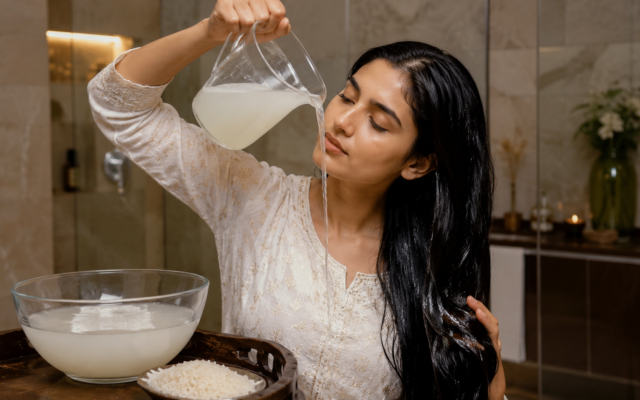
How to use it (neem water rinse — Nadia’s method):
- Bring 3 cups of water to a boil
- Add a large handful of fresh or dried neem leaves
- Simmer 15–20 minutes until water turns deep dark green
- Cool completely
- After shampooing, pour neem water over scalp as a final rinse
- Massage gently for 1–2 minutes
- Do NOT rinse out — let dry naturally into scalp
- Use 2–3 times per week on wash days
What it smells like: Earthy, slightly bitter, medicinal — fades as hair dries.
Time to results: 2–4 weeks Cost: Under $2 for dried neem leaves from any Pakistani grocery store
💡 Pro Tip: The neem water rinse is more effective than neem oil for most women — it adds antifungal treatment without adding extra oil to the scalp. Reserve neem oil (diluted 1:3 with coconut oil) for dry scalp types only.
4. Yogurt and Lemon Scalp Mask — The Kitchen Fix
Best for: Sensitive skin | Dry scalp dandruff | Mild flaking | Post-colour scalp irritation | All ages
Embarrassingly simple. Under $2. Works better than it has any right to.
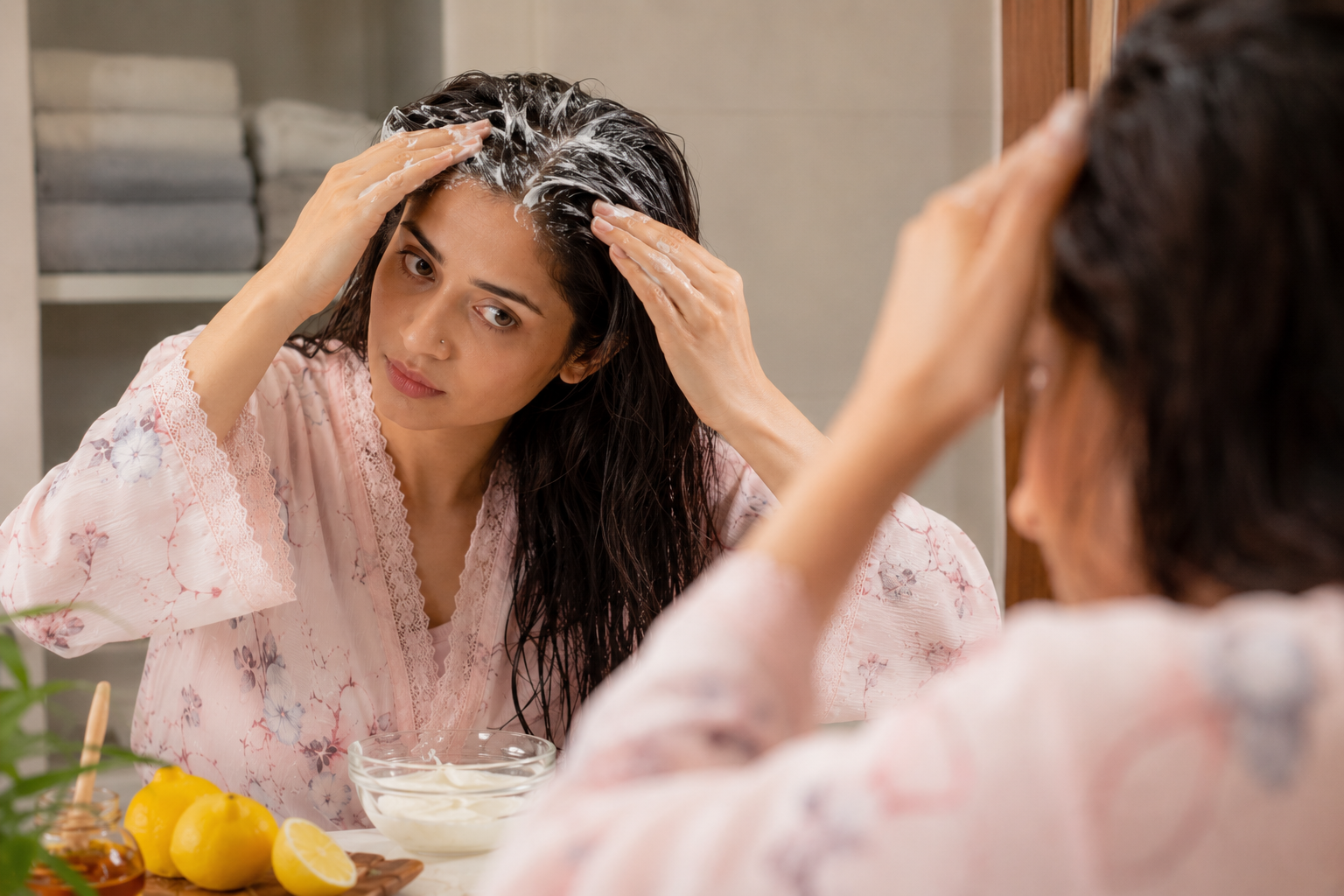
Plain yogurt contains lactic acid — a gentle exfoliant that loosens flakes without stripping the scalp. Its probiotic content may also help restore the scalp’s natural microbiome balance. Lemon juice adds mild antifungal action and clears product residue.
How to use it:
- Mix 4 tablespoons plain full-fat yogurt (dahi) with juice of half a lemon
- Apply to scalp in sections
- Leave on 20–30 minutes
- Rinse with lukewarm water, then shampoo normally
- Use once a week
What it feels like: Cool and soothing — immediate itch relief.
Time to results: Immediate texture improvement; flaking reduces in 3–4 weeks Cost: Under $2 — ingredients already in your kitchen
💡 Pro Tip: Full-fat plain yogurt only. Low-fat has significantly less lactic acid. Never use flavored or sweetened yogurt — the sugar feeds scalp fungus and makes dandruff worse.
5. Aloe Vera Gel — The Soother That Works for Both Types
Best for: Sensitive skin | Dry or oily dandruff | Scalp redness | Post-colour irritation | Ages 16+
Aloe vera is one of the few remedies that works for both oily AND dry dandruff — because it targets the symptoms (itching, inflammation, flaking) rather than just the fungal cause. A 1998 clinical study showed aloe vera significantly reduced symptoms of seborrheic dermatitis, a severe form of dandruff.
How to use it:
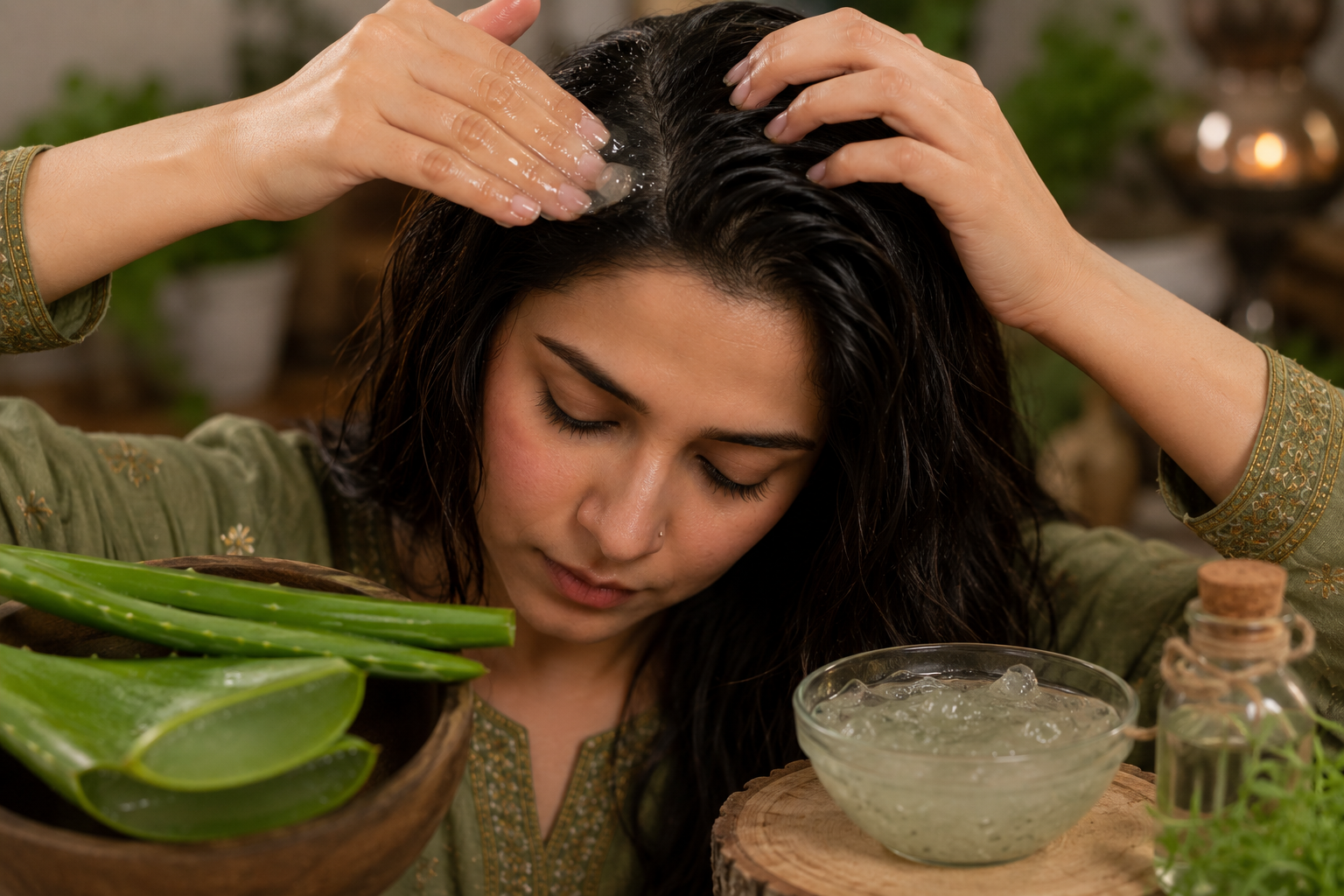
- Slice open an aloe vera leaf and scoop out the clear gel
- Apply directly to scalp and massage gently
- Leave on 20–30 minutes, or overnight in a shower cap
- Rinse with cool water, then shampoo lightly
- Use 3 times per week
What it feels like: Cool and immediately calming — one of the most soothing things you can put on an irritated scalp.
Time to results: Itching relief in 2–3 days; flaking reduces in 2–3 weeks Cost: Free if you have a plant; $3–5 for bottled gel
💡 Pro Tip: Bottled gel must be at least 99% pure aloe — no added alcohol, fragrance, or artificial colouring. Alcohol-based gels worsen dryness significantly.
6. Baking Soda Scalp Scrub — Use This Sparingly
Best for: Oily skin | Product buildup dandruff | Women who use heavy oils or styling products regularly
Let’s be honest — baking soda has been significantly overpromoted in natural haircare. It is not a long-term dandruff solution. Used too frequently, it disrupts scalp pH and worsens both dryness and oiliness.
Done right, once every two weeks as a clarifying treatment, it removes deep product buildup that gentler remedies can’t shift. Done wrong — used weekly — you’ll strip your scalp and make dandruff significantly worse. I made this mistake and my dandruff doubled within a month.
How to use it:
- Wet scalp thoroughly
- Mix 2 tablespoons baking soda with enough water to make a loose paste
- Massage gently in circular motions for 2–3 minutes — no scrubbing
- Leave for 2 minutes
- Rinse very thoroughly — no shampoo needed
- Use once every two weeks maximum
Cost: Under $1
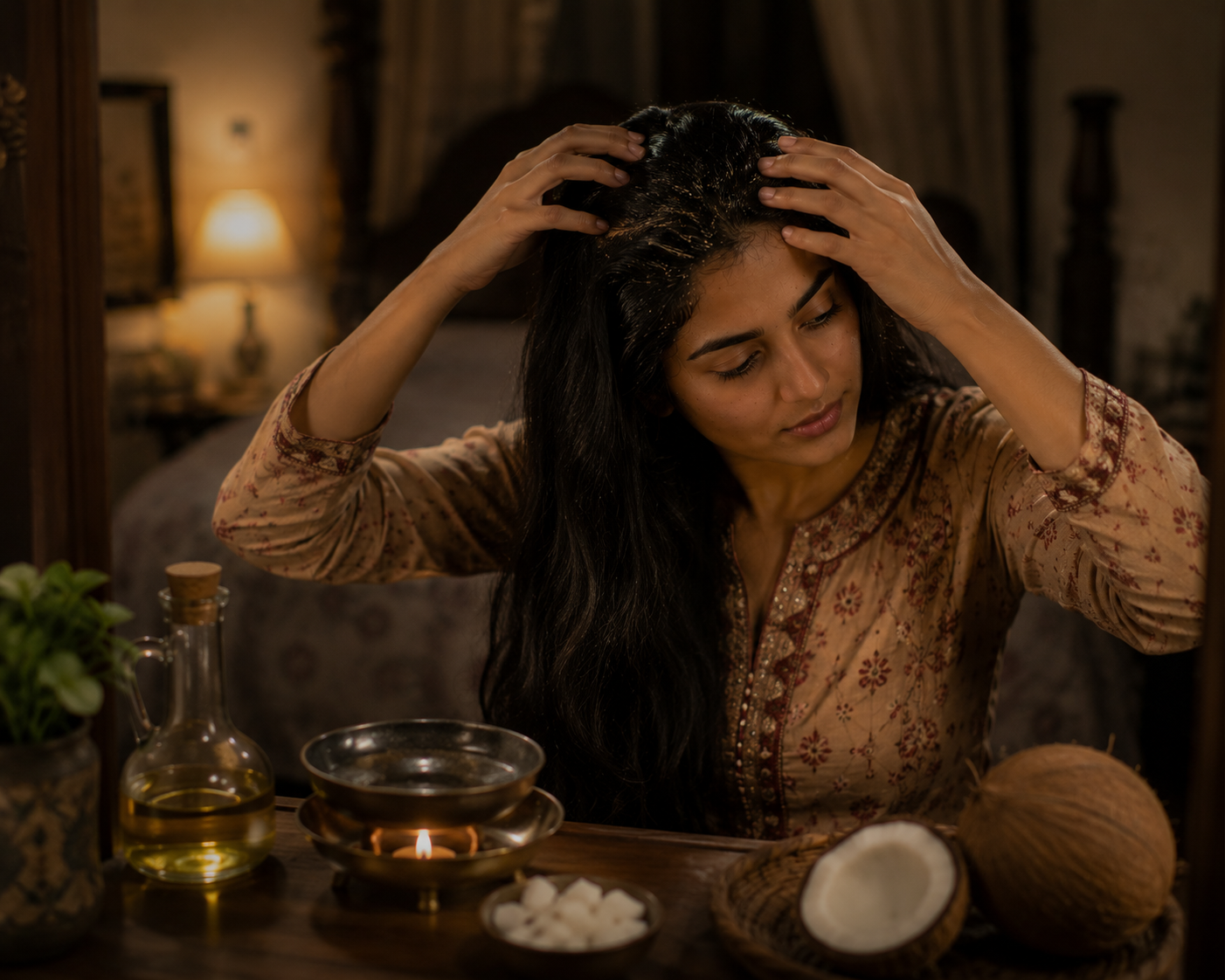
7. Coconut Oil and Camphor (Kapoor) — The Desi Night Treatment
Best for: Dry or sensitive scalp | Intense scalp itching | Traditional remedy preference | All ages
This is the remedy Nadia’s family has used for three generations. Camphor (kapoor) has real antifungal and cooling properties. Combined with the mild antimicrobial lauric acid in coconut oil, it creates a traditional overnight treatment that soothes itching almost immediately.
The first time Nadia’s mother applied it to my scalp — camphor dissolved into warm coconut oil, filling the kitchen with a clean, medicinal scent — the cooling relief was almost instant. Deep, spreading relief that took the itch away completely within minutes.
How to use it:
- Warm 3 tablespoons coconut oil gently until liquid
- Dissolve 2 small camphor tablets (kapoor) into the warm oil — stir until fully dissolved
- Cool until comfortably warm
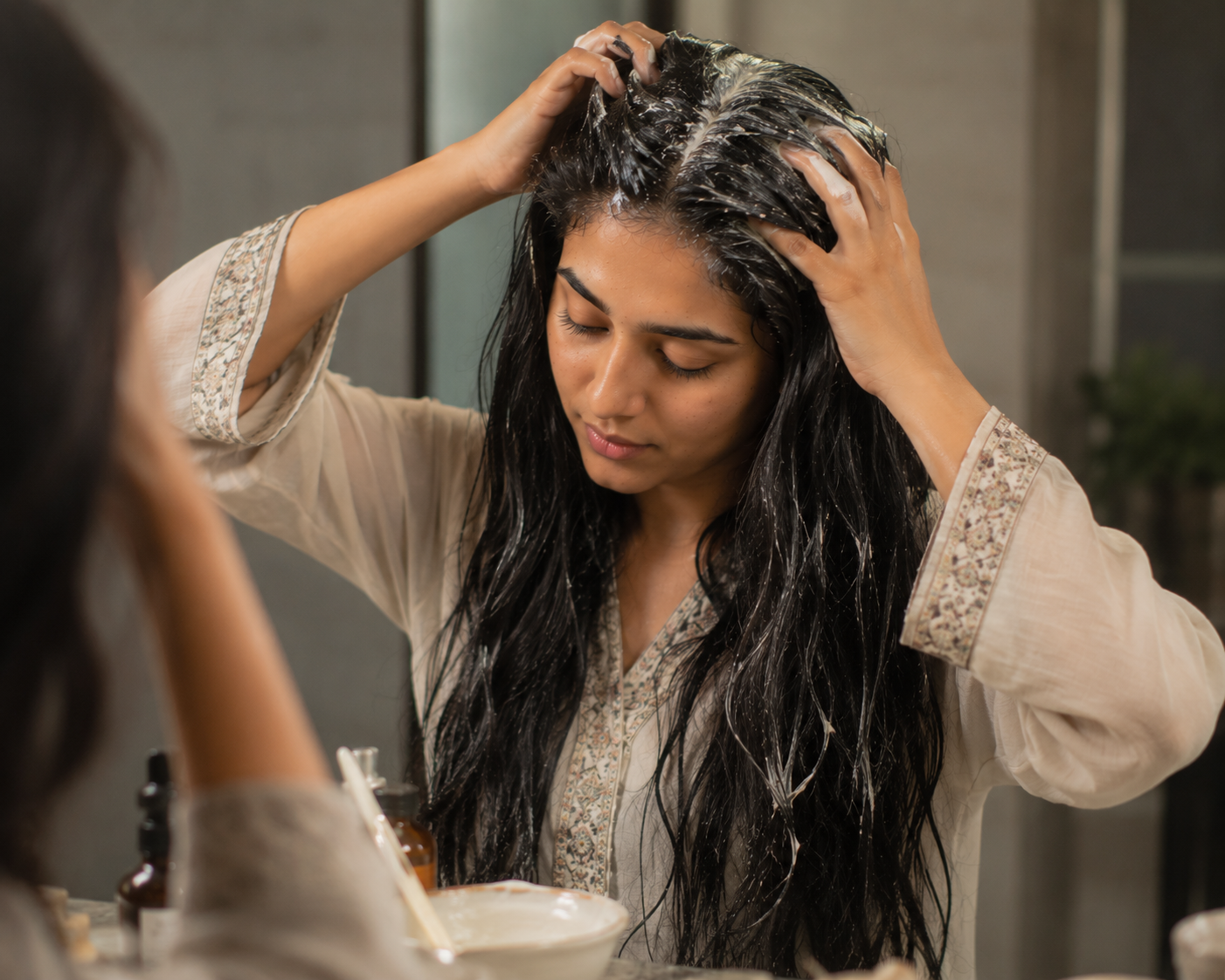
- Apply to scalp with cotton ball or fingertips
- Massage in circular motions for 5 minutes
- Leave overnight covered in a shower cap or old dupatta
- Wash off thoroughly in the morning
- Use once a week
Time to results: Immediate itch relief; flaking reduces in 3–4 weeks Cost: Under $3 total
💡 Pro Tip: The overnight application makes a significant difference compared to one hour. Commit to the overnight version.
Honest note: Do NOT use on oily or fungal dandruff. Coconut oil feeds Malassezia fungus. This remedy is specifically for dry scalp dandruff.
8. Fenugreek (Methi) Paste — The Hair Fall Fighter
Best for: All skin types | Dandruff with hair fall | Oily scalp | Ages 20–50
If your dandruff comes with hair fall — very common, since chronic scalp inflammation disrupts hair follicles — methi seeds address both problems simultaneously.
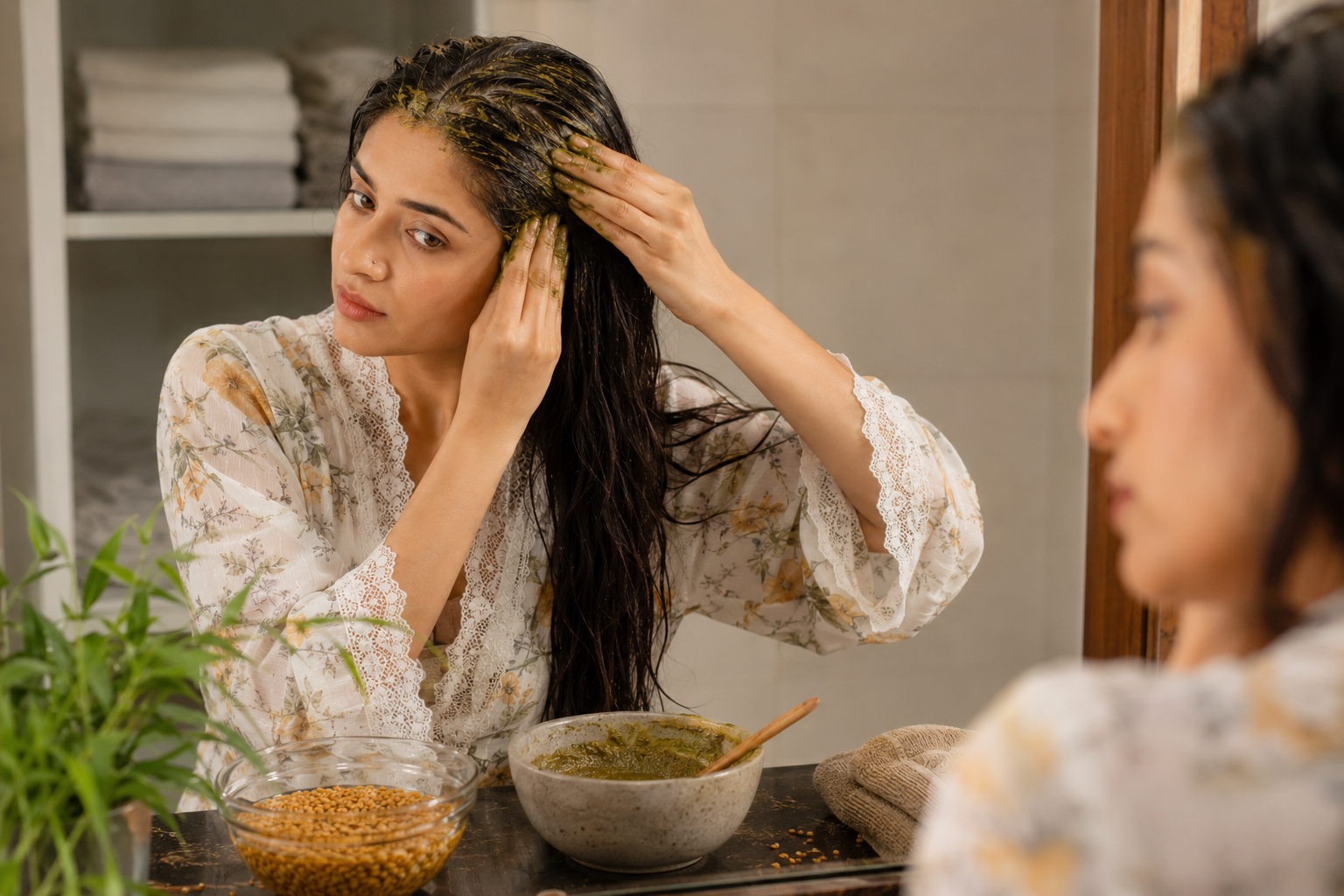
Fenugreek contains lecithin (conditions the scalp), diosgenin (antifungal compound), and nicotinic acid (improves follicle circulation). “My hair was falling in clumps in my twenties,” Nadia told me. “My mother made me start the methi routine. Within two months, the fall reduced by more than half.”
How to use it:
- Soak 3 tablespoons methi seeds in water overnight — minimum 8 hours
- Drain and grind into smooth paste
- Add 1 tablespoon plain yogurt to make application easier
- Apply to scalp in sections
- Leave on 30–45 minutes
- Rinse very thoroughly, then shampoo
- Use once a week
Time to results: 4–6 weeks — slower but more complete Cost: Under $1 — methi is in every Pakistani kitchen
💡 Pro Tip: The overnight soak is non-negotiable. Unsoaked seeds won’t grind smoothly and leave gritty lumps that are almost impossible to rinse out fully.
9. Onion Juice Treatment — The Smelly One That Works
Best for: All skin types | Dandruff with hair fall | Stubborn dandruff | Ages 20+
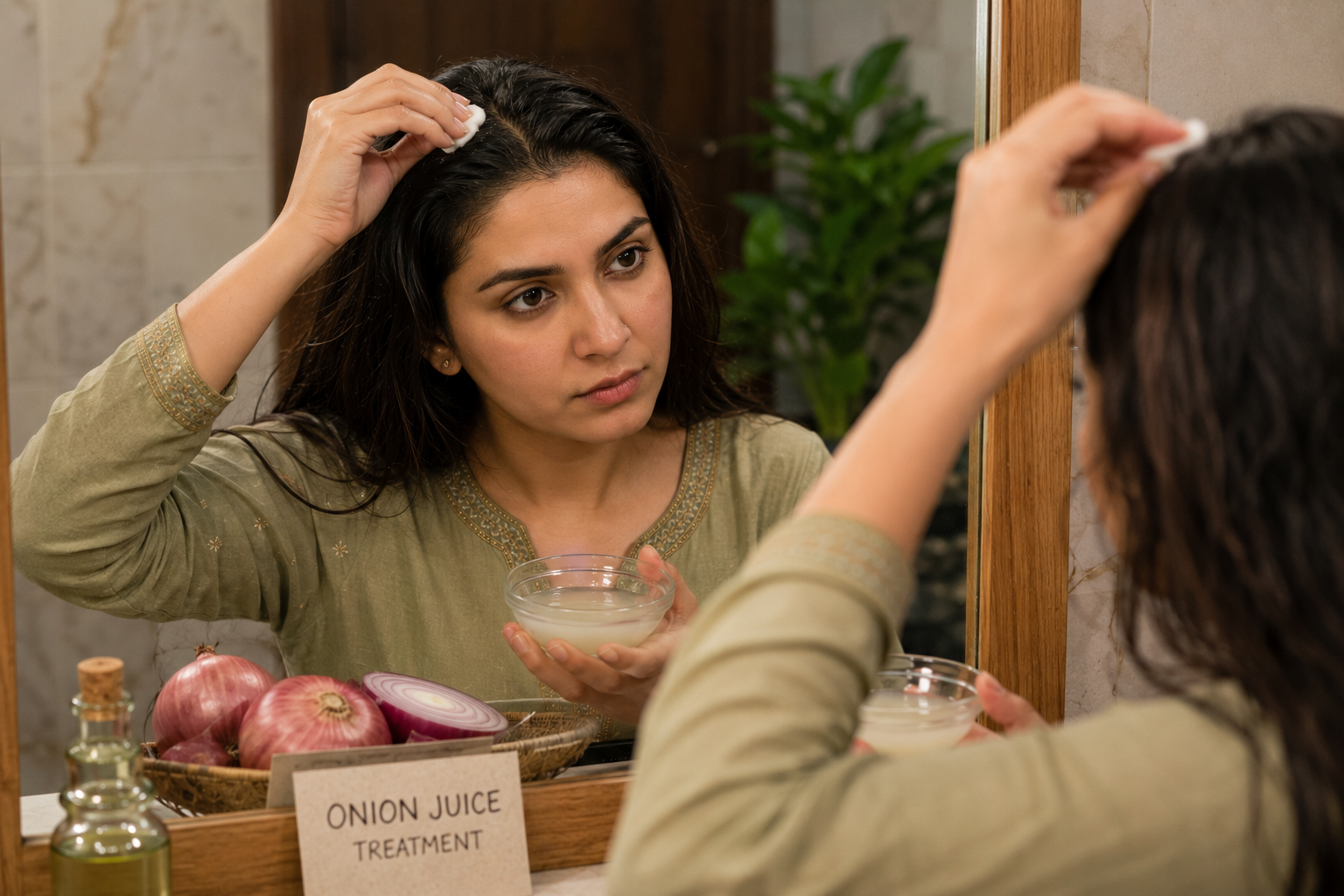
Rich in quercetin (antifungal, anti-inflammatory) and sulphur (antimicrobial, improves scalp circulation). For stubborn dandruff combined with hair fall, this works where other remedies haven’t.
I learned the hard way — I once applied it the morning of a family gathering, shampooed twice, and my bhabhi still asked if I’d been cooking biryani.
How to use it:
- Blend 1 medium onion and strain juice through a clean cloth
- Apply to full scalp with a cotton ball
- Leave on 30–45 minutes
- Rinse with cool water, then shampoo twice
- Use once a week
Time to results: 3–4 weeks Cost: Free
Honest note: Plan this only on days you’re staying home. The smell is persistent even after double shampooing.
10. The Listerine Trick — The Insider Remedy Most Blogs Won’t Tell You
Best for: Oily skin | Stubborn fungal dandruff | Women who haven’t responded to other natural remedies | Ages 18+
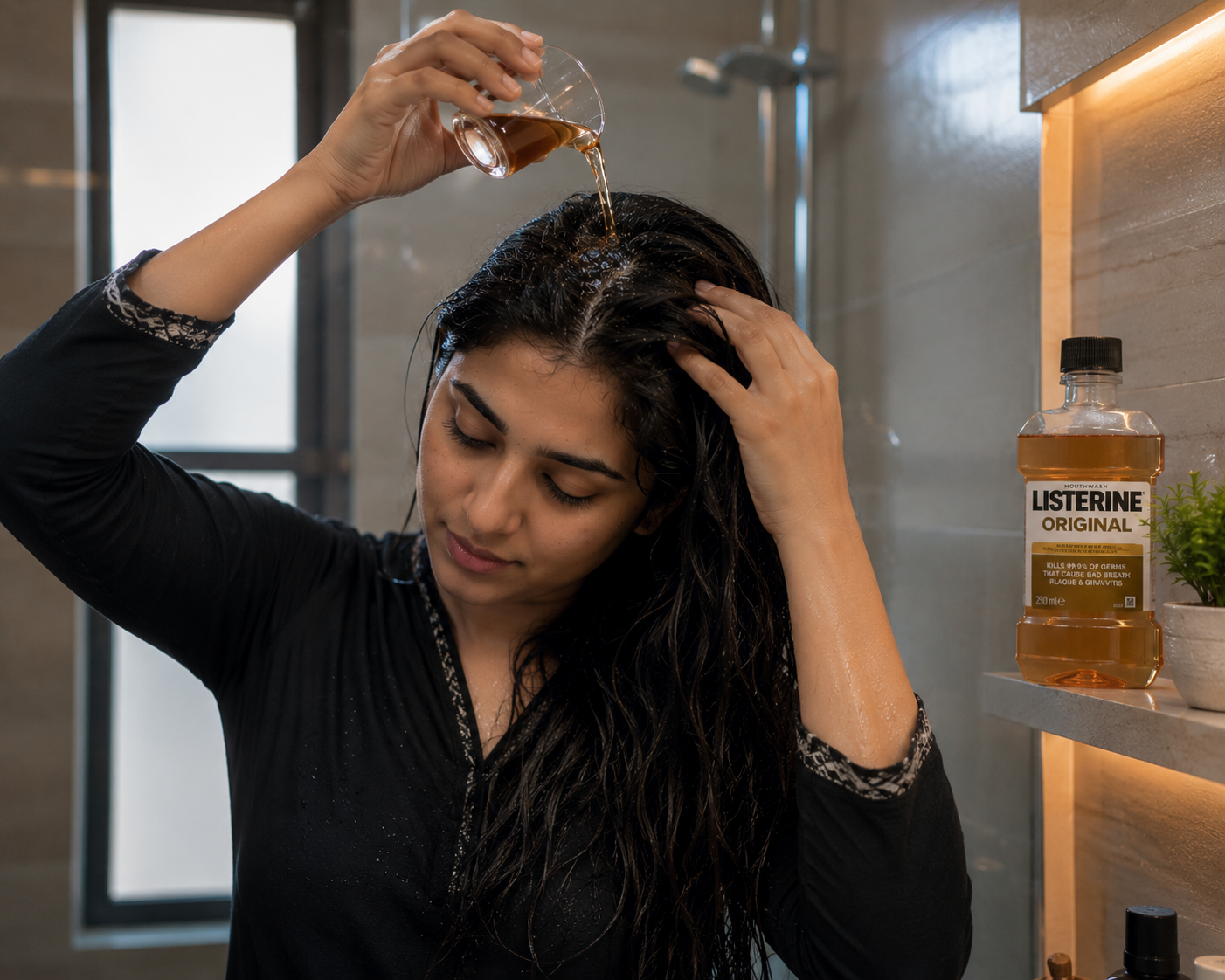
Original Listerine (amber formula) contains thymol, eucalyptol, and methyl salicylate — proven antifungal compounds that directly target Malassezia. When Nadia first suggested this, I thought she was joking. Two weeks later, I was a believer.
How to use it:
- Mix 1 part original Listerine with 3 parts water
- After shampooing, apply to scalp with spray bottle or cotton ball
- Leave on 5 minutes
- Rinse thoroughly
- Use once a week maximum
Time to results: 1–2 weeks for stubborn fungal dandruff Cost: Under $3
💡 Pro Tip: Original amber formula only — not whitening, not “advanced”, not alcohol-free. Check label for thymol and eucalyptol as active ingredients.
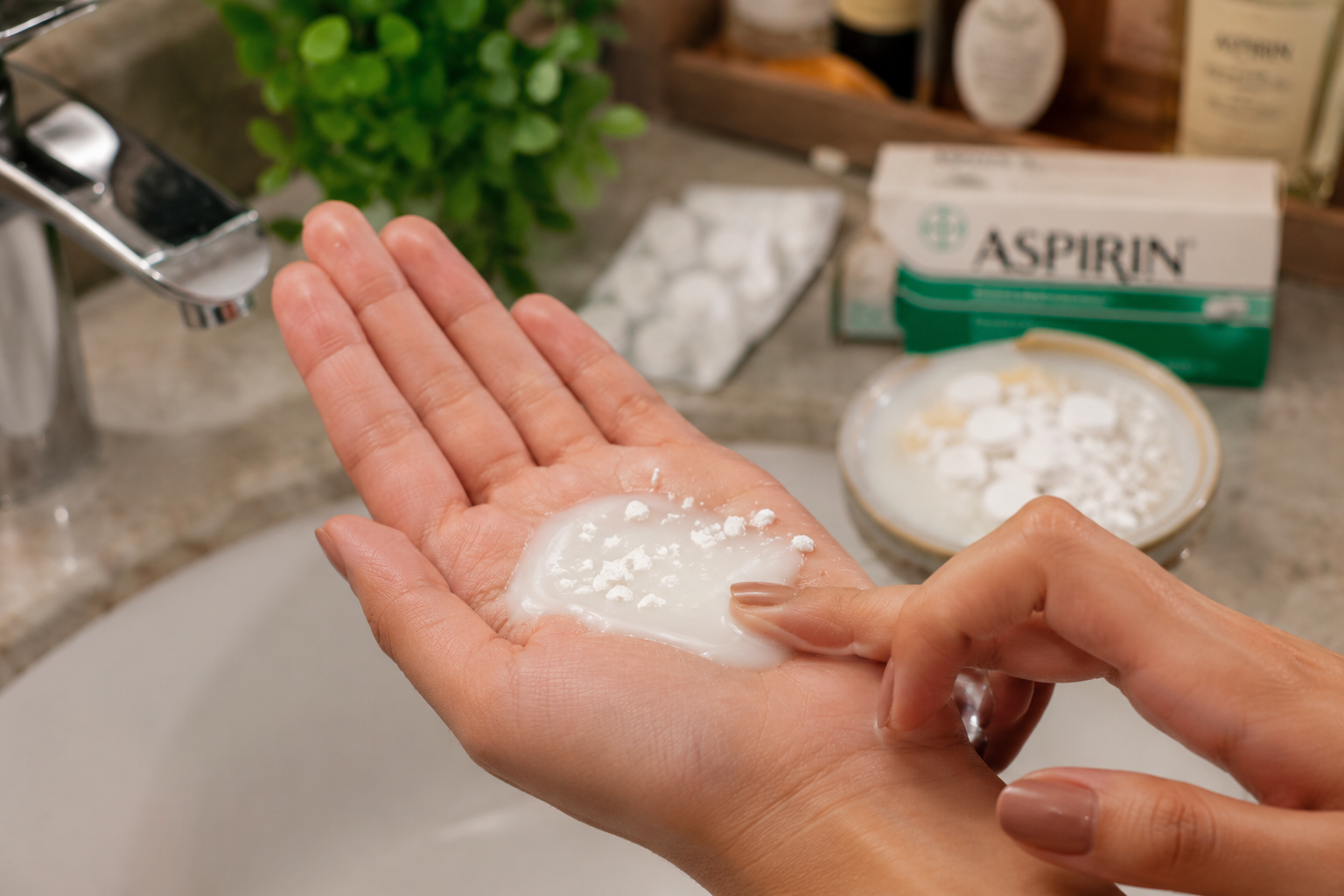
11. Aspirin Paste — The Quick Flake Fix
Best for: All skin types | Flaky dandruff | Women who want a no-prep addition to existing routine | Ages 18+
Regular uncoated aspirin contains salicylic acid — the same active ingredient in many expensive medicated anti-dandruff shampoos. Crushing two tablets into your shampoo gives your regular wash a genuine dandruff-fighting boost instantly.
How to use it:
- Crush 2 uncoated aspirin tablets into fine powder
- Mix into your shampoo in your palm before applying
- Leave on scalp for extra 2 minutes before rinsing
- Use 2x per week
Time to results: Immediate flake reduction; consistent improvement over 2–3 weeks Cost: Under $1
Honest note: Addresses flaking (the symptom) rather than root cause. Use alongside a scalp treatment above. Do not use if allergic to aspirin or NSAIDs.
12. The Most Underrated Remedy: Fix Your Shampooing Technique
Best for: Every woman with dandruff — without exception Cost: Free
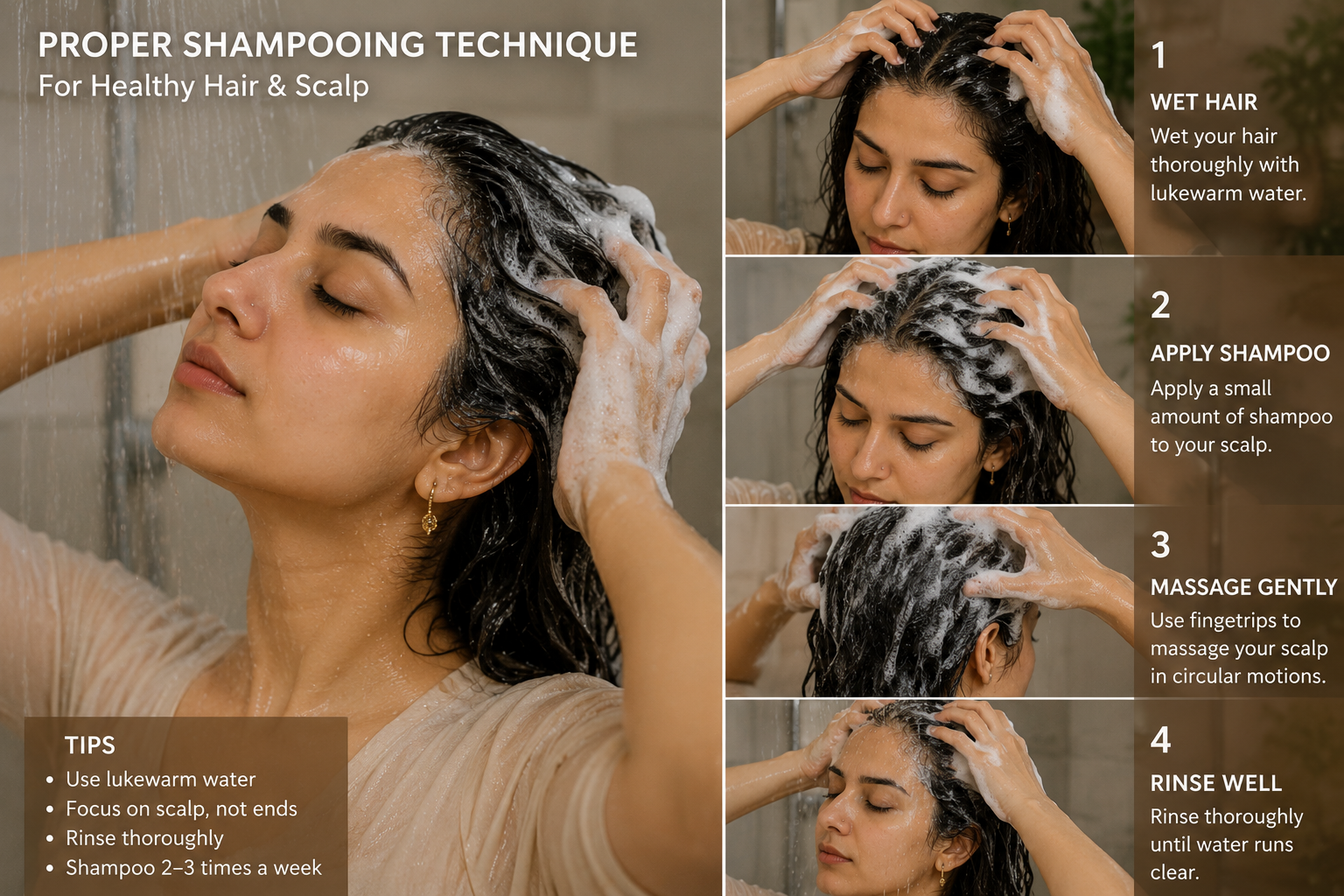
This costs nothing and would reduce most women’s dandruff by 40–50% on its own. The mistake most women make is treating dandruff as a product problem when it’s partly a habit problem.
What to change:
- Frequency: Wash 2–3 times per week — not once. Malassezia feeds on scalp oils; longer gaps between washes = more fungal food
- Water temperature: Lukewarm or cool, not hot. Hot water strips the scalp barrier and triggers excess oil production
- Conditioner: Lengths and ends only — never the scalp. Conditioner residue on the scalp feeds dandruff fungus
- Rinsing: Rinse 30 extra seconds beyond what you think is enough. Residue is a major contributor to buildup dandruff
Comparison Table: Home Remedies for Dandruff
| Remedy | Cost | Time to Results | Difficulty | Best For | Dandruff Type |
|---|---|---|---|---|---|
| Apple Cider Vinegar | Under $5 | 2–3 weeks | Easy | Oily/fungal dandruff | Oily/fungal |
| Tea Tree Oil | $6–10 | 1–2 weeks | Easy | Fungal dandruff with itching | Oily/fungal |
| Neem Water Rinse | Under $2 | 2–4 weeks | Easy | Scalp inflammation | Oily/fungal |
| Yogurt + Lemon Mask | Under $2 | 3–4 weeks | Easy | Dry/sensitive scalp | Dry scalp |
| Aloe Vera Gel | Free–$5 | 2–3 weeks | Easy | Both types | Dry and oily |
| Methi Paste | Under $1 | 4–6 weeks | Medium | Dandruff + hair fall | Oily/fungal |
| Camphor + Coconut Oil | Under $3 | 3–4 weeks | Easy | Dry scalp, itching | Dry scalp |
| Baking Soda Scrub | Under $1 | Immediate | Easy | Product buildup | Buildup |
| Onion Juice | Free | 3–4 weeks | Medium | Stubborn + hair fall | All types |
| Listerine Rinse | Under $3 | 1–2 weeks | Easy | Stubborn fungal | Oily/fungal |
| Aspirin Paste | Under $1 | 2–3 weeks | Easy | Quick flake fix | All types |
| Shampooing Technique | Free | 1–2 weeks | Habit change | Foundation for all | All types |
Common Mistakes Women Make With Dandruff
The biggest mistake — and I made this for over two years — is stopping the remedy the moment the dandruff clears up.
Dandruff caused by Malassezia fungus is chronic for many women. The moment you stop your remedy, the conditions that allowed the fungus to overgrow return, and within 3–4 weeks the dandruff is back. The goal is not a cure. The goal is management.
Other mistakes:
- Using coconut oil on fungal/oily dandruff — it feeds Malassezia and makes dandruff significantly worse
- Mixing ACV and baking soda thinking “double the power” — they neutralize each other completely
- Applying undiluted lemon juice — causes scalp burns and photosensitivity
- Trying 3 different remedies simultaneously — overwhelms and irritates the scalp; test one remedy for 3–4 weeks before switching
- Washing with hot water — damages the scalp barrier and triggers more oil production
Done right, dandruff management takes 10–15 minutes per week. Done wrong, you’ll spend years cycling through products and watching the flakes return every time.
When to See a Doctor
Home remedies work well for mild to moderate dandruff, but some situations require professional treatment. Please consult your doctor or dermatologist if:
- Dandruff does not improve after 6–8 weeks of consistent home treatment
- You notice thick, yellowish, greasy flakes with significant scalp redness, swelling, or rash — this may indicate seborrheic dermatitis or scalp psoriasis requiring prescription treatment
- Hair loss is accompanying dandruff and getting progressively worse
- The scalp develops open sores, oozing, crusting, or unusual smell
- You experience scalp pain rather than just itching
Please consult your doctor before beginning any new treatment, especially if you have existing skin conditions or are pregnant. These remedies are for informational purposes only and are not a substitute for professional medical advice.
People Also Ask
❓ What is the fastest home remedy for dandruff? → Tea tree oil and apple cider vinegar are the fastest-acting home remedies for dandruff. Tea tree oil’s antifungal compound terpinen-4-ol begins reducing Malassezia fungus within days of use. Most women notice a reduction in itching within the first week and visible flake reduction by week two with consistent use 2–3 times per week.
❓ How do I permanently get rid of dandruff at home? → Dandruff cannot be “permanently cured” at home because for many women it is a chronic condition. However, it can be permanently managed with a consistent routine. A weekly neem water rinse combined with an ACV spray 2–3 times per week keeps most fungal dandruff controlled long-term. Maintenance is the key — stopping the routine allows dandruff to return.
❓ Does apple cider vinegar really help dandruff? → Yes, for oily and fungal dandruff specifically. ACV’s acetic acid lowers scalp pH, creating an environment where Malassezia fungus cannot thrive. Diluted 1:1 with water and applied 2–3 times per week, most women see noticeable improvement within 2–3 weeks. It is not effective for dry scalp dandruff and may worsen it.
❓ Why do I still have dandruff after washing my hair regularly? → Washing frequency alone doesn’t control dandruff — the type of products used, water temperature, and whether conditioner touches the scalp all matter. Dandruff caused by Malassezia fungus requires antifungal treatment, not just cleansing. Hot water during washing also strips the scalp barrier and triggers excess oil production, which feeds the fungus despite regular washing.
❓ What is the difference between dandruff and dry scalp? → Dry scalp produces small, fine white flakes that fall off easily, with no underlying oiliness — caused by lack of moisture. Dandruff (fungal) produces larger, sometimes yellowish clumping flakes that stick to the scalp, often with oiliness. Treating dry scalp with antifungal remedies and treating fungal dandruff with moisturising remedies both worsen the condition. Identifying which you have first is essential.
FAQ: Home Remedies for Dandruff
Q: How long does it take for home remedies to get rid of dandruff? Most home remedies for dandruff require consistent use for 2–4 weeks before meaningful results appear. Some remedies like aloe vera and baking soda offer immediate itch or flake relief on first use. But the underlying scalp condition takes longer to correct. Give any remedy a full 3–4 weeks before deciding it isn’t working. Consistency matters more than intensity — daily use of a weaker remedy beats occasional use of a stronger one.
Q: Can dandruff cause hair fall? Yes, and this connection is more common than most women realise. Chronic scalp inflammation from fungal activity or excess flaking disrupts the hair follicle environment and contributes to increased shedding. Scratching an itchy scalp also physically damages follicles over time. Treating dandruff consistently usually reduces associated hair fall within 4–6 weeks. If hair fall is severe or accelerating, please consult a dermatologist.
Q: Is dandruff a sign of something serious? For most women, dandruff is a common, manageable scalp condition — not a sign of serious illness. However, persistent severe dandruff with redness, swelling, or rashes extending beyond the scalp may indicate seborrheic dermatitis, scalp psoriasis, or fungal infection requiring professional evaluation. Consult your doctor if symptoms are severe, worsening, or don’t respond to home treatment after 6–8 weeks.
Q: Why does my dandruff keep coming back even after treatment? Because dandruff is a chronic condition for many women. The Malassezia fungus is always present on the scalp — what changes is whether conditions allow it to overgrow. When you stop your remedy, those conditions return, and dandruff comes back within weeks. The solution is maintenance — continuing a simple weekly routine even after flakes disappear, the way you maintain any other aspect of health.
Q: Should I wash my hair more or less if I have dandruff? More, not less — for oily or fungal dandruff. Washing 2–3 times per week prevents scalp oil buildup that feeds Malassezia. If your dandruff is dry scalp type, washing too frequently worsens dryness — 2x per week with a gentle shampoo and cool water is better. The type of dandruff determines the answer, which is exactly why identifying your type before choosing a remedy matters so much.
Q: Does coconut oil make dandruff worse? For oily, fungal dandruff — yes, significantly. Malassezia feeds on fatty acids found in oils, including coconut oil. Applying it to a scalp with fungal dandruff can dramatically worsen flaking within days. Coconut oil is only appropriate for dry scalp dandruff. This is one of the most important — and most commonly misunderstood — facts about dandruff treatment.
Q: What is the difference between dandruff and dry scalp? They look similar but have different causes and require different treatments. Dry scalp produces small, fine, powdery white flakes that fall easily — scalp feels tight and itchy — and worsens in cold weather. Dandruff (fungal) produces larger, sometimes yellowish clumping flakes that stick to the scalp, often with oiliness. Using moisturising remedies on fungal dandruff and antifungal remedies on dry scalp both worsen the condition.
Q: Can I use home remedies for dandruff if I colour or chemically treat my hair? Yes, with some care. Avoid ACV rinses immediately after colouring — acidity can affect colour longevity. Aloe vera, yogurt masks, and neem water rinses are all safe for coloured hair. Diluted tea tree oil is also fine. Avoid baking soda on coloured hair — its mild alkalinity can strip colour over repeated use.
Q: Is dandruff contagious? No. Dandruff cannot be passed from person to person. Malassezia fungus is naturally present on every human scalp — the dandruff occurs when individual scalp conditions allow it to overgrow. Sharing combs or towels does not cause dandruff, though avoiding shared hair tools is good hygiene practice regardless.
Q: Why is dandruff worse in winter? Several factors work together. Cold, dry air reduces scalp moisture and worsens dry scalp dandruff. Wearing caps and scarves increases scalp warmth and humidity, worsening fungal dandruff. Indoor heating further dries the air and scalp. And many women wash their hair less frequently in winter — which allows scalp oil and fungus to build up unchecked.
Q: Can diet cause or worsen dandruff? Research suggests diets high in sugar and refined carbohydrates may worsen fungal dandruff by promoting yeast activity. Deficiencies in zinc and B vitamins have also been linked to worsening scalp conditions. Adding foods rich in zinc (pumpkin seeds, chickpeas, lentils), omega-3 fatty acids (fish, walnuts, flaxseed), and B vitamins (eggs, leafy greens) may support scalp health over time as part of a broader approach.
Q: When should I stop using home remedies and see a dermatologist? If you have been consistently using a home remedy for 6–8 weeks with no improvement — or if the condition is worsening — please see a dermatologist. Severe seborrheic dermatitis, scalp psoriasis, and fungal scalp infections all look similar to regular dandruff but require prescription treatment. Please consult your doctor if symptoms persist, worsen, or interfere with your daily life.
Q: What foods help reduce dandruff naturally? Foods that may support scalp health include those rich in zinc (lentils, chickpeas, pumpkin seeds), omega-3 fatty acids (fish, walnuts, flaxseed), and B vitamins (eggs, spinach, whole grains). Reducing sugar and refined carbohydrates may also help, as high sugar intake is associated with increased yeast and fungal activity. Diet alone rarely resolves dandruff but supports other treatments.
Q: Can stress cause dandruff to flare up? Yes. Stress is a well-documented trigger for seborrheic dermatitis and dandruff flare-ups. Stress hormones affect the immune system’s ability to regulate the Malassezia fungus on the scalp. Many women notice their dandruff worsens significantly during exam season, work pressure, or major life events. Managing stress through sleep, exercise, and relaxation supports overall scalp health alongside topical remedies.
Quick Summary — Home Remedies for Dandruff ✅ Best remedy: Apple Cider Vinegar + Neem Water Rinse combination ⏱ Time to results: 2–4 weeks with consistent use 💰 Budget option: Yogurt + Lemon Mask — under $2 ⚠️ Avoid if: Oily/fungal dandruff — never use coconut oil 👩⚕️ See a doctor if: No improvement after 6–8 weeks, or scalp develops sores, redness, or swelling 📌 Top tip: Identify your dandruff type first — oily/fungal vs dry scalp — before choosing any remedy
Closing
A few months after that wedding, I stood at the same mirror in the same bathroom — but this time counting nothing.
I’d stopped buying anti-dandruff shampoos completely. My routine had simplified to three things: neem water rinse after every wash, an ACV spray twice a week on the days I didn’t wash, and Nadia’s methi paste every Sunday morning. My scalp felt genuinely healthy — not just temporarily product-treated, but actually healthy.
The flaking didn’t disappear overnight. Week three was when I noticed the real shift. Week six, it was barely noticeable. Week twelve, I forgot it had ever been a problem — until I remembered to keep doing the routine.
You don’t need an expensive serum or a dermatologist’s budget to manage dandruff. You need to identify which type you have, choose the right remedy for it, and — this is the part most women miss — keep going even after the flakes disappear.
As Nadia always says: “Your scalp has a memory. Treat it consistently, and it remembers what healthy feels like.”
Start with one remedy today. Give it four full weeks. And please — stop putting coconut oil on fungal dandruff. Trust me on this one.
For informational purposes only. Please consult your doctor or dermatologist if symptoms persist or worsen. These remedies are not a substitute for professional medical advice.
Leave a Comment
Share your thoughts or questions about this article!