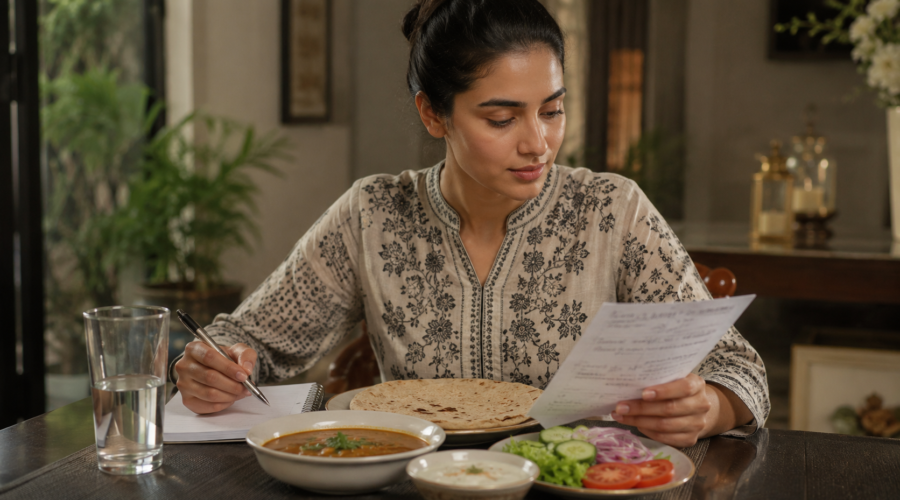
This article is based on published research and real-world experience. All recommendations are for informational purposes only. Please consult your doctor before making significant dietary changes.
How to Lose Weight Without Exercise — Quick Answer Yes, you can lose weight without exercise by creating a calorie deficit through food choices alone. Key strategies include portion control, cutting sugary drinks, eating more protein and fiber, drinking more water, improving sleep quality, and reducing stress. These lifestyle changes can produce steady, sustainable weight loss of 0.5–1 kg per week without any gym routine.
How to Lose Weight Without Exercise — 12 Strategies That Actually Work (2026)
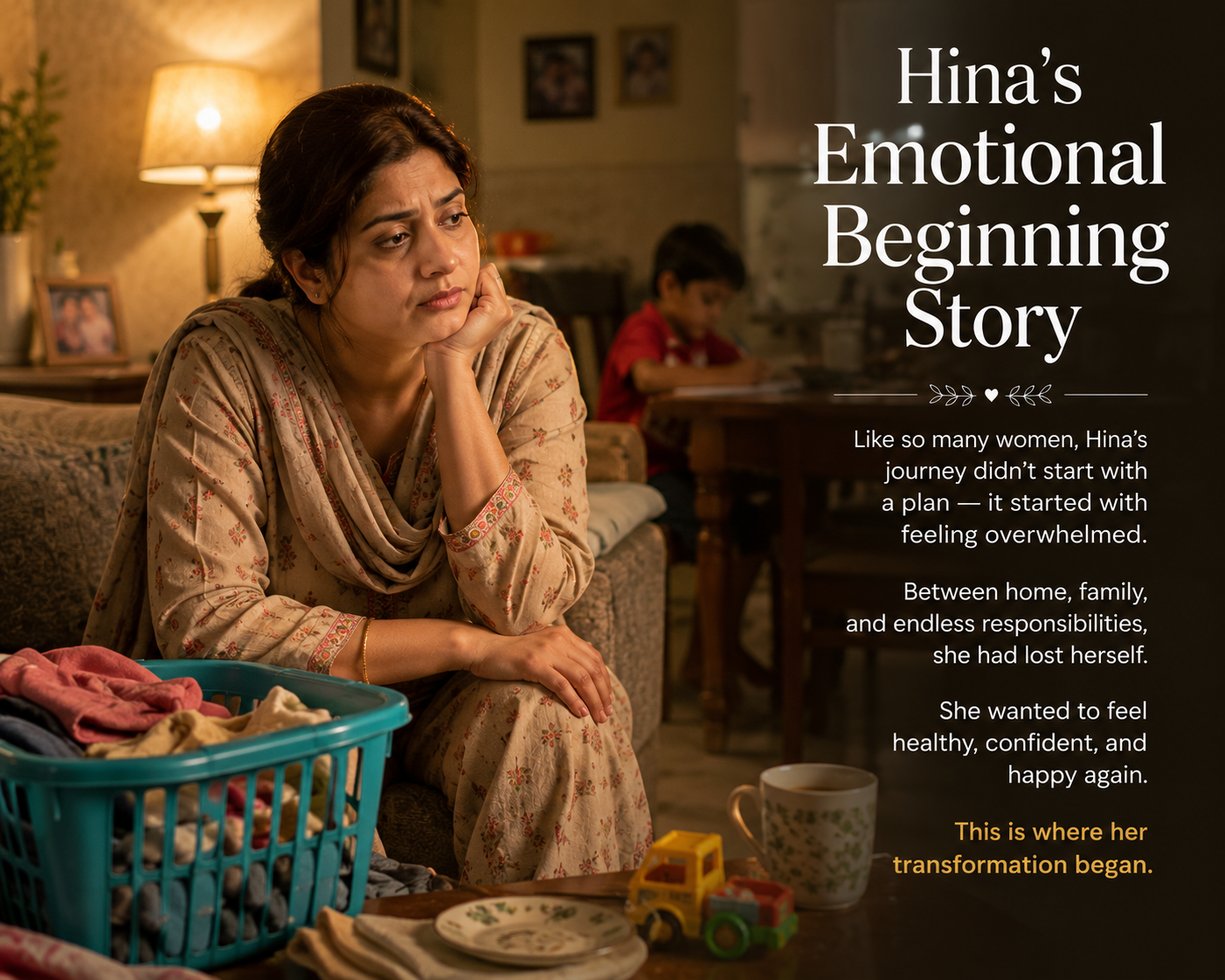
My neighbor Hina came to me last Ramadan looking completely defeated. She’d tried three different “fitness plans” in the past year — each one lasted about two weeks before life got in the way. Two kids, a household to run, a part-time job, and a mother-in-law who expressed love through extra helpings of biryani. “I genuinely cannot exercise,” she told me. “I don’t have 45 minutes to myself. Is there any other way?”
Here’s what I told her: weight loss is 80% what you eat and 20% how you move. This isn’t me being motivational — this is what the research actually says. According to Dr. Yoni Freedhoff, obesity expert and author of The Diet Fix, weight loss is primarily driven by diet, as reducing calorie intake has a greater impact on fat loss than exercise alone.
That doesn’t mean exercise isn’t valuable — it is, enormously. But for women who genuinely cannot commit to a gym routine right now, the door to weight loss is absolutely not closed. Hina lost 6 kg in four months without a single formal workout. Here’s what she did — and what the science backs up.
Can You Really Lose Weight Without Exercise? (The Honest Answer)
Yes — but with an important condition: you have to create a calorie deficit. Your body loses weight when it burns more calories than it takes in. Exercise is one way to increase calorie burn. Changing what and how you eat is another — and for most women, it’s actually the more powerful lever.
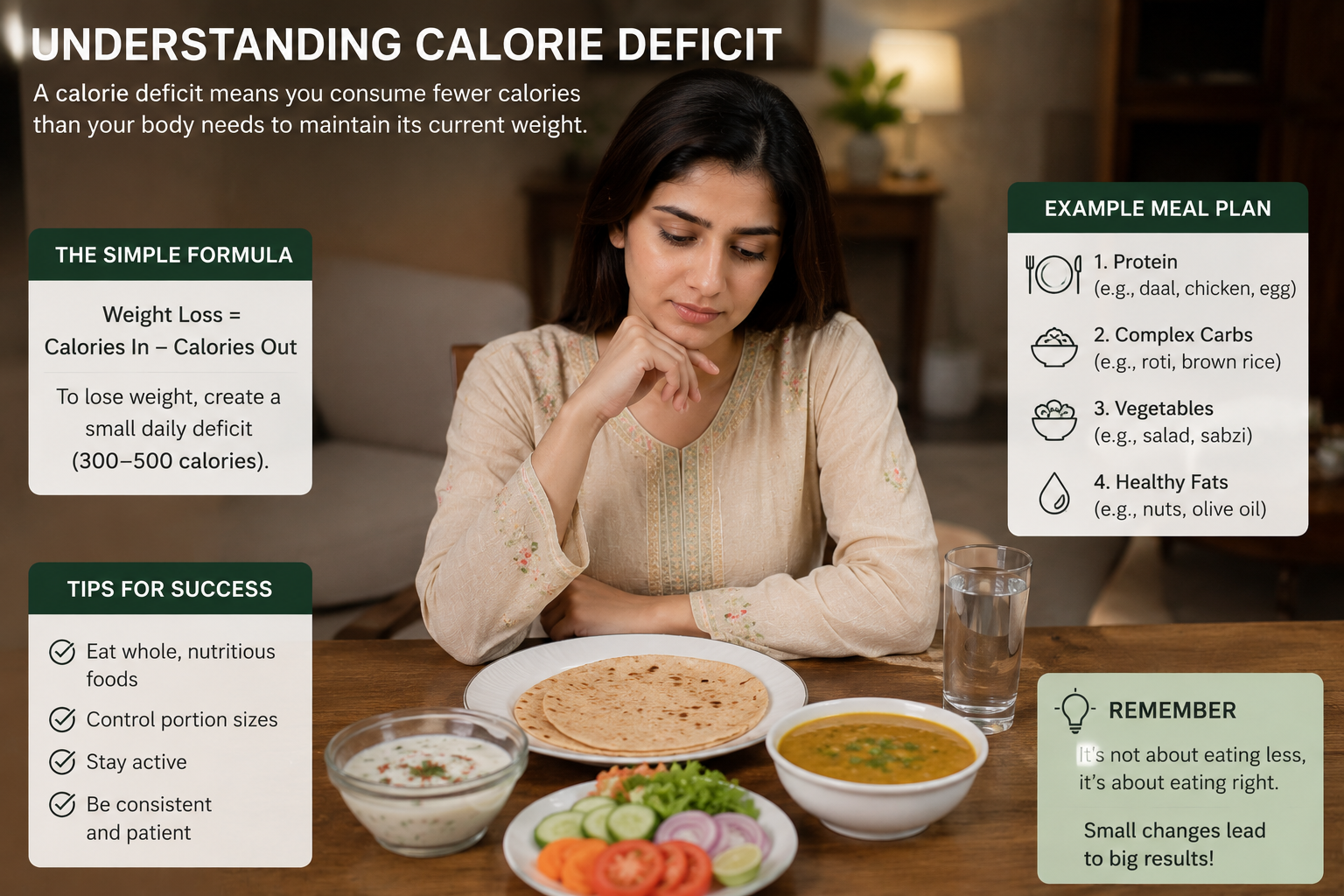
The key principle: weight loss = energy in (food) minus energy out (metabolism + activity). You can shift this equation significantly through food choices alone.
What’s realistic:
- 0.5–1 kg per week with consistent dietary changes — sustainable, healthy rate
- More than this usually means water weight or muscle loss, not fat loss
What’s not realistic:
- Losing 5 kg in a week without exercise (crash diets that fail within weeks)
- Spot-reducing belly fat through any single food or drink
The trick is making small, consistent changes that add up — not dramatic restrictions that your body fights against.
Also Read: Weight Loss Tips for Pakistani Women
12 Proven Ways to Lose Weight Without Exercise
1. Understand Your Calorie Deficit — Without Obsessive Counting
You don’t need to count every calorie. But you do need a general understanding of where your calories are coming from. Most Pakistani women I know are significantly underestimating their daily intake — the handful of namkeen here, the extra roti there, the three cups of sugary chai that add up to 300+ calories before lunch.
According to nutrition research, people underestimate their caloric intake by nearly 30–50%. This is not a character flaw — it’s just how our brains work.
Practical approach without calorie counting:
- Identify your 2–3 highest-calorie habits (chai with sugar, fried snacks, late-night eating)
- Reduce those specifically — don’t overhaul everything at once
- Use the “hand portion” method: protein = palm size, carbs = cupped hand, vegetables = two fists
What to expect: Reducing your top 3 calorie habits alone often creates a 300–500 calorie daily deficit — enough for 0.5 kg/week loss.
💡 Pro Tip: Track your food for just 3 days — no judgment, just observation. Most women are shocked by how much they eat without realizing it. You don’t need to count forever — just long enough to understand your patterns.
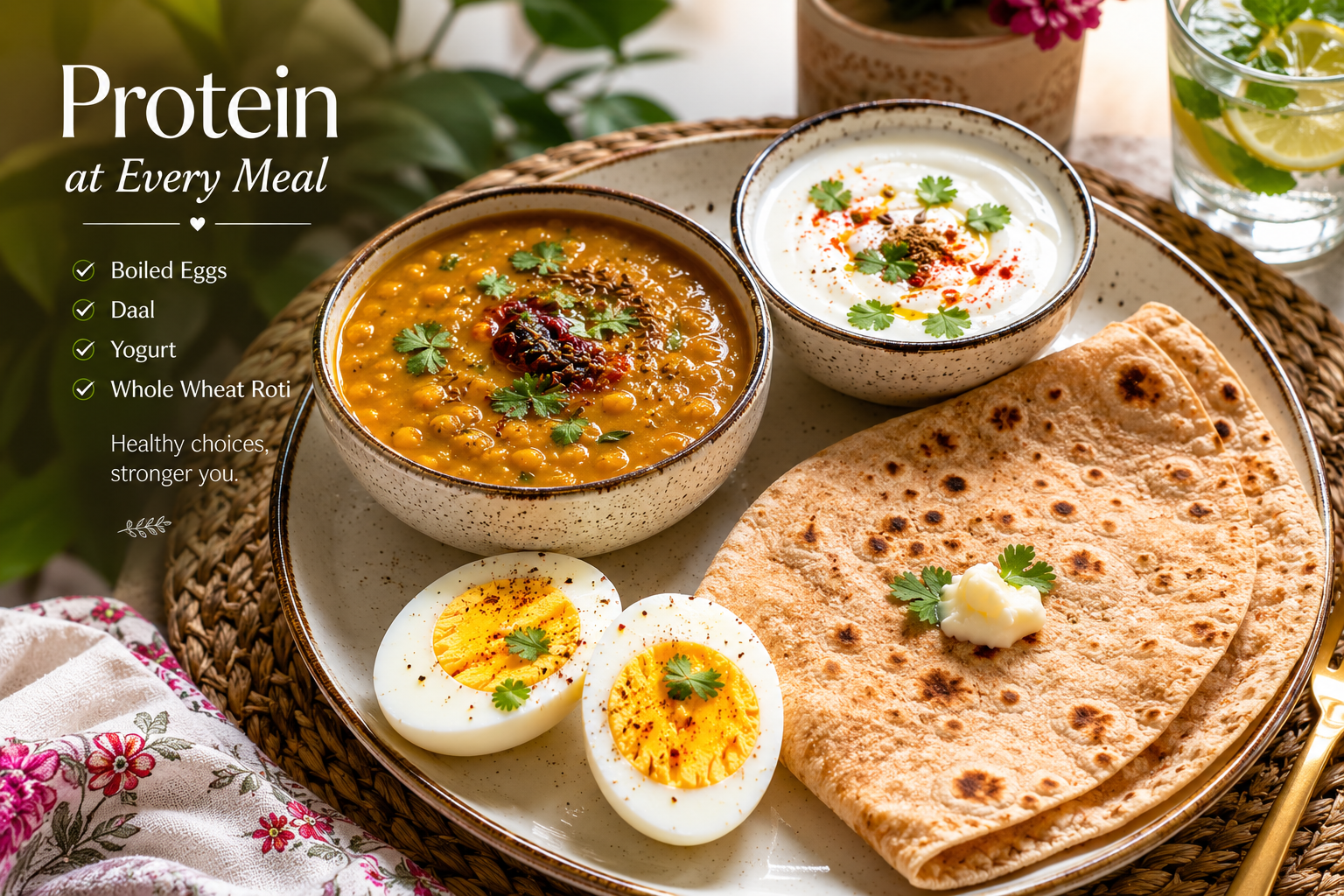
2. Protein at Every Single Meal — The Single Biggest Change
If I could tell every Pakistani woman trying to lose weight one thing, it would be this: eat more protein. Not less food — more protein specifically.
Protein does three things that directly support weight loss without exercise:
- It keeps you fuller for longer (reduces hunger hormones)
- It has a higher “thermic effect” — your body burns more calories just digesting it compared to carbs or fat
- It preserves muscle mass while you lose fat, keeping your metabolism higher
According to Harvard’s School of Public Health nutrition research, a diet rich in fiber, healthy fats, and lean proteins significantly enhances weight loss without exercise.
Easy protein additions for Pakistani women:
- Add 2 boiled eggs to breakfast instead of extra paratha
- Replace biscuits/namkeen snack with a handful of chickpeas (chanay) or dahi
- Have daal every single day — it’s one of the highest-protein, lowest-calorie foods in our cuisine
- Add yogurt (plain dahi) to every meal possible
Best for: All women, especially those with PCOS or hormonal weight gain Time to results: Reduced hunger within 3–5 days; visible weight change in 3–4 weeks
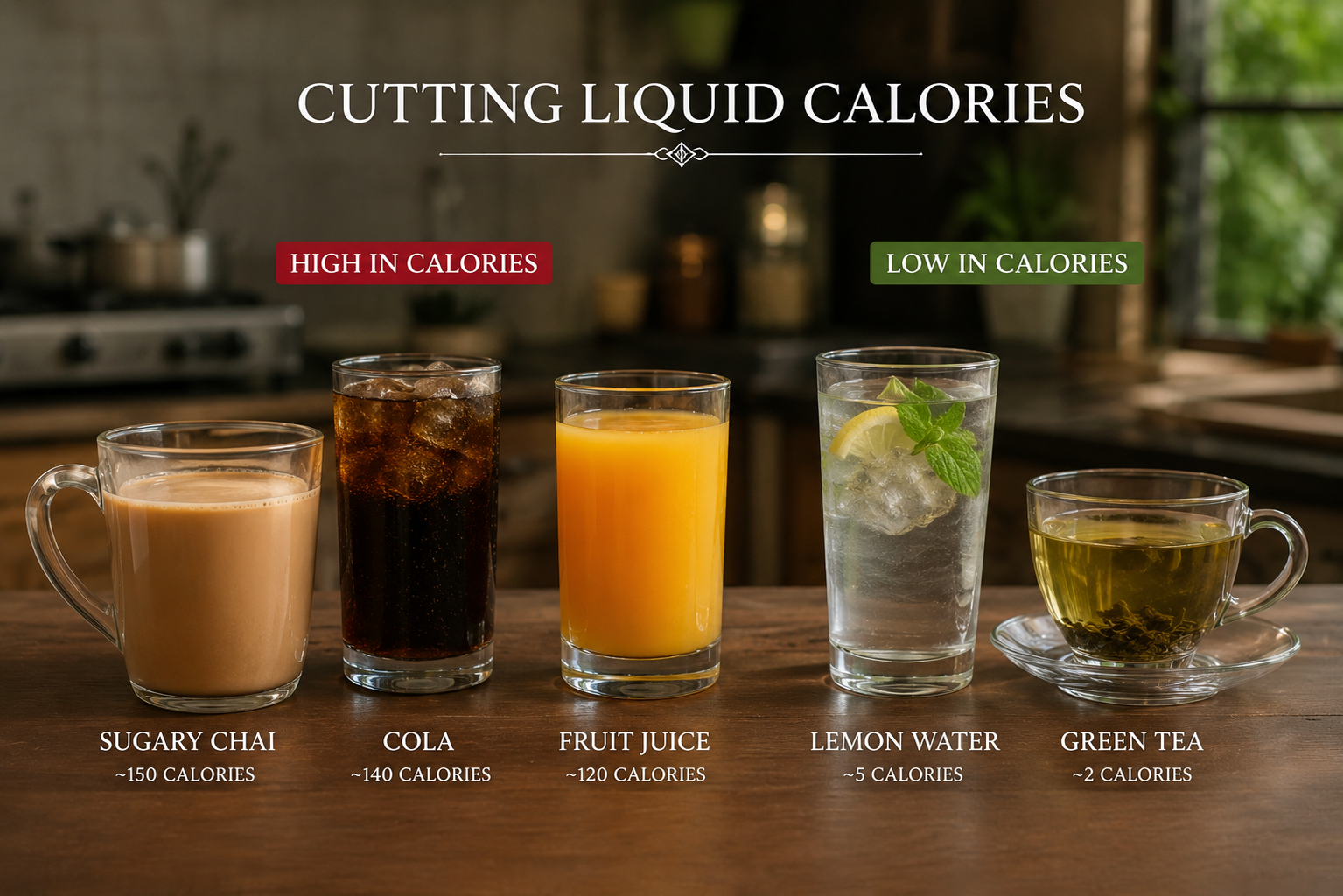
3. Cut Liquid Calories — This Is Where Most Weight Hides
I learned this the hard way. For two years I couldn’t understand why my diet wasn’t working. Then I actually counted the calories in my daily drinks:
- 3 cups chai with 2 tsp sugar + full cream milk each = approximately 300 calories
- 1 glass of cola or juice = 140–200 calories
- Sweet lassi = 250–350 calories
That’s potentially 600+ calories per day from drinks alone. Drinks don’t trigger satiety hormones the way food does — meaning your body doesn’t register them as “eating,” so they don’t reduce hunger.
A 2022 research review found that replacing sugar-sweetened beverages with low-calorie or no-calorie options was linked to meaningful reductions in body weight, BMI, and body fat percentage.
What to switch:
- Chai with sugar → plain chai with no sugar or 1/2 tsp only, or green tea
- Cold drinks → plain water with a squeeze of lemon and pinch of kala namak
- Juice → eat the actual fruit instead (fiber keeps you full; juice doesn’t)
- Sweet lassi → plain dahi or salted lassi
Done right: Cutting liquid sugar alone can create a 300–500 calorie daily deficit — equivalent to 30–45 minutes of moderate exercise — without changing a single meal.
4. Eat Protein and Vegetables First — The Plate Order Method
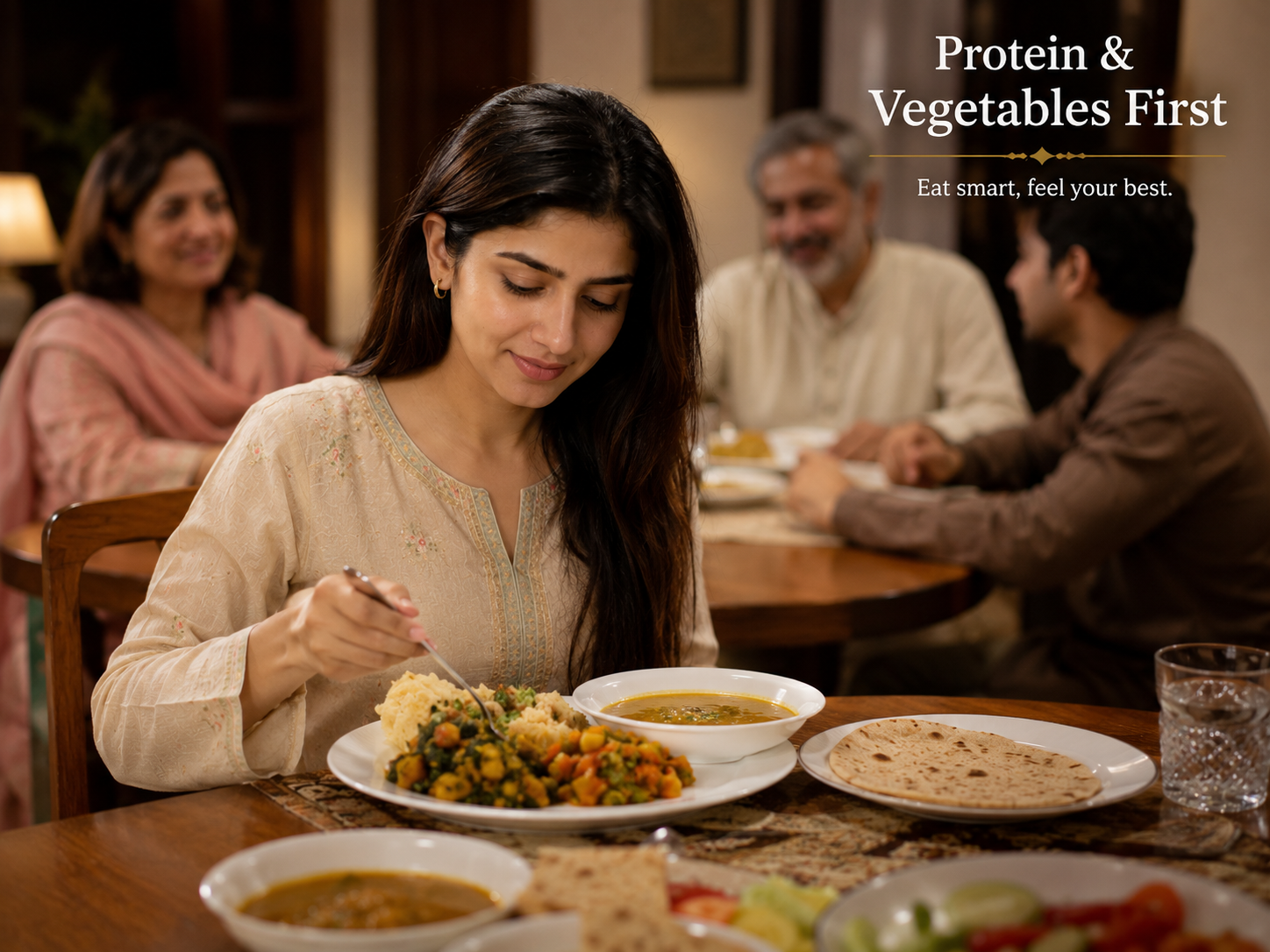
This sounds almost too simple to matter. It isn’t. Research shows that eating protein and vegetables first, before carbohydrates, significantly reduces the total amount of food consumed at a meal — without conscious restriction.
When you start with roti or rice, you eat more total food. When you start with daal, sabzi, or chicken — and eat roti at the end — you naturally eat less roti without even trying.
How to apply this at every meal:
- Take your protein first (daal, chicken, eggs, yogurt)
- Eat your vegetables/salad next
- Eat carbs (roti, rice) last — eat as much as you still want, which will be less
What to expect: Most women naturally reduce carb intake by 20–30% using this method alone, without feeling deprived.
💡 Pro Tip: Nadia does this with every family meal — her plate always starts with a large serving of daal or sabzi. She says she can never finish her full roti quota anymore. I’ve been doing the same for eight months and have stopped feeling guilty about rice — I just eat less of it naturally.
5. The 20-Minute Rule — Stop Eating Before You’re Full
Your brain takes approximately 20 minutes to receive the signal that your stomach is full. This biological delay is one of the most underestimated causes of overeating.
When we eat fast — especially in front of screens, while cooking, or while managing children — we consistently eat past the point of actual fullness before our brain catches up.
How to practice this:
- Put your spoon or roti down between bites
- Eat at the table without screens (start with just one meal per day if this feels too hard)
- Stop eating when you feel 80% full — not stuffed
- Wait 20 minutes before deciding on seconds. Most of the time, the craving passes.
What to expect: Reducing eating speed alone typically decreases calorie intake by 10–15% at each meal. Over weeks, this adds up to significant weight difference.

6. Drink Water — More Than You Think You Need
This is one of the most basic tips that most women genuinely aren’t doing. Not because they don’t know — but because when life is busy, water just gets forgotten.
Two direct mechanisms link hydration to weight loss without exercise:
- Dehydration is frequently mistaken for hunger — leading to eating when you actually just need water
- Drinking 500ml of water before meals reduces calorie intake at that meal by approximately 13%, according to research published in Obesity journal
Practical targets:
- Drink 1 large glass of water immediately upon waking (before chai)
- Drink one glass 30 minutes before each meal
- Aim for 8–10 glasses daily total
- Keep a water bottle visible at all times — out of sight means forgotten
What to expect: Improved digestion within days, reduced hunger, and visible weight change within 2–3 weeks when combined with other strategies.

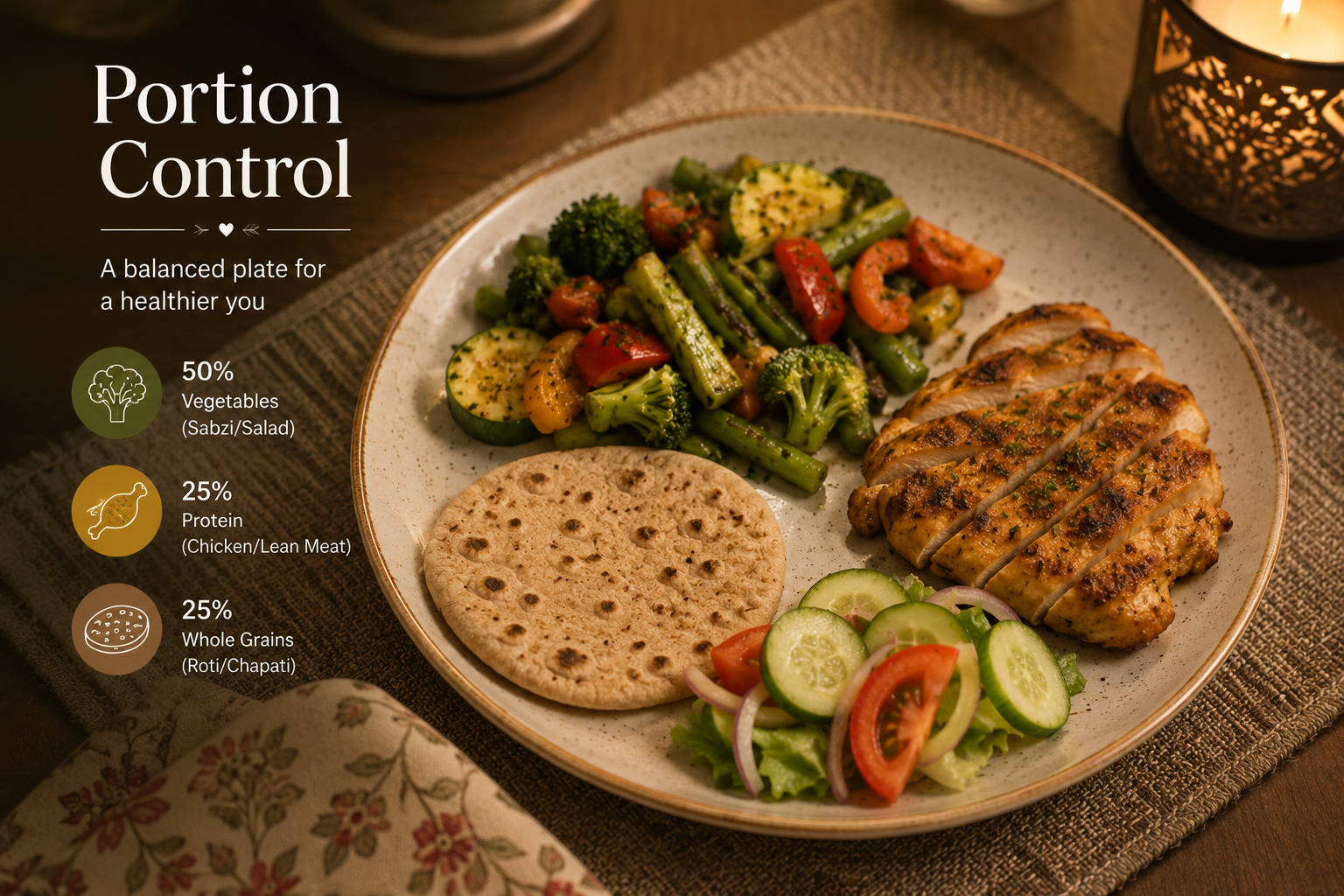
7. Reduce Portion Sizes Gradually — Without Feeling Deprived
The fastest way to fail at weight loss is dramatic restriction. If you cut everything by half overnight, your hunger hormones increase, cravings intensify, and willpower becomes a daily battle you’ll eventually lose.
The sustainable approach is gradual reduction. Research consistently shows that people who make small, incremental changes maintain weight loss significantly longer than those who crash diet.
Practical portion strategies for Pakistani meals:
- Use a slightly smaller plate — your brain registers a full plate regardless of plate size
- Cook the same amount but serve yourself 20% less rice or rotis than usual
- Add extra sabzi to bulk up the meal volume with fewer calories
- Never eat from the pot or serving dish directly — always plate your food
Done right: Gradual reduction of 200–300 calories per day through portion control leads to 0.5–1 kg weight loss per month — steady, sustainable, and without the rebound weight gain that crash diets cause.
8. Sleep 7–8 Hours — The Weight Loss Habit Nobody Talks About
This one surprised me when I first read the research. Sleep deprivation directly causes weight gain through two hormone pathways:
- Ghrelin (hunger hormone) increases when you’re sleep-deprived — making you feel hungrier
- Leptin (fullness hormone) decreases — making it harder to feel satisfied
Women who sleep less than 6 hours per night consistently consume more calories the following day — without realizing it. A 2025 study found that 7 hours and 19 minutes of sleep may be optimal for insulin sensitivity, directly impacting weight management.
For Pakistani women specifically:
- Late-night chai, snacking after Isha, eating dinner at 11pm — all common patterns that disrupt both sleep and weight management
- Moving dinner to before 9pm makes a meaningful difference
- Even improving from 5 to 6.5 hours of sleep shows measurable hormonal improvement
What to expect: Better sleep alone often reduces late-night cravings within one week. Combined with dietary changes, the effect on weight loss is significant.

9. Reduce Sugar Specifically — Not Just “Eat Less”
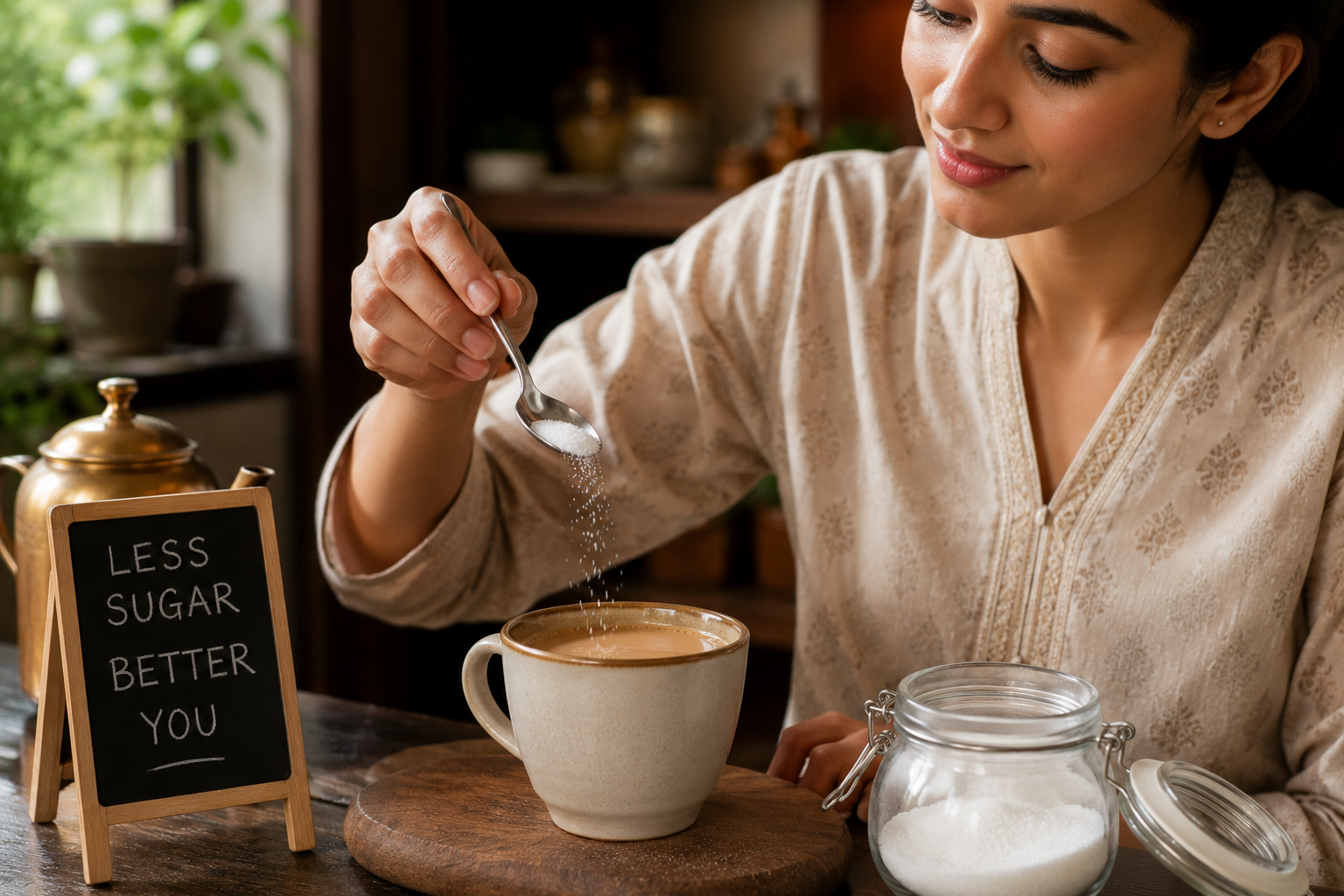
Vague advice to “eat less” rarely works. Specific advice to reduce sugar does. Sugar — particularly refined sugar in chai, sweets, and processed foods — causes rapid insulin spikes that promote fat storage, particularly in the abdominal area.
Improving insulin sensitivity through reducing sugar intake directly supports fat burning even without exercise, according to Dr. David Ludwig, a professor of nutrition at Harvard Medical School.
Pakistani diet specific targets:
- Chai sugar: Going from 2 tsp to 1 tsp per cup, 3 cups daily = saves 120–150 calories and significantly reduces insulin spikes
- Mithai and Pakistani sweets: Limit to 1–2 times per week — not daily
- Biscuits and packaged snacks: Replace with fruit, plain dahi, or nuts
- Maida-based foods: Naan, white bread, samosas daily — replace with whole wheat roti when possible
What to expect: Reduced bloating within 1 week, visible belly fat reduction within 4–6 weeks of consistent sugar reduction.
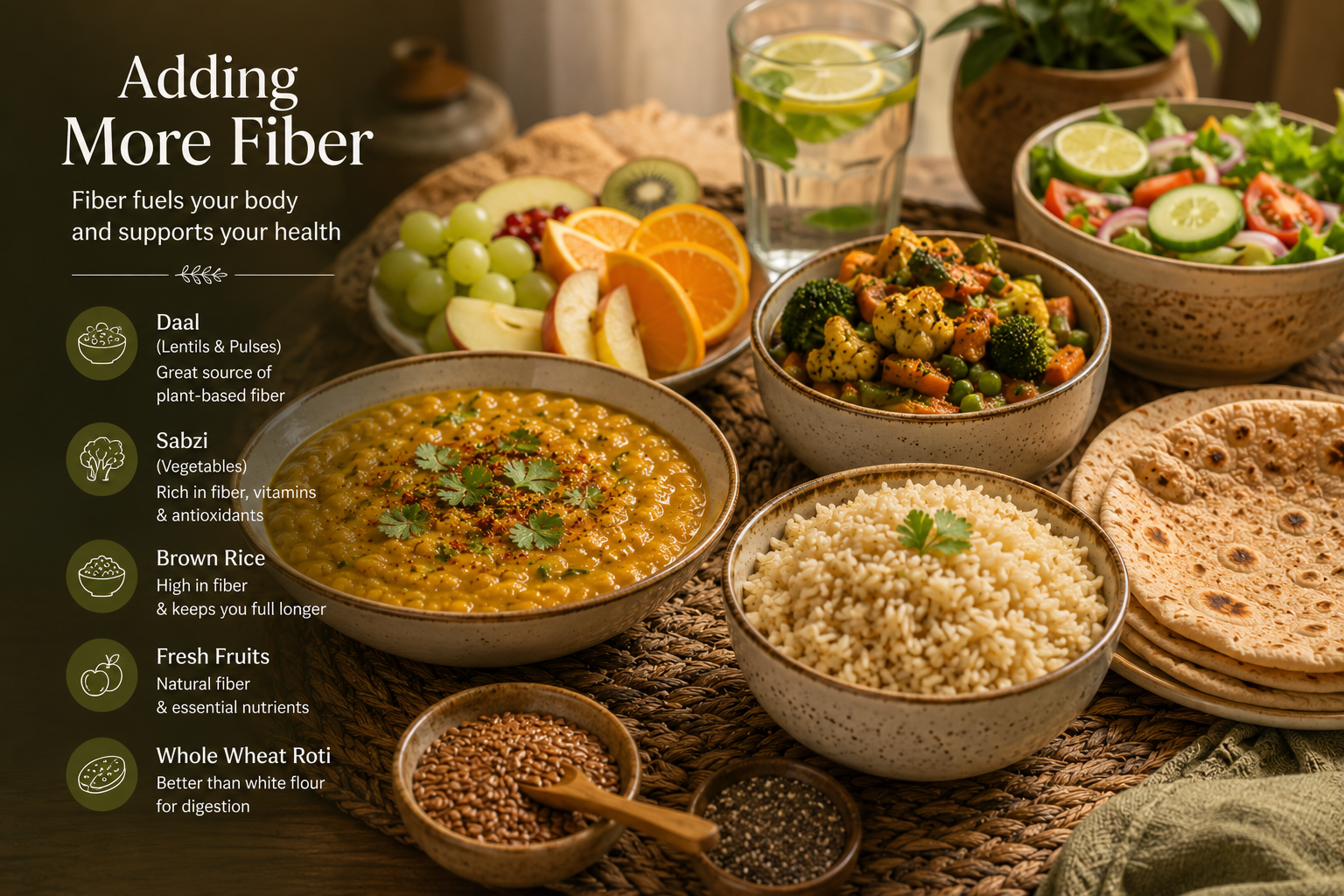
10. Add More Fiber — The Natural Appetite Suppressant
A study published in The American Journal of Clinical Nutrition found that individuals who followed a high-fiber, whole-food diet naturally ate fewer calories without consciously restricting portions — because fiber slows digestion and keeps you full for longer.
Pakistani cuisine is actually naturally fiber-rich — if you choose correctly:
High fiber Pakistani foods:
- Daal (lentils) — exceptionally high fiber, protein, and satiety
- Sabziyat (vegetables): bhindi, karela, tinda, palak, gobhi — eat more of these at every meal
- Whole wheat roti instead of maida naan
- Brown rice (even if just half of your rice is brown, it makes a difference)
- Fruits: amrood (guava), papita (papaya), seb (apple) — high fiber choices
What to expect: Significantly reduced hunger within 3–5 days of increasing fiber. Natural reduction in portion sizes within 2 weeks.
11. Manage Stress — The Hidden Weight Driver
Cortisol, the stress hormone released during prolonged stress, directly signals your body to store fat — particularly visceral fat around the abdomen. This is why many women notice weight gain during stressful life periods even without changing their eating habits.
For Pakistani women managing households, children, relationships, and often work simultaneously — chronic low-grade stress is extremely common and extremely underestimated as a weight factor.
Practical stress reduction (realistic for busy women):
- 10 minutes of quiet after Fajr before the day begins — even just sitting with a cup of plain chai, no phone
- Short walk outside even 15–20 minutes daily (this doesn’t count as “exercise” — it’s stress management)
- Reducing social media consumption, which research links to increased cortisol in women
- Setting one boundary per week that protects your time
What to expect: Reduced cortisol within 2–3 weeks of consistent stress management. Combined with dietary changes, abdominal fat reduction becomes noticeably easier.

12. NEAT — Move More Without “Exercising”
NEAT stands for Non-Exercise Activity Thermogenesis — the calories your body burns through all daily movement that isn’t formal exercise. This includes climbing stairs, standing while cooking, walking while on the phone, household chores, and even fidgeting.
In 2026, nutrition research increasingly recognizes NEAT as a significant weight management tool — especially for women who cannot commit to gym routines. The difference between a sedentary day and an active day can be 200–400 extra calories burned without any formal workout.
Easy NEAT increases for Pakistani women:
- Take stairs instead of elevator anywhere you go
- Stand while on phone calls
- Walk to nearby shops instead of sending someone or driving
- Do light movement during commercial breaks
- Pace while children do homework
What to expect: Increasing NEAT consistently adds meaningful calorie burn that supports weight loss without any formal exercise commitment.

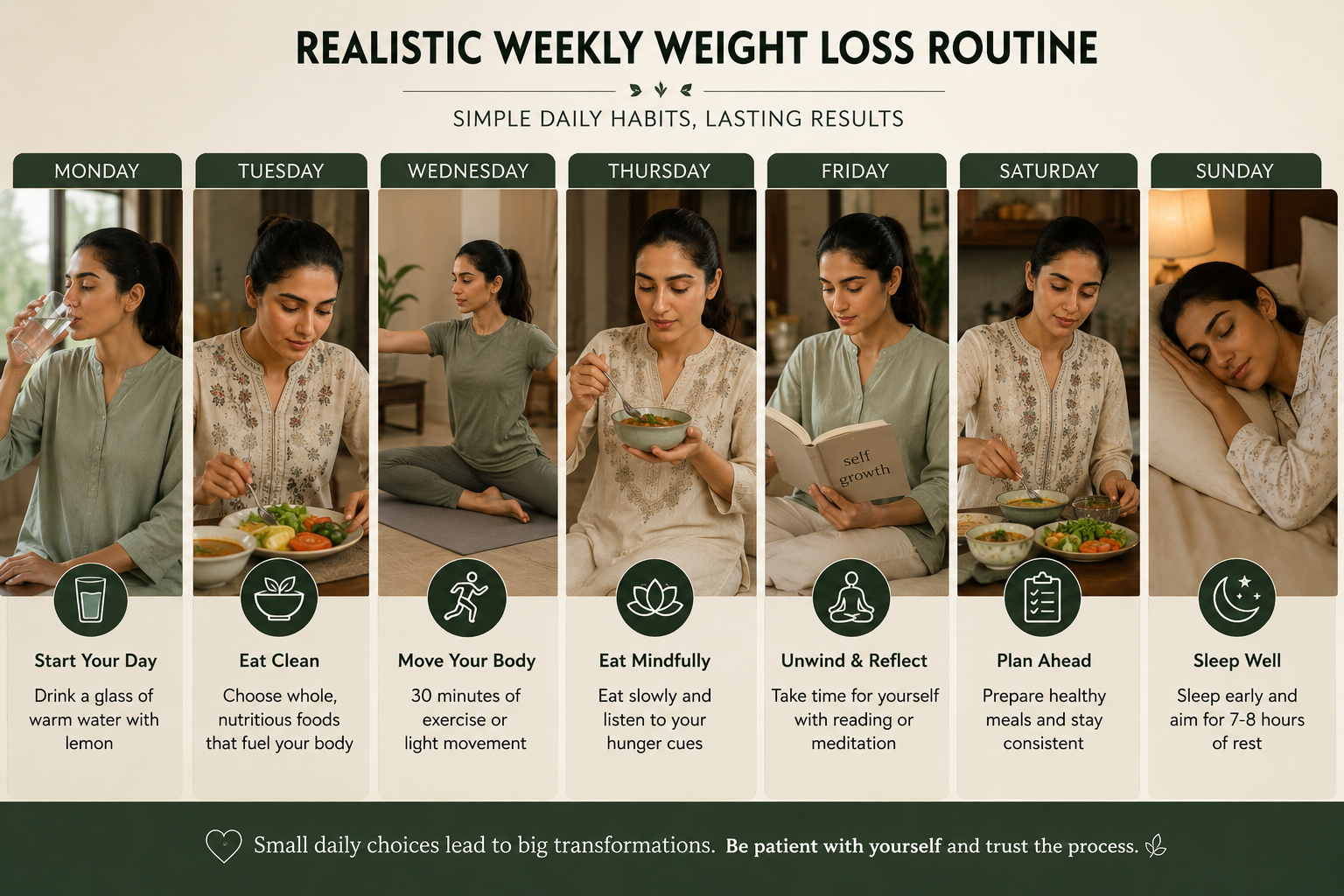
What a Realistic Week Looks Like
Simple daily non-exercise weight loss plan:
| Time | Action | Impact |
|---|---|---|
| Morning | 1 large glass water before chai | Reduces false hunger |
| Breakfast | 2 eggs + 1 roti instead of 2 rotis + no eggs | More protein, fewer carbs |
| Mid-morning | Plain dahi or fruit instead of biscuits | Replaces ~150 empty calories |
| Lunch | Vegetables and protein first, roti last | Natural reduction in roti quantity |
| Afternoon | Water, not chai with sugar | Saves 100 calories per cup |
| Dinner | Before 9pm, protein-first, smaller portions | Better sleep, less fat storage |
| Night | 7–8 hours sleep, phone off by 10:30pm | Hormonal balance for fat burning |
Common Mistakes That Stall Weight Loss Without Exercise
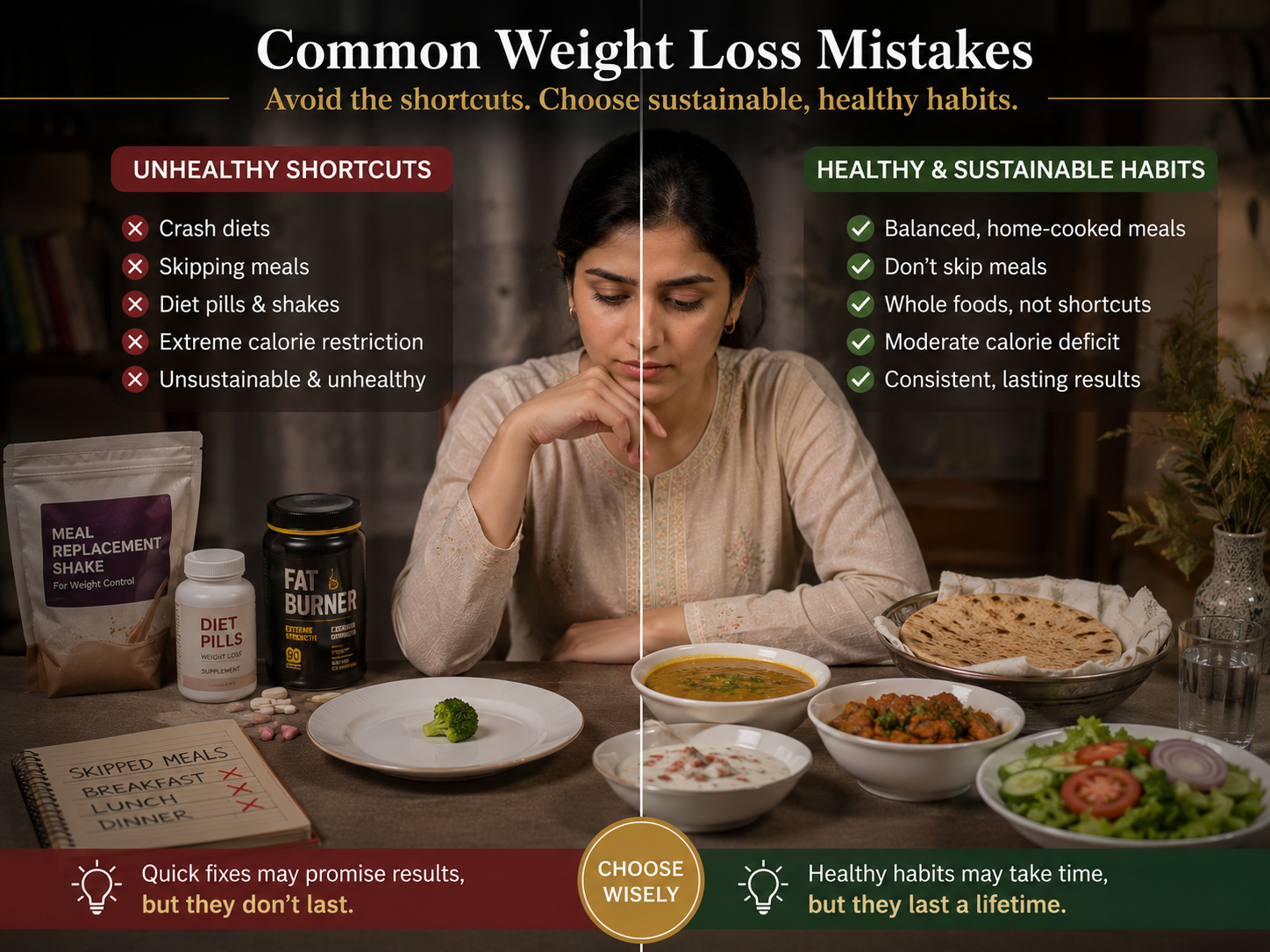
Mistake 1 — Skipping meals: This triggers your body’s starvation response, slowing metabolism and increasing cravings. Never skip meals to lose weight — eat less at each meal instead.
Mistake 2 — Replacing meals with “diet” products: Most Pakistani women trying to lose weight buy “diet” biscuits, “light” juices, or meal replacement shakes. These are almost universally more expensive, less filling, and not more effective than real food.
Mistake 3 — Expecting rapid results and giving up in week 2: Real dietary changes produce 0.5–1 kg per week. The scale may not move for 1–2 weeks before it starts — this is normal. Give any dietary change a minimum of 4 weeks before evaluating.
Mistake 4 — Eating “healthy” foods in unlimited quantity: Brown bread, dahi, fruits, nuts — all genuinely healthy. But calories still count. Eating 3x as much of something “healthy” cancels the benefit.
Mistake 5 — All-or-nothing thinking: “I ate a samosa at a family function, so this week is ruined.” One meal doesn’t determine your results. Consistency over weeks matters — not perfection on any single day.
Comparison Table — Weight Loss Strategies Without Exercise
| Strategy | Effort | Time to Results | Calories Saved/Week | Best For |
|---|---|---|---|---|
| Cut liquid sugar | Low | 1–2 weeks | 1,500–2,000 | All women |
| Protein at every meal | Low | 3–4 weeks | Reduces intake naturally | PCOS, hormonal weight gain |
| Plate order method | Very low | 2–3 weeks | 300–500/meal | Busy women, family meals |
| Portion control | Low | 3–4 weeks | 1,000–1,500 | Gradual, sustainable |
| Water before meals | Very low | 2–3 weeks | ~500 | All women |
| Better sleep | Medium | 2–4 weeks | Hormonal benefit | Women with cravings |
| Reduce sugar | Medium | 4–6 weeks | 1,000–2,500 | Belly fat specifically |
| Increase fiber | Low | 1–2 weeks | Reduces intake naturally | Digestive health + weight |
| Stress management | Medium | 3–6 weeks | Hormonal benefit | Abdominal fat, PCOS |
| NEAT movement | Very low | 4–6 weeks | 1,400–2,800 | All women |
When to See a Doctor
Weight loss without exercise is safe and effective for most healthy women. However, please consult your doctor if:
- You are losing weight but feel constantly exhausted or unwell — this may indicate a thyroid or other hormonal issue
- You have PCOS, diabetes, or thyroid conditions — dietary changes should be medically supervised
- Weight is not moving despite consistent, genuine effort over 12 weeks — a hormonal assessment may be needed
- You have a history of eating disorders — structured dietary restriction should always be medically supervised
- You are pregnant or breastfeeding — weight loss should not be a goal during these periods
Your doctor can also check thyroid function, insulin resistance, and hormonal levels — all of which directly affect weight management. Please don’t delay professional consultation if something doesn’t feel right.
FAQ — How to Lose Weight Without Exercise
Q: Can you really lose a significant amount of weight without exercising? Yes — weight loss is primarily driven by calorie intake versus expenditure. While exercise increases calorie burn, dietary changes can create an equally effective deficit. Women who focus on protein intake, portion control, sugar reduction, sleep improvement, and hydration can lose 0.5–1 kg per week consistently without any formal exercise routine.
Q: How many calories should I eat to lose weight without exercise? A general starting point: subtract 300–500 calories from your current estimated daily intake. For most women, this means consuming 1,400–1,600 calories per day for gradual loss. However, going below 1,200 calories without medical supervision is not recommended — it slows metabolism and causes muscle loss.
Q: What Pakistani foods help the most with weight loss? Daal (lentils) is the single best weight loss food in Pakistani cuisine — high protein, high fiber, low calorie, very filling. Sabziyat (vegetables), plain dahi, boiled eggs, amrood (guava), papita (papaya), and whole wheat roti are all excellent choices. The issue is usually portion sizes and cooking methods (too much ghee or oil), not the food itself.
Q: Does drinking water really help you lose weight? Yes — directly. Drinking 500ml of water before meals has been shown to reduce calorie intake at that meal by approximately 13%. Additionally, dehydration is frequently mistaken for hunger, leading to unnecessary eating. Consistent hydration also supports metabolism and kidney function, both relevant to weight management.
Q: Is it possible to reduce belly fat specifically without exercise? You cannot spot-reduce fat — fat loss happens throughout the body, not in one area. However, reducing refined sugar and refined carbohydrates specifically reduces insulin spikes, which are the primary driver of visceral (belly) fat storage. Women who cut sugar consistently notice abdominal fat reducing within 4–6 weeks.
Q: How much weight can I realistically lose per week without exercising? A healthy, sustainable rate is 0.5–1 kg per week through dietary changes alone. More than this typically means water weight or muscle loss, not fat. Losing too fast without exercise usually indicates extreme restriction — which causes rebound weight gain when normal eating resumes.
Q: Is skipping meals a good way to lose weight without exercise? No — skipping meals triggers your body’s protective response: slowing metabolism, increasing hunger hormones, and intensifying cravings, which leads to overeating later. Eating smaller amounts at regular meal times is far more effective than skipping meals entirely.
Q: What should I eat for breakfast to lose weight without exercising? A protein-centered breakfast is ideal: 2 boiled eggs + 1 whole wheat roti, or plain dahi with fruit, or a bowl of daal. Breakfast with adequate protein significantly reduces hunger and total calorie intake throughout the rest of the day. Avoid sugary breakfast options (sweetened cereals, fruit juices, paratha with jam).
Q: How does sleep affect weight loss? Sleep deprivation increases ghrelin (hunger hormone) and decreases leptin (fullness hormone) — meaning you feel hungrier and less satisfied the day after poor sleep, consuming more calories without realizing it. Getting 7–8 hours of quality sleep is one of the most underrated weight loss strategies, especially for women managing hormonal fluctuations.
Q: Can stress cause weight gain even when dieting? Yes — chronic stress elevates cortisol, which promotes fat storage particularly in the abdominal area and increases cravings for high-calorie, high-sugar foods. This is why women under significant stress often cannot lose weight despite genuine dietary effort. Addressing stress alongside dietary changes is essential for sustainable results.
Q: Is intermittent fasting effective for weight loss without exercise? For some women, yes. Intermittent fasting (eating within a specific window, such as 8 hours) can help reduce total calorie intake naturally. However, it is not suitable for everyone — particularly women with blood sugar issues, PCOS, or a history of disordered eating. Consult your doctor before trying intermittent fasting.
Q: How long does it take to see results from weight loss without exercise? Most women notice reduced bloating and improved energy within 1–2 weeks of cleaner eating and better hydration. Visible weight change on the scale typically appears at 2–4 weeks. Significant, noticeable body change requires 8–12 weeks of consistency. Give every strategy at least 4 weeks before evaluating whether it’s working.
People Also Ask
❓ What is the fastest way to lose weight without exercising? → The fastest effective approach: cut all liquid sugar immediately (chai, cold drinks, juice), drink water before every meal, add protein to every meal, and eat vegetables before carbs. These changes alone can create a 500+ calorie daily deficit, producing visible results in 2–3 weeks.
❓ Can you lose belly fat without exercise? → You cannot spot-reduce belly fat, but you can lose overall body fat including belly fat through dietary changes. Reducing refined sugar and refined carbohydrates specifically targets insulin-driven belly fat storage. Consistent dietary changes show abdominal fat reduction in 4–6 weeks.
❓ Does intermittent fasting work without exercise? → For many women, yes — it reduces the window for eating, naturally lowering calorie intake. Most effective when eating nutritious, protein-rich meals during the eating window. Not suitable for all women; consult a doctor if you have PCOS, diabetes, or blood sugar issues.
❓ What drink helps you lose weight fast? → Plain water — especially before meals — has the most consistent research support for weight loss. Green tea has mild metabolism-supporting benefits. Avoid “weight loss teas” and detox drinks — most have no evidence and some contain harmful laxatives.
❓ How do I stop craving food when trying to lose weight? → Cravings are almost always a signal of either genuine hunger (solve by eating more protein and fiber), dehydration (drink water first), or habit (identify your craving triggers and replace the behavior). Protein at every meal is the single most effective craving reduction strategy.
Quick Summary — How to Lose Weight Without Exercise
✅ Most impactful single change: Cut liquid sugar (chai, cold drinks, juice) ✅ Best food to add: Protein at every meal (daal, eggs, dahi, chicken) ✅ Best daily habit: 1 large glass water before every meal ⏱ Realistic timeline: Visible results in 3–4 weeks; significant change in 8–12 weeks 💰 Cost: Most strategies cost nothing or reduce your food bill ⚠️ Avoid: Skipping meals, crash diets, “diet” products, all-or-nothing thinking 👩⚕️ See a doctor if: No results after 12 weeks, fatigue despite changes, known PCOS/thyroid 📌 Top tip: You don’t need to overhaul everything — fix your top 3 calorie habits first
Closing
Hina lost 6 kg in four months. No gym. No diet pills. No miracle drink. She cut her chai sugar by half, started eating daal every day, drank water before meals, and stopped eating after 9pm. That’s it. Four changes, done consistently.
She told me last month that she doesn’t even feel like she’s “on a diet” anymore. She just eats differently. Her energy is better, her clothes fit differently, and she stopped feeling guilty every time she had a family meal.
You don’t need perfect willpower. You don’t need hours of free time. You don’t need an expensive plan. You need a few specific changes, done consistently, for long enough to actually work.
Start with one thing today. Just one. Which of the 12 strategies resonated most with you? Begin there. Small consistent habits always beat dramatic treatments — in skincare and in weight loss both.

Leave a Comment
Share your thoughts or questions about this article!