
This article is based on published research and real-world testing. All recommendations are for informational purposes only.
Hot Oil Treatment at Home — Quick Answer A hot oil treatment involves warming a carrier oil (coconut, olive, or argan) and massaging it into the scalp and hair, then leaving it under heat for 20–30 minutes before washing out. Done weekly, it may improve moisture, reduce breakage, stimulate scalp circulation, and restore shine. The whole process takes about 45 minutes and costs under $2 per session.
My hair looked like it had given up. I’d been heat-styling almost every day for months, and the ends were dry, snapping at the slightest touch, and so dull that no amount of serum made a visible difference. I remember running my fingers through my hair one evening and feeling what I can only describe as straw. Not even nice straw — old, brittle straw.
Nadia, who had been doing hot oil treatments since her mother taught her at age fourteen, sat down with me and said: “You’re trying to fix heat damage with more heat. Stop. Let the oil do the work.”
She walked me through her treatment step by step — the warm coconut oil, the shower cap, the patience of leaving it on for a full thirty minutes. I felt ridiculous. I also felt the difference the next morning. My hair was softer than it had been in months. The ends moved again instead of just sitting there stiffly. It wasn’t a transformation — but it was enough to make me understand why this practice has survived for generations.
Here’s everything I’ve learned about doing a proper hot oil treatment at home — from choosing the right oil for your hair type to the exact steps that make the difference between a mediocre result and genuinely nourished hair.
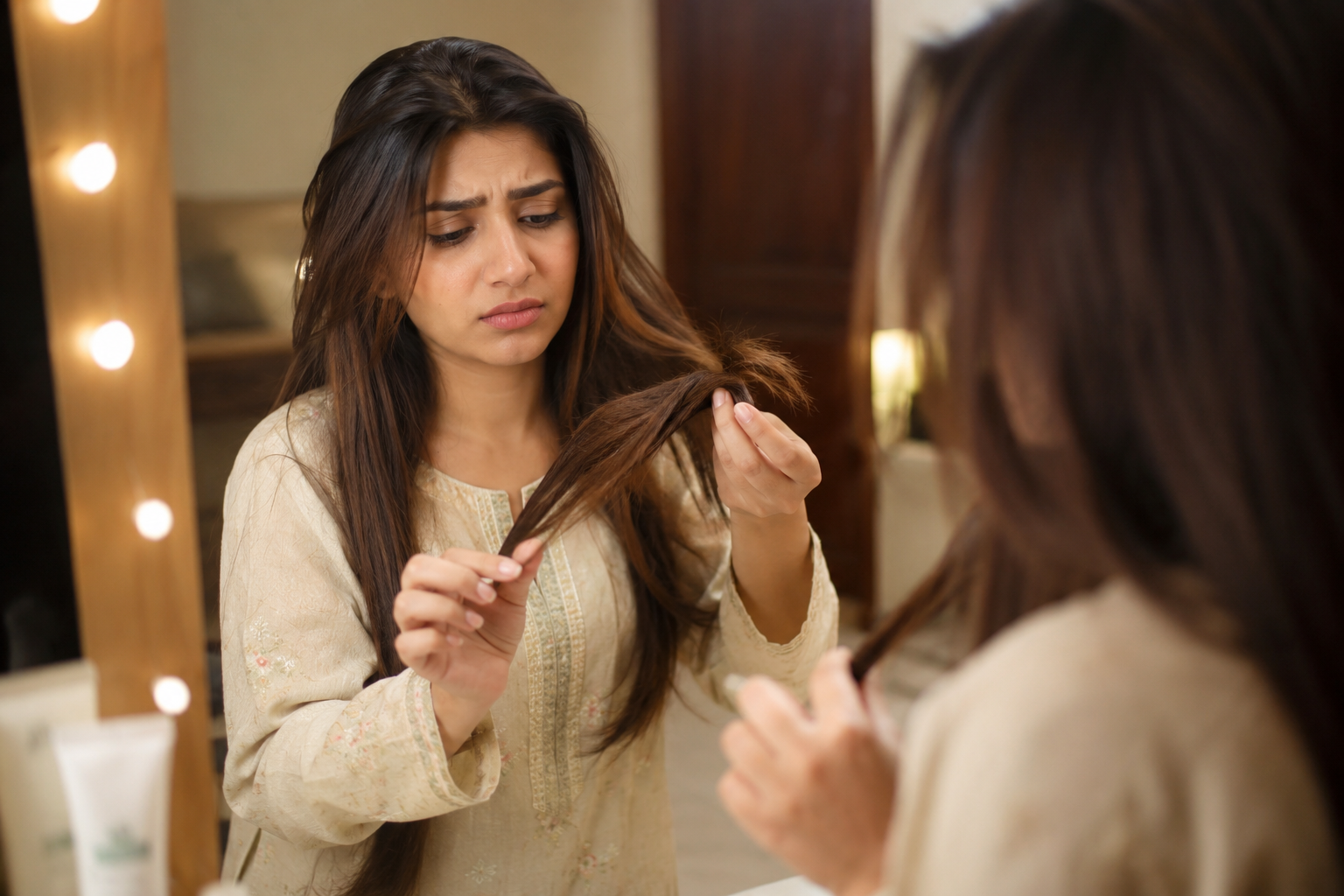
What Does a Hot Oil Treatment Actually Do?
The “hot” in hot oil treatment isn’t just for comfort — it’s functional. Warmth opens the hair cuticle, allowing oil to penetrate more deeply into the hair shaft rather than just sitting on the surface. This is the key difference between a hot oil treatment and simply applying oil to your hair.
What it does:
- Moisturises from within: Oil penetrates the cortex (inner layer) of the hair shaft, reducing porosity and moisture loss
- Seals the cuticle: After rinsing, the oil leaves a protective coating that smooths the cuticle and adds shine
- Stimulates scalp circulation: The massage component increases blood flow to follicles, potentially supporting follicle health and growth
- Reduces breakage: Lubricated, flexible strands are significantly less prone to snapping
- Conditions the scalp: Addresses dryness, flakiness, and irritation at the root
What it doesn’t do:
- Permanently repair split ends (no product can — trimming is the only solution)
- Reverse genetic or hormonal hair loss on its own
- Work without proper wash-out (oil left too long can clog follicles)
Which Oil Should You Use? Choosing by Hair Type
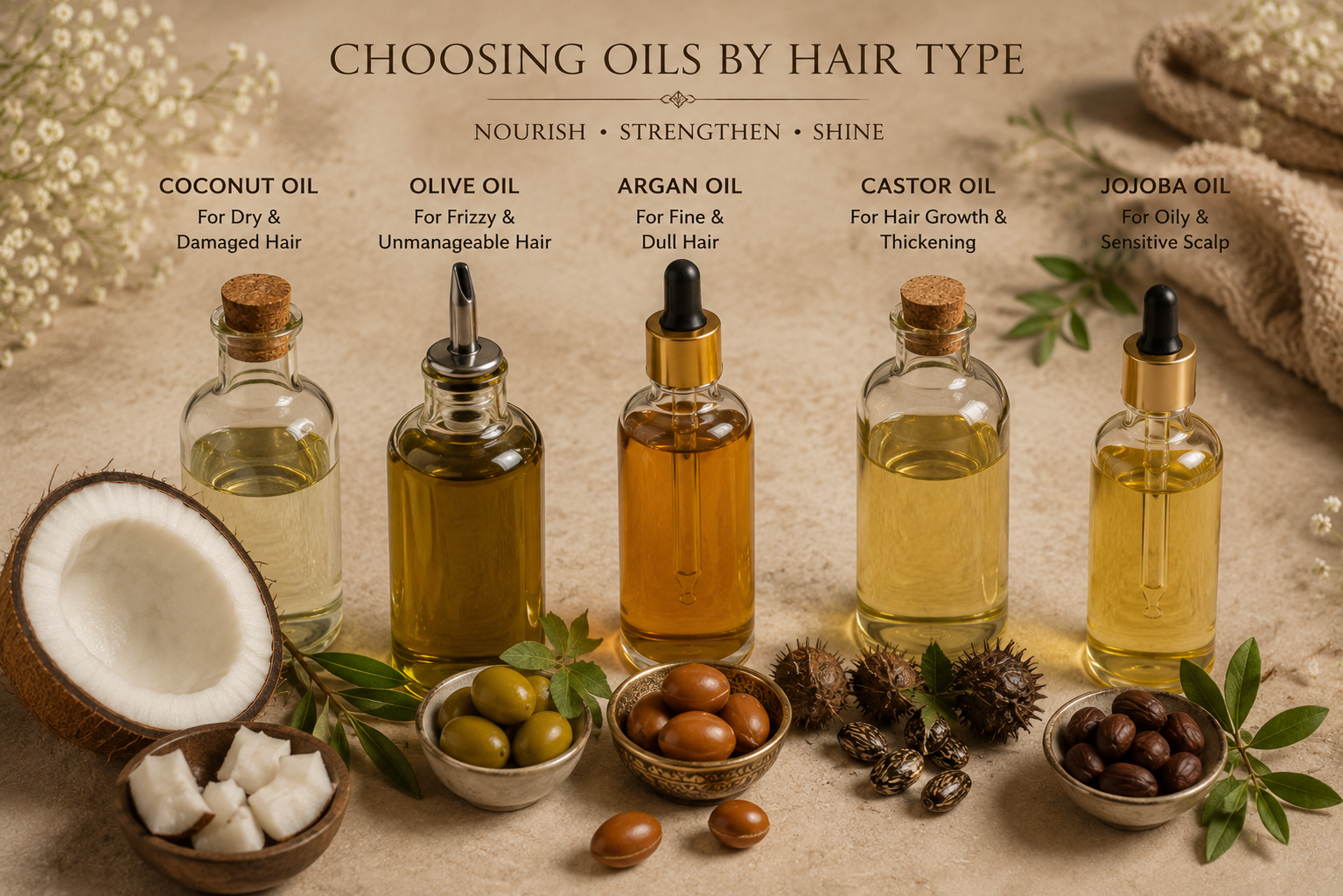
This is where most women — including me, for a long time — make their first mistake. Not all oils behave the same way. The wrong oil for your hair type produces disappointing results or outright greasiness.
Coconut Oil — Best for Dry, Thick, or Coarse Hair
Coconut oil is one of the only oils that can penetrate the hair shaft (rather than coating the surface). Its low molecular weight allows it to enter the cortex, where it reduces protein loss during washing. A 2003 study in the Journal of Cosmetic Science confirmed this penetration ability.
Best for: Thick, coarse, dry, or high-porosity hair. Women with curly or chemically treated hair. Avoid if: Your hair is fine or prone to feeling heavy — coconut oil can weigh fine hair down significantly. Warmth needed: Very gentle — coconut oil solidifies below 24°C, so mild warming is sufficient.
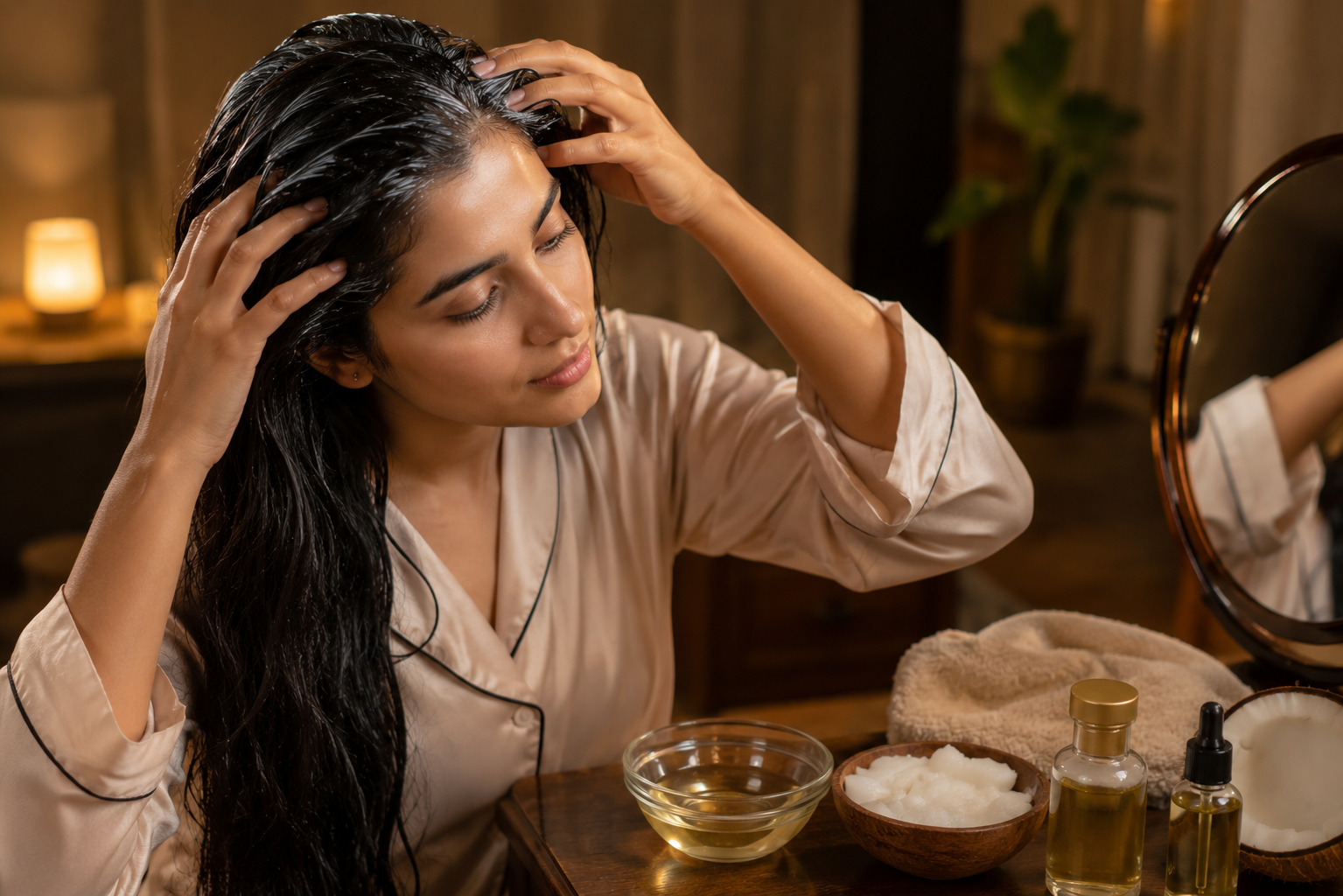
Olive Oil — Best for Very Dry or Damaged Hair
Olive oil is richer and heavier than coconut oil, making it ideal for very dry or severely damaged hair. It contains oleic acid, squalene, and polyphenols that deeply condition and add flexibility. It stays on the surface more than coconut oil — making it excellent for sealing moisture.
Best for: Very dry scalp, heat-damaged, colour-treated hair, or during harsh weather. Avoid if: You have oily hair — it’s too heavy and can increase scalp greasiness. Warmth needed: Moderate — olive oil stays liquid at room temperature but warms beautifully.
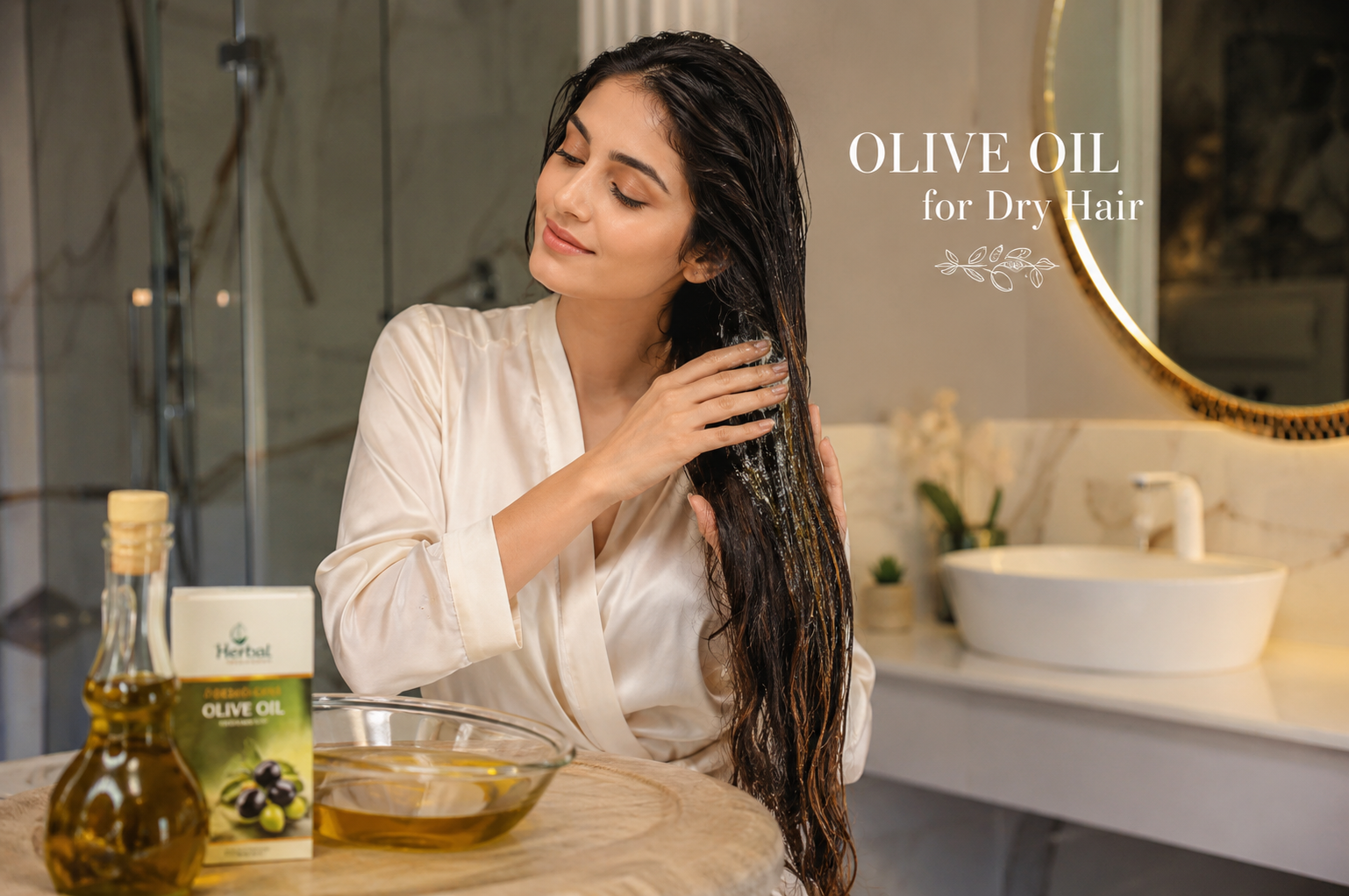
Argan Oil — Best for Fine, Normal, or Colour-Treated Hair
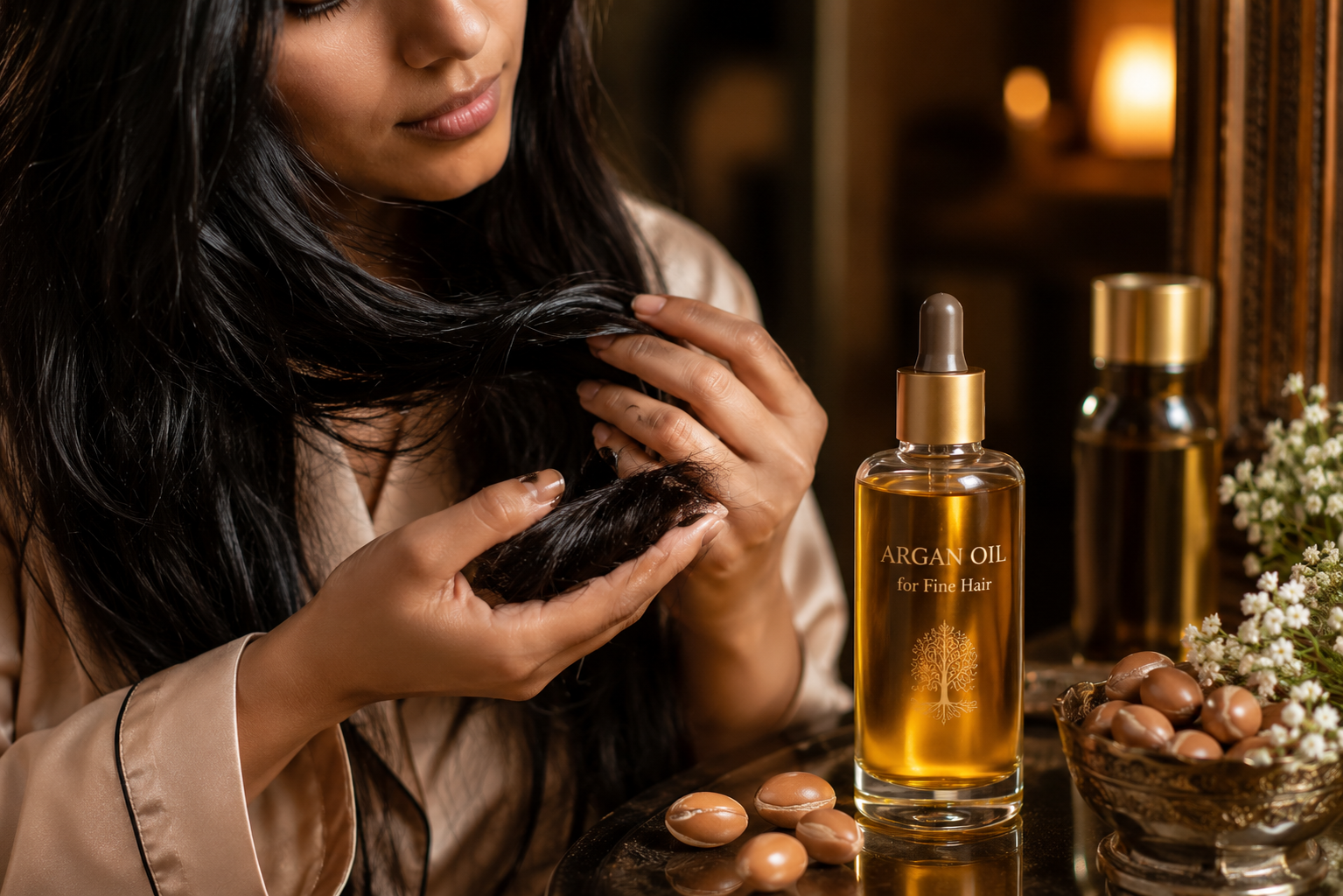
Argan oil is lighter than coconut or olive oil, making it the best choice for fine hair that needs conditioning without weight. It’s rich in Vitamin E, fatty acids, and ferulic acid — excellent for shine, frizz control, and UV protection.
Best for: Fine, normal, or colour-treated hair. Women who find other oils too heavy. Use: 1 tablespoon is enough — argan oil goes a long way.
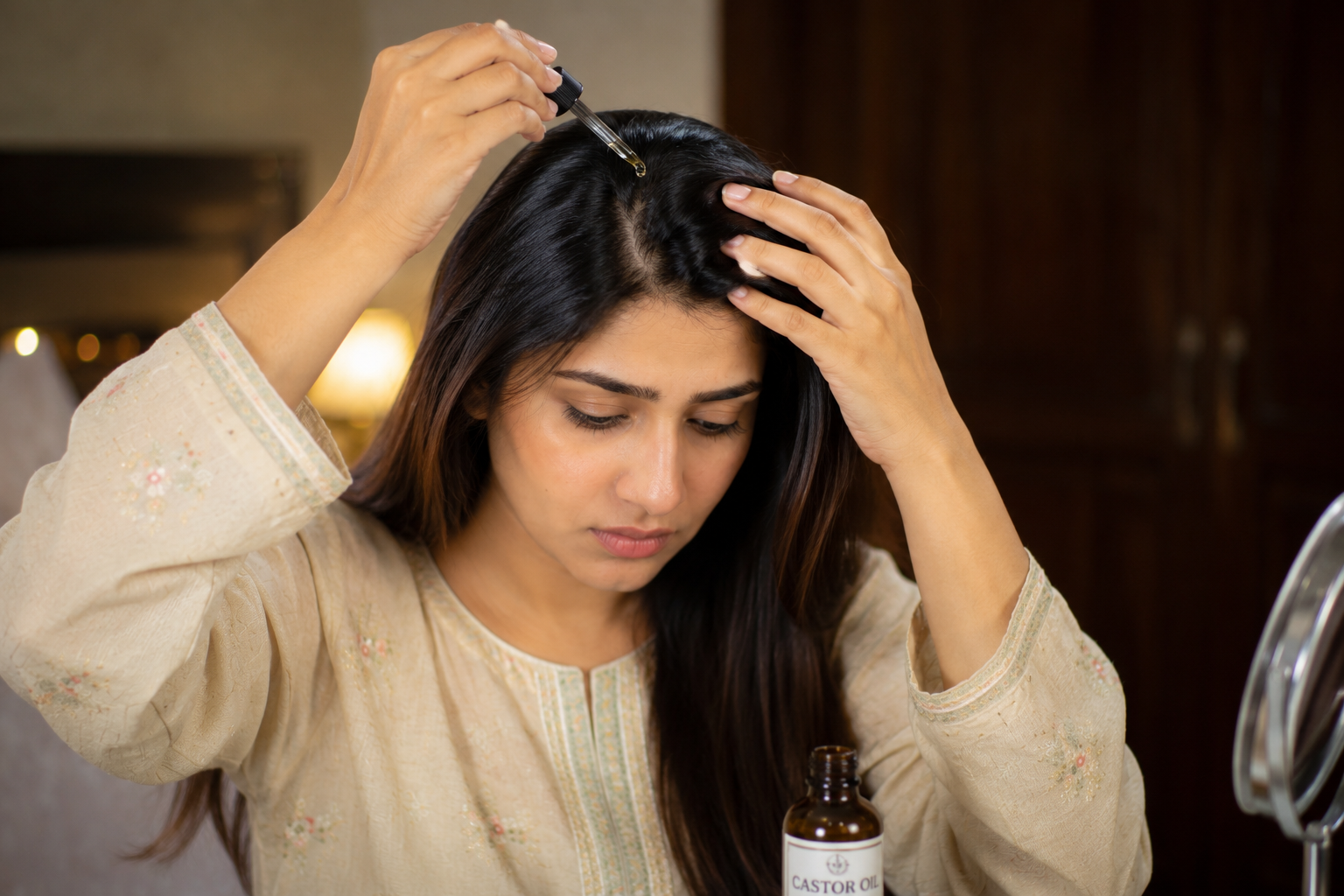
Castor Oil — Best for Scalp Treatment and Edges
Castor oil is the thickest oil in this list and is primarily used as a scalp treatment, not for hair lengths. It contains ricinoleic acid, which has anti-inflammatory properties that may support scalp health and follicle environment. It’s too thick to use alone — always blend it.
Best for: Scalp treatment, edges/hairline, eyebrow growth support. Mixed 1:3 with a lighter oil. Avoid: Applying to hair lengths alone — it’s very difficult to wash out and can cause buildup.
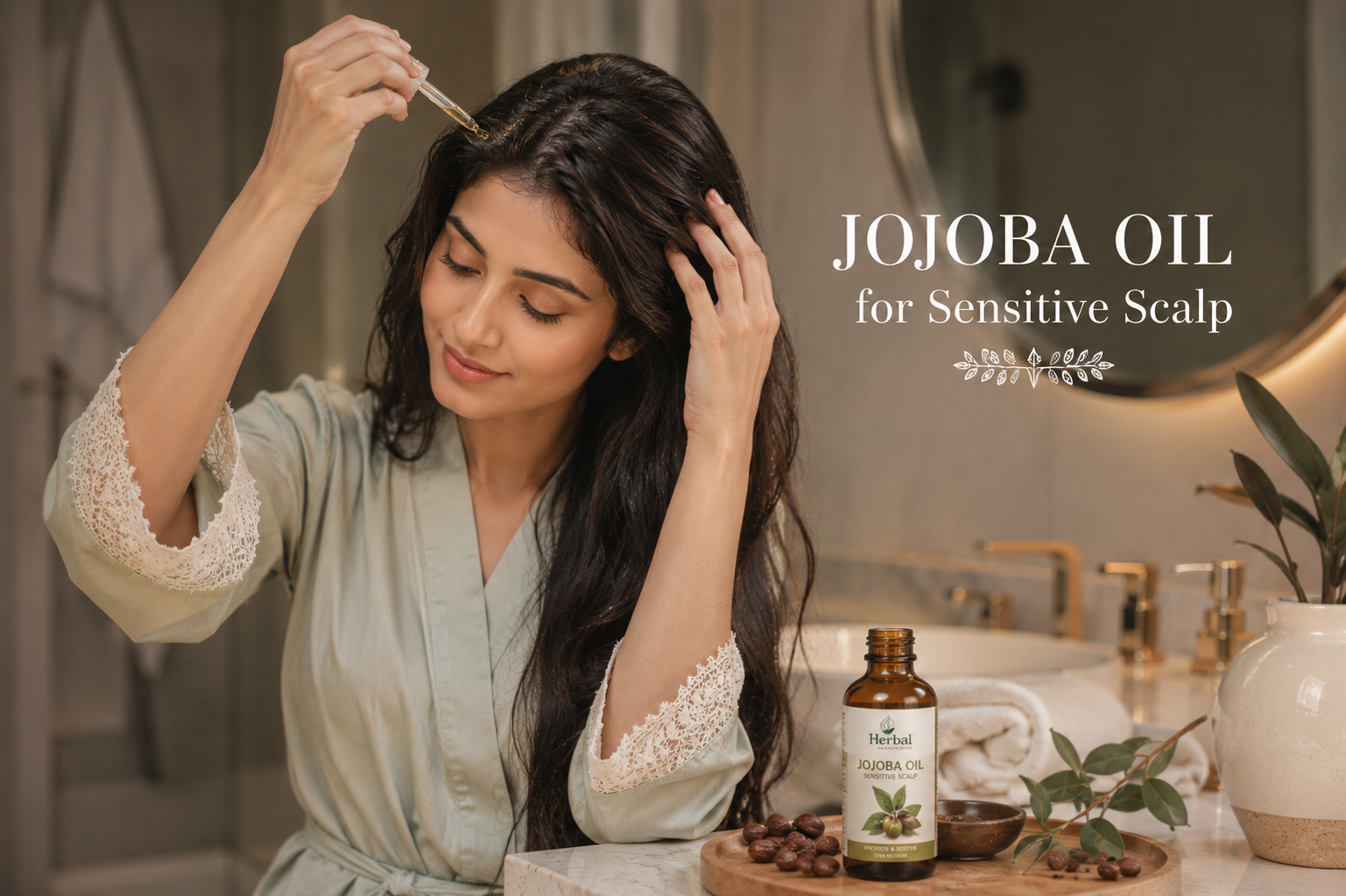
Jojoba Oil — Best for Oily Scalp or Sensitive Skin
Jojoba oil is technically a wax ester, and its molecular structure closely resembles the scalp’s natural sebum. This makes it uniquely balancing — it can signal the scalp to produce less oil while still providing conditioning. Excellent for sensitive or irritated scalps.
Best for: Oily scalp, sensitive skin, scalp with flakiness or mild irritation. Warmth needed: Minimal — it stays liquid and penetrates well at body temperature.
How to Do a Hot Oil Treatment at Home — Step by Step
What you need:
- 2–3 tablespoons of your chosen oil (or a blend)
- A small glass or ceramic bowl
- A cup of hot water (to heat the bowl — no microwave for argan oil)
- A shower cap
- A warm towel (optional, for added heat)
- Your regular shampoo
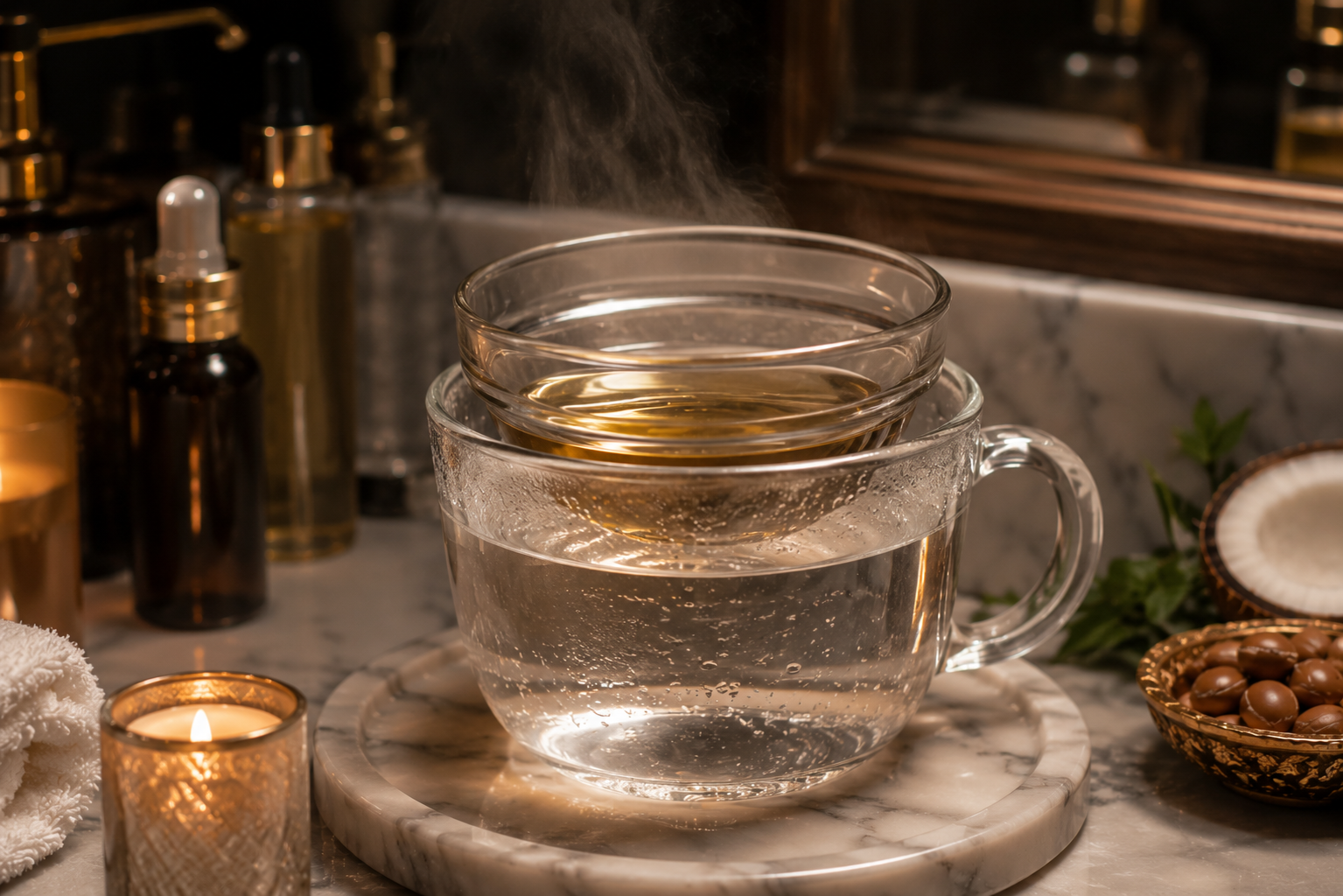
Step 1: Warm the oil Place your oil in a small glass bowl. Set the bowl inside a cup of just-boiled water and let it sit for 2–3 minutes. The oil should be warm — not hot. Test it on your inner wrist before applying to your scalp. It should feel comfortable, never burning.
Alternatively: Pour oil into a small plastic bottle and hold under warm running water for 2 minutes. This gives you more control for section-by-section application.
⚠️ Never microwave oil directly — it heats unevenly and can burn your scalp. Never heat essential oils directly — add them after the carrier oil is warmed.
Step 2: Section your hair Divide dry or slightly damp hair into 4–6 sections using clips. This ensures full coverage and prevents missing areas.
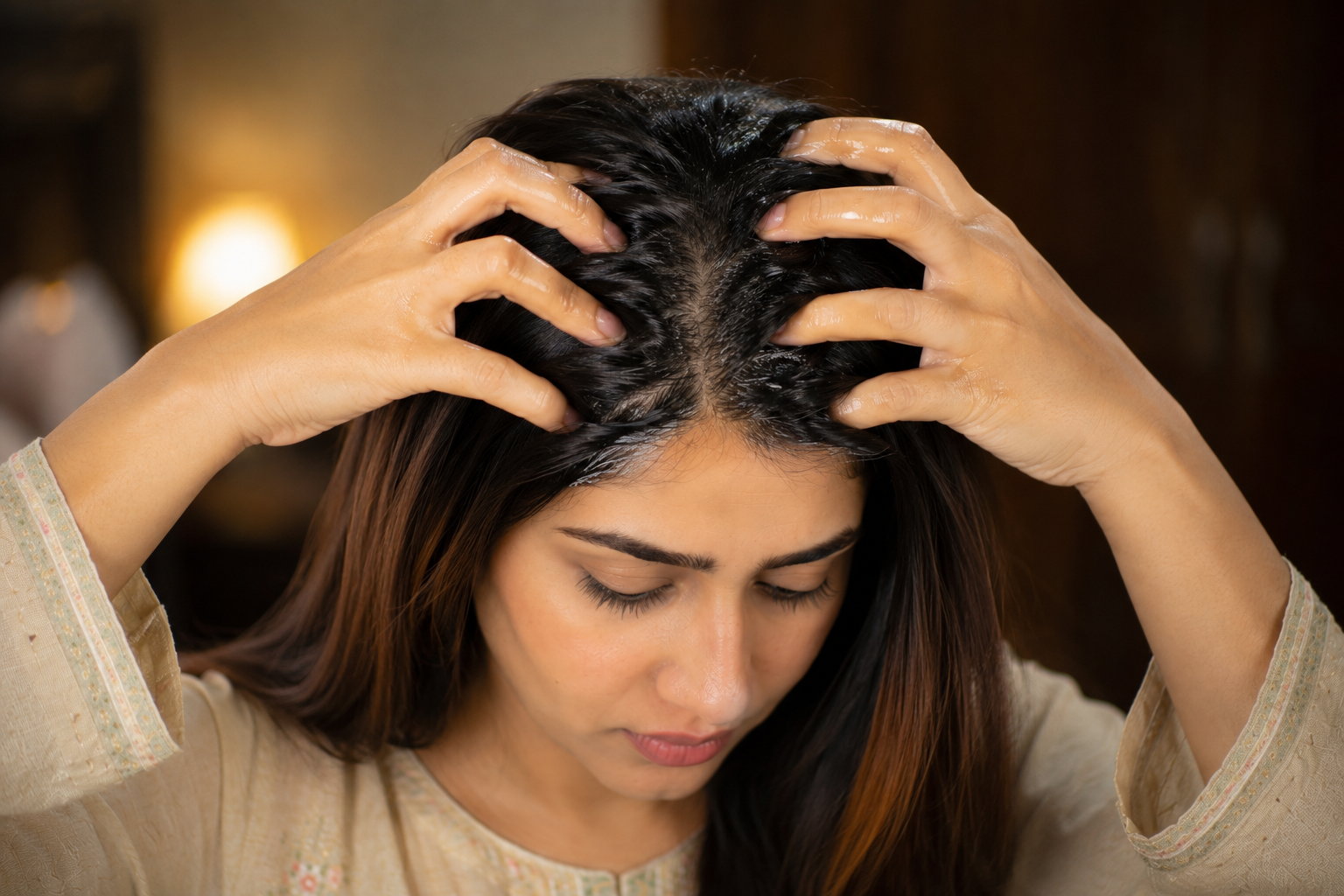
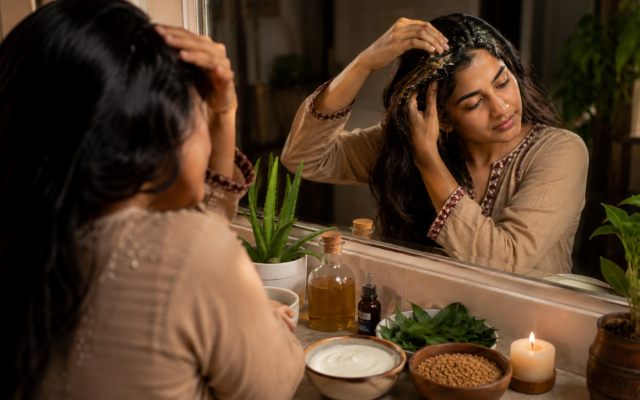
Step 3: Apply to scalp first Using a dropper bottle, cotton pad, or your fingers, apply warm oil directly to the scalp in each section. Massage in with firm circular motions for 5 minutes — this is not optional. The massage stimulates circulation and drives the oil into the follicle openings.
Step 4: Apply through hair lengths After the scalp, work remaining oil through the mid-lengths and ends. These are the driest, most damaged sections and benefit most from oil penetration. Don’t saturate — coat evenly.
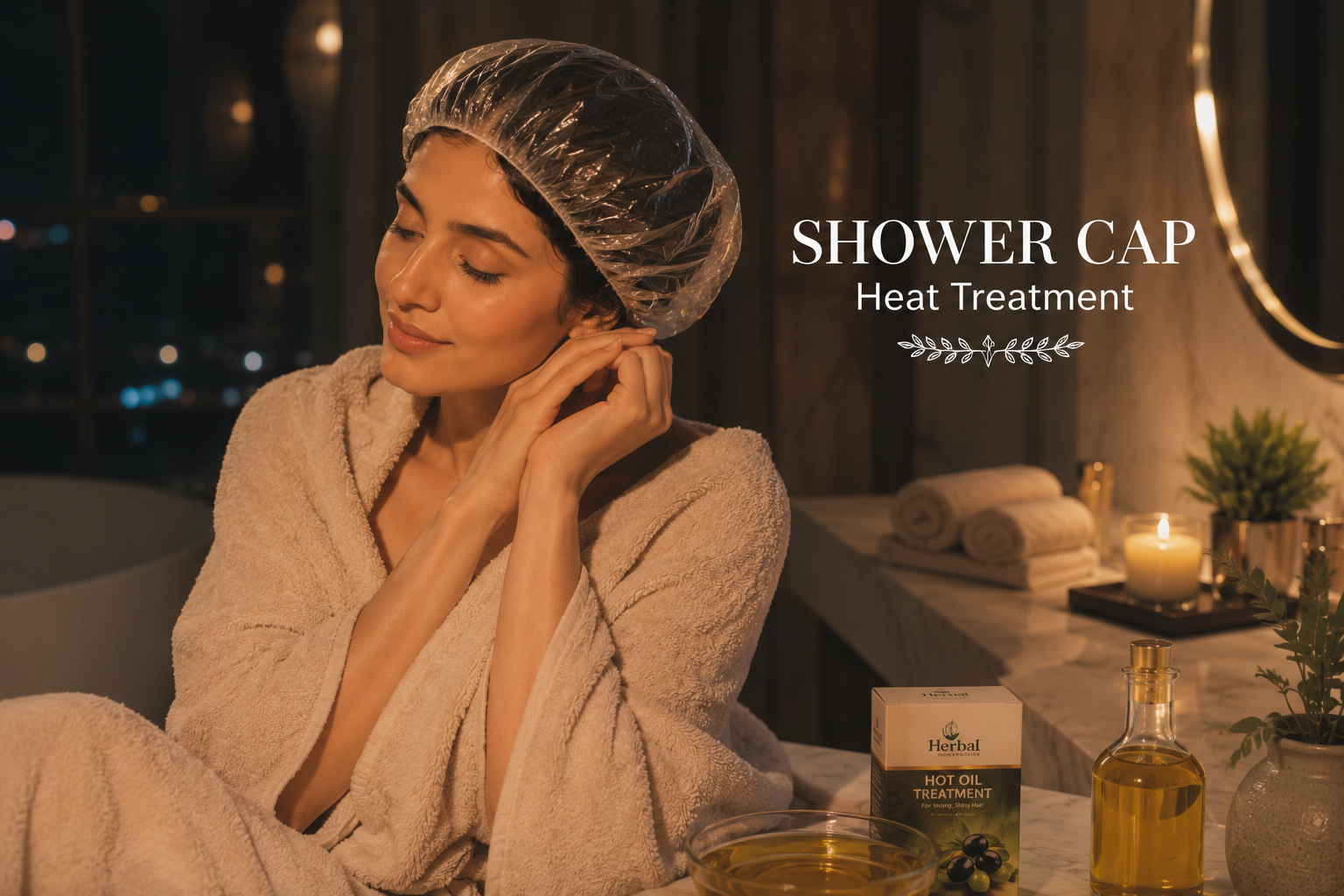
Step 5: Apply heat Cover hair with a shower cap. Then:
- Option A: Wrap a warm (not hot) towel around the shower cap — re-warm every 10 minutes
- Option B: Sit under a hood dryer on low heat for 20 minutes
- Option C: No external heat — the shower cap traps body heat, which is gentler
Leave for 20–30 minutes. Nadia always leaves hers for a full 30 minutes and refuses to rush it. She’s right — the extra time makes a measurable difference.
Step 6: Wash out thoroughly This step is critical and where most women go wrong. Apply shampoo directly to the oiled hair (without wetting first) — this helps the shampoo grip the oil and emulsify it. Then wet, lather, and rinse. Shampoo twice for heavy oils like castor or olive. For lighter oils like argan or jojoba, once is usually sufficient.
Step 7: Condition the ends Apply a lightweight conditioner from mid-lengths to ends. Leave 2–3 minutes, rinse with cool water. The cool rinse closes the cuticle that the heat opened — sealing in all that conditioning benefit.
💡 Pro Tip: Don’t apply hot oil treatment the same day you want to style your hair. Nadia always does hers the night before and washes in the morning — the oil has maximum penetration time and hair is perfectly conditioned for the next day.
Also Read: Home Remedies for Dandruff Treatment: What Actually Works
Boosting Your Hot Oil Treatment with Essential Oils
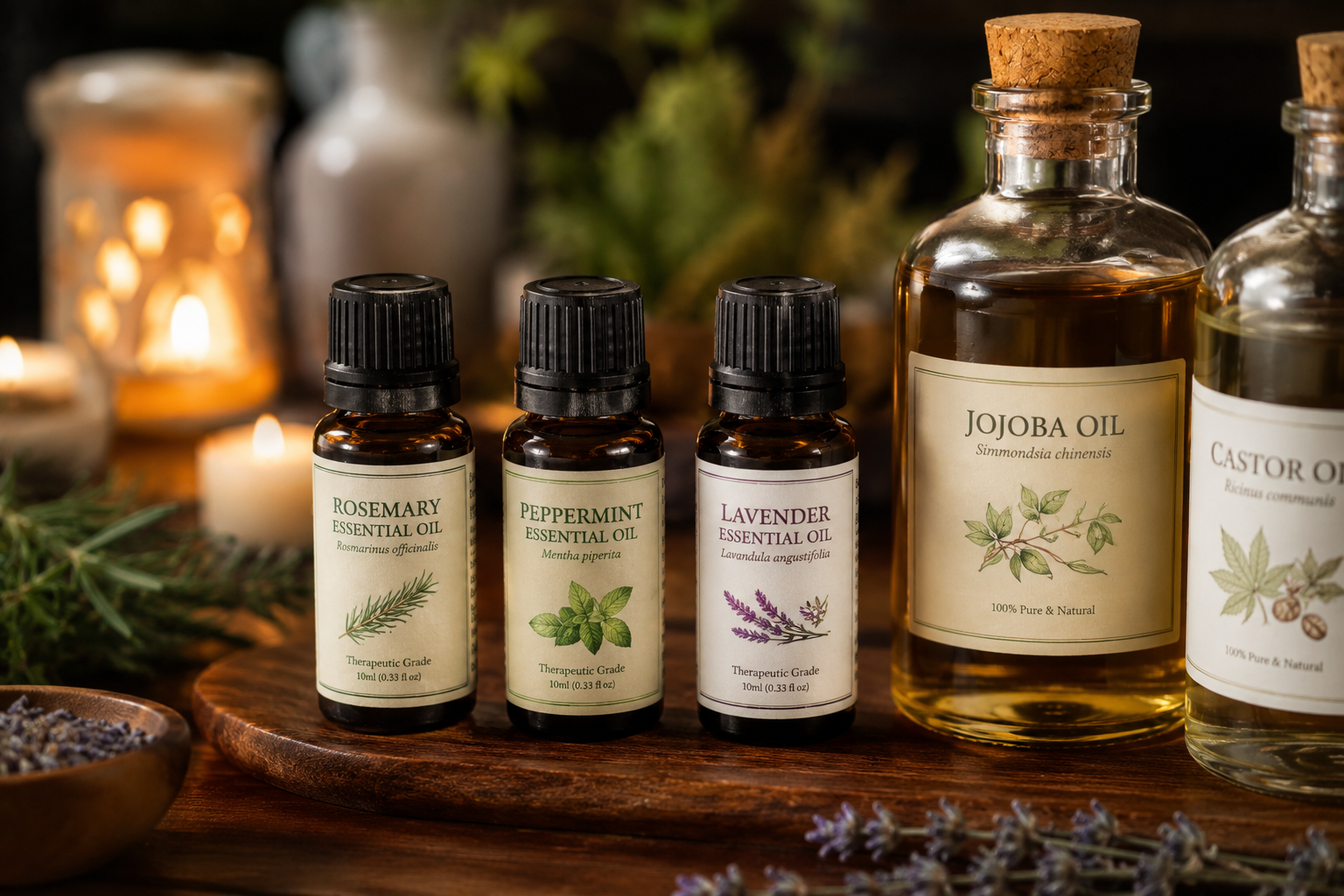
A few drops of the right essential oil can significantly enhance your hot oil treatment. Always add essential oils after warming the carrier oil, and never apply undiluted essential oils directly to the scalp.
Rosemary oil (3–5 drops per 3 tbsp carrier oil): Improves scalp circulation and may support hair growth. The most evidence-backed essential oil for hair. Peppermint oil (2–3 drops): Creates a cooling, tingling sensation that indicates circulation increase. A 2014 study found peppermint oil increased follicle depth and the number of follicles in the growing phase. Lavender oil (3–4 drops): Calms scalp inflammation and has mild antimicrobial properties. Excellent for sensitive or irritated scalps. Tea tree oil (2–3 drops): Antifungal and antibacterial — great for dandruff-prone scalps. Can be slightly irritating at higher concentrations.
How Often Should You Do a Hot Oil Treatment?
| Hair Type | Recommended Frequency |
|---|---|
| Very dry, damaged, or colour-treated | Once a week |
| Normal hair needing maintenance | Every 2 weeks |
| Oily hair or oily scalp | Once a month (focus on ends only) |
| Fine hair | Once every 2–3 weeks, lighter oil (jojoba/argan) |
Over-treating (more than once a week for most hair types) can lead to product buildup, scalp greasiness, and even follicle congestion. More is not better here.
Comparison Table: Best Oils for Hot Oil Treatment
| Oil | Best For | Weight | Penetration | Cost | Frequency |
|---|---|---|---|---|---|
| Coconut Oil | Dry, thick, coarse hair | Medium | Deep (enters shaft) | $4–8 | Weekly |
| Olive Oil | Very dry, severely damaged | Heavy | Surface + some penetration | $5–10 | Weekly |
| Argan Oil | Fine, colour-treated, normal | Light | Surface sealing | $8–15 | Every 2 weeks |
| Castor Oil | Scalp treatment, edges | Very Heavy | Scalp only (blend it) | $4–8 | Weekly (scalp) |
| Jojoba Oil | Oily scalp, sensitive skin | Light | Surface + mimics sebum | $8–12 | Every 2 weeks |
| Sweet Almond Oil | All types, especially fine | Medium-Light | Good penetration | $5–10 | Every 2 weeks |
Common Mistakes with Hot Oil Treatments
- Applying to the scalp only: The ends are the most damaged and the most in need of treatment. Work oil through the full length.
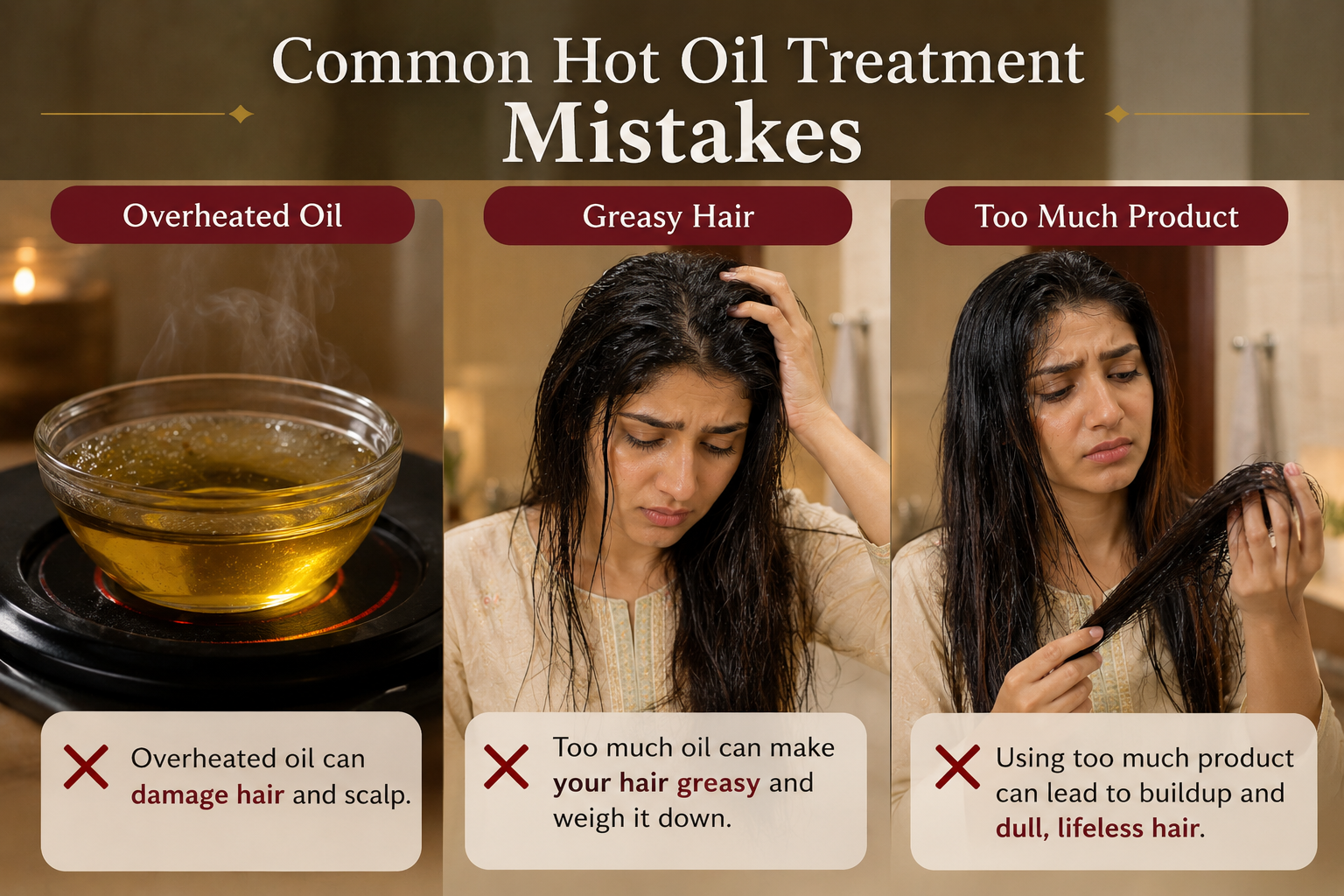
- Making the oil too hot: Oil that’s too hot can burn the scalp and actually damage the cuticle further. Always test on your wrist.
- Skipping the massage: The mechanical stimulation is a significant part of the benefit. 5 minutes minimum.
- Not shampooing properly: Under-washing leaves oil residue that clogs follicles. Apply shampoo to dry hair first, then wet.
- Doing it too often with heavy oils: Weekly coconut or olive oil on fine hair = greasy, weighed-down strands that look unwashed. Match oil weight to your hair type.
- Expecting results after one session: Hot oil treatment is a maintenance practice, not a one-time fix. Results build over 4–6 sessions.
When to See a Doctor
Hot oil treatments are safe for almost all women when done correctly. However, consult your doctor if:
- Your scalp is significantly inflamed, painful, or has open sores — oil can trap bacteria and worsen these conditions
- You experience increased hair shedding after starting oil treatments (may indicate follicle blockage — reduce frequency and use lighter oils)
- Scalp irritation doesn’t resolve after switching oils or diluting essential oils
- Underlying hair loss isn’t improving with home care — a blood panel may be needed
Please consult your doctor before trying new hair treatments during pregnancy, particularly those involving essential oils like rosemary or peppermint.
FAQ: Hot Oil Treatment at Home
Q: What is the best oil for a hot oil treatment at home? Coconut oil is the most evidence-backed option for penetrating the hair shaft and reducing protein loss. For fine hair, argan or jojoba oil is lighter and won’t weigh strands down. For severely damaged hair, a 50/50 blend of olive and argan works beautifully.
Q: How long should I leave hot oil in my hair? 20–30 minutes is the ideal window. Less than 15 minutes reduces penetration time; more than 45 minutes doesn’t meaningfully increase benefit and can lead to follicle congestion on the scalp. Nadia always times herself — she says 30 minutes is the sweet spot.
Q: Can I leave hot oil in my hair overnight? Occasionally, yes — but only on the hair lengths (not the scalp). Overnight scalp oil application can block follicles. If you want an overnight treatment, apply oil from mid-lengths to ends, loosely braid, and shampoo in the morning.
Q: How do I wash out hot oil without leaving it greasy? Apply shampoo to dry, oiled hair FIRST — before adding water. This allows the shampoo to grip the oil molecules. Then wet, lather, rinse. Repeat once for lighter oils, twice for heavier oils (olive, castor). Finish with a cool water rinse.
Q: Is hot oil treatment good for hair growth? The scalp massage component stimulates circulation, which may support follicle health. Some oils (with added rosemary essential oil) may directly support growth. The primary benefit is hair health and breakage reduction — retained length means hair appears to grow faster.
Q: Can I use coconut oil if I have oily hair? Coconut oil is generally too heavy for oily scalps. Apply it from mid-lengths to ends only, avoiding the scalp entirely. For the scalp, jojoba oil is a better match for oily hair types.
Q: What’s the difference between hot oil treatment and deep conditioning? A deep conditioning treatment uses a water-based conditioner that adds moisture. A hot oil treatment uses oil to seal the cuticle, reduce friction, and penetrate the shaft. They serve different purposes — ideally, alternate between them. Many women deep condition one week, hot oil treat the next.
Q: Can I do a hot oil treatment on coloured or bleached hair? Yes — in fact, chemically treated hair benefits significantly from regular hot oil treatments because bleach and colour processing compromise the cuticle. Use argan or sweet almond oil (lighter weight) and avoid leaving the treatment on for more than 30 minutes on very damaged hair.
Q: Does hot oil treatment help with dandruff? It can help with dry-scalp dandruff (where the scalp is flaky due to dryness) — jojoba or coconut oil can reduce dry flaking. For fungal dandruff (oily, yellow flakes associated with Malassezia), oil treatment may worsen it by feeding the yeast. Use a ketoconazole shampoo instead for fungal dandruff.
Q: How many times a week should I do hot oil treatment? Once a week is the maximum for dry or damaged hair. Every 2 weeks for normal hair. Monthly for oily or fine hair types. Overdoing it leads to product buildup and greasy-looking hair.
Q: Is it safe to add essential oils to my hot oil treatment? Yes, when properly diluted. The safe dilution for scalp use is 1–2% — that’s 3–6 drops of essential oil per 3 tablespoons of carrier oil. Never apply essential oils neat (undiluted) to the scalp. Avoid if you’re pregnant without consulting your doctor first.
Q: Can hot oil treatment fix split ends? No — nothing permanently repairs split ends except trimming. However, hot oil treatment temporarily seals and smooths the cuticle at the split, reducing the appearance and preventing the split from travelling further up the shaft. It’s a maintenance measure, not a repair.
People Also Ask
❓ What do I put in a hot oil treatment for hair growth? → A base of coconut or jojoba oil mixed with 3–4 drops of rosemary essential oil creates a strong growth-supporting treatment. Apply warm to the scalp, massage for 5 minutes, cover with a shower cap, leave 30 minutes, and wash out thoroughly.
❓ How often should I do a hot oil treatment? → Once a week for dry, damaged, or colour-treated hair. Every two weeks for normal hair. Monthly for oily or fine hair. Consistent weekly treatments show the clearest results — most women notice softer, less breaking hair within 3–4 sessions.
❓ Can I do a hot oil treatment without heat? → Yes — the shower cap alone traps body heat and produces a gentler, milder version of the same treatment. It’s less effective than adding external heat, but it’s still beneficial and much safer. Nadia sometimes does this in the evening while watching TV.
❓ Which is better — hot oil treatment or hair mask? → They serve different purposes. Hot oil treatments seal and strengthen; hair masks (protein or moisture-based) replenish specific deficits. Use both: hot oil one week, moisture or protein mask the next. They complement each other rather than compete.
━━━━━━━━━━━━━━━━━━━━━━━━━━━━━ Quick Summary — Hot Oil Treatment at Home ✅ Best oil: Coconut (dry/thick hair), Argan (fine/normal), Jojoba (oily scalp) ⏱ Time per session: 45 minutes total (5 min massage + 30 min treatment + wash) 💰 Budget option: Coconut oil treatment — under $1 per session ⚠️ Avoid: Overheating oil, applying castor oil neat to lengths, skipping massage 👩⚕️ See a doctor if: Scalp has open sores, inflammation, or significant hair loss 📌 Top tip: Apply shampoo to dry oiled hair first — best way to remove oil completely ━━━━━━━━━━━━━━━━━━━━━━━━━━━━━

Leave a Comment
Share your thoughts or questions about this article!