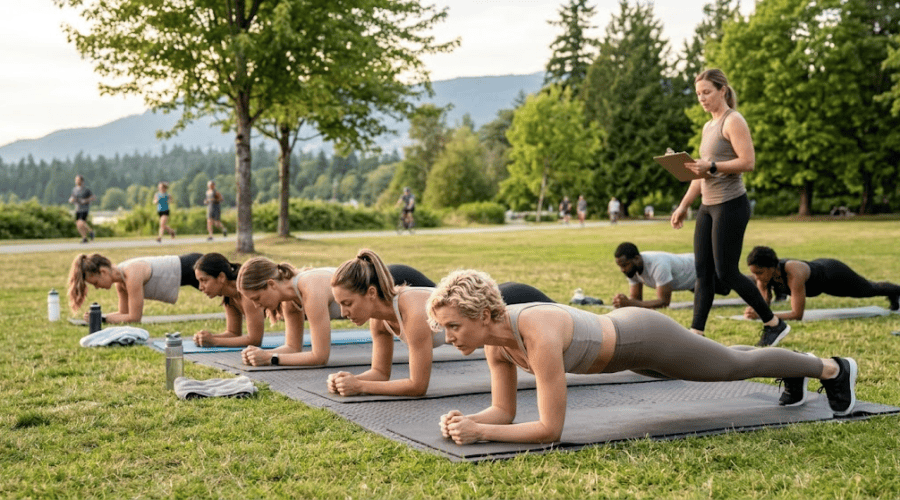
Home Workout for Women — Quick Answer
You do not need a gym membership or any equipment to get fit at home. A beginner-friendly routine of bodyweight moves — squats, wall push-ups, glute bridges, marching in place, and a plank — done for just 15 minutes a day, three to four times a week, is enough to build strength, improve stamina, and support weight management. Start slow, focus on good form over speed, and rest whenever you feel pain. Consistency matters far more than intensity when you are beginning.
Finding time to exercise is one of the biggest challenges women face — between work, family, and household responsibilities, a trip to the gym often feels impossible. The good news is that some of the most effective workouts require nothing more than your own body weight and a small patch of floor space. This guide walks you through a complete beginner home workout you can start today, exactly why each move helps, and how to build a routine that actually sticks.
Why Home Workouts Work So Well for Women
Home workouts remove almost every common barrier to exercise. There is no commute, no waiting for equipment, no monthly fee, and no feeling self-conscious in front of others. You can exercise in your own clothes, at your own pace, whenever a free window appears in your day — early morning before the household wakes up, during a baby’s nap, or in the evening after chores are done.
Bodyweight training is also genuinely effective. Movements like squats and push-ups work several muscle groups at once, which means you build functional strength that helps with everyday tasks such as lifting children, carrying groceries, and climbing stairs. Regular movement also supports better sleep, steadier mood, stronger bones, and healthier blood sugar levels. For many women, the simplicity of a home routine is exactly what turns exercise from an occasional effort into a lasting habit.
Before You Begin: A Quick Warm-Up
Never jump straight into a workout with cold muscles — a short warm-up lowers your risk of strains and prepares your heart and joints for movement. Spend three to five minutes doing gentle activity to raise your body temperature and loosen your muscles. A brisk walk is a perfect warm-up too — see our guide on walking for weight loss for how to get the pace right.
- March in place for 60 seconds, lifting your knees comfortably high.
- Roll your shoulders backward and forward, 10 times each direction.
- Gentle arm circles for 30 seconds to open up the shoulders.
- Standing side bends, reaching one arm overhead and leaning gently to each side.
- Ankle and wrist rolls to loosen the smaller joints.
The 15-Minute Beginner Home Workout
This routine uses five simple exercises. Perform each move for the suggested amount, rest for 20 to 30 seconds between them, then repeat the whole circuit twice if you can. If one round is all you can manage at first, that is completely fine — you can always add the second round as you get stronger.
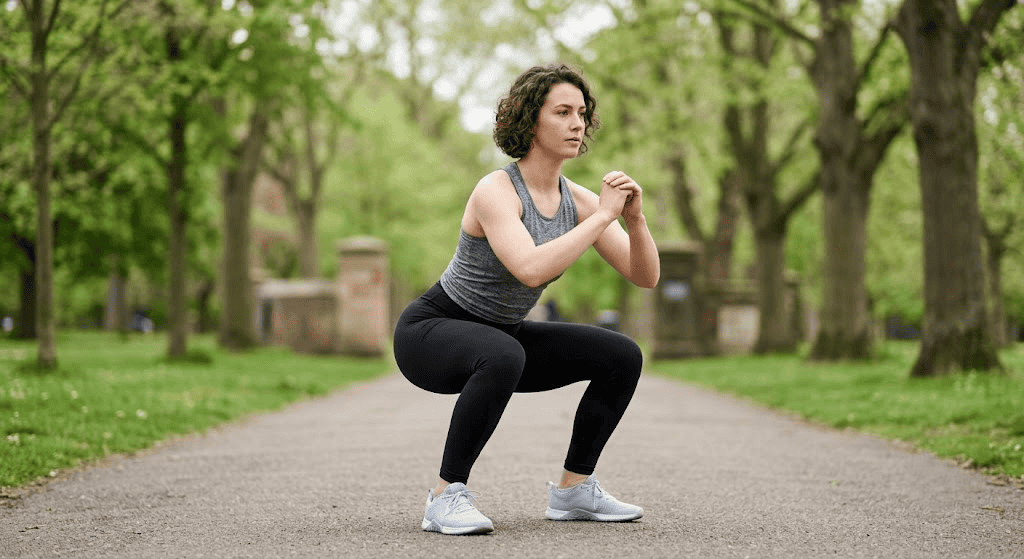
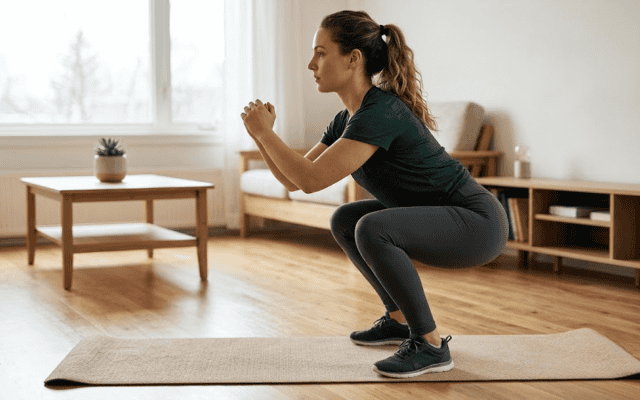
1. Bodyweight Squats (10–12 reps)
Stand with your feet shoulder-width apart, toes pointing slightly outward. Push your hips back as if sitting into a chair, keeping your chest lifted and your weight in your heels. Lower until your thighs are roughly parallel to the floor, then press back up. Squats strengthen your thighs, hips, and glutes — the largest muscles in your body — which makes them one of the most efficient moves you can do.
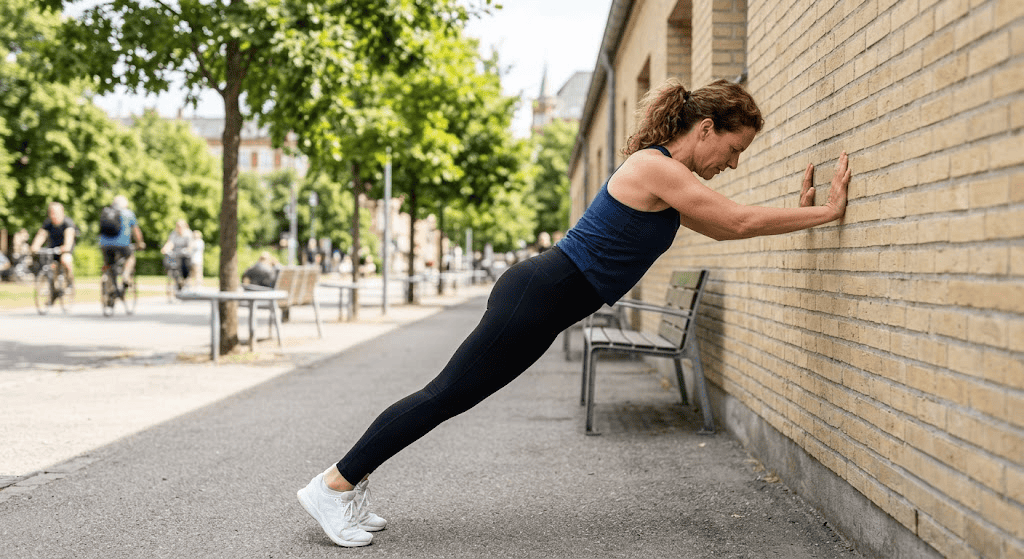
2. Wall Push-Ups (8–10 reps)
Stand facing a wall, arm’s length away. Place your palms flat on the wall at shoulder height. Bend your elbows to bring your chest toward the wall, then push back to the start. Wall push-ups build upper-body and core strength with far less strain than floor push-ups, making them ideal for beginners. As you get stronger, you can progress to push-ups against a kitchen counter, then eventually the floor.
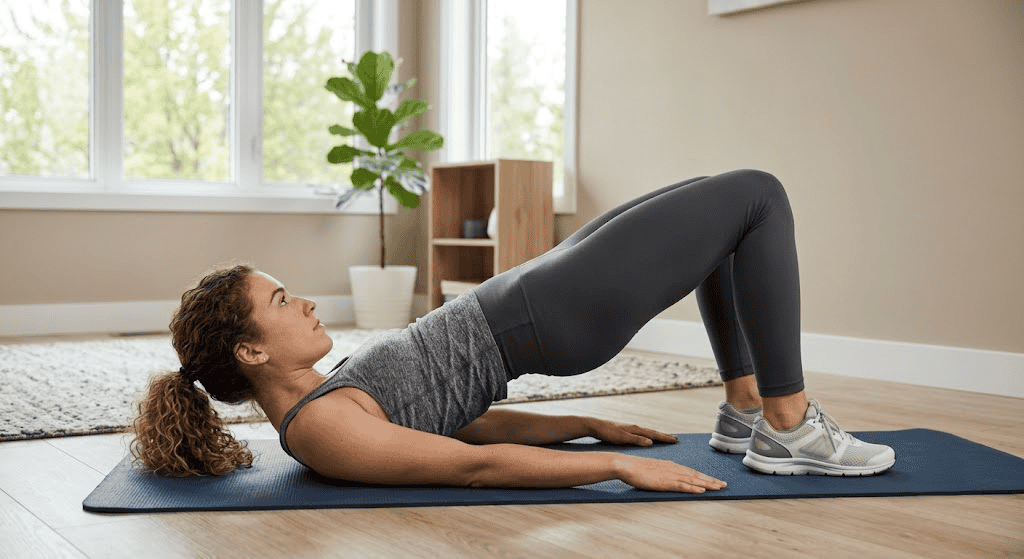
3. Glute Bridges (12–15 reps)
Lie on your back with your knees bent and feet flat on the floor, hip-width apart. Squeeze your glutes and lift your hips toward the ceiling until your body forms a straight line from shoulders to knees. Hold for a second at the top, then lower slowly. This move strengthens the glutes and lower back and is especially helpful for women who sit for long periods, as it counteracts tight hips.
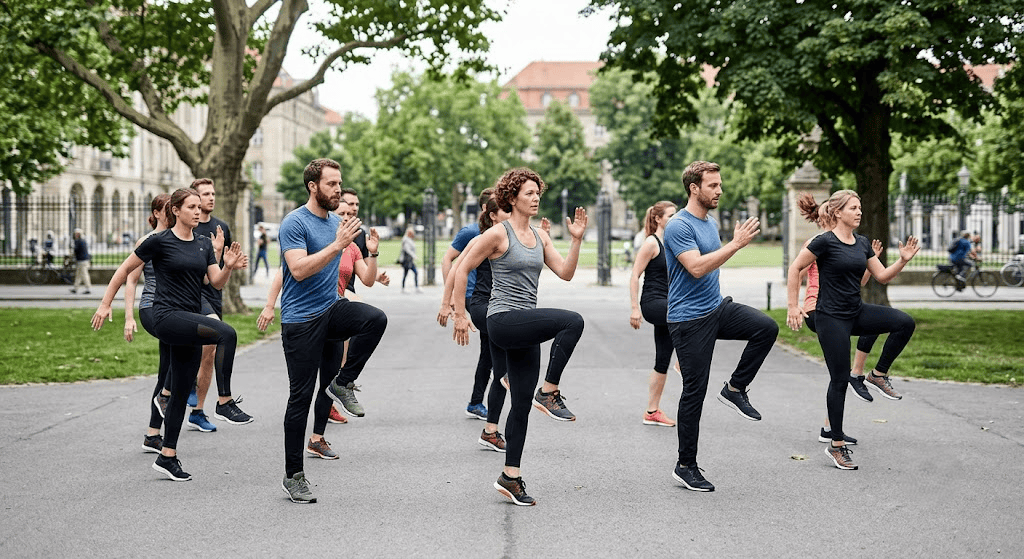
4. Marching in Place (45–60 seconds)
Stand tall and march on the spot, lifting your knees to hip height and gently swinging your arms. This raises your heart rate, adds a cardio element, and gives your legs a break from the strength moves. Keep a steady, controlled pace — you should feel warm and slightly breathless but still able to talk.
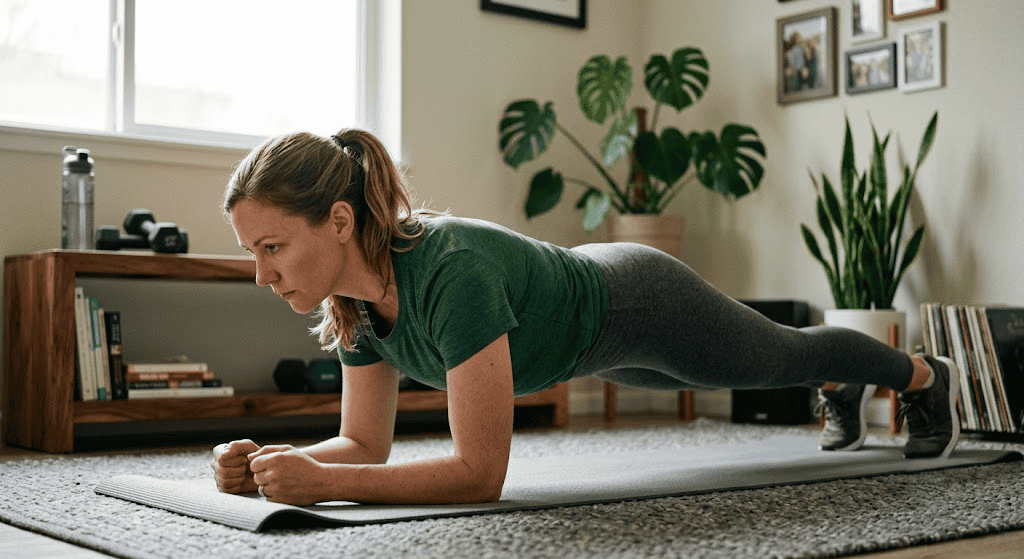
5. Plank Hold (15–30 seconds)
Rest on your forearms and toes (or drop to your knees for an easier version), keeping your body in a straight line from head to heels. Tighten your stomach and hold. The plank builds core strength, which supports better posture and helps protect your lower back. Start with short holds and add a few seconds each week.
A Simple Weekly Plan
You do not need to work out every single day. For beginners, three or four sessions a week gives your body time to recover and adapt. Here is an easy schedule you can follow:
- Monday: Full 15-minute routine
- Tuesday: Rest or a gentle 15-minute walk
- Wednesday: Full 15-minute routine
- Thursday: Rest
- Friday: Full 15-minute routine
- Saturday: Light activity — a walk, stretching, or housework counts
- Sunday: Rest
As the routine starts to feel easy, add the second circuit round, hold your plank a little longer, or increase your squat reps. Small, steady progress keeps your body challenged without overwhelming you.
Staying Consistent and Motivated
Motivation fades — habits are what carry you. Attach your workout to something you already do daily, such as exercising right after your morning tea or before your evening shower. Keep the bar low on hard days: even a single round of squats and a plank is a win that keeps the habit alive. Tracking your sessions on a simple calendar, or inviting a friend or sister to join you, can make the routine feel more rewarding and easier to maintain.
Exercise works best alongside good nutrition, so fuel your efforts with a few healthy snacks for women to keep your energy steady between sessions.
Frequently Asked Questions
How long until I see results from a home workout?
Most beginners notice more energy and better sleep within one to two weeks. Visible changes in strength and body shape usually take around four to eight weeks of consistent effort, combined with balanced eating.
Can I lose weight with just bodyweight exercises?
Exercise supports weight management, but the biggest factor is your overall diet. Bodyweight workouts help by building muscle and burning calories; pairing them with sensible, balanced meals gives the best results.
Is it safe to work out at home without a trainer?
Yes, gentle bodyweight routines are safe for most healthy adults. Focus on good form, start slow, and stop if you feel sharp pain. If you have any medical condition, are pregnant, or have recently given birth, check with your doctor before starting. If you are expecting, read our guide on safe exercise during pregnancy first.
What if I can only do five minutes a day?
Five minutes is still valuable. Pick two or three moves and do what you can. Short daily sessions build the habit, and you can always extend the time as your fitness improves.
Final Thoughts
A fit, strong body does not require expensive equipment or hours of free time — just a little floor space and a willingness to show up regularly. This 15-minute beginner routine gives you everything you need to start building strength and energy from home. Begin at your own pace, celebrate small wins, and let consistency do the heavy lifting.
Disclaimer: This article is for informational purposes only and is not a substitute for professional medical advice. Consult a qualified doctor or certified fitness professional before starting any new exercise program, especially if you are pregnant, postpartum, or have any health condition.


Leave a Comment
Share your thoughts or questions about this article!