Your hair breaks easily and feels thin: You need protein — egg, yogurt, dahi masks.
Your hair is extremely dry, dull, and ends are split: You need both — combination masks with egg + coconut oil + honey.
Your scalp is dry and itchy with dry hair: You need scalp nourishment — aloe vera + castor oil + coconut oil mask applied to scalp AND lengths.
Your hair is damaged from heat or chemicals: You need protein first, then moisture in subsequent weeks.
9 Best DIY Hair Masks for Dry and Damaged Hair
MASK 1 — The Classic Egg Protein Repair Mask
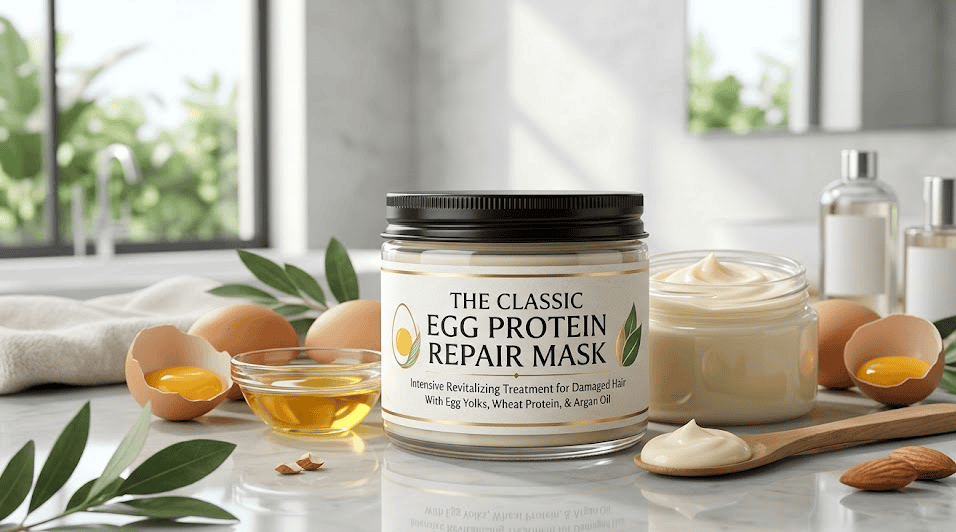
Best for: Damaged, weak, chemically treated hair | Thin, breakage-prone hair
This is the most important mask for truly damaged hair — the one you need before anything else. Egg contains complete protein including all amino acids your hair needs to rebuild its keratin structure. The yolk adds lecithin and fatty acids that condition while the white provides the structural protein.
I tried this for the first time after my “overcooked spaghetti” salon visit. After just two uses over two weeks, the snapping sound my hair made when I brushed it — the one I’d normalized — almost completely disappeared.
Ingredients:
- 2 whole eggs (for medium-length hair)
- 1 tablespoon olive oil
- 1 tablespoon plain dahi (yogurt)
How to make it:
- Beat eggs thoroughly until smooth — no lumps
- Add olive oil and dahi, mix until combined
- The consistency should be smooth and pourable
How to apply:
- Dampen hair with water — do not apply to dry hair
- Apply from roots to tips, focusing on damaged mid-lengths and ends
- Massage gently into scalp for 1–2 minutes
- Cover with a shower cap — body heat helps the mask penetrate deeper
- Leave 30 minutes maximum — don’t let it dry on hair
- Rinse with COOL water only — hot water cooks the egg and creates an impossible-to-remove mess
- Follow with your regular shampoo
Frequency: Once per month for maintenance; twice per month for severely damaged hair Cost: Under Rs. 100 What to expect: Hair feels noticeably stronger and smoother immediately after first use. Breakage reduces significantly after 3–4 uses.
💡 Pro Tip: If the smell bothers you — and it does bother some women — add 2 drops of lavender or peppermint oil to the mix. It doesn’t affect the mask’s effectiveness and makes the experience dramatically more pleasant.
MASK 2 — Banana, Honey, and Coconut Oil Moisture Mask
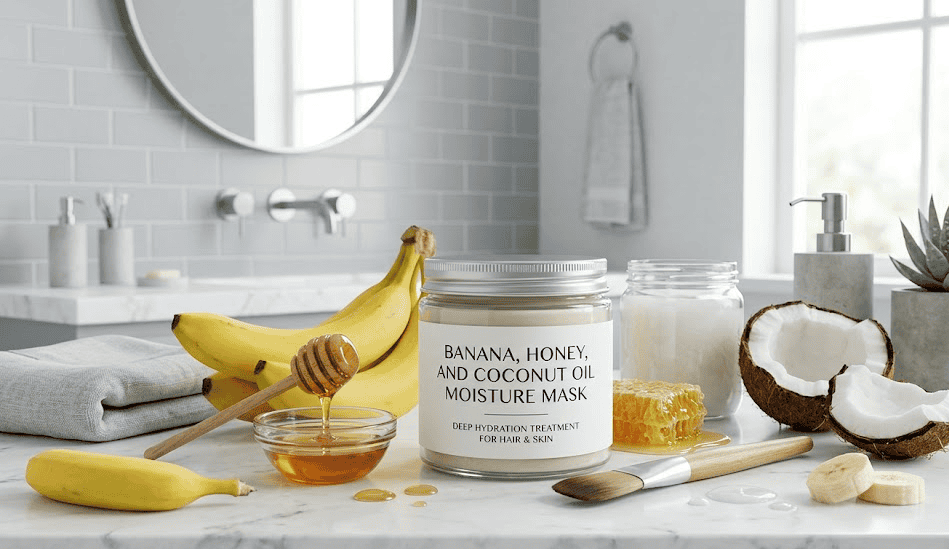
Best for: Dry, frizzy, dull hair | Hair that feels rough and lacks shine | Pakistani summer damage
This is Nadia’s favourite mask — the one she makes for her daughters too. She says her mother made it with just banana and oil, and she added honey when she read more about it. The combination is genuinely brilliant: banana provides potassium and natural oils that hydrate deeply, honey is a humectant (draws moisture from the air into hair), and coconut oil seals everything in.
Ingredients:
- 1 ripe banana (the riper, the better — brown-spotted bananas work best)
- 2 tablespoons raw honey
- 2 tablespoons coconut oil (slightly warmed)
How to make it:
- Mash banana extremely thoroughly — or blend it — until there are NO lumps whatsoever
- This step matters more than any other: banana chunks in hair are a nightmare to remove
- Mix in honey and warm coconut oil until smooth
How to apply:
- Apply to damp hair from mid-lengths to ends — avoid roots if scalp is oily
- Work through with fingers, ensuring even coverage
- Cover with shower cap — leave 30–40 minutes
- Rinse thoroughly with lukewarm water, then shampoo
- Condition as normal
Frequency: Once per week for very dry hair; once per fortnight for maintenance Cost: Under Rs. 150 What to expect: Hair feels soft, smooth, and noticeably shinier immediately after first use. Frizz reduces significantly within 2–3 uses. The honey-banana combination provides one of the best natural shine results of any DIY mask.
Honest note: Blend the banana. I cannot stress this enough. The one time I tried mashing by hand and thought it was smooth enough — it was not. Removing banana pieces from long hair takes 40 minutes and several shampoos.
MASK 3 — Yogurt and Olive Oil Deep Conditioning Mask
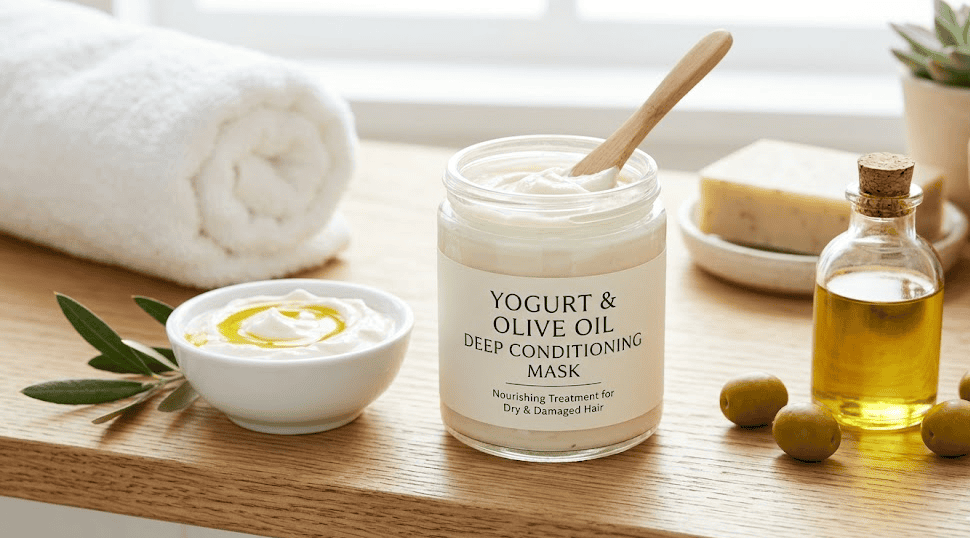
Best for: All types of dry and damaged hair | Frizzy hair | Hair damaged by hard water
Plain dahi (yogurt) is one of the best natural hair conditioners — it contains lactic acid that gently cleanses the scalp, removes buildup, and closes the cuticle (making hair smoother and shinier). Olive oil provides deep nourishment and acts as a sealant.
Ingredients:
- 4 tablespoons plain dahi (full-fat, unflavored)
- 2 tablespoons olive oil
- 1 tablespoon raw honey (optional but recommended)
How to make it:
- Mix dahi until smooth — no lumps
- Add olive oil and honey, stir until combined
How to apply:
- Apply to damp hair from roots to tips
- Focus on scalp with dahi for its mild clarifying effect
- Massage scalp gently for 2 minutes
- Cover with shower cap — leave 30 minutes
- Rinse with cool to lukewarm water, then light shampoo
Frequency: Once per week Cost: Under Rs. 100 What to expect: Hair feels deeply conditioned and significantly smoother after first use. Dandruff and scalp buildup also reduce with regular use (lactic acid benefit). Shine improvement is immediate.
MASK 4 — Avocado and Egg Intensive Repair Mask
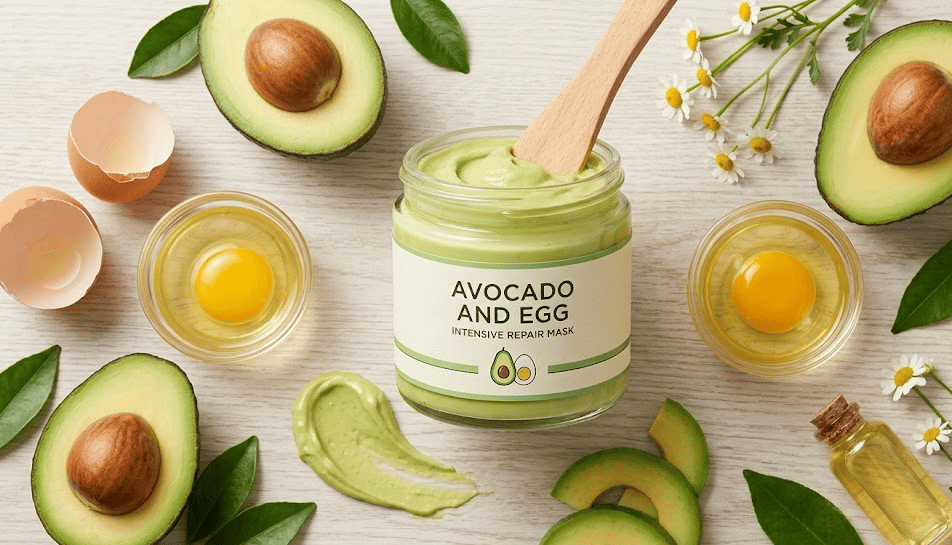
Best for: Severely damaged hair | Chemical damage from coloring or relaxing | Very dry, brittle hair
Avocado is one of the richest natural sources of healthy fats, vitamins B and E, and antioxidants — all of which penetrate damaged hair shafts and restore suppleness. Combined with egg protein, this becomes an intensive repair treatment that addresses both protein loss and moisture loss simultaneously.
Ingredients:
- 1/2 ripe avocado
- 1 egg
- 1 tablespoon olive oil or coconut oil
How to make it:
- Mash avocado very smooth (or blend)
- Beat egg separately, then combine
- Add oil and mix until uniform
How to apply:
- Apply generously to damp hair — avocado is rich enough to use from roots to tips even on oily scalp
- Cover with shower cap — leave 30–45 minutes
- Rinse with cool water first, then lukewarm shampoo
Frequency: Once per fortnight for severely damaged hair; once per month for maintenance Cost: Rs. 100–200 (avocado prices vary) What to expect: This is the most intensive mask on the list — and the results match. Hair feels dramatically softer and more elastic after even one use. For chemically damaged hair, 3–4 consistent uses show significant improvement in texture.
💡 Pro Tip: I make this mask specifically after any heat styling event or chemical treatment. It’s my “emergency repair” treatment. One use after a wedding or event where I’ve straightened heavily brings my hair back to a manageable state within 2–3 days.
MASK 5 — Aloe Vera and Castor Oil Scalp + Ends Mask
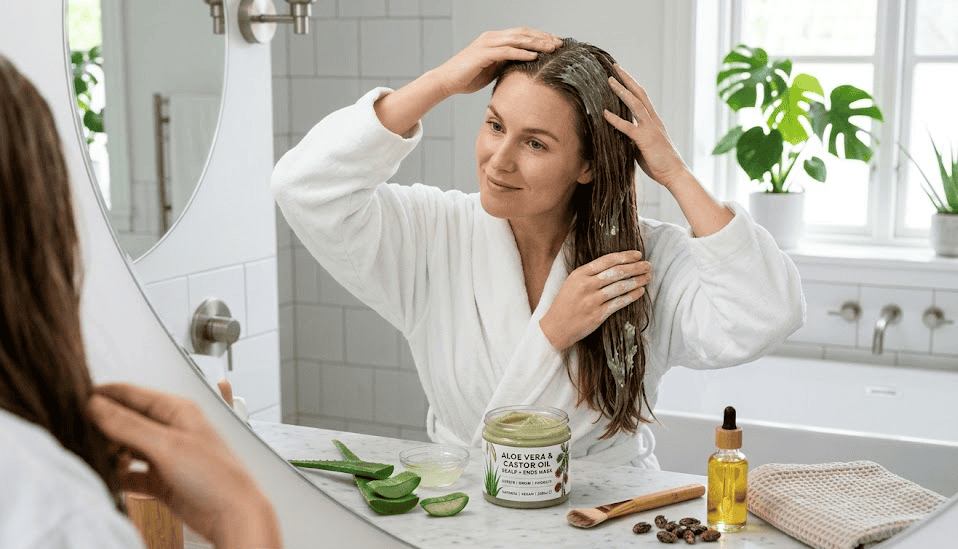
Best for: Dry scalp with dry hair | Itchy scalp + damaged ends | Hair that is dry at the scalp AND at the ends
This mask addresses a problem that many women have — dryness at both the scalp (dry, itchy, flaky) AND the ends (split, brittle). Most masks target only the lengths. This one works everywhere.
Ingredients:
- 3 tablespoons fresh aloe vera gel (from leaf — not the bottled blue kind)
- 1 tablespoon castor oil
- 1 tablespoon coconut oil
How to make it:
- Scoop fresh aloe vera gel from a leaf
- Mix with castor oil and coconut oil until combined — it won’t be completely smooth but should be well mixed
How to apply:
- Apply to scalp first — massage gently for 2–3 minutes
- Work remaining mask through mid-lengths and ends
- Cover with shower cap — leave 30–40 minutes
- Rinse thoroughly, shampoo once (castor oil needs thorough washing out)
Frequency: Once per week Cost: Rs. 50–100 What to expect: Scalp itchiness and dryness reduce within 2–3 uses. Hair ends feel nourished and less brittle. Aloe vera’s naturally occurring salicylic acid also gently removes scalp buildup.
MASK 6 — Henna and Egg Protein Strengthening Mask
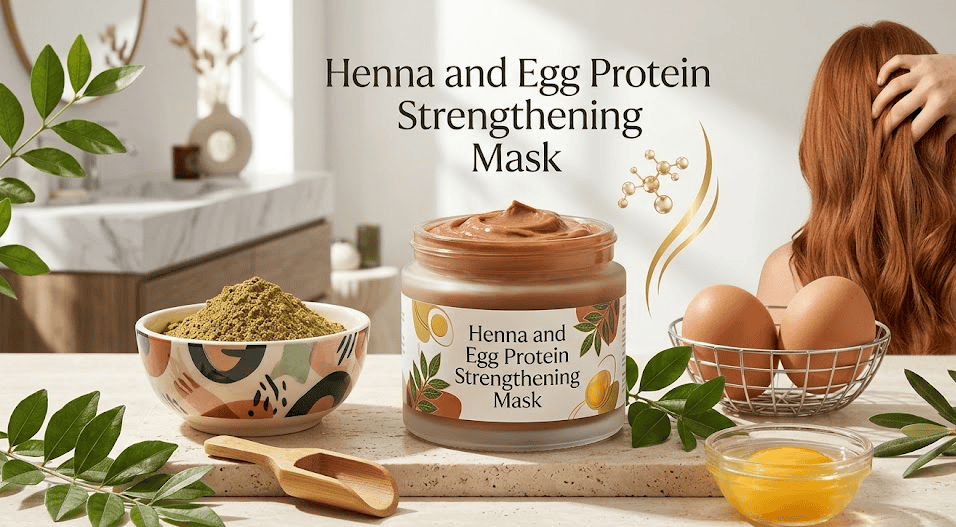
Best for: Thin, weak, limp hair | Women who want thickness AND repair | Pakistani and South Asian hair types
Henna (mehndi) has been used for hair across the subcontinent for generations — and it genuinely works. It coats each hair strand, making hair appear and feel thicker, while also strengthening the shaft. Combined with egg protein, it’s one of the most effective traditional strengthening masks.
Important note: Henna has a permanent colour effect — it deposits a red/copper tone on hair. Do not use if you have chemically lightened or bleached hair (it can react unpredictably). Works beautifully on natural black or dark brown hair.
Ingredients:
- 4 tablespoons pure henna powder (not black henna — use natural red henna)
- 1 egg
- Enough plain dahi to make a paste
How to make it:
- Mix henna with dahi to make a thick paste — the consistency of yogurt
- Add beaten egg and mix well
- Optionally: let it sit for 2–3 hours before applying (this activates the henna — deeper colour result)
How to apply:
- Apply section by section through hair
- Cover with shower cap — leave minimum 1 hour, maximum 3 hours
- Rinse very thoroughly with water first (no shampoo — henna releases color in first rinse)
- Condition generously after
Frequency: Once per month maximum — henna can be drying with overuse Cost: Under Rs. 100 | Time to results: Immediate thickness and shine improvement; strengthening benefit builds over 2–3 uses
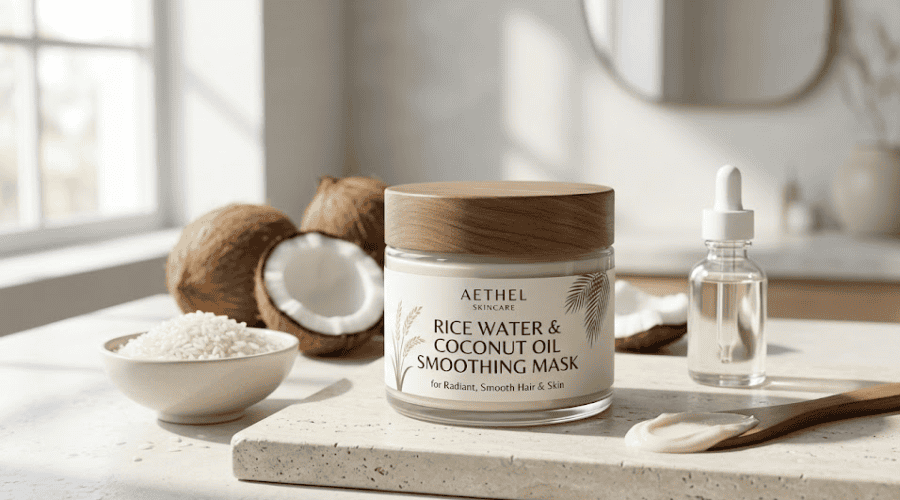
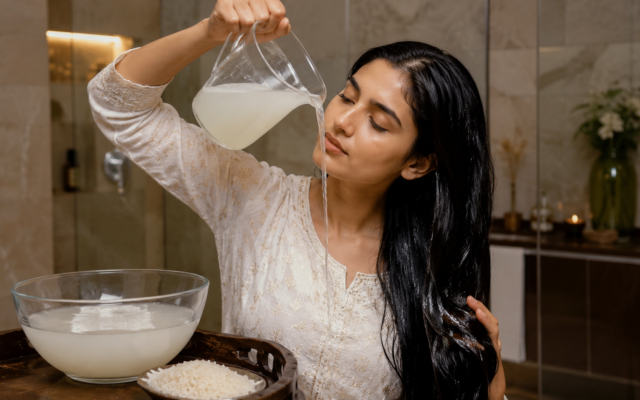
MASK 7 — Rice Water and Coconut Oil Smoothing Mask
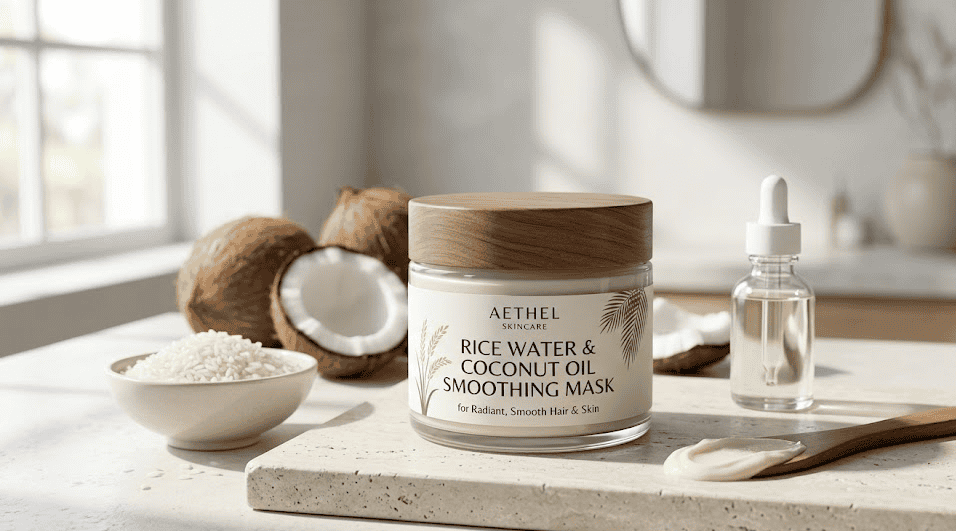
Best for: Frizzy, rough, hard-to-manage hair | Porous hair that absorbs humidity and puffs up
Rice water contains inositol — a compound that penetrates the hair shaft and repairs damaged areas from inside. Combined with coconut oil (the only oil proven to penetrate the hair shaft, per Journal of Cosmetic Science research), this becomes a genuinely effective smoothing treatment.
Ingredients:
- 4 tablespoons rice water (soaked or fermented — see below)
- 2 tablespoons coconut oil (melted)
- 1 tablespoon honey
How to make rice water:
- Wash 1/2 cup rice, soak in 2 cups water for 1 hour (or overnight for fermented version)
- Strain — use the water
How to make the mask:
- Warm coconut oil gently until liquid
- Mix with rice water and honey — stir well (it won’t fully emulsify but mix as well as possible)
How to apply:
- Apply to damp hair — mid-lengths and ends focus
- Leave 20–30 minutes with shower cap
- Rinse with lukewarm water, then shampoo lightly
Frequency: Once per week Cost: Rs. 0–50 | Time to results: Smoother, less frizzy hair after 2–3 uses; significant improvement in 4–6 weeks
MASK 8 — Mayonnaise Deep Moisture Mask
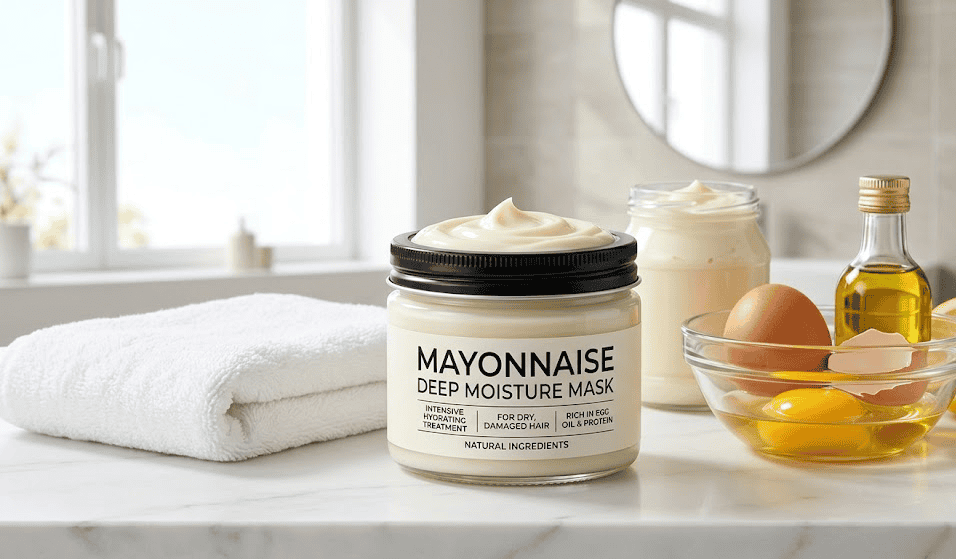
Best for: Extremely dry, brittle hair | Hair that feels like straw | Damaged ends
This one gets laughs — until people try it. Mayonnaise is essentially oil + egg + a small amount of vinegar. The combination deep moisturizes, adds protein, and the mild acidity closes the cuticle (which is what creates shine and smoothness). It smells unexpected on hair but rinses out completely.
Ingredients:
- 4 tablespoons full-fat mayonnaise
- 1 tablespoon coconut oil
- Few drops of lavender oil (for smell — optional but recommended)
How to apply:
- Apply to dry or damp hair from roots to tips
- Cover with shower cap — leave 30–40 minutes
- Rinse with cool water first, then shampoo thoroughly
- Condition as normal
Frequency: Once per fortnight Cost: Under Rs. 100 | What to expect: One of the best results for extreme dryness — hair feels dramatically softer within one use. Shine improvement is immediate and significant.
Honest note: Yes, it smells like mayonnaise. The lavender drops help significantly. It rinses out completely — there is no residual smell after washing.
MASK 9 — The Ultimate Damage Repair Mask (For Severely Damaged Hair)
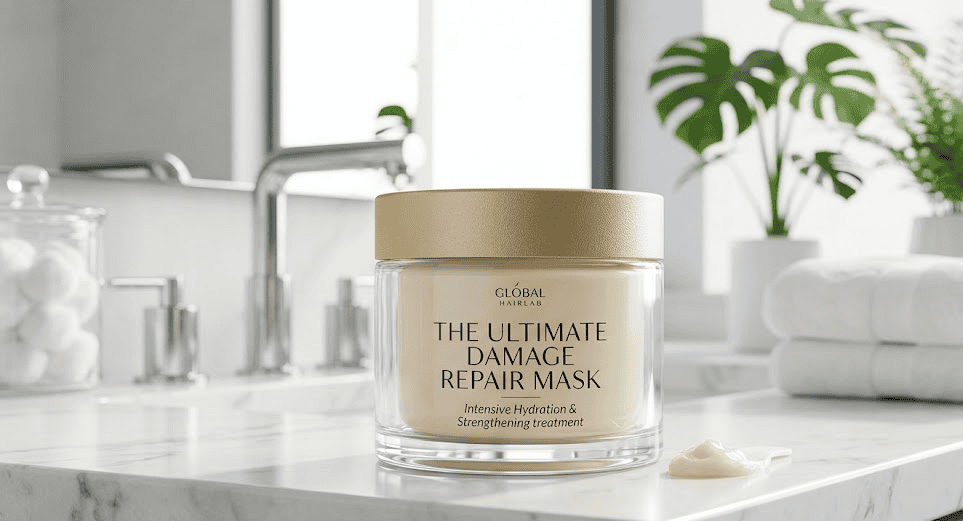
Best for: Hair damaged by heat, chemicals, bleaching, or years of neglect | Last resort before a drastic cut
This is the most intensive mask — combining protein, moisture, and oil in one. Use this when your hair needs serious intervention.
Ingredients:
- 2 eggs
- 1/2 ripe avocado
- 2 tablespoons coconut oil
- 1 tablespoon raw honey
- 1 tablespoon plain dahi
How to make it:
- Blend all ingredients together until completely smooth
- Should be a thick, creamy consistency
How to apply:
- Apply generously to damp hair — full coverage from roots to very tips
- Cover with shower cap — wrap in a warm towel over the cap (heat helps penetration)
- Leave 45 minutes to 1 hour
- Rinse with cool water, then shampoo twice (it’s a rich mixture)
- Deep condition after if hair still feels dry
Frequency: Once per week for 4 weeks (intensive repair phase), then monthly maintenance Cost: Rs. 150–250 | What to expect: Significant improvement in texture after 2 uses. After 4 weeks, damaged hair is noticeably more manageable and less prone to breaking.
Mask Comparison Table — Choose the Right One
| Mask | Main Benefit | Hair Problem It Solves | Cost | Time Needed |
|---|---|---|---|---|
| Egg + Dahi + Olive Oil | Protein repair | Weak, breaking, thin hair | Rs. 100 | 30 min |
| Banana + Honey + Coconut | Deep moisture | Dry, frizzy, dull hair | Rs. 150 | 40 min |
| Yogurt + Olive Oil | Conditioning + scalp | All dry hair types | Rs. 100 | 30 min |
| Avocado + Egg | Intensive repair | Chemical/heat damage | Rs. 200 | 45 min |
| Aloe + Castor + Coconut | Scalp + ends | Dry scalp AND dry ends | Rs. 100 | 40 min |
| Henna + Egg + Dahi | Strengthening + color | Thin, limp, dark hair | Rs. 100 | 60–180 min |
| Rice Water + Coconut + Honey | Smoothing | Frizzy, porous, rough hair | Rs. 50 | 30 min |
| Mayonnaise + Coconut | Extreme moisture | Straw-like, brittle hair | Rs. 100 | 40 min |
| Ultimate Repair Blend | Complete intensive repair | Severely damaged hair | Rs. 250 | 60 min |
How to Apply Any Hair Mask Correctly — The Method Matters
Step 1: Wash hair with shampoo first — masks penetrate better on clean, damp hair than dirty hair. Step 2: Squeeze out excess water — hair should be damp, not dripping. Step 3: Apply mask in sections — part hair into 4 sections, work through each one. This ensures even coverage. Step 4: Scalp first, then lengths, then ends — ends need the most product. Step 5: Cover with shower cap — the enclosed warmth increases penetration significantly. Step 6: Leave the recommended time — more time is not always better with protein masks. Step 7: Rinse with cool water first, then lukewarm — cool water closes the cuticle, locking in the treatment.
Common DIY Hair Mask Mistakes
Mistake 1 — Applying to dry, dirty hair: Masks cannot penetrate product buildup and sebum. Always shampoo first.
Mistake 2 — Rinsing with hot water: Hot water lifts the cuticle open — undoing everything the mask just did. Always cool or lukewarm rinse.
Mistake 3 — Leaving protein masks too long: Protein masks (egg-based) left for over 45 minutes can cause protein overload — making hair hard, brittle, and snapping. Stick to the recommended time.
Mistake 4 — Not blending banana properly: The single most common DIY mask complaint. Blend — don’t mash — for perfectly smooth application and easy removal.
Mistake 5 — Using one mask for all problems: Dry hair needs moisture masks. Damaged hair needs protein masks. Using only moisture masks on severely damaged hair creates softness without strength — hair feels nice but still breaks. Alternate protein and moisture masks for best results.
Mistake 6 — Expecting results after one use: One mask improves texture immediately — this is real. But actual repair of damaged hair takes 4–8 weeks of consistent weekly masking.
When to See a Doctor or Dermatologist
DIY hair masks beautifully address damage from external causes — heat, mechanical stress, dryness. However, consult a doctor if:
- Hair loss accompanies dry, damaged hair — this may indicate thyroid issues, iron deficiency, or hormonal imbalance
- Scalp is consistently red, inflamed, or severely itchy despite home treatment
- Hair condition is deteriorating despite stopping all heat styling and chemical treatments
- Hair damage appeared suddenly without an obvious cause
A dermatologist can identify underlying scalp conditions or nutritional deficiencies that home masks cannot address. Please don’t hesitate to consult your doctor — some hair damage has internal causes that need medical treatment, not kitchen remedies.
FAQ
Q: How often should I use a DIY hair mask? For dry, damaged hair: once per week. For normal hair maintenance: once per fortnight. Protein masks (egg-based): maximum twice per month — more than this causes protein overload, making hair hard and brittle. Moisture masks (banana, honey, yogurt): can be used weekly without risk.
Q: Can DIY hair masks really repair damaged hair? DIY masks can significantly improve the texture, manageability, and strength of damaged hair — reducing breakage and increasing moisture retention. However, truly damaged hair (split ends, severely broken strands) cannot be fully “repaired” at a structural level — those ends need trimming. Masks prevent further damage and improve the health of undamaged portions. Think of it as treatment, not reversal.
Q: Which ingredients should I never put in a DIY hair mask? Avoid: undiluted lemon juice or apple cider vinegar (can cause dryness and irritation with overuse), baking soda (highly alkaline — disrupts the hair’s natural pH, causing serious damage), cinnamon (can irritate scalp and cause hair thinning with overuse), and raw garlic (can cause chemical burns on sensitive scalps). These are commonly recommended in DIY hair content but are more likely to harm than help.
Q: Is mayonnaise actually good for hair? Yes — it’s essentially oil + egg + mild acid. The combination provides protein, moisture, and cuticle-closing acidity. It’s one of the most genuinely effective moisture treatments for extreme dryness. The smell is temporary and completely washes out. Full-fat mayonnaise works best — low-fat versions don’t have the same conditioning properties.
Q: Can I use a hair mask without shampooing first? For best results: shampoo first. Masks penetrate significantly better through clean hair than through hair with product buildup or natural scalp oils. If shampooing first isn’t possible, apply mask to very damp hair and shampoo after removing the mask.
Q: How long should I leave a hair mask on? Moisture masks (banana, honey, yogurt): 30–45 minutes. Protein masks (egg-based): 20–30 minutes maximum. Oil-heavy masks (avocado, mayonnaise): 40–60 minutes. Never leave any mask beyond recommended time without purpose — protein overload from extended egg masks causes hair to become hard and snappy.
Q: Can I use a hair mask every day? No — even moisture masks used daily can cause buildup and make hair feel heavy. Once per week is the maximum frequency for most masks. Daily masking disrupts the scalp’s natural oil balance and can cause different problems than the ones you’re trying to solve.
Q: What is the best DIY hair mask for Pakistani summer hair damage? Pakistani summer causes two types of damage: sun dryness and humidity frizz. The banana + honey + coconut oil mask is the best all-rounder for summer — it addresses both dryness and frizz. The rice water rinse used weekly helps manage humidity-related frizz specifically.
Q: Is henna good for damaged hair? Henna is excellent for strengthening and adding thickness — but it’s important to use it correctly. Pure, natural henna (red) coats the hair shaft, making each strand thicker and stronger. It should not be used on chemically bleached or lightened hair. And it should not be overused — monthly maximum. Combined with egg and dahi, it becomes one of the most effective traditional strengthening treatments.
Q: Can I mix my own oils into any of these masks? Yes — most carrier oils (coconut, olive, almond, jojoba) are interchangeable in these recipes based on availability and preference. Coconut oil is best for protein loss prevention. Olive oil is richest and most nourishing for very dry hair. Almond oil is lightweight and good for fine hair. Avoid mineral oil — it coats hair without penetrating, creating buildup over time.
People Also Ask
❓ What is the best homemade hair mask for damaged hair? → For most damaged hair, the egg + olive oil + dahi protein mask provides the fastest visible improvement. For severely damaged hair, the Ultimate Repair blend (egg + avocado + coconut oil + honey + dahi) covers both protein repair and moisture restoration in one treatment.
❓ How do you fix dry, frizzy hair naturally? → The banana + honey + coconut oil mask addresses frizz most effectively — banana’s potassium hydrates the hair shaft, honey draws in moisture, and coconut oil seals it in. Combined with a weekly rice water rinse (which smooths the cuticle), frizz becomes significantly more manageable in 3–4 weeks.
❓ Can I leave a hair mask on overnight? → Oil-based masks (coconut oil, castor oil, olive oil) can safely be left overnight — they continue conditioning without harm. Protein masks (egg, dahi) should not be left overnight — protein overload causes hair to become brittle. Honey-based masks can be left 1–2 hours maximum but not overnight as honey can cause hygral fatigue (hair absorbs too much moisture and weakens).
❓ What makes hair soft and silky naturally? → For immediate softness: the yogurt + olive oil + honey mask closes the cuticle and adds slip. For lasting softness: weekly deep conditioning with any moisture mask, combined with cool water rinses (which keep the cuticle closed) and reducing heat styling frequency. Soft, silky hair is primarily a cuticle health issue — keeping it closed and smooth is the key.
❓ Is egg or yogurt better for damaged hair? → Both have different roles. Egg provides structural protein — essential for hair that breaks, snaps, or feels thin. Yogurt conditions and closes the cuticle — ideal for rough, frizzy, dull hair. For severely damaged hair: use egg first (protein repair), then yogurt-based masks the following week (moisture and cuticle smoothing). Alternating gives better results than using just one.
Quick Summary — DIY Hair Masks for Dry and Damaged Hair
✅ Best for breakage and weakness: Egg + dahi + olive oil (monthly)
✅ Best for dryness and frizz: Banana + honey + coconut oil (weekly)
✅ Best for scalp + ends: Aloe vera + castor + coconut oil (weekly)
✅ Best intensive repair: Ultimate Repair blend (avocado + egg + coconut + honey + dahi)
⏱ Time to results: Immediate texture improvement after 1st use; real repair in 4–6 weeks
💰 Total cost for all 9 masks combined: Under Rs. 500 (using kitchen ingredients)
⚠️ Never use: Baking soda, undiluted lemon juice, or raw garlic in hair masks
⚠️ Always: Rinse with cool water, blend banana completely, don’t exceed protein mask timing
👩⚕️ See a doctor if: Hair damage accompanied by hair loss, scalp inflammation, or sudden worsening
📌 Top tip: Shampoo BEFORE applying — masks penetrate 3x better on clean damp hair
Closing
My hair is not perfect. But it no longer snaps when I brush it. It no longer looks like “overcooked spaghetti” — the stylist’s diplomatic description that stayed with me for years.
The change came from stopping expensive products that promised results they couldn’t deliver, and starting a monthly egg mask, a weekly banana + honey treatment, and dramatically reducing how often I reach for my straightener.
Nadia said her mother used to say: “Feed your hair what it’s made of.” Hair is protein, oil, and water. Feed it protein, oil, and water. It’s not more complicated than that.
Pick one mask from this list. Try it this weekend. Give it four weeks of consistency before judging. That’s all it takes to see whether your kitchen already has everything your hair has been asking for.
Leave a Comment
Share your thoughts or questions about this article!