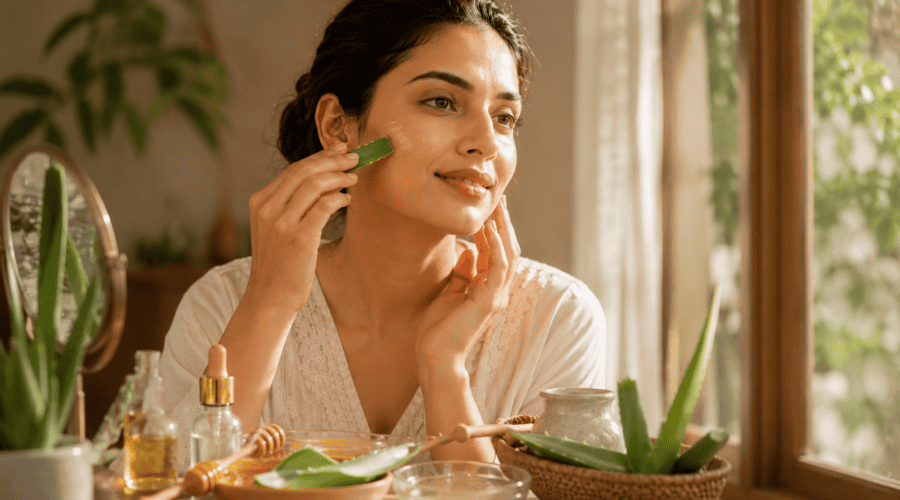
Aloe Vera Benefits for Skin and How to Use – Quick Answer: Aloe vera may help hydrate, soothe, and brighten skin thanks to its anti-inflammatory compounds, natural enzymes, and high water content. Apply pure aloe gel directly to clean skin as a moisturiser, spot treatment, or overnight mask. Most women notice softer, calmer skin within 5–7 days of consistent use.
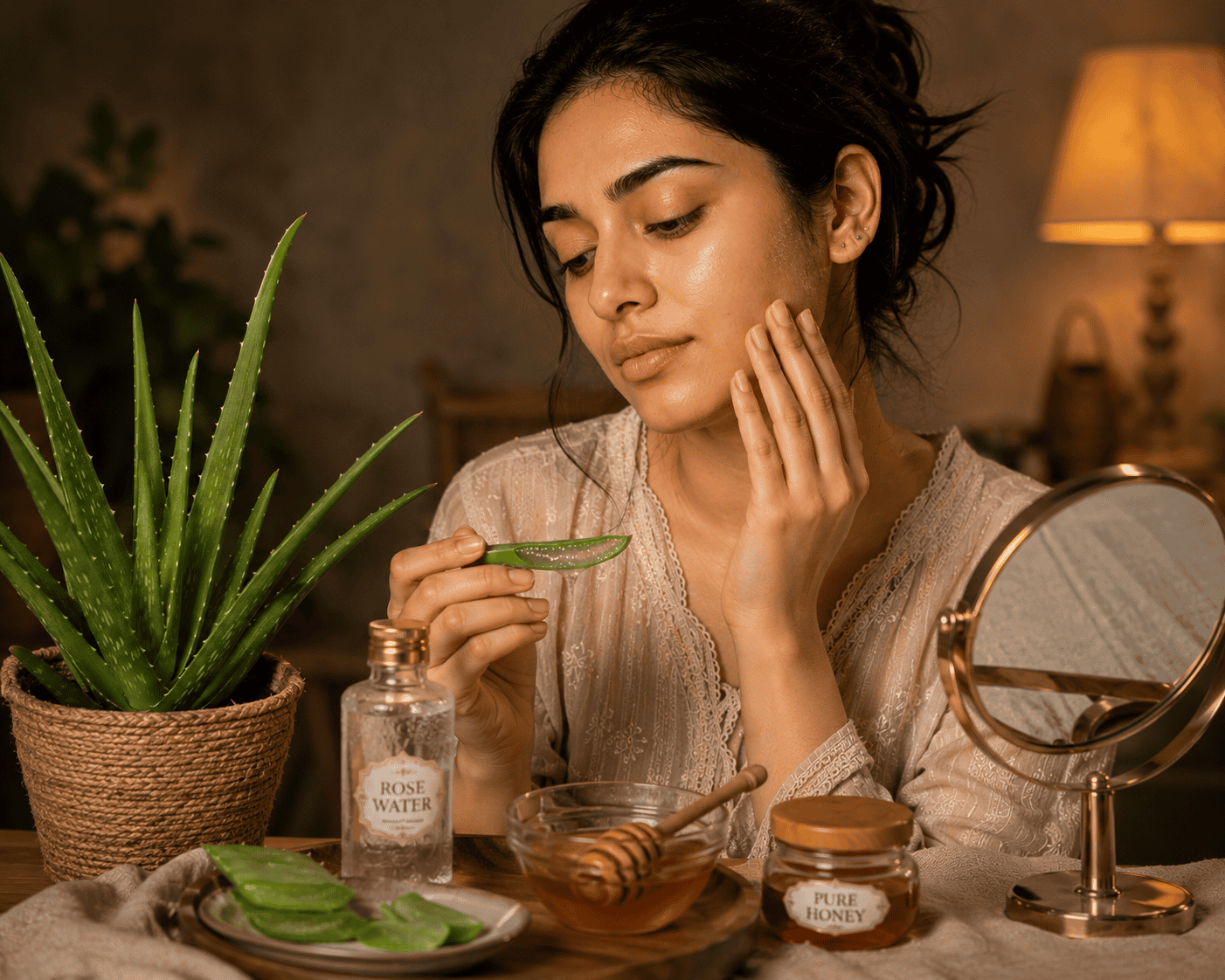
I still remember the morning I broke off a thick aloe leaf from my mother-in-law’s windowsill plant and smeared the cool, slightly slippery gel across my face for the first time. I was skeptical. It smelled faintly green, it felt strange, and honestly it looked like something you’d find in a fish tank. Three days later, the stubborn redness along my jaw — the kind that never fully responded to any of the expensive creams I’d tried — had visibly calmed down. I was converted.
My friend Nadia had been telling me about aloe vera for years before I finally listened. She grew up watching her mother break off a fresh leaf every single morning, split it down the middle, and run the gel side across her face before washing. “Chemical-free moisturiser before it was trendy,” Nadia always says. She now keeps three aloe plants on the windowsill of her London flat and refuses to buy a separate toner or overnight mask. I used to roll my eyes. I don’t anymore.
Here’s what I’ve learned after years of testing: aloe vera genuinely works, but how you use it makes all the difference. Done right, it costs almost nothing and delivers results that rival products ten times the price. Done wrong, you’ll end up with a sticky face and zero results. Here’s what actually works, what’s overhyped, and how to see real results.
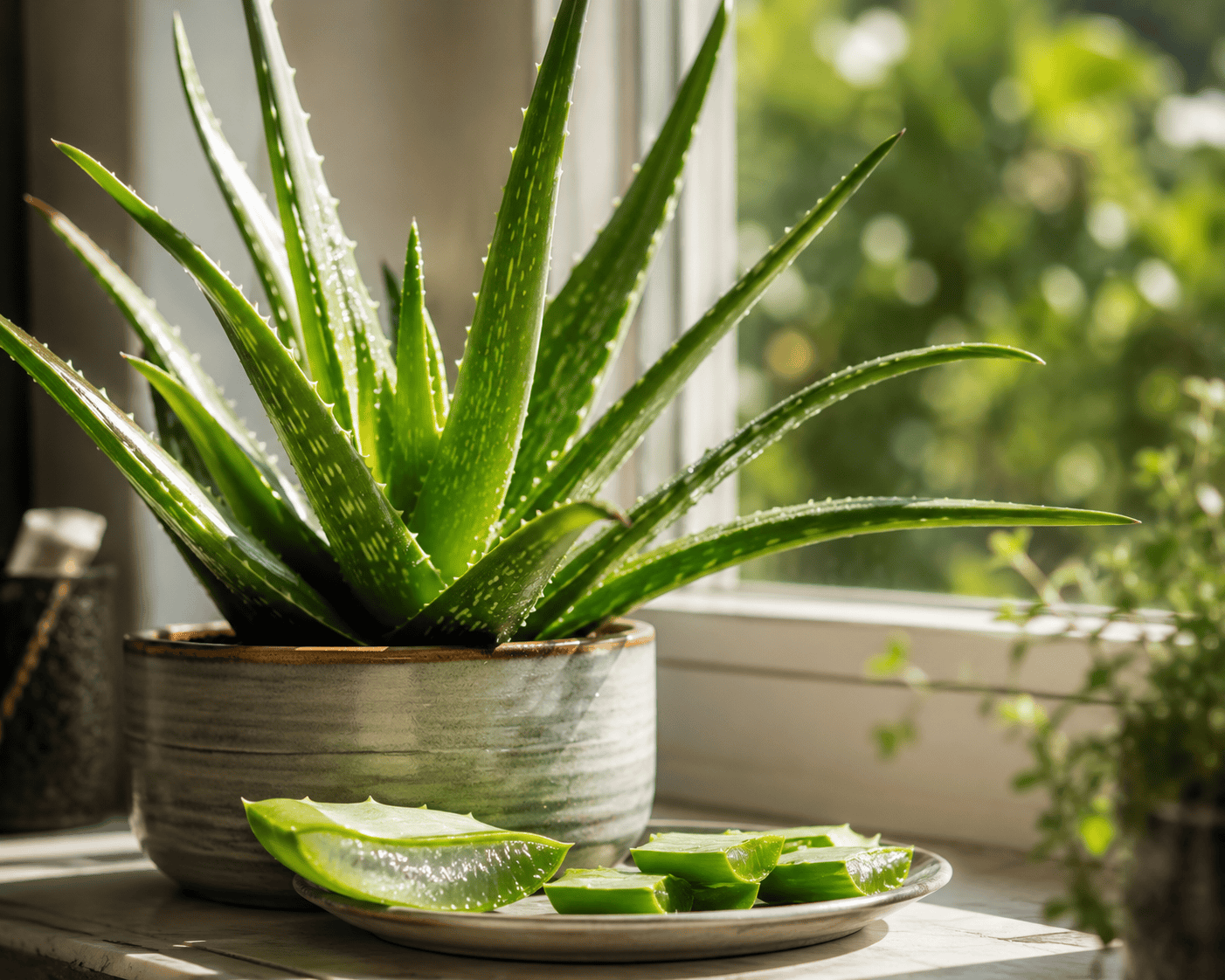
What Aloe Vera Actually Does for Your Skin (And What Most People Get Wrong)
Aloe vera is not a miracle cream. It will not bleach your skin, eliminate deep wrinkles overnight, or permanently clear severe acne. Anyone promising you that is selling something.
What it IS:
- A powerful humectant — it draws moisture into the skin and holds it there
- A natural anti-inflammatory — its compounds gibberellins and polysaccharides calm redness and irritation
- A lightweight barrier support — helps protect the skin’s natural moisture barrier without clogging pores
- A source of vitamins C and E, enzymes, and amino acids that support healthy cell turnover
What it ISN’T:
- A skin bleaching agent (it can gently even out tone over time, but won’t lighten your complexion dramatically)
- A replacement for sunscreen (it provides no UV protection)
- Instantly effective — patience is required, just like any skincare ingredient
- Safe for everyone without patch testing first
The trick is understanding that aloe works best as a supporting ingredient in a consistent routine — not as a one-time fix.

Also Read: Turmeric Face Pack for Glowing Skin
Does Aloe Vera Really Work as a Daily Moisturiser?
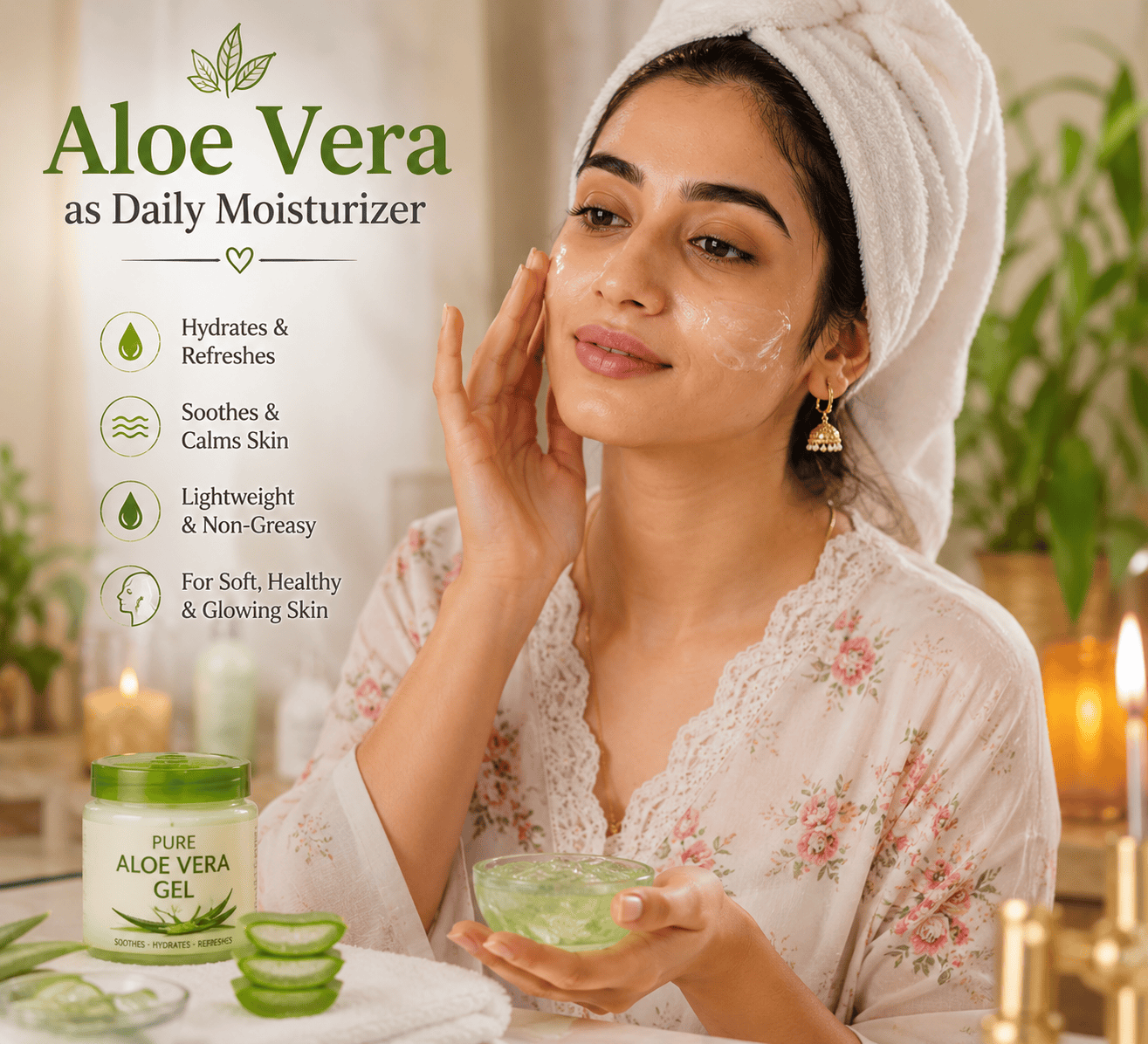
Yes — and it’s one of the most underrated daily moisturisers available. Aloe gel is made up of approximately 96% water, but what makes it effective is its polysaccharide content, which forms a lightweight film on the skin that locks in that hydration without the heaviness of a cream.
I switched to pure aloe gel as my morning moisturiser for one month and noticed my skin felt less tight after washing within the first week. The texture is light enough that it works beautifully under SPF without pilling.
How to use it:
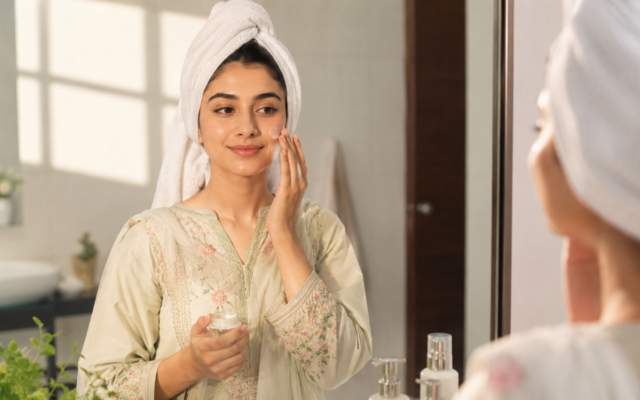
- Cleanse your face and pat dry — leave skin slightly damp
- Scoop about half a teaspoon of pure aloe gel into your palm
- Warm it between your fingers and press gently into skin — don’t rub aggressively
- Follow with your SPF in the morning or a heavier moisturiser at night if your skin is very dry
Best for: All skin types, especially dry, dehydrated, and combination skin. If you have oily skin, this may be the only moisturiser you need. Cost: $0 if you grow your own plant; $6–10 for a quality bottled gel Time to results: Softer, more comfortable skin within 5–7 days
💡 Pro Tip: Apply to slightly damp skin — the aloe will lock in that surface moisture and you’ll get significantly better hydration than if you apply to a completely dry face.
How to Use Aloe Vera on Your Face Overnight
This is Nadia’s favourite trick, and honestly the one that made me a true believer. Aloe vera as an overnight sleeping mask is one of the most effective — and cheapest — things you can do for your skin.
Skin does its repair work at night. Aloe’s acemannan compound (a complex carbohydrate) actively supports cell regeneration during those hours. Apply a thin layer and wake up to noticeably softer skin. After two weeks of doing this every other night, I stopped reaching for the £40 overnight cream I’d been buying.
How to use it:
- Double-cleanse your face thoroughly before bed
- Apply any serums you use first and let them absorb
- Apply a thin layer of pure aloe gel all over — it should feel barely-there, not goopy
- Leave it on overnight — no need to rinse
- In the morning, simply splash with water and continue your routine
Best for: Dry skin, dull skin, anyone living in cold or central-heated environments (UK winters, Canadian winters — this one is essential) What to expect: Softer skin by morning; a visible glow within 10–14 days of consistent use
⚠️ Use only pure gel (99% aloe content). Avoid products containing alcohol (denat.), artificial fragrance, or green dye — the green colour is artificial. Real aloe gel is clear to slightly yellow.
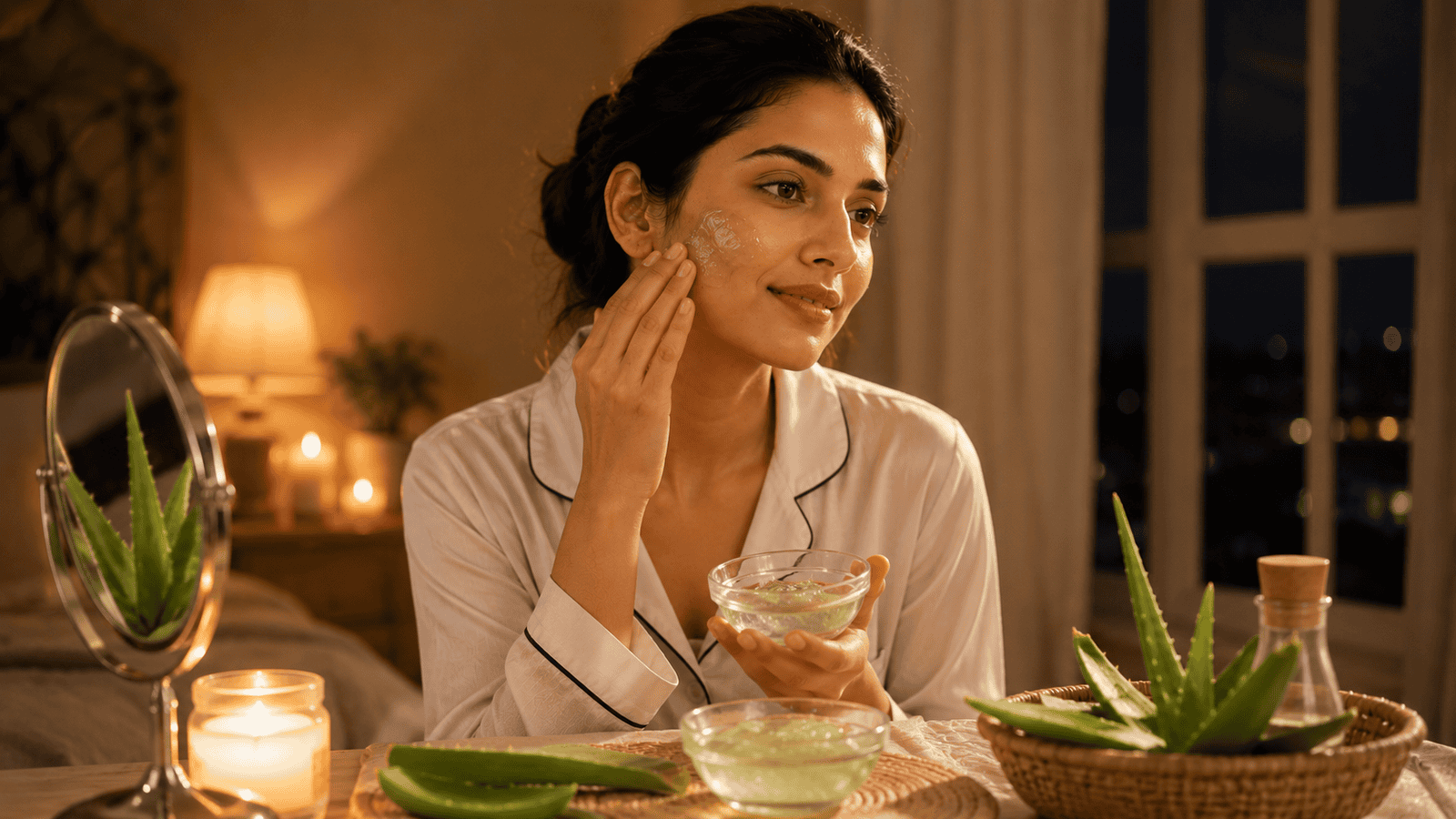
Can Aloe Vera Help with Acne and Pimples?
This is one of the questions I get asked most often, and the honest answer is: yes, but with realistic expectations.
Aloe’s gibberellins have demonstrated antimicrobial properties in research. Combined with honey — which contains hydrogen peroxide — this simple two-ingredient mask may genuinely help calm active breakouts and reduce redness.
According to a study published in the Journal of Dermatological Science, aloe vera’s anti-inflammatory properties helped reduce the severity of acne lesions in participants after 8 weeks of use.
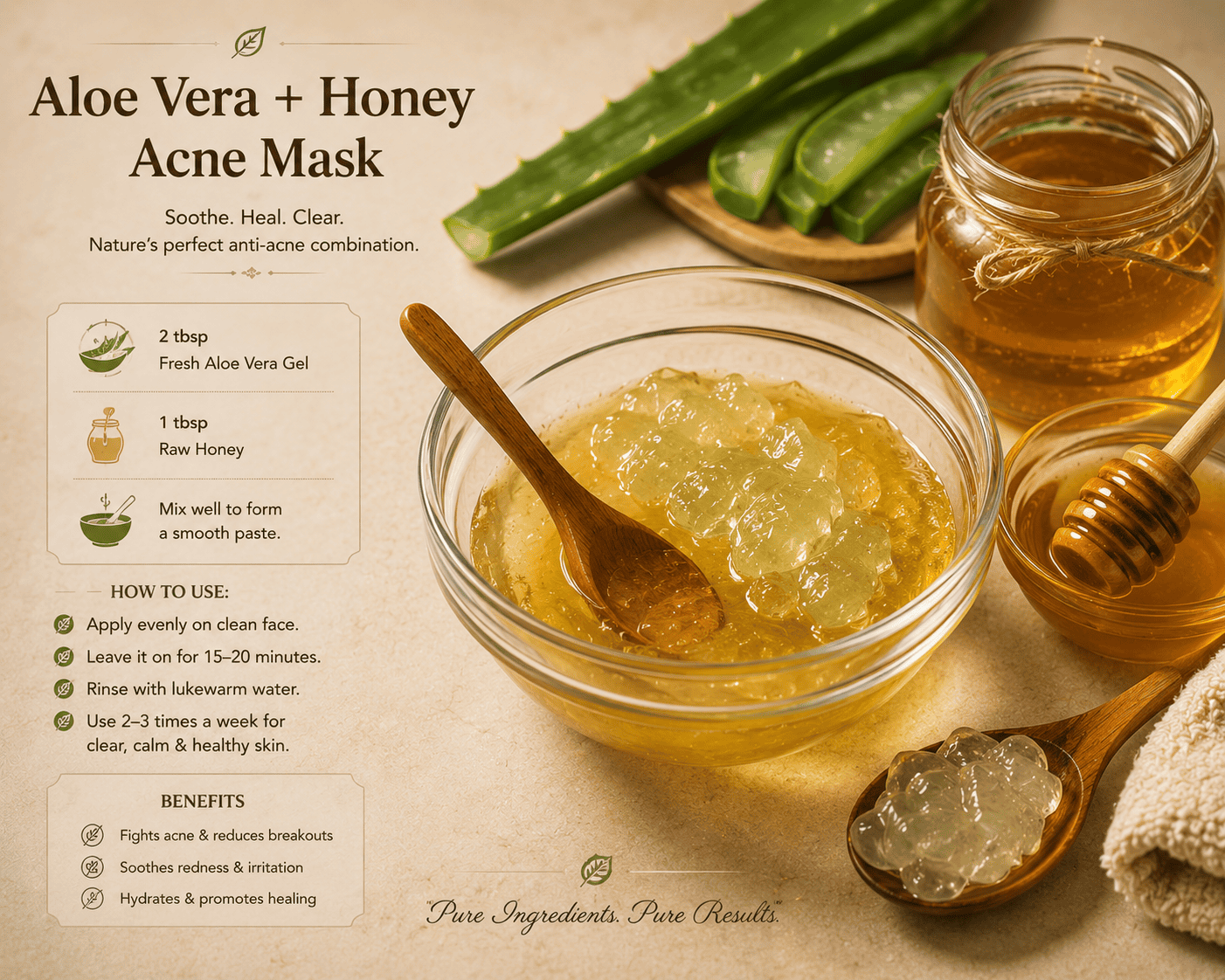
DIY Aloe + Honey Mask for Acne:
- 2 tablespoons pure aloe gel
- 1 tablespoon raw Manuka honey (or raw honey if Manuka is out of budget)
- Mix together and apply to clean skin for 15–20 minutes
- Rinse with cool water
- Use 3 times a week
Best for: Acne-prone and sensitive skin Cost: Under $3 per use Time to results: Redness reduced within 24–48 hours; overall breakout management in 2 weeks Honest note: This works best for mild to moderate acne. Cystic or hormonal acne needs a dermatologist’s assessment — consult your doctor if breakouts are severe, painful, or leaving significant scarring.
💡 Pro Tip: After the mask, apply a thin layer of aloe gel as a spot treatment directly on blemishes and leave overnight. The cooling sensation you’ll feel is the inflammation calming down.
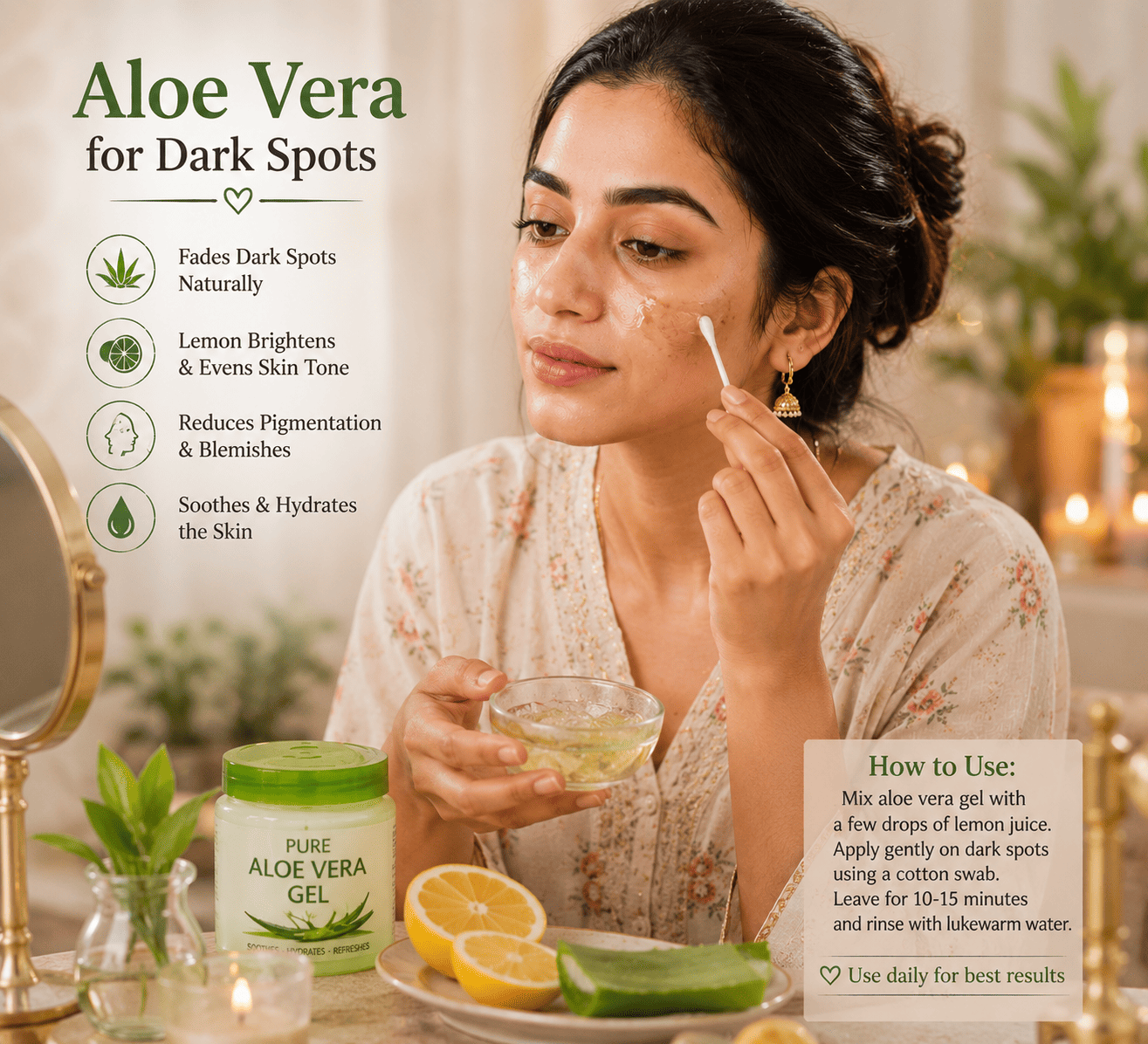
Aloe Vera for Dark Spots: Does It Actually Work?
Let me be honest here — this is where TikTok dramatically oversells aloe vera. It will not remove dark spots quickly. What it can do, with consistent use over 6–8 weeks, is gently support a more even skin tone.
Aloe contains a compound called aloin, which has mild depigmenting properties. Combined with lemon’s vitamin C, you have a low-cost, gentle brightening treatment that many women find effective for post-acne marks and sun spots.
Aloe + Lemon Dark Spot Treatment:
- 1 tablespoon pure aloe gel
- 3–4 drops fresh lemon juice
- Mix and apply only at night to dark spots (not all over face)
- Leave for 20 minutes then rinse, or leave overnight if your skin tolerates it
⚠️ Important: Lemon is photosensitive. Never apply this before going outside. Always rinse before morning. Avoid on broken or irritated skin. If you experience stinging, dilute with more aloe or skip lemon entirely.
Best for: Post-acne marks, mild hyperpigmentation, uneven skin tone Cost: Under $1 per use Time to results: 6–8 weeks of consistent use — I know that feels slow, but this is the honest timeline
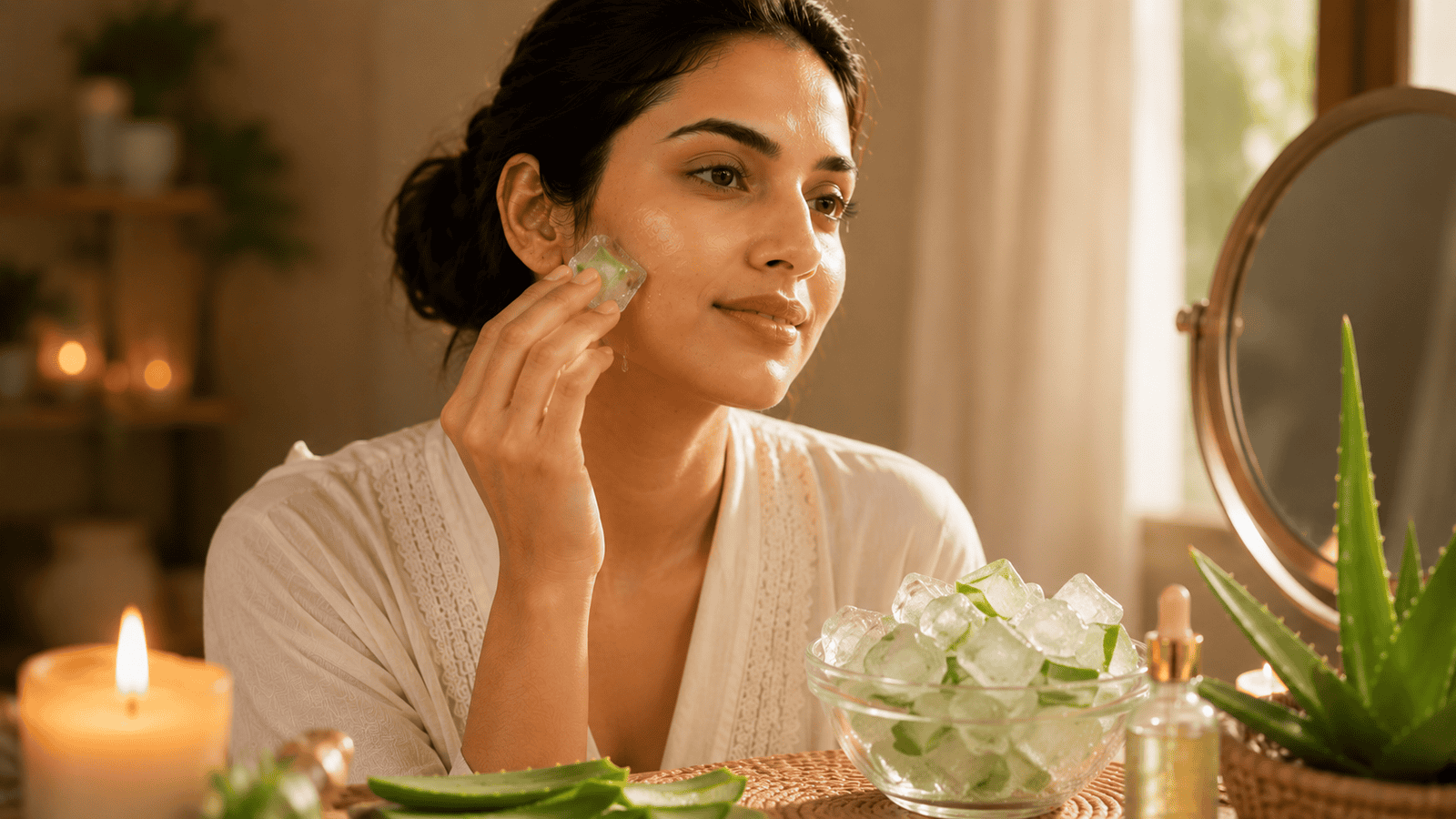
Aloe Vera Ice Cubes for Pores and Puffiness
I learned this the hard way — spending money on expensive pore-minimising products when the solution was sitting in my kitchen the whole time.
Freeze pure aloe gel in an ice cube tray. Each morning, take one cube and gently rub it across your face for 30–60 seconds. The cold constricts pores temporarily and reduces morning puffiness, while the aloe delivers its anti-inflammatory benefits at the same time.
Sound too simple? That’s exactly why it works.
Best for: Oily skin, large pores, anyone with morning puffiness Cost: $0 (if you grow a plant) Effect: Immediate tightening; refined pore appearance in 3–4 weeks of daily use
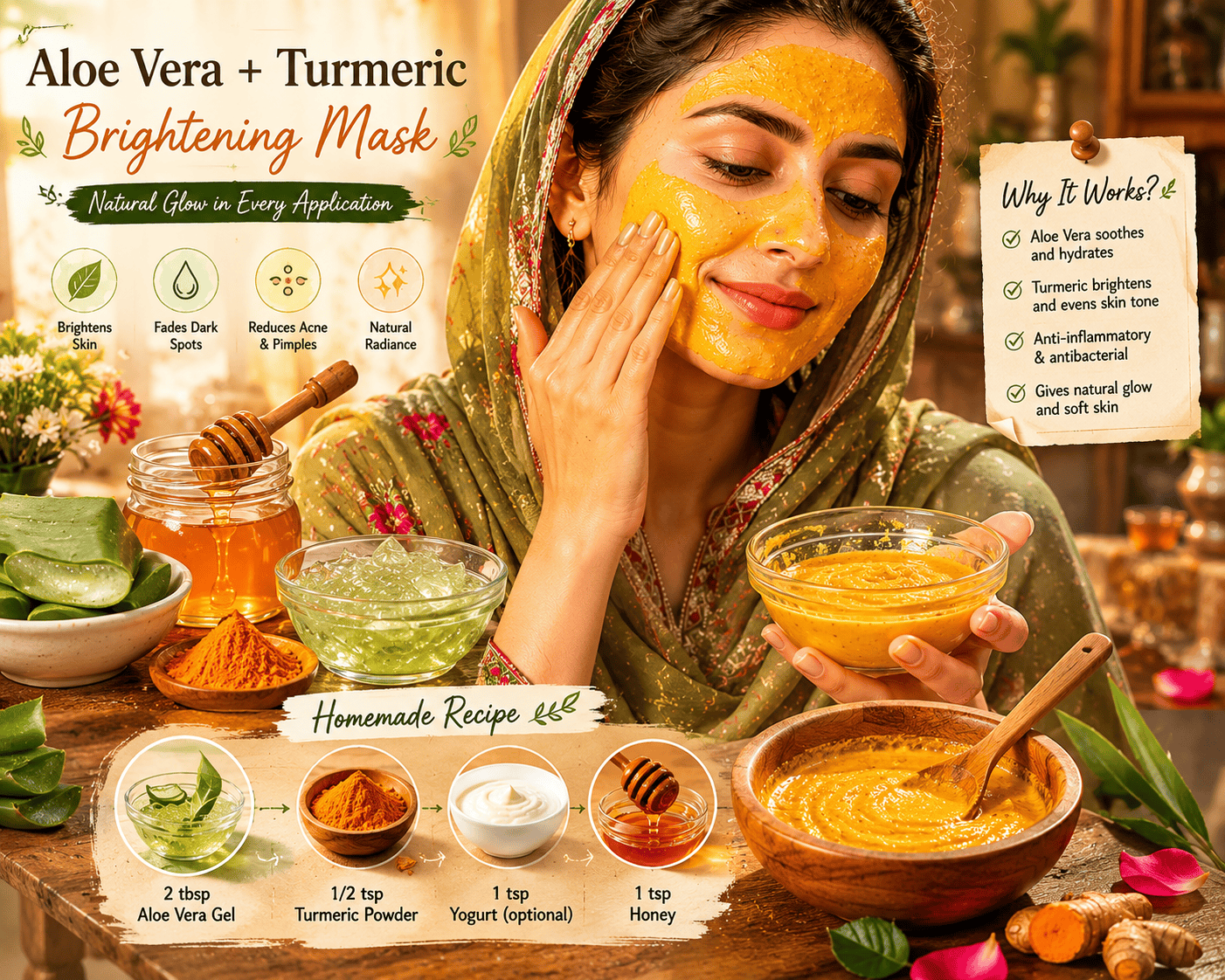
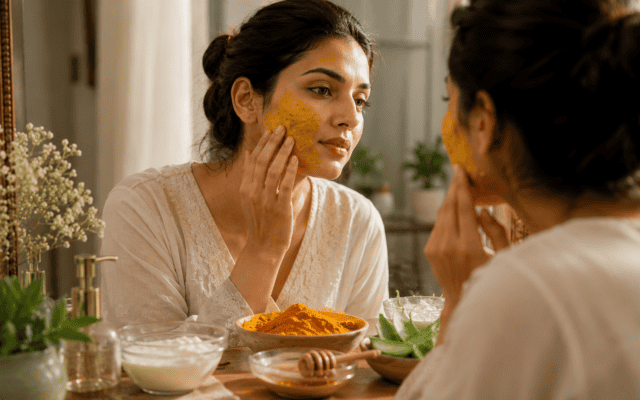
Aloe Vera + Turmeric Face Mask for Brightening
This is the mask Nadia swears by for glowing skin. Her mother made it every Friday evening, and Nadia has carried on the tradition. I’ve been doing it every Sunday for months and the difference in my skin tone is genuinely noticeable.
Turmeric’s curcumin inhibits an enzyme involved in melanin production, which may help with uneven tone and dullness over time. Aloe keeps the turmeric from being too harsh.
Ingredients:
- 2 tablespoons aloe gel
- ¼ teaspoon turmeric powder
- 1 teaspoon raw honey
Mix thoroughly, apply to clean face, leave for 15 minutes, rinse with warm water. Use 2–3 times a week.
Best for: Dull skin, uneven skin tone, South Asian skin tones prone to hyperpigmentation Cost: Under $2 per use Time to results: 3–4 weeks with consistent use
⚠️ Patch test first. Turmeric can temporarily stain very fair skin. If you notice yellowish tint, reduce the amount of turmeric or shorten the mask time.
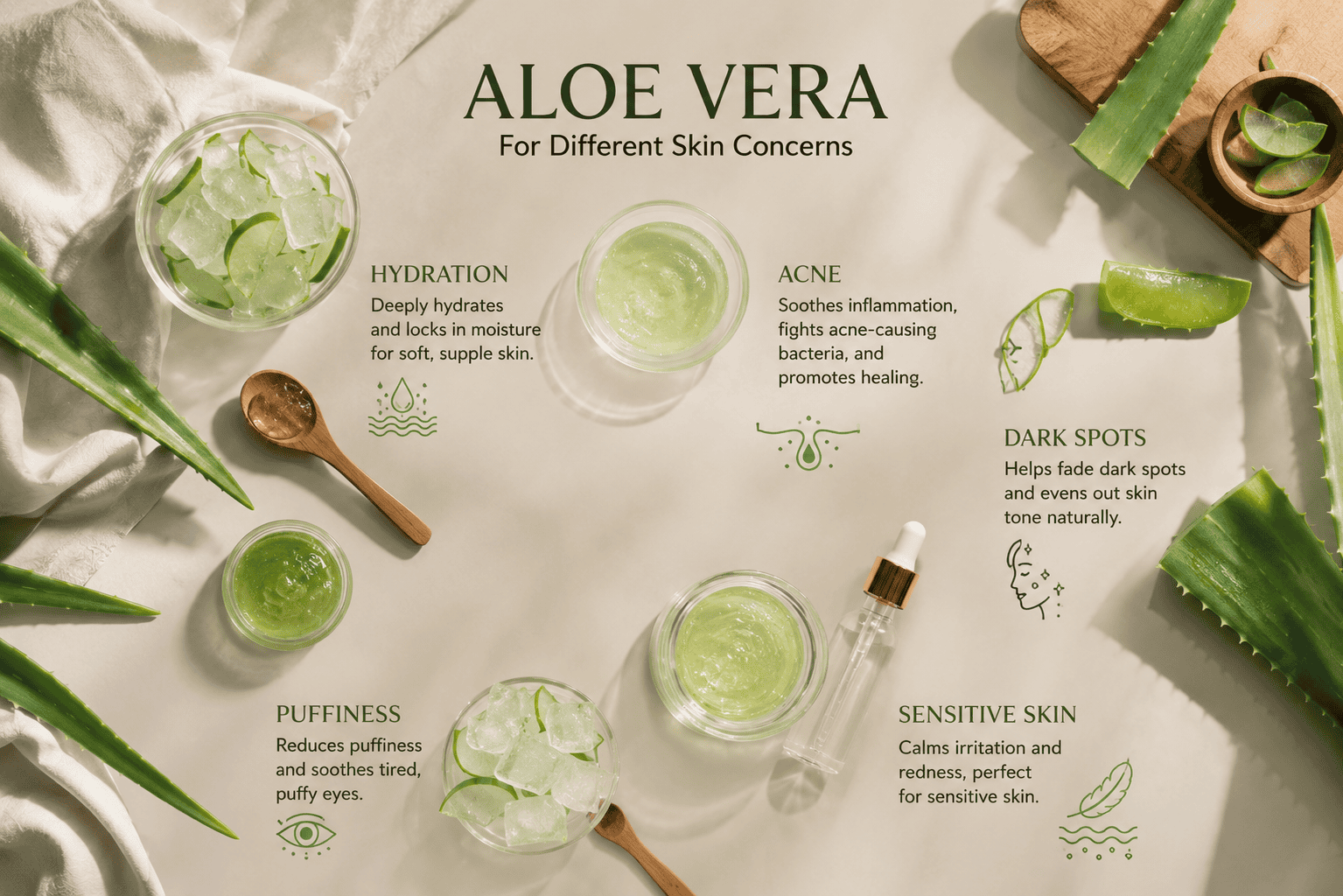
Comparison Table: Aloe Vera Uses for Skin
| Method | Cost | Time to Results | Difficulty | Best For |
|---|---|---|---|---|
| Daily moisturiser | $0–10 | 5–7 days | Easy | All skin types |
| Overnight mask | $0–10 | 10–14 days | Easy | Dry, dull skin |
| Acne + honey mask | $2–3 | 2 weeks | Easy | Acne-prone, sensitive |
| Dark spot treatment (+ lemon) | Under $1 | 6–8 weeks | Easy | Post-acne marks |
| Aloe ice cubes | $0 | Immediate + 3–4 weeks | Easy | Oily, large pores |
| Turmeric brightening mask | Under $2 | 3–4 weeks | Easy | Dull, uneven tone |
| Anti-aging (+ Vitamin E) | Under $2 | 4–6 weeks | Easy | Ages 30+, fine lines |
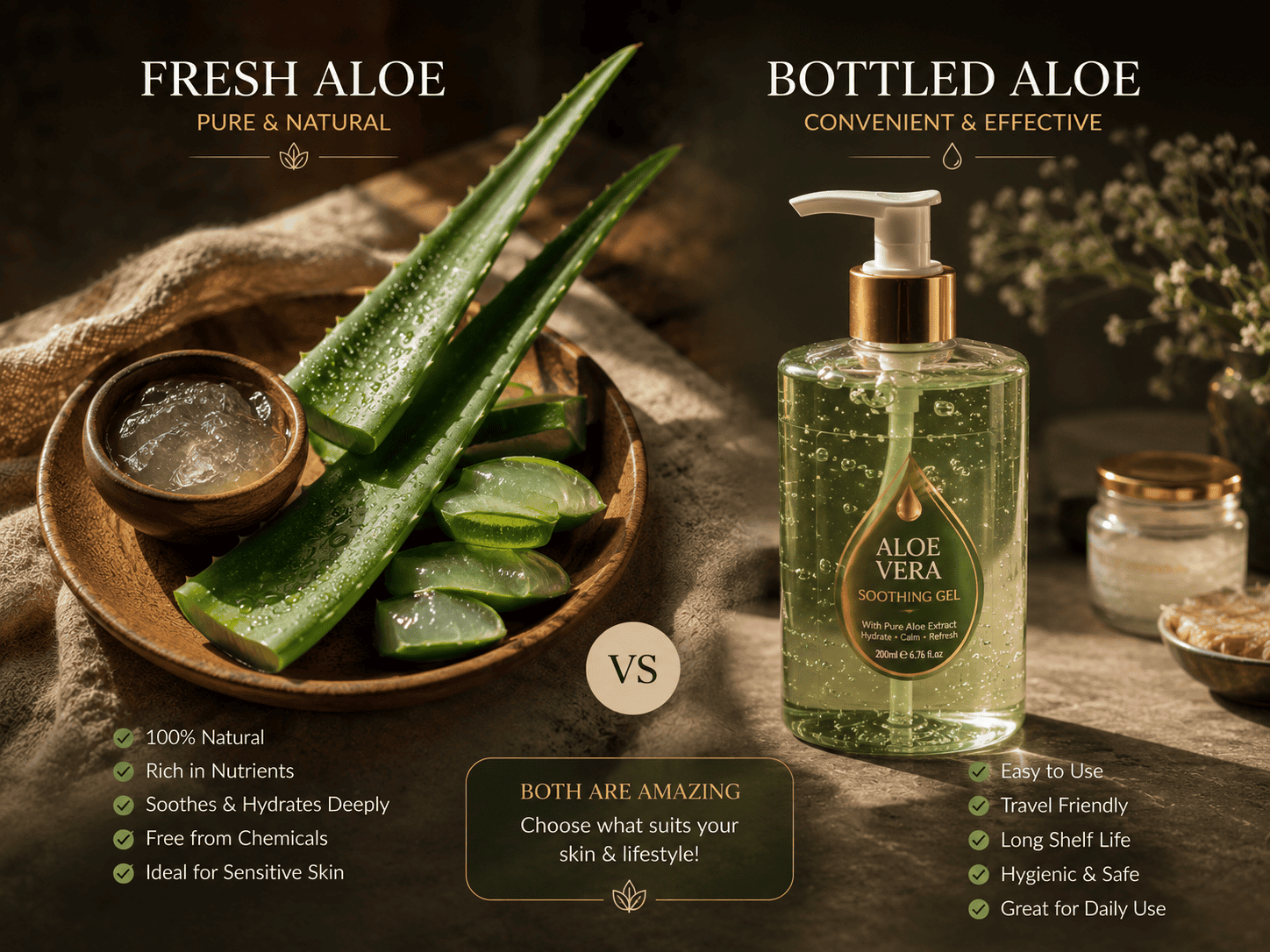
Fresh Aloe vs. Bottled Gel — What’s Actually Worth It?
Honestly, I’ve been asked this question so many times that I need to settle it once and for all.
Fresh aloe from a plant is superior in terms of active enzyme content — processing destroys some of these naturally occurring compounds. If you have the space, a small aloe vera plant ($5–15 one-time cost) gives you an unlimited supply for years.
Bottled gel is more convenient, travels well, and is perfectly effective if you choose the right one.
What to look for in bottled gel:
- Aloe listed as the FIRST ingredient
- 99%+ aloe content stated on packaging
- No alcohol (denat.) in the ingredients — this is drying
- No artificial fragrance or green dye (pure aloe is clear or slightly yellow)
- Brands worth trying: Fruit of the Earth 100% Aloe Vera Gel (~$6), Seven Minerals Pure Aloe Vera Gel (~$15)
What to avoid: Any “aloe gel” where aloe appears fifth or later on the ingredients list — you’re mostly buying water and filler.
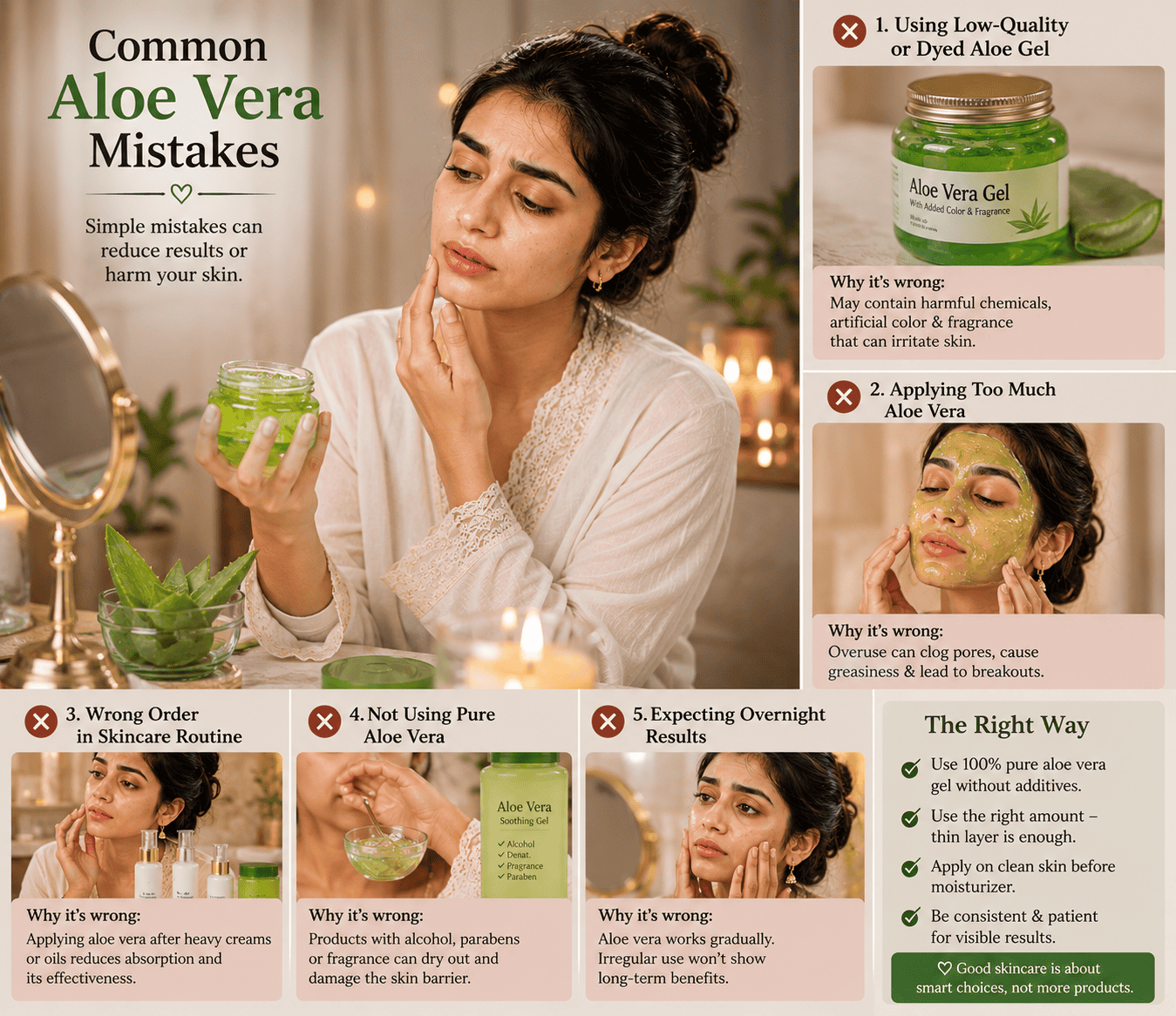
Common Mistakes Women Make with Aloe Vera
The biggest mistake most women make is applying aloe over their moisturiser instead of under it. Aloe’s molecules cannot penetrate a heavy cream barrier — it just sits on top and becomes sticky and useless.
Here’s the correct order: Cleanser → Toner → Aloe Gel → Serum → Moisturiser → SPF (morning)
Other common mistakes:
- Using green-dyed aloe gel (mostly filler and alcohol — this is what I did for months before realising)
- Applying too much — a thin layer works better than a thick, goopy application
- Expecting overnight miracles — consistency over weeks is what delivers results
- Not patch testing first — some people do react, especially to bottled products with added ingredients
- Mixing aloe with retinol on the same night — this can cause irritation; alternate nights instead
When to See a Doctor
Aloe vera is a wonderful supporting ingredient, but there are clear signs that it’s time to consult your doctor rather than reaching for a home remedy.
See a dermatologist if:
- Acne is cystic, painful, or leaving deep scars
- Dark spots are spreading, changing colour, or have irregular edges
- You develop a rash, hives, or burning after applying aloe (allergic reaction)
- Your skin condition shows no improvement after 8–12 weeks of consistent care
- You’re dealing with conditions like eczema, psoriasis, or rosacea — these need professional management alongside any home care
Please consult your doctor before making significant changes to your skincare routine if you have a diagnosed skin condition or are on prescription skincare medication.
People Also Ask
❓ What does aloe vera actually do for your skin? → Aloe vera acts as a humectant (draws and holds moisture), an anti-inflammatory (calms redness and irritation), and a light barrier support. It may also help with mild brightening and skin cell turnover over time. It works best as a consistent daily or nightly ingredient, not a one-off treatment.
❓ Can I apply aloe vera directly from the plant on my face? → Yes — this is actually the most effective method. Split a fresh leaf, scoop out the clear inner gel, and apply to clean skin. Avoid the yellow latex layer just under the skin of the leaf, as this can irritate sensitive skin.
❓ How often should I apply aloe vera to my face? → Daily use is safe for most skin types. You can apply it as a moisturiser each morning, an overnight mask every other night, or as a spot treatment whenever needed. 3–7 times per week is the sweet spot for most women.
❓ Is aloe vera safe for sensitive or acne-prone skin? → Generally yes — it’s one of the gentler natural ingredients available. However, always patch test first (apply a small amount to your inner arm and wait 24 hours). Some people react to preservatives or additives in bottled gels, so pure fresh aloe is safest for very sensitive skin.
❓ Does aloe vera work for dark spots and hyperpigmentation? → It can help gradually even skin tone thanks to a compound called aloin, but results are slow — 6–8 weeks minimum. It works better for preventing new dark spots from forming (by keeping skin healthy) than for quickly fading existing ones. Combined with lemon juice at night, results may improve.
FAQ
Can I apply aloe vera on my face every day? Yes — daily application is safe and beneficial for most skin types. It’s one of the few ingredients gentle enough for everyday use. If you have reactive or allergy-prone skin, start with every other day and patch test first.
How long does it take for aloe vera to improve skin? You’ll likely notice softer, more hydrated skin within 5–7 days. For improvements in acne, expect 2–3 weeks. For uneven skin tone or dark spots, allow 6–8 weeks of consistent use. Patience is the most important ingredient.
Is fresh aloe better than store-bought gel? Fresh aloe from the plant retains more active enzymes that are partially destroyed during processing. However, a high-quality bottled gel (99%+ aloe, no alcohol or fragrance) is nearly as effective and far more convenient. Both work.
Can aloe vera remove dark spots permanently? No — aloe vera’s effect on dark spots is gradual and may not be permanent if the underlying cause (sun exposure, hormones, acne) isn’t also addressed. It can help fade post-acne marks over time and gently support more even tone, but it’s not a permanent depigmentation treatment.
Does aloe vera clog pores? No. Aloe vera is non-comedogenic — it will not clog pores. This makes it one of the best moisturising options for oily and acne-prone skin types.
Can I use aloe vera on active pimples? Yes. Apply a small amount of pure aloe gel directly to active pimples as a spot treatment. Its anti-inflammatory properties may help reduce redness and swelling within 24–48 hours.
Is aloe vera good for oily skin? Excellent choice. Aloe provides hydration without any heaviness or greasiness. For oily skin, it can replace a heavier moisturiser entirely. Some women with oily skin use it as their only moisturiser under SPF.
Can I leave aloe vera on my face overnight? Yes — this is actually one of the best ways to use it. Apply a thin layer to clean skin before bed and rinse in the morning. Use pure gel with no added alcohol or fragrance.
Why is my skin breaking out after using aloe vera? This is usually caused by additives in bottled aloe gel — particularly alcohol, fragrance, or preservatives — not the aloe itself. Switch to a purer product (99%+ aloe) or use fresh gel directly from a plant.
Does aloe vera work for anti-aging and wrinkles? Some research suggests it may. A 2019 study found that aloe vera supplementation significantly improved skin elasticity and collagen production in women over 45. Topically, it provides hydration which temporarily plumps fine lines. For deeper wrinkles, combine with Vitamin E oil and use consistently.
Can aloe vera lighten skin tone? It can gently even tone and help with post-acne marks over time, but it will not dramatically lighten your natural skin colour. TikTok has significantly overhyped this effect. Think of it as a tone-evening ingredient rather than a lightening one.
What happens if I use aloe vera every day for a month? Most women report noticeably softer, more hydrated skin, calmer complexion, and in some cases reduced redness and breakouts. Results depend on your skin type and how consistently you use it. After one month, you’ll have a much clearer sense of whether it’s working for your specific skin.
Closing
If you started reading this article hoping for a magic solution, I hope I’ve given you something better — realistic information about what actually works and why. Aloe vera isn’t glamorous. It’s not a $90 serum with a glossy marketing campaign. It’s a humble plant that’s been used for thousands of years because it genuinely, quietly, consistently delivers.
I think about Nadia’s mother — no dermatologist, no skincare budget to speak of, just a leaf broken off a plant each morning. Her skin, according to Nadia, was remarkable well into her 60s. Was it all the aloe? Probably not. But it was part of a consistent, simple routine built on understanding what her skin actually needed.
Start simple. Get the routine right first. A thin layer of pure aloe gel on clean skin, morning and night, for three weeks. That’s it. See what it does for you before adding anything else.
You don’t need a dermatologist’s budget to have healthy, glowing skin. Sometimes the best ingredient really does cost $6 and sit on a drugstore shelf.
Quick Summary — Aloe Vera for Skin ✅ Best daily use: Pure aloe gel as a lightweight morning moisturiser ⏱ Time to results: 5–7 days (hydration); 6–8 weeks (dark spots) 💰 Budget option: Grow your own aloe plant — $5–15 one-time cost ⚠️ Avoid if: Allergic to plants in the Liliaceae family; always patch test 👩⚕️ See a doctor if: Severe acne, spreading dark spots, allergic reaction, or no improvement after 8–12 weeks 📌 Top tip: Apply to slightly damp skin for maximum hydration — and always under, not over, your moisturiser
Leave a Comment
Share your thoughts or questions about this article!