This article is based on published research and real-world testing. All recommendations are for informational purposes only.
Best Shampoos for Hair Fall Control — Quick Answer The best shampoos for hair fall control contain active ingredients like ketoconazole (for scalp health), caffeine (follicle stimulation), biotin, saw palmetto (DHT blocking), and salicylic acid (scalp exfoliation). Sulphate-free formulas are gentler for everyday use. Look for these key ingredients rather than brand names — most of the best options are under $15.
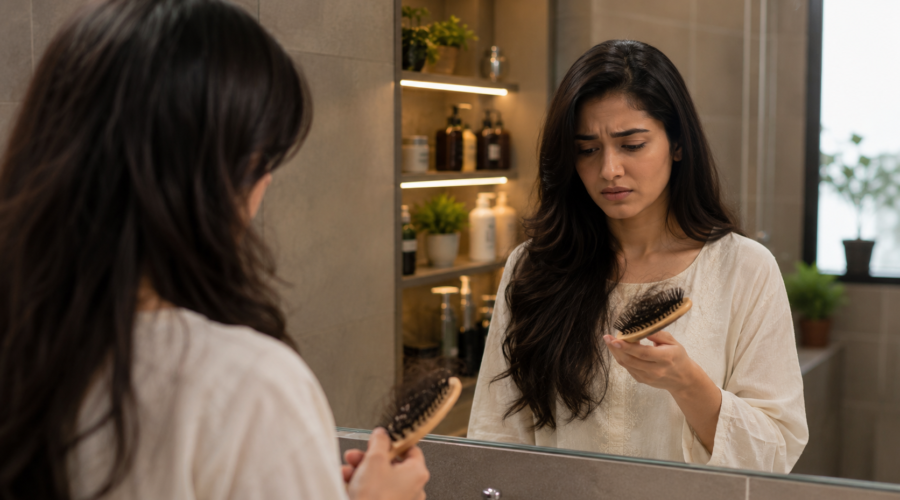
I spent almost two years switching shampoos every 6–8 weeks, convinced that the next one would be the one that finally stopped my hair from falling out. I’d try something with a pretty bottle and a promising label, feel like it was working for the first three weeks (new product effect — it’s real), and then be right back where I started by week six.
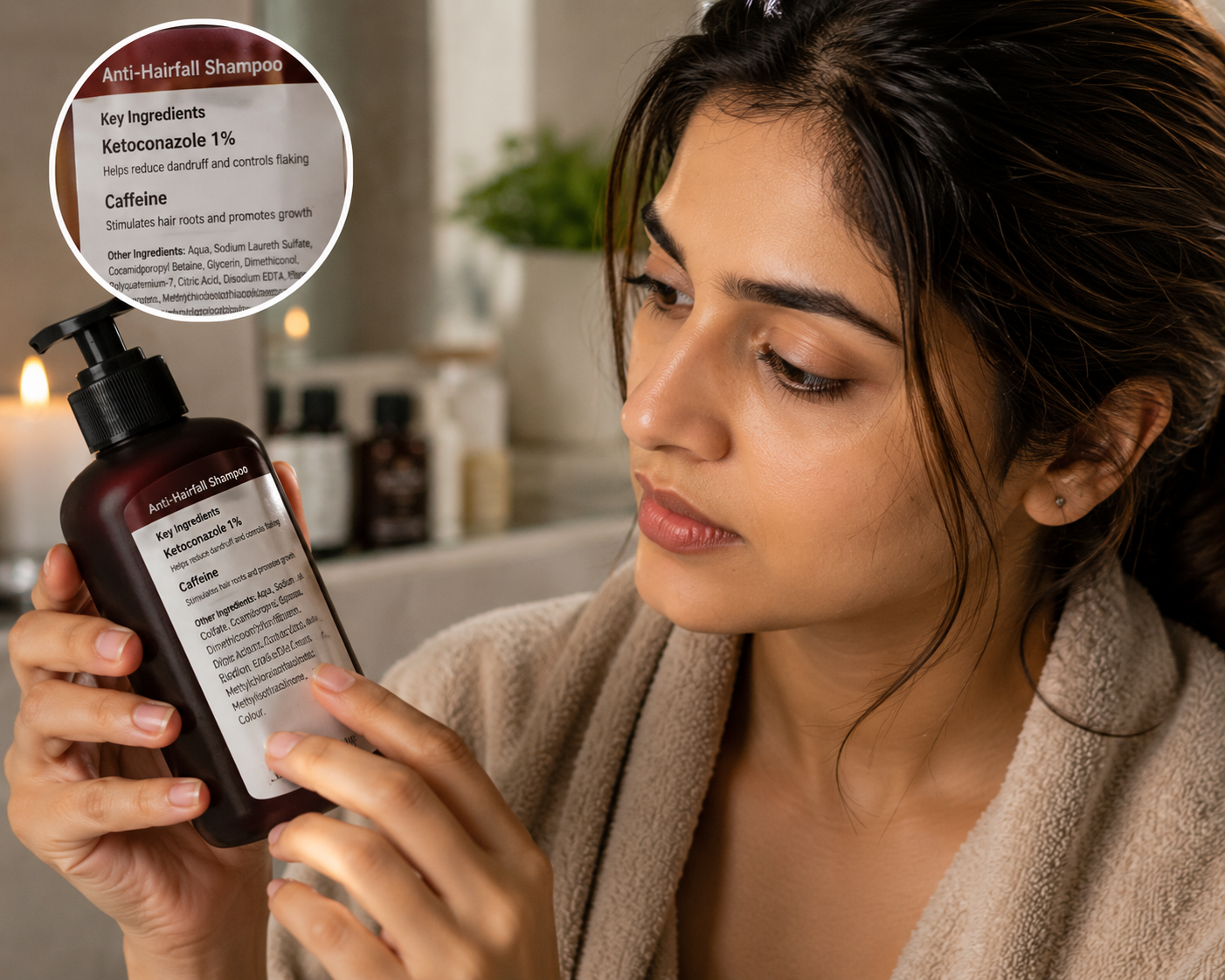
Nadia watched this cycle with visible patience and then, finally, handed me a plain-looking bottle of ketoconazole shampoo she’d been using for eight months. “Stop looking at the packaging,” she said. “Read the ingredient list.”
That was the advice that actually changed my hair. Because most Best Shampoos for Hair Fall Control — including very expensive ones — don’t contain the ingredients that research backs. They contain nice-smelling filler, some biotin (which barely penetrates from outside), and a lot of hope. Here’s what you actually need to look for.

What Shampoo Can (and Cannot) Do for Hair Fall
Let’s be honest about this upfront, because the marketing doesn’t always tell you the truth.
What shampoo CAN do:
- Create a healthier scalp environment (reducing inflammation, buildup, fungal growth that can impair follicles)
- Remove excess sebum and product buildup that clogs follicles
- Deliver some active ingredients (caffeine, ketoconazole) in concentrations that reach the follicle
- Strengthen existing strands to reduce mechanical breakage
What shampoo CANNOT do:
- Reverse genetic hair loss (androgenetic alopecia) on its own
- Replace nutritional deficiencies (iron, Vitamin D, biotin)
- Reactivate dormant or dead follicles without medical treatment
- Substitute for addressing hormonal causes of hair loss
The trick is: a good shampoo is one part of a hair fall strategy — not the whole strategy. Used correctly and consistently, the right shampoo can meaningfully reduce shedding. Used in isolation while ignoring diet, stress, and scalp health — it will disappoint you.
Also Read: How to Do Hot Oil Treatment at Home
Best Shampoos for Hair Fall Control: The Ingredients That Actually Work for Hair Fall Control
1. Ketoconazole — The Most Underrated Anti-Hair Fall Ingredient
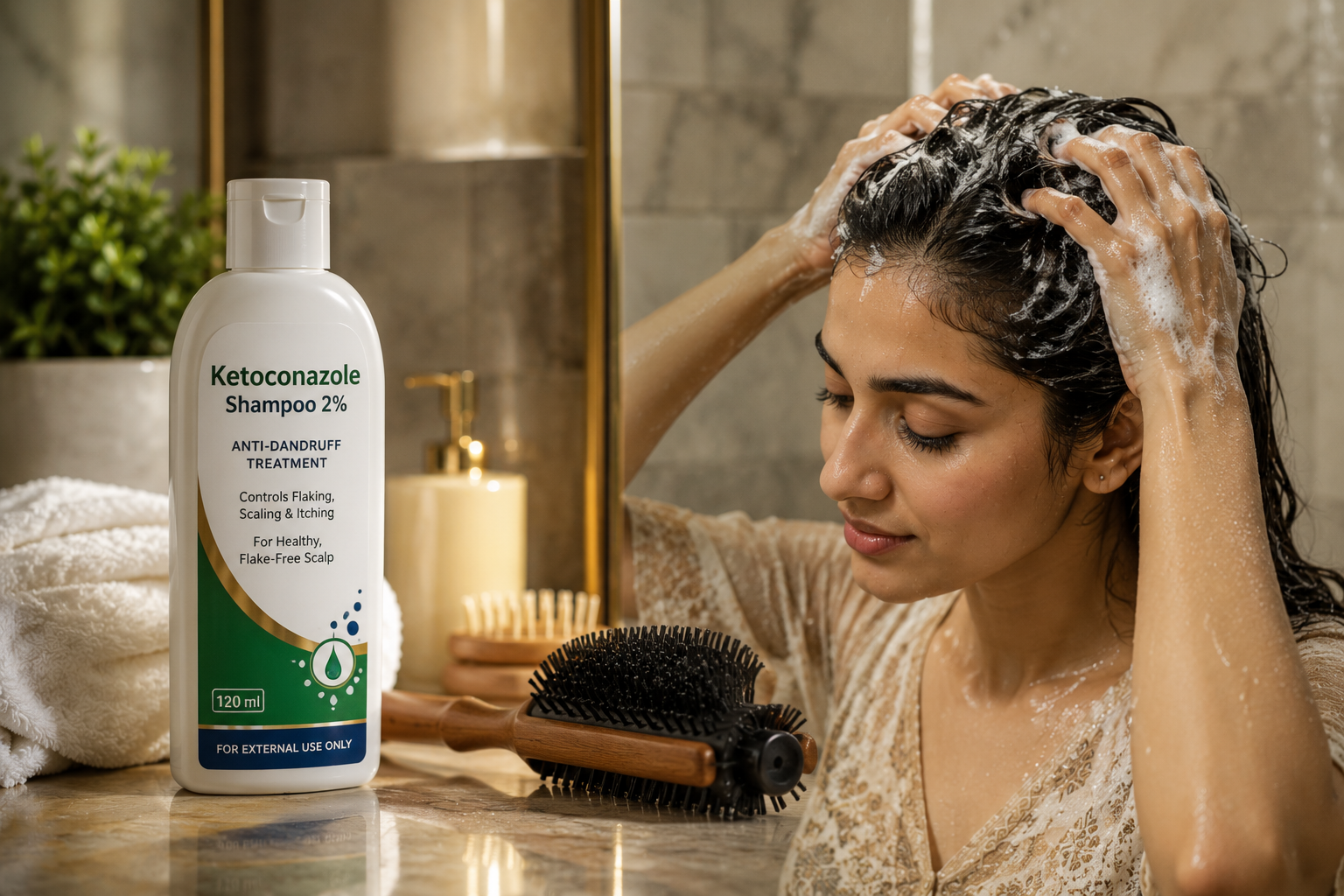
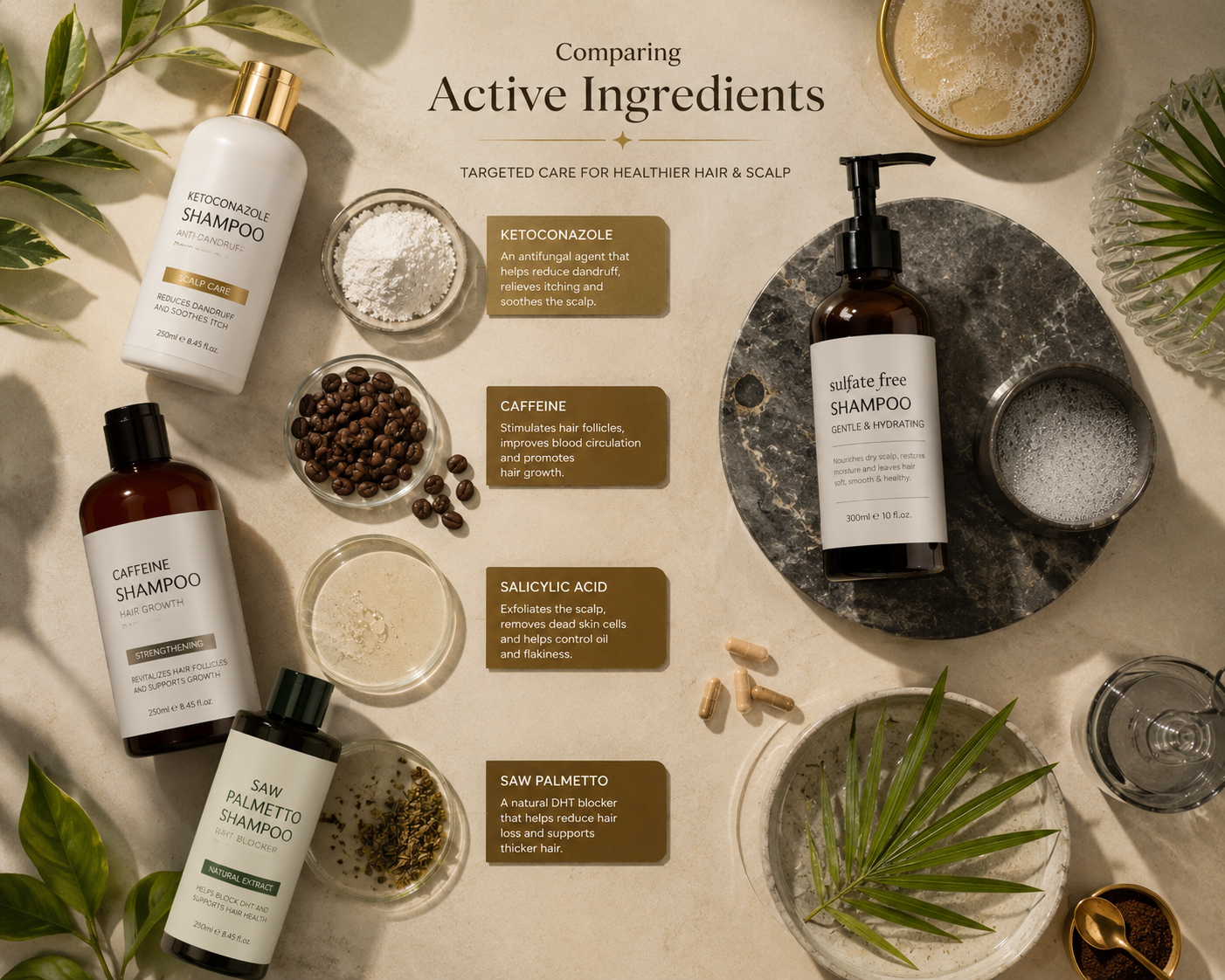
Ketoconazole is an antifungal agent, and it’s one of the most evidence-backed ingredients for hair fall reduction. Here’s why: one of the most common causes of scalp inflammation is Malassezia — a naturally occurring yeast that, when overgrown, damages follicles and accelerates shedding. Ketoconazole reduces this yeast population.
A 2007 study in the Journal of Dermatology found that ketoconazole shampoo (2%) was comparable to minoxidil 2% in increasing hair density in women with androgenetic alopecia. That’s a remarkable result for a shampoo ingredient.
What to look for: 1% ketoconazole (available over the counter in most countries) or 2% (prescription in some regions). How to use: Apply to scalp, leave for 3–5 minutes before rinsing. Use 2–3 times per week.
💡 Pro Tip: Ketoconazole shampoos are often marketed as dandruff shampoos. Don’t be put off by this — dandruff and hair loss are frequently related (scalp inflammation from Malassezia drives both).
2. Caffeine — Follicle Stimulation From the Outside
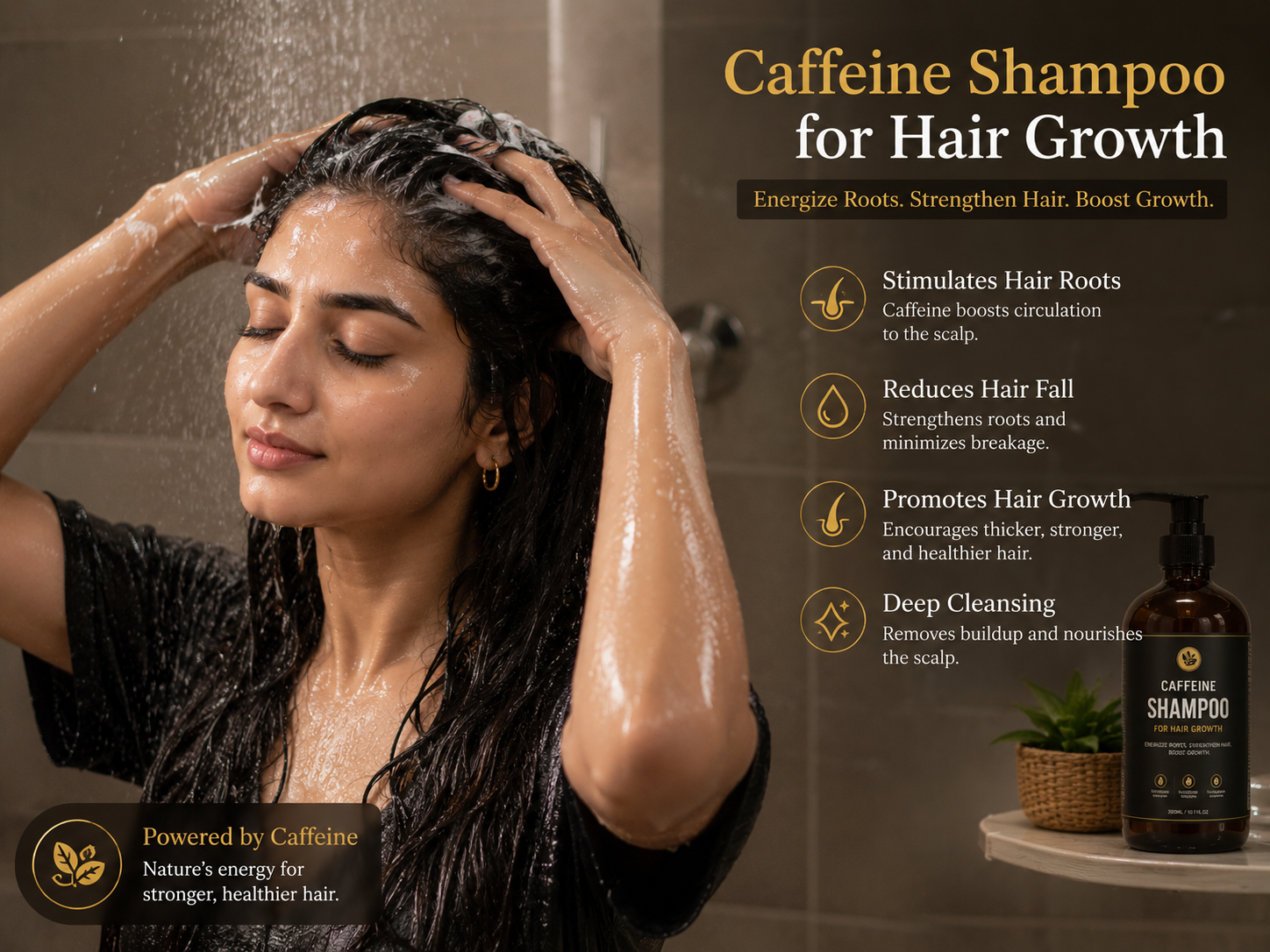
A 2007 study in the International Journal of Dermatology found that caffeine applied topically can penetrate the scalp and stimulate the hair matrix cells — the cells responsible for hair production. In laboratory conditions, caffeine even counteracted the follicle-suppressing effect of testosterone (relevant for DHT-driven hair loss).
What to look for: “Caffeine” in the first 6 ingredients on the label — position matters. If it’s listed near the bottom with fragrance, the concentration is too low. How to use: Leave on for at least 2 minutes before rinsing to allow penetration.
3. Salicylic Acid — Clearing the Way for Follicles
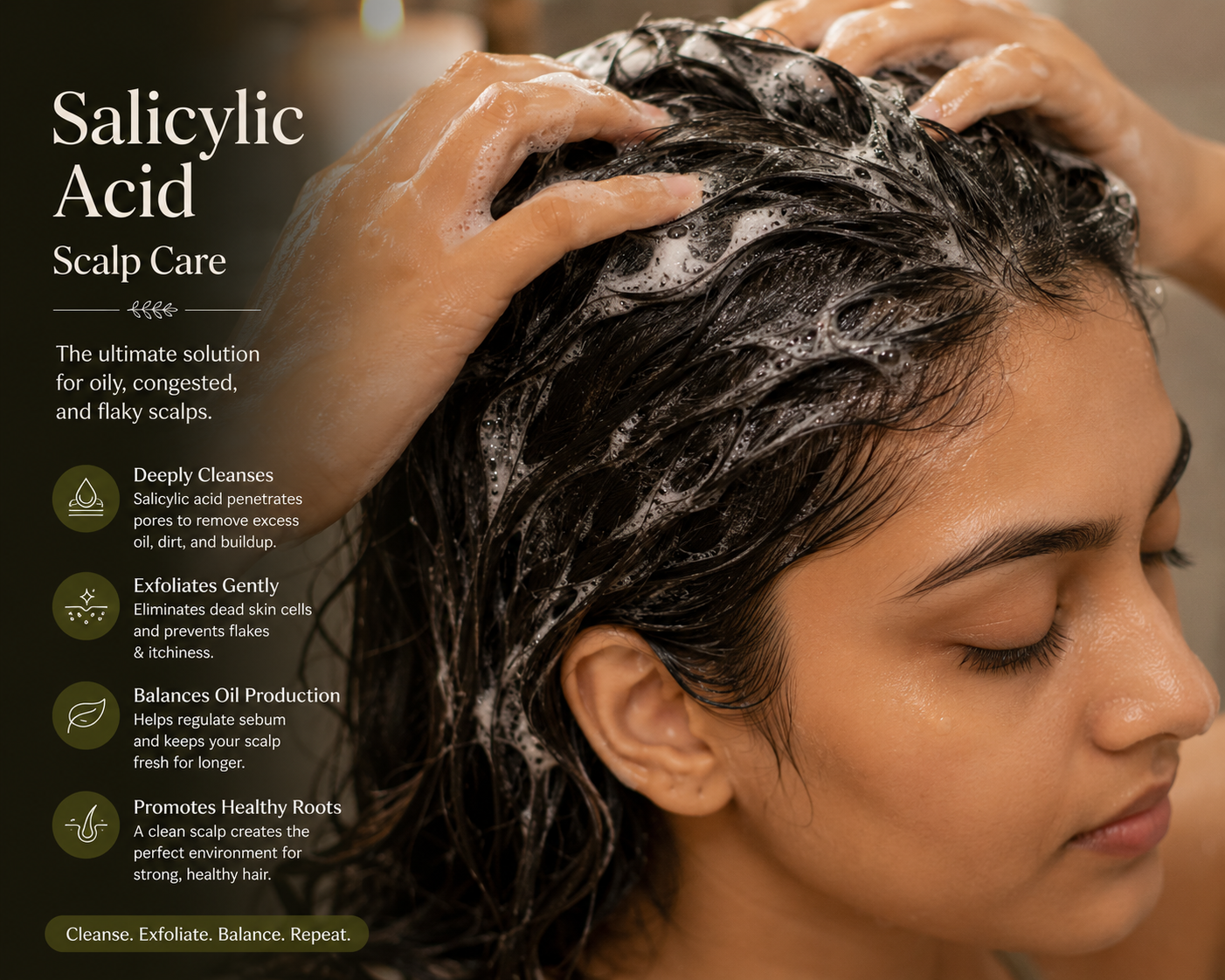
Clogged follicles — from excess sebum, dead skin cells, or product buildup — can slow hair growth and increase shedding. Salicylic acid is a keratolytic (it dissolves the bonds between dead skin cells) that keeps follicle openings clear.
What to look for: 0.5–2% salicylic acid. Best for: Women with oily scalp, dandruff, or product buildup. Caution: Can be drying with daily use. Use 2–3 times per week maximum. Always follow with a conditioner on the hair lengths.
4. Saw Palmetto — Natural DHT Blocker
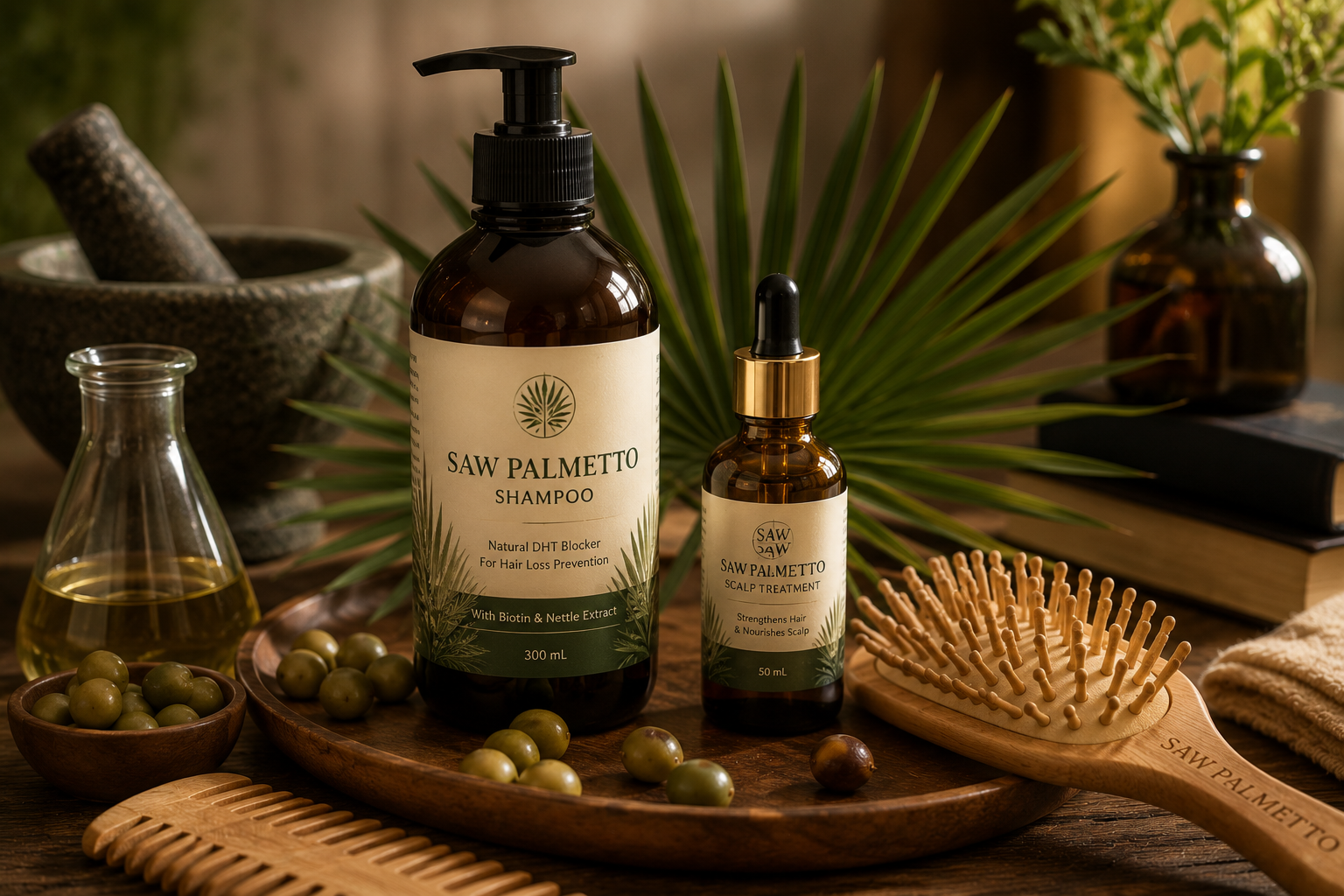
Dihydrotestosterone (DHT) is the hormone primarily responsible for androgenetic (genetic/hormonal) hair loss in both men and women. Saw palmetto is a plant extract that may inhibit the enzyme (5-alpha reductase) that converts testosterone to DHT.
A 2020 review in the Journal of Alternative and Complementary Medicine found saw palmetto supplementation improved hair density in 83.3% of participants. Topical application via shampoo is less studied but increasingly included in formulations.
What to look for: “Serenoa repens” or “saw palmetto extract” in the ingredients. Best for: Women with hormonal hair thinning, particularly at the crown.
5. Biotin — Useful but Overhyped Topically
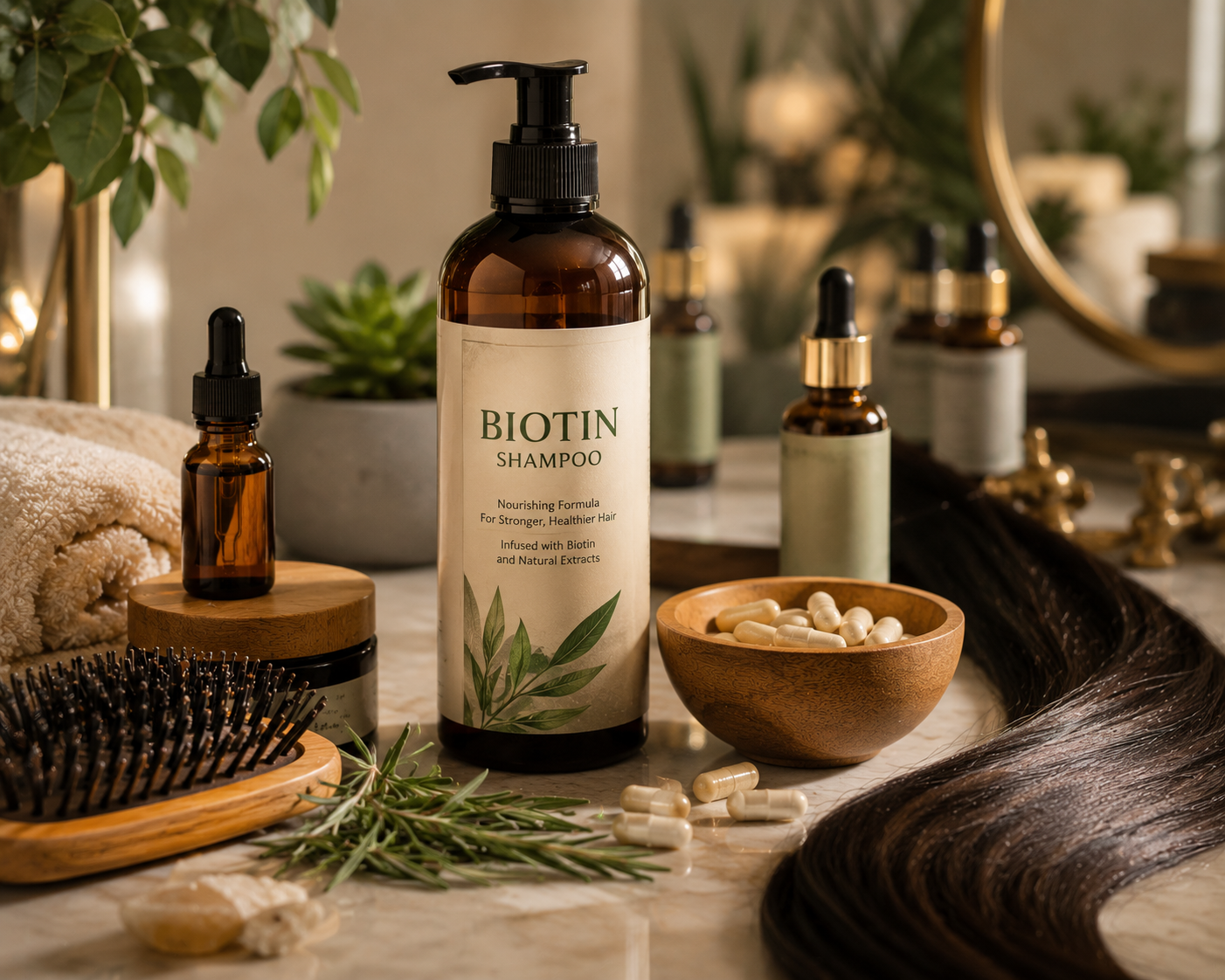
Biotin in shampoo is one of the biggest marketing tricks in the hair care industry. I’ll be honest: biotin molecules are too large to penetrate the hair shaft or scalp when applied topically. The research supporting biotin for hair is based on oral supplementation in deficient individuals.
That said, biotin-containing shampoos are usually well-formulated overall and safe to use. Just don’t pay a premium for a shampoo because it contains biotin — it’s not doing what the label implies.
6. Sulphate-Free Formula — What It Actually Means
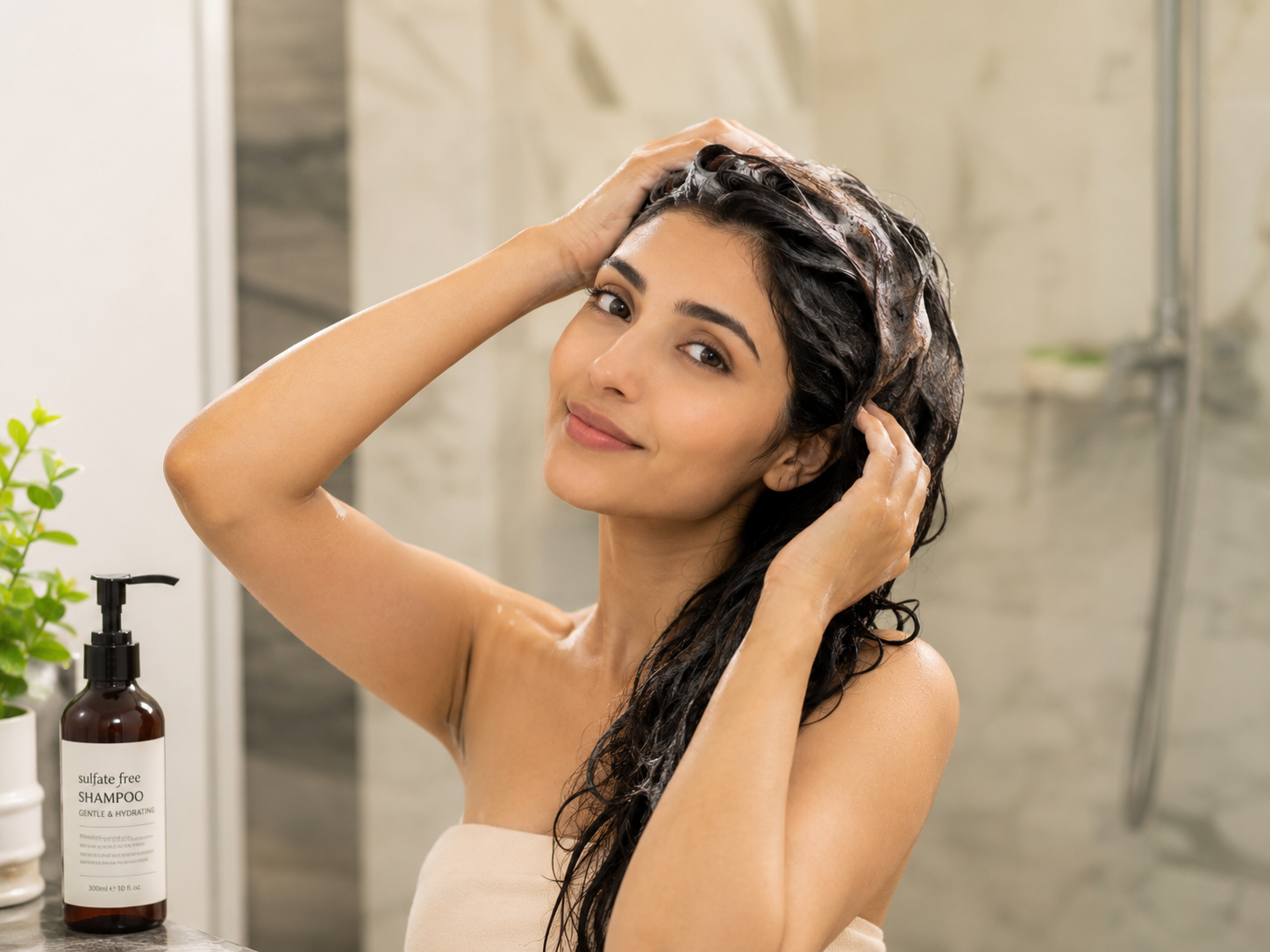
Sulphates (Sodium Lauryl Sulphate, Sodium Laureth Sulphate) are the detergents that make shampoo lather. They’re effective cleansers but can strip natural oils, irritate sensitive scalps, and over time may weaken strands if overused.
For women with hair fall, a sulphate-free formula is a reasonable choice — it cleans without aggressively stripping. The trade-off: less lather (which is purely psychological — lather doesn’t equal cleansing power) and sometimes needing twice the amount for very oily hair.
Best for: Dry scalp, colour-treated, chemically processed, or sensitive scalp. Not essential for every woman — if your scalp tolerates sulphates without dryness or irritation, they’re not harmful.
How to Choose the Right Shampoo for Your Hair Fall Type
This is where most women go wrong — buying a generic “anti-hair fall” shampoo without knowing what’s causing their hair loss.
If your scalp is oily or flaky: Look for ketoconazole or salicylic acid. The hair fall may be inflammation-driven. If hair loss is hormonal (crown thinning, post-pregnancy, irregular periods): Look for saw palmetto + caffeine combination. If hair feels weak and breaks easily: Look for protein-strengthening formulas with keratin, silk amino acids, or hydrolysed wheat protein. If you’ve had a baby recently: Use a gentle, sulphate-free formula. Postpartum shedding is hormonal and will resolve — focus on scalp health and nutrition, not aggressive treatments. If you’re unsure: Ketoconazole 1% is the most evidence-backed starting point for most types of non-genetic shedding.
How to Use Your Shampoo Correctly for Maximum Benefit
The application method matters as much as the formula. Done right, anti-hair fall shampoo delivers active ingredients to the follicle. Done wrong, you rinse most of it off before it can work.
- Wet scalp thoroughly with lukewarm (not hot) water
- Apply shampoo directly to the scalp (not the hair lengths) — focus on the areas with most thinning
- Massage for 3–5 minutes using fingertips (not nails) in gentle circular motions — this stimulates circulation and gives active ingredients contact time
- Leave for 2–5 minutes — especially important for ketoconazole and caffeine
- Rinse with cool water
- Apply conditioner from mid-lengths to ends — not on the scalp
Frequency: 3 times a week is optimal for most hair types. Daily shampooing strips natural oils; less than twice a week may allow buildup that blocks follicles.
💡 Pro Tip: Nadia does a scalp pre-massage with a few drops of rosemary oil for 5 minutes before shampooing. She massages, then shampoos. The mechanical stimulation from the massage is independent of any product and supported by its own research.
What to Avoid in Anti-Hair Fall Shampoos
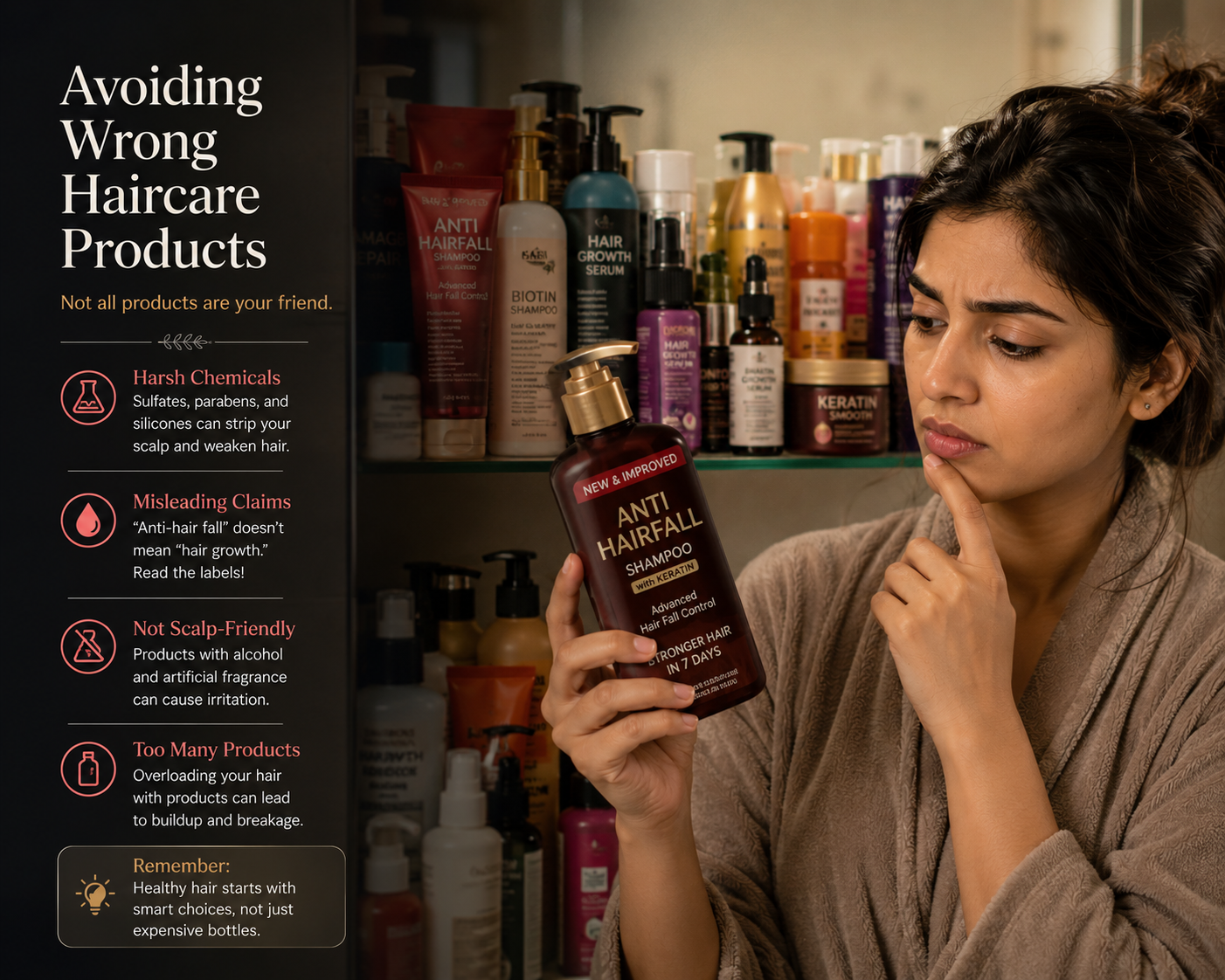
- Shampoos that smell amazing but have no active ingredients: Fragrance is listed last; active ingredients should be high on the list.
- “Volumizing” shampoos for hair fall: These often use polymers that coat the hair to make it look fuller — they don’t address shedding.
- Shampoos that promise “90% less hair fall after one wash”: This typically refers to reducing breakage during washing (by detangling easier) — not reducing actual biological shedding.
- Clarifying shampoos used frequently: These strip everything including beneficial oils. Use monthly for buildup, not as a regular choice.
- Shampoos with heavy silicones (Dimethicone, Cyclomethicone): These build up on the scalp over time and can block follicles. Fine in conditioner for hair lengths; not ideal in scalp shampoos.
Comparison Table: Best Shampoo Ingredients for Hair Fall Control
| Ingredient | Evidence Level | Best For | How to Use | Cost of Products |
|---|---|---|---|---|
| Ketoconazole 1-2% | Strong (clinical) | Scalp inflammation, dandruff-related fall | 3x/week, 3–5 min contact | $8–15 |
| Caffeine | Moderate-Strong | General thinning, DHT-related | 2–3x/week, 2 min contact | $10–20 |
| Saw Palmetto | Moderate | Hormonal thinning, crown loss | Daily to 3x/week | $12–25 |
| Salicylic Acid | Strong | Oily scalp, clogged follicles | 2–3x/week | $8–15 |
| Biotin (topical) | Weak | General hair health (mild) | Any frequency | $8–20 |
| Sulphate-Free base | Gentle support | Sensitive, dry, or treated scalp | Daily to 2x/week | $10–25 |
When to See a Doctor
A shampoo — no matter how well-formulated — cannot address all causes of hair fall. Consult your doctor if:
- You’re losing significantly more than 100 hairs per day for more than 8 weeks
- Hair loss is in visible patches or the scalp is visible when hair is dry
- Switching to the right shampoo hasn’t reduced shedding after 10–12 weeks of consistent use
- Hair loss is accompanied by other symptoms (fatigue, weight changes, acne, irregular periods)
- You’re postpartum and experiencing severe shedding — get a full blood panel including ferritin, thyroid, and Vitamin D
Please consult your doctor before making significant changes to your hair care routine if you’re pregnant or breastfeeding.
FAQ: Best Shampoos for Hair Fall Control
Q: Which shampoo ingredient is best for hair fall? Ketoconazole (1–2%) has the strongest clinical evidence for reducing hair fall — it addresses scalp inflammation and fungal growth, which are underappreciated causes of shedding. Caffeine is the second most evidence-backed ingredient for follicle stimulation.
Q: Should I use anti-hair fall shampoo every day? No — most anti-hair fall shampoos contain active ingredients (ketoconazole, salicylic acid) that can cause dryness or irritation with daily use. 2–3 times per week is the optimal frequency for most women. Use a gentle, sulphate-free formula on the other wash days if needed.
Q: Do expensive shampoos work better for hair fall? Not necessarily. Price is determined by marketing, packaging, and fragrance — not ingredient concentration. A $10 ketoconazole shampoo from a pharmacy can outperform a $50 “prestige” hair growth shampoo with no clinically backed actives. Always check the ingredient list.
Q: Can the wrong shampoo cause hair fall? Yes — harsh sulphate-heavy shampoos, those with heavy silicone buildup, or those used too frequently can weaken strands and irritate the scalp, both contributing to increased shedding. Switching to a gentler formula can reduce breakage within a few weeks.
Q: How long does it take for anti-hair fall shampoo to work? Most women notice reduced mechanical shedding (breakage during washing) within 2–4 weeks. Meaningful reduction in biological hair fall (follicle shedding) takes 8–12 weeks of consistent use. Give any shampoo at least 12 weeks before evaluating.
Q: Is ketoconazole shampoo safe for long-term use? Ketoconazole 1% is generally considered safe for long-term use at 2–3 times per week. Some women alternate it with a regular sulphate-free shampoo to maintain scalp balance. Ketoconazole 2% (prescription strength) should be used under medical guidance.
Q: What is the best shampoo for postpartum hair fall? A gentle, sulphate-free formula without heavy actives is typically best for postpartum use. Postpartum shedding is hormonal — it usually peaks at 3–4 months postpartum and resolves by 12 months. Aggressive treatments aren’t necessary; focus on scalp health, gentle handling, and nutrition. Consult your doctor if shedding is severe.
Q: Can I use hair growth shampoo and minoxidil together? Yes — they work through different mechanisms and can complement each other. Use your shampoo first, rinse thoroughly, dry hair, then apply minoxidil. Always confirm with your doctor before starting minoxidil, as it has specific usage guidelines and isn’t appropriate for everyone.
Q: Does shampoo build up on the scalp and cause hair fall? Silicone-heavy shampoos and conditioners can accumulate on the scalp over time and potentially block follicles. Using a clarifying shampoo once a month clears this buildup. If you use many styling products, weekly clarifying may be necessary.
Q: Which is better — shampoo or serum for hair fall? They address different aspects. A serum (applied to the scalp and left on) delivers active ingredients more effectively because there’s no rinse-off. Shampoo cleans the scalp and delivers some benefit during contact time. For best results, use a good shampoo as the foundation and add a leave-in serum (caffeine, rosemary) for active ingredient delivery.
Q: Is sulphate-free shampoo better for hair fall? It’s gentler on the scalp and less likely to cause dryness or irritation that can contribute to shedding — so yes, it’s a sensible choice. However, sulphate-free alone won’t address underlying causes of hair fall. The active ingredients in the formula matter more than whether it’s sulphate-free.
Q: What’s the best shampoo routine for reducing hair fall? Shampoo 2–3 times per week with a ketoconazole or caffeine formula. Massage into scalp for 3–5 minutes before rinsing. Follow with a lightweight conditioner on the lengths only. Once a month, use a clarifying shampoo to clear buildup. Pair with a rosemary oil scalp massage on non-wash days.
People Also Ask
❓ What really stops hair fall? → A combination approach works best: addressing nutritional deficiencies (iron, Vitamin D, zinc), using an evidence-based shampoo (ketoconazole or caffeine-based), adding scalp massage with rosemary oil, and managing stress. No single shampoo stops hair fall on its own.
❓ How do I know if my shampoo is causing hair fall? → Switch to a gentle, sulphate-free formula for 4 weeks. If shedding reduces, your previous shampoo was contributing. Signs a shampoo is problematic: scalp feels tight, itchy, or very dry after washing; noticeably more hair in the drain on wash days than non-wash days.
❓ Is it normal to lose hair every time I shampoo? → Yes — washing loosens hairs that were already in the telogen (shedding) phase. Losing 50–100 hairs during washing is normal. If you’re seeing 200+ or clear thinning at the scalp, consult your doctor.
Quick Summary — Best Shampoos for Hair Fall Control ✅ Best ingredient: Ketoconazole 1–2% (strongest clinical evidence) ⏱ Time to results: 8–12 weeks of consistent use (3x/week) 💰 Budget option: Pharmacy ketoconazole shampoo — under $10 ⚠️ Avoid: Daily use of strong actives; silicone-heavy formulas on scalp 👩⚕️ See a doctor if: Shedding continues after 12 weeks or patchy loss appears 📌 Top tip: Leave shampoo on scalp 3–5 minutes — contact time drives results



Leave a Comment
Share your thoughts or questions about this article!