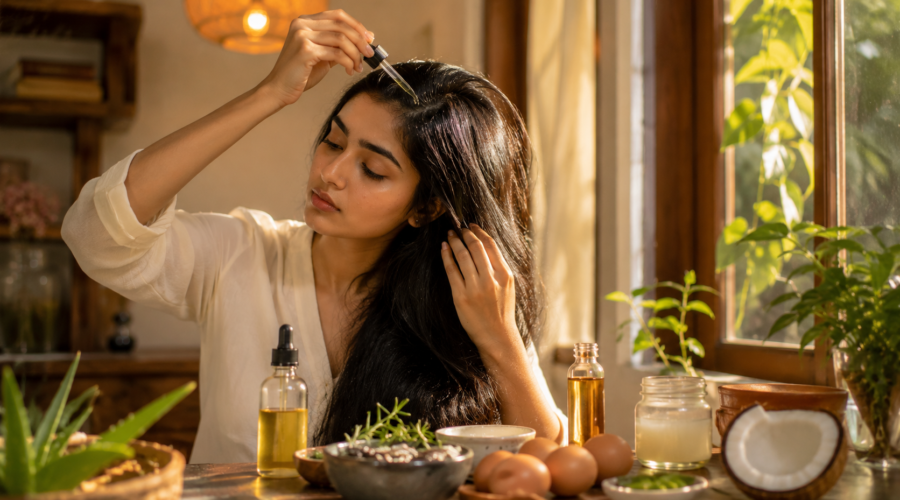
How to Get Long and Thick Hair Fast — Quick Answer: To get long and thick hair fast, focus on scalp massage with growth-stimulating oils (rosemary, castor, coconut), protein-rich hair masks (egg, yogurt), a nutrient-dense diet rich in iron, zinc and biotin, and protecting hair from breakage. Hair grows approximately 1–1.5 cm per month — consistent habits over 8–12 weeks show visible thickness and length improvements.
How to Get Long and Thick Hair Fast — 12 Tips That Actually Work (2026)
For most of my twenties, I had what I privately called “sad hair.” Not falling out dramatically — just thin, limp, slow-growing hair that sat on my shoulders and refused to budge further. I tried every expensive shampoo the beauty store recommended. I took biotin supplements for eight months. I deep conditioned every week.
Nothing changed. Until I stopped spending money and started paying attention to the actual science.
My friend Nadia has always had thick, long hair — the kind women stop her to ask about. I finally asked her what she does. Her answer was almost annoyingly simple: weekly oiling, egg masks once a month, and “stop washing it so much.” No Rs. 3,000 shampoos. No professional treatments. Just consistent, basic habits.
Here’s what I’ve learned from two years of proper research and actual testing — what really makes hair grow longer and thicker, what’s biologically possible, and what’s completely overhyped.

What Actually Determines Hair Length and Thickness
Before anything else, let’s set honest expectations — because this is where most women get disappointed.
Hair grows an average of 1–1.5 cm per month. That’s the biological reality for most women. You cannot change your growth rate dramatically — genetics determines your hair’s maximum growth speed. What you can change:
- How much hair you retain (preventing breakage = more length)
- How healthy each strand is (protein-filled hair is thicker, stronger)
- How active your follicles are (scalp health determines hair density)
- Your diet (nutritional deficiencies directly slow growth and cause thinning)
More than 55% of women experience hair thinning at some point in their lives. The most common causes in Pakistani women specifically: iron deficiency (extremely common), post-pregnancy hormonal shifts, vitamin D deficiency, and chronic stress.
The trick is understanding which of these applies to you — because treating iron deficiency looks completely different from treating stress-related hair loss.
Also Read: Best Shampoos for Hair Fall Control
12 Ways to Get Long and Thick Hair Fast
1. Scalp Massage — The Most Underrated Growth Tool
A 2016 study from Japan found that just 4 minutes of daily standardized scalp massage over 24 weeks produced measurably thicker hair strands. This is one of the most solid pieces of research on natural hair thickness — and it costs nothing.
Scalp massage works by increasing blood circulation to the hair follicles, delivering more oxygen and nutrients directly where hair grows. It also stretches follicle cells, stimulating them to produce thicker hair strands.
How to do it correctly:
- Use your fingertips — never nails
- Apply gentle pressure in small circular motions across the entire scalp
- Start at the nape, work toward the crown, then temples
- Do this for 4–5 minutes daily — with or without oil
- Best time: before bed or just before oiling
What to expect: Hair feels fuller and scalp feels healthier within 2–3 weeks. Measurable thickness improvement takes 4–6 months of daily consistency.
💡 Pro Tip: Nadia does her scalp massage every Thursday night before oiling — she calls it her “hair day.” At 34, her hair density is remarkable. She says she’s never skipped more than two weeks in the past decade. That kind of consistency is what actually produces results.
Best for: All hair types, all ages, especially thinning hair Cost: Free | Time to results: 4–6 months for thickness; fullness noticeable in weeks
2. Rosemary Oil — The Research-Backed Growth Oil
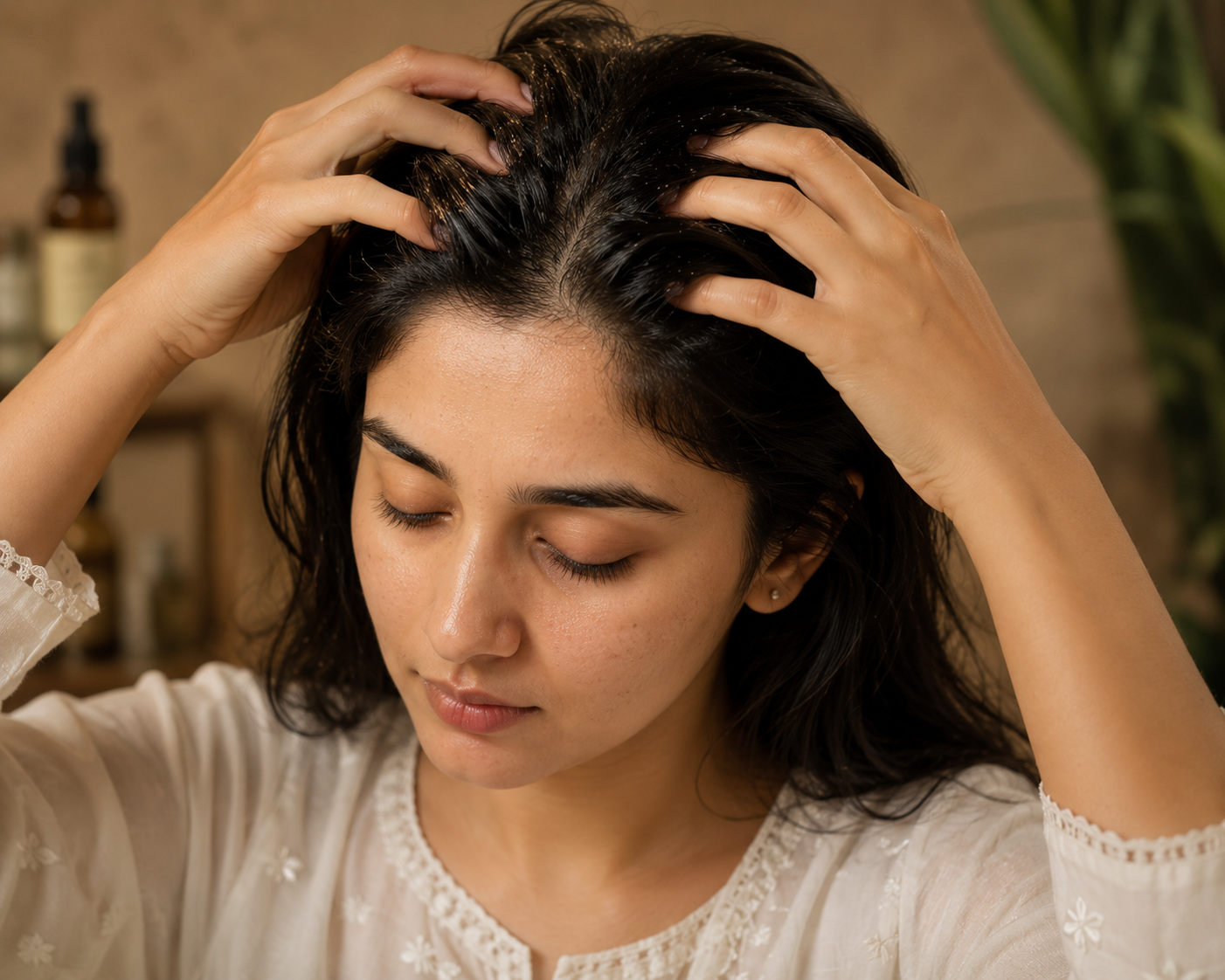
Here’s what actually works for hair growth that most people are just discovering: rosemary oil. A clinical trial comparing rosemary oil to Minoxidil 2% (the pharmaceutical hair growth treatment) found similar effectiveness for both after 6 months. A 2024–2025 double-blind trial using a rosemary-lavender oil combination measured hair growth improvements of over 57% and thickness increases of nearly 70%.
This is the most research-supported natural hair growth remedy available right now.
How to use it:
- Mix 2–3 drops rosemary essential oil into 1 tablespoon of carrier oil (coconut, jojoba, or olive oil)
- Massage into scalp for 3–5 minutes
- Leave for minimum 30 minutes, or overnight
- Use 3–4 times per week consistently
- Always patch test first — never apply undiluted essential oil directly on scalp
What to expect: No visible results before 3 months — this is not a quick fix. After 6 months of consistent use, hair thickness and density improvements are measurable.
Best for: Thinning hair, slow growth, androgenetic hair loss Cost: Rs. 400–700 for a small bottle (lasts months) | Time to results: 3–6 months
3. Castor Oil — For Thickness and Scalp Nourishment
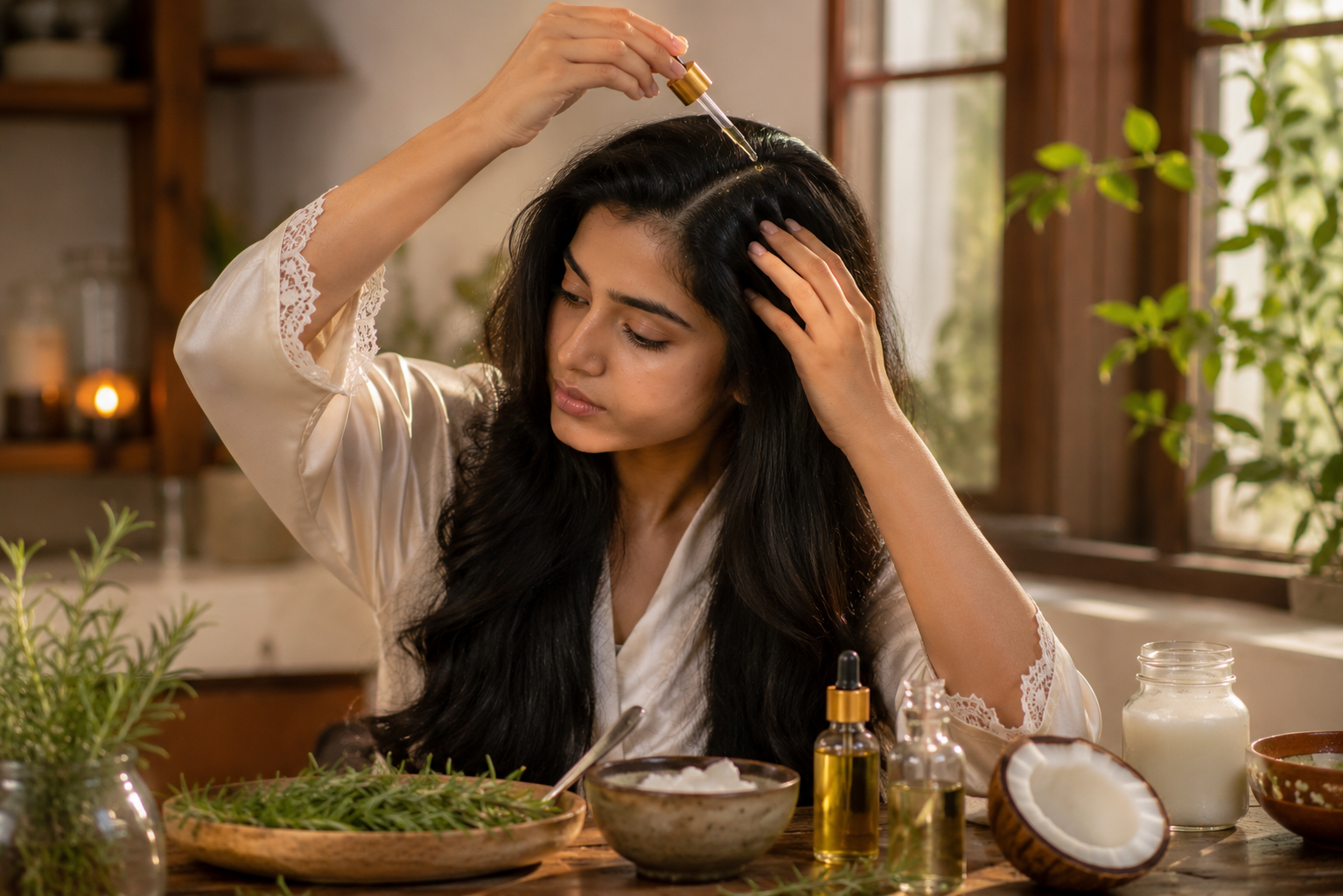
Castor oil is rich in Vitamin E and ricinoleic acid, which improve scalp circulation and strengthen hair from the root. It’s been used across South Asia for generations — and while the clinical research is limited, the consistent results women report across decades of use make it worth including.
The texture of castor oil is very thick, which is why most women mix it with a lighter carrier oil.
How to use it:
- Mix 50% castor oil + 50% coconut oil (or olive oil)
- Warm slightly — never hot
- Apply on scalp and hair length
- Leave 1–2 hours or overnight (cover with a shower cap)
- Wash out thoroughly with shampoo — may require two rounds
- Use once per week
What to expect: Hair feels noticeably thicker and more moisturized within 3–4 uses. Length improvement requires 3–4 months minimum.
Best for: Thin, fine hair; dry scalp; slow growth Cost: Under Rs. 300 | Time to results: 4–8 weeks for thickness feel; 3–4 months for growth
💡 Pro Tip: I tried castor oil alone for three months — the application was a nightmare and washing it out took 20 minutes. Mixed with coconut oil in a 50:50 ratio: total game changer. Applies easily, washes out in one round, and works better. I learned this the hard way so you don’t have to.

4. Egg Protein Hair Mask — The Kitchen Growth Treatment
Hair is made of keratin protein. When your hair is thin, weak, or growing slowly, it often means protein is lacking — either in your diet or directly at the hair shaft. Egg whites are one of the richest natural sources of protein available in any kitchen.
How to use it:
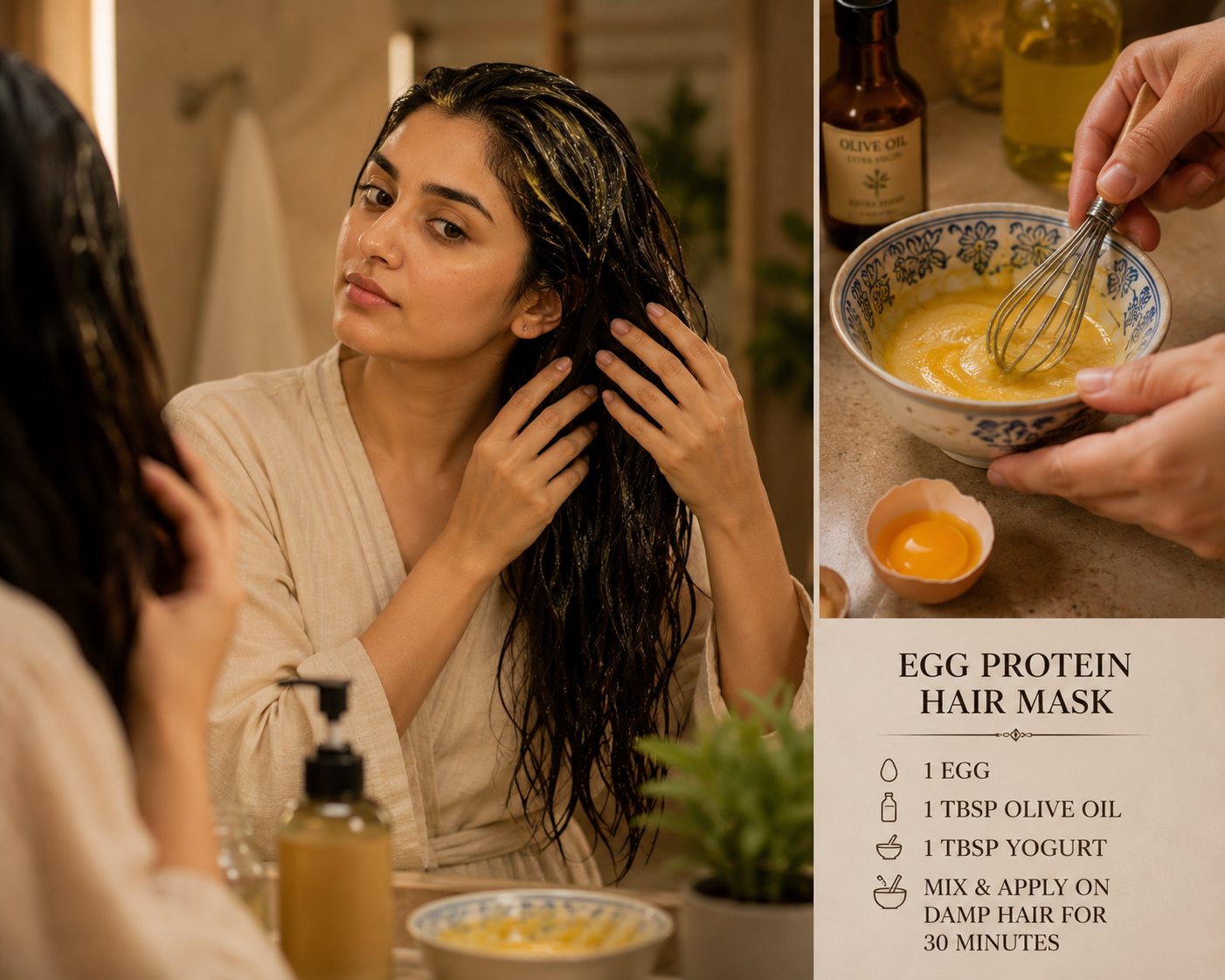
- Beat 1–2 whole eggs (for medium-long hair, use 2)
- Apply to damp hair from roots to tips
- Leave for 20–30 minutes — don’t let it dry completely
- Rinse with cool water ONLY (hot water cooks the egg — nightmare to remove)
- Follow with your regular shampoo
- Use once per month
What to expect: Immediately after rinsing, hair feels noticeably stronger, smoother, and fuller. With monthly use, hair strand strength increases significantly — meaning less breakage, which means more retained length over time.
Best for: Weak, damaged, thin hair; slow growing hair; all ages Cost: Under Rs. 50 | Time to results: Immediate texture improvement; growth benefits in 2–3 months
5. Protein-Rich Diet — Feed Hair From Inside
I’ll be honest: I wasted a lot of money on topical treatments while eating a protein-deficient diet and wondering why my hair wasn’t growing. Hair follicles are among the most metabolically active cells in the body — they show nutritional deficiency faster than almost any other tissue.
Key nutrients specifically for hair growth:
Iron and ferritin: One of the most common and underdiagnosed causes of hair thinning in South Asian women. Studies show ferritin below 70 ng/mL directly impairs hair growth — even without full anemia. Get your ferritin tested if hair loss is significant.
Zinc: Directly supports hair follicle function. Found in chickpeas (chanay), pumpkin seeds, spinach, and meat.
Biotin (Vitamin B7): Found in eggs, nuts, lentils, and whole grains. Biotin deficiency causes hair thinning — supplementation helps only if you’re actually deficient.
Protein: 50–60g daily minimum for hair health. Pakistani diet is often high in carbs and low in quality protein for women.
Best daily additions:
- 2 boiled eggs at breakfast
- Daal at every lunch — it’s one of the best hair growth foods in our cuisine
- Plain dahi daily (protein + gut health both support hair)
- Spinach (palak) — iron + folate combination

6. Stop Washing Hair Every Day
This was Nadia’s advice that I resisted for the longest time — especially with oily scalp. But she was right.
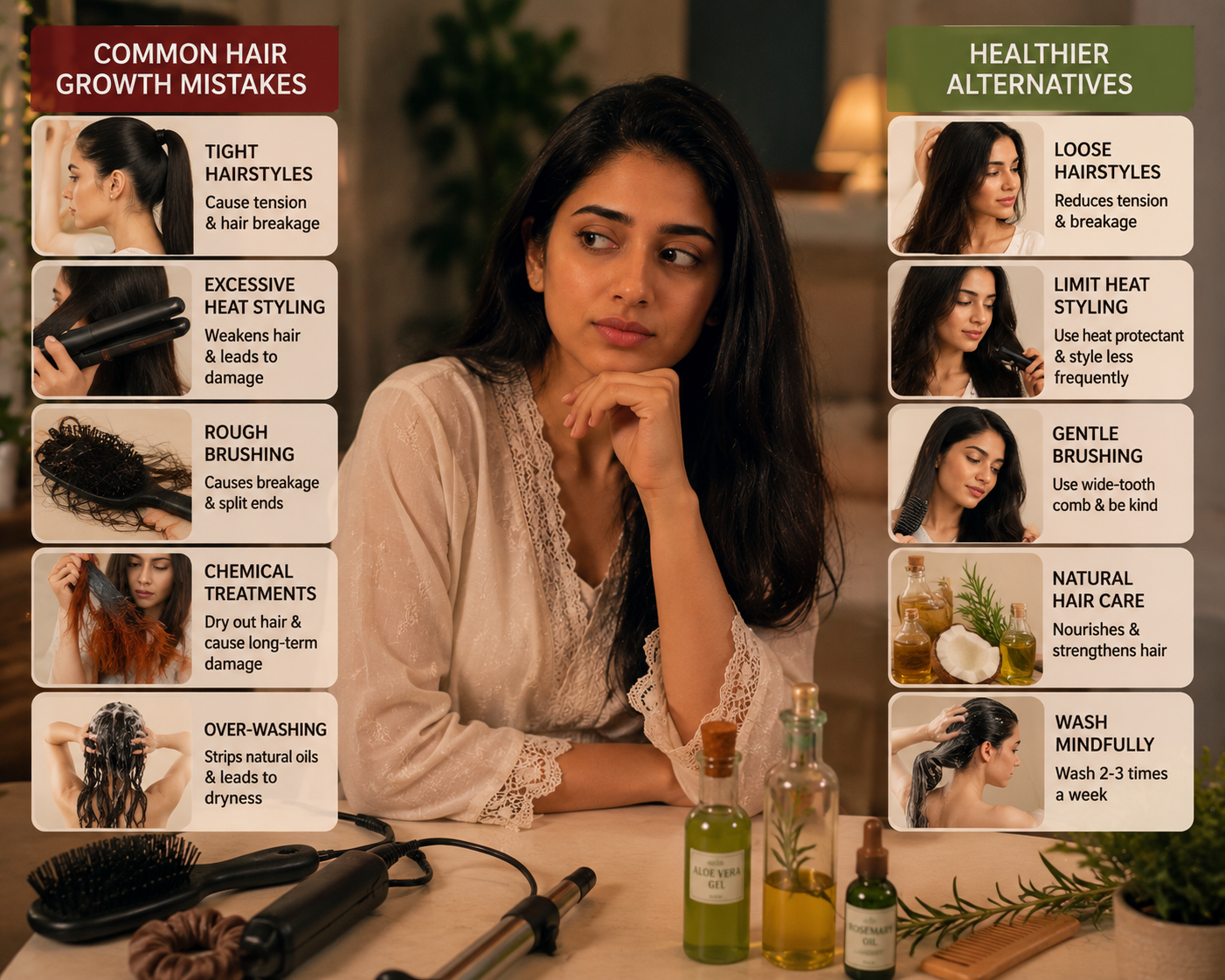
Daily washing strips the scalp of natural sebum (your hair’s best natural conditioner), which the scalp then overproduces to compensate, making hair appear greasier faster. This cycle weakens hair and increases breakage from daily manipulation.
The right frequency:
- Normal to oily hair: wash 2–3 times per week
- Dry hair: 1–2 times per week maximum
- After oiling: yes, wash — but let the oil sit at least 1–2 hours first
What to expect: Within 2–3 weeks of reducing wash frequency, hair feels stronger, less dry at the ends, and paradoxically becomes less oily over time as the scalp recalibrates.

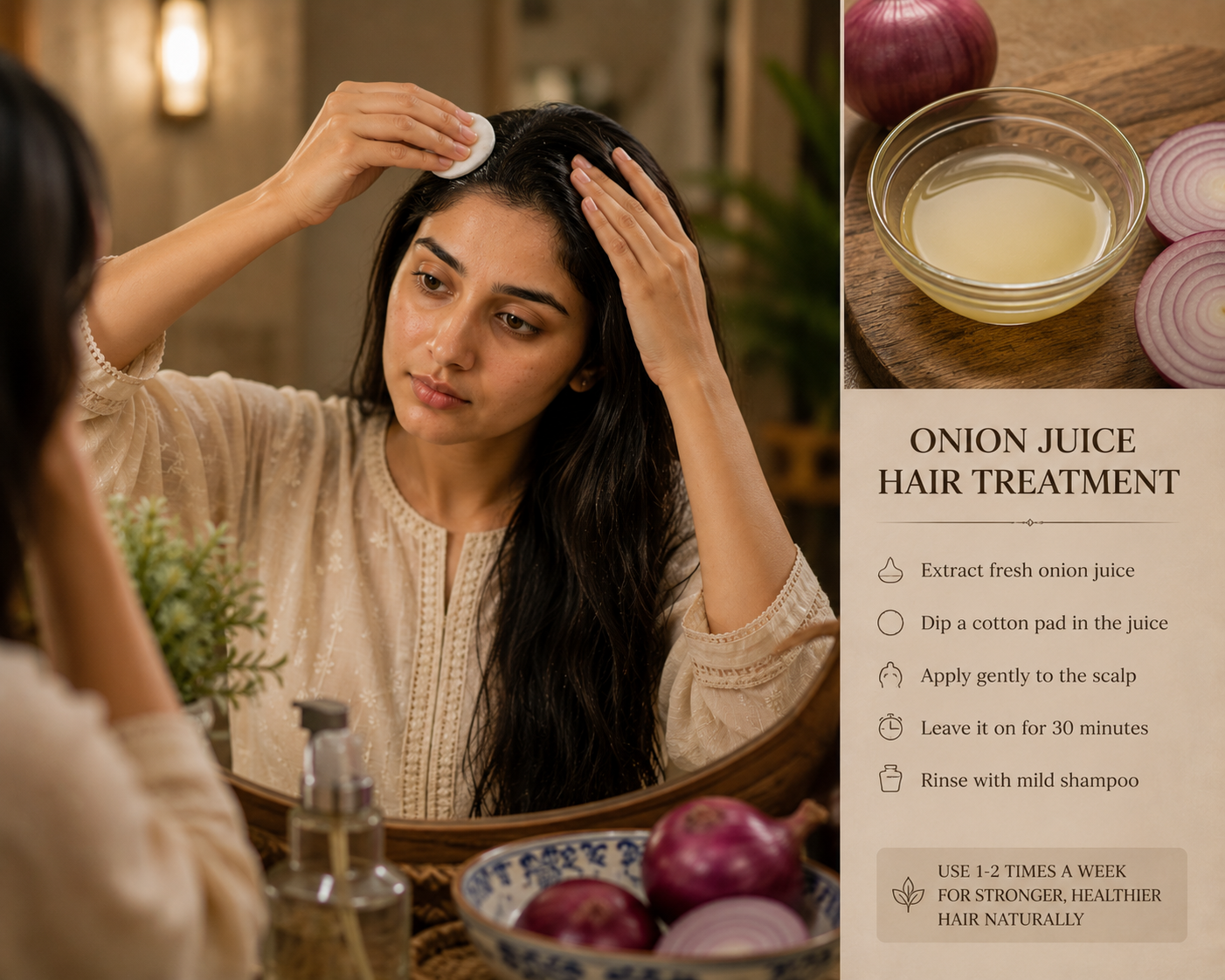
7. Onion Juice Scalp Treatment — The Smelly But Effective One
This one requires commitment — specifically, commitment to smelling like a kitchen for a few hours. But the research backs it: onion juice contains sulfur compounds that support collagen production in hair follicles and improve blood circulation to the scalp.
How to use it:
- Grate or blend 1 medium onion, strain the juice
- Apply directly on scalp with a cotton ball
- Leave 30–45 minutes — no more (it can irritate if left too long)
- Wash thoroughly with shampoo — add 1 drop of lemon juice to shampoo to neutralize smell
- Use once per week maximum
What to expect: Studies show noticeable hair regrowth after 6 weeks of weekly use. Most effective for patchy hair loss and follicle reactivation.
Honest note: The smell is significant. Do this on a day you’re staying home, and make sure to wash twice with shampoo.
8. Trim Split Ends Regularly — Counterintuitive But Essential
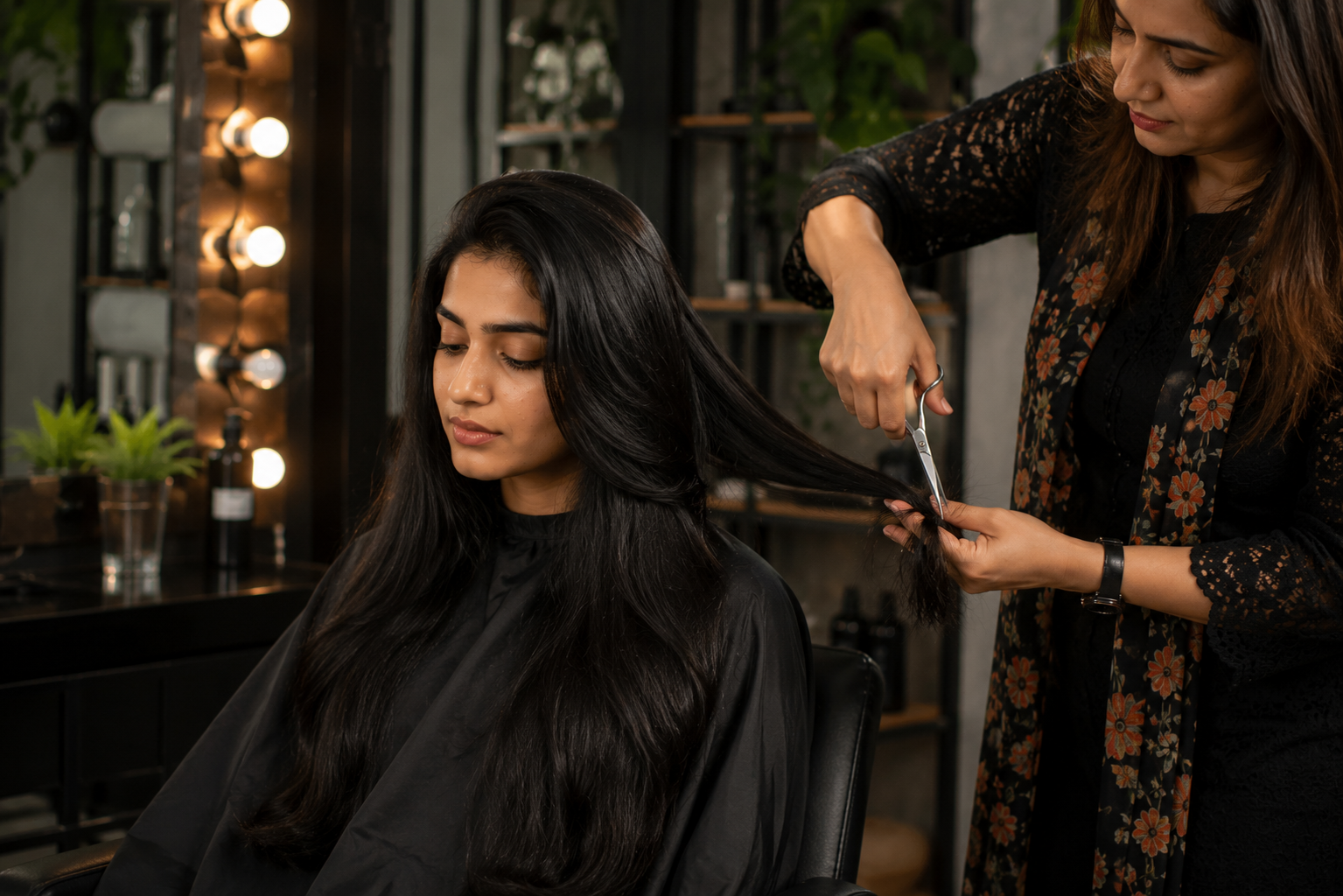
Every woman trying to grow long hair resists trimming — it feels like cutting progress. I understand. I grew out a trim for 6 months once without trimming. By the end, my ends were so damaged and split that 5 cm had to be cut off.
Split ends travel upward along the hair strand. Untreated splits cause breakage higher up the shaft, meaning your hair is constantly breaking at the same length — never actually getting longer.
The right approach:
- Trim 1–2 cm every 8–10 weeks
- If hair is very damaged: one larger cut to remove damage, then maintain from there
- Focus on just the ends — you’re removing damage, not length
What to expect: After one trimming cycle, hair grows visibly past its previous “stuck” length because breakage is no longer canceling out growth.
9. Silk or Satin Pillowcase — The Night Protection Trick
Cotton pillowcases create friction against hair while you sleep — especially for women with long hair or who move around at night. This friction causes mechanical breakage that accumulates over months. Switching to silk or satin reduces this friction significantly.
Alternative for budget: Wrap hair loosely in a soft cotton dupatta or smooth cotton before sleeping. The goal is reducing friction and tangling during the night.
What to expect: Reduced morning breakage and less tangling within the first week. Over 2–3 months, noticeably more hair retained — which shows as length.
Cost: Rs. 500–1,500 for a satin pillowcase | Or: free with a dupatta wrap method

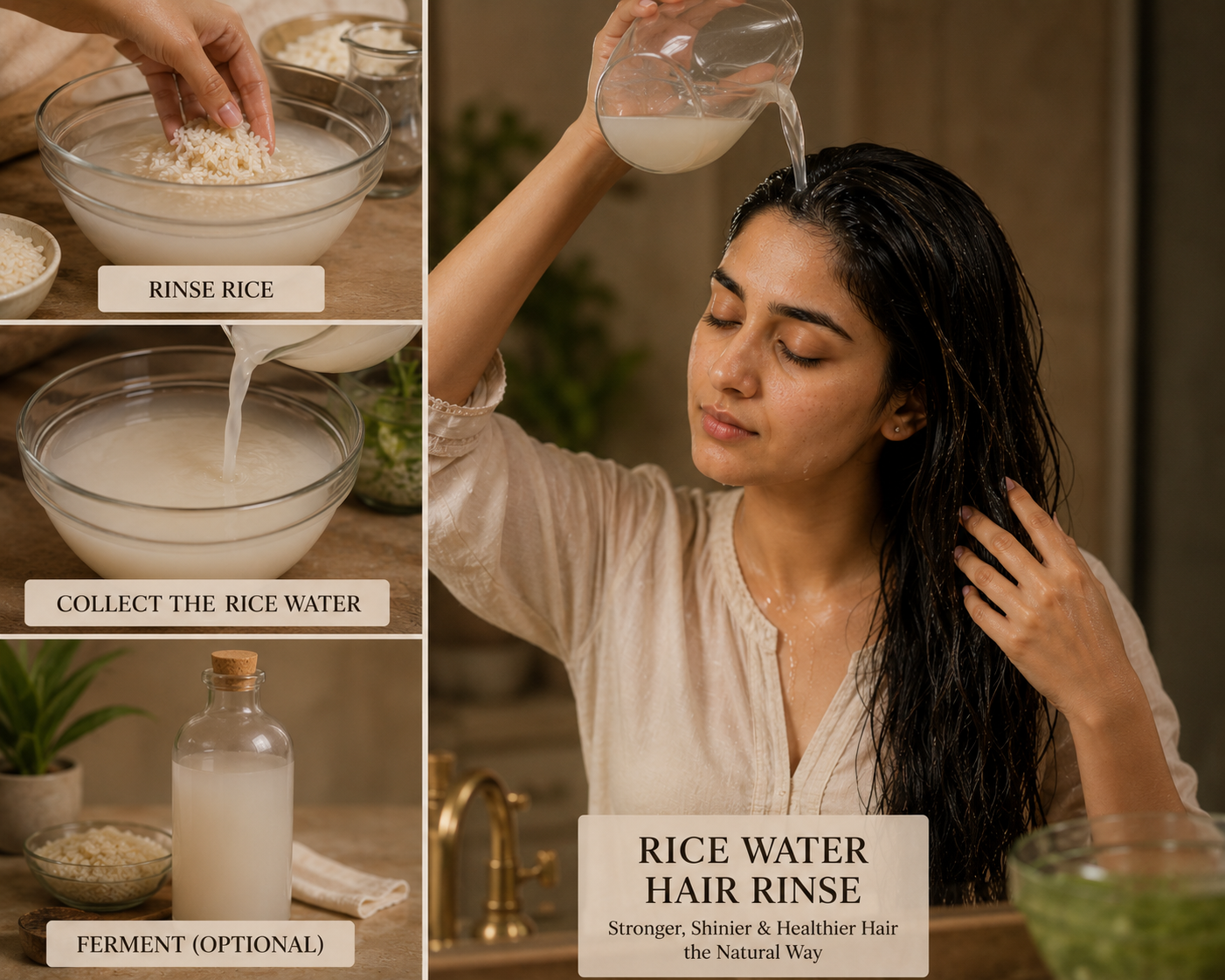
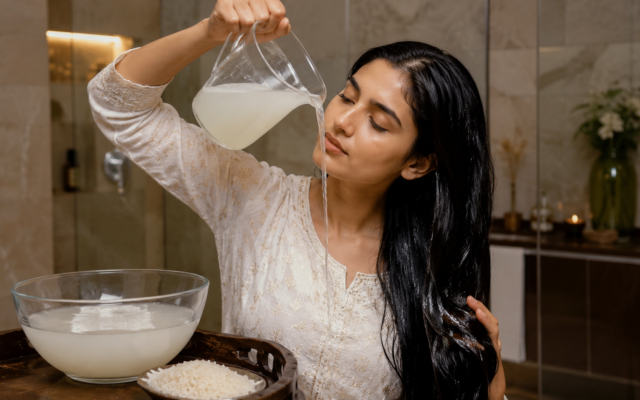
10. Rice Water Rinse — The Traditional South Asian Secret
Rice water has been used across South Asia and East Asia for hair care for centuries. Research confirms it contains inositol, a carbohydrate that penetrates damaged hair and repairs it from inside — reducing breakage and improving elasticity.
How to make it:
- Wash 1 cup of rice
- Soak in 2 cups of water for 30 minutes
- Strain — this is your rice water
- Option: ferment for 24 hours for stronger effect (it will smell slightly sour — this is normal)
How to use:
- After shampooing, pour rice water over hair and scalp
- Massage gently for 1–2 minutes
- Leave 5 minutes, then rinse with plain water
- Use once per week
What to expect: Hair feels smoother and stronger immediately. With weekly use, breakage reduces noticeably within 4–6 weeks.
11. Reduce Heat Styling — The Silent Length Killer
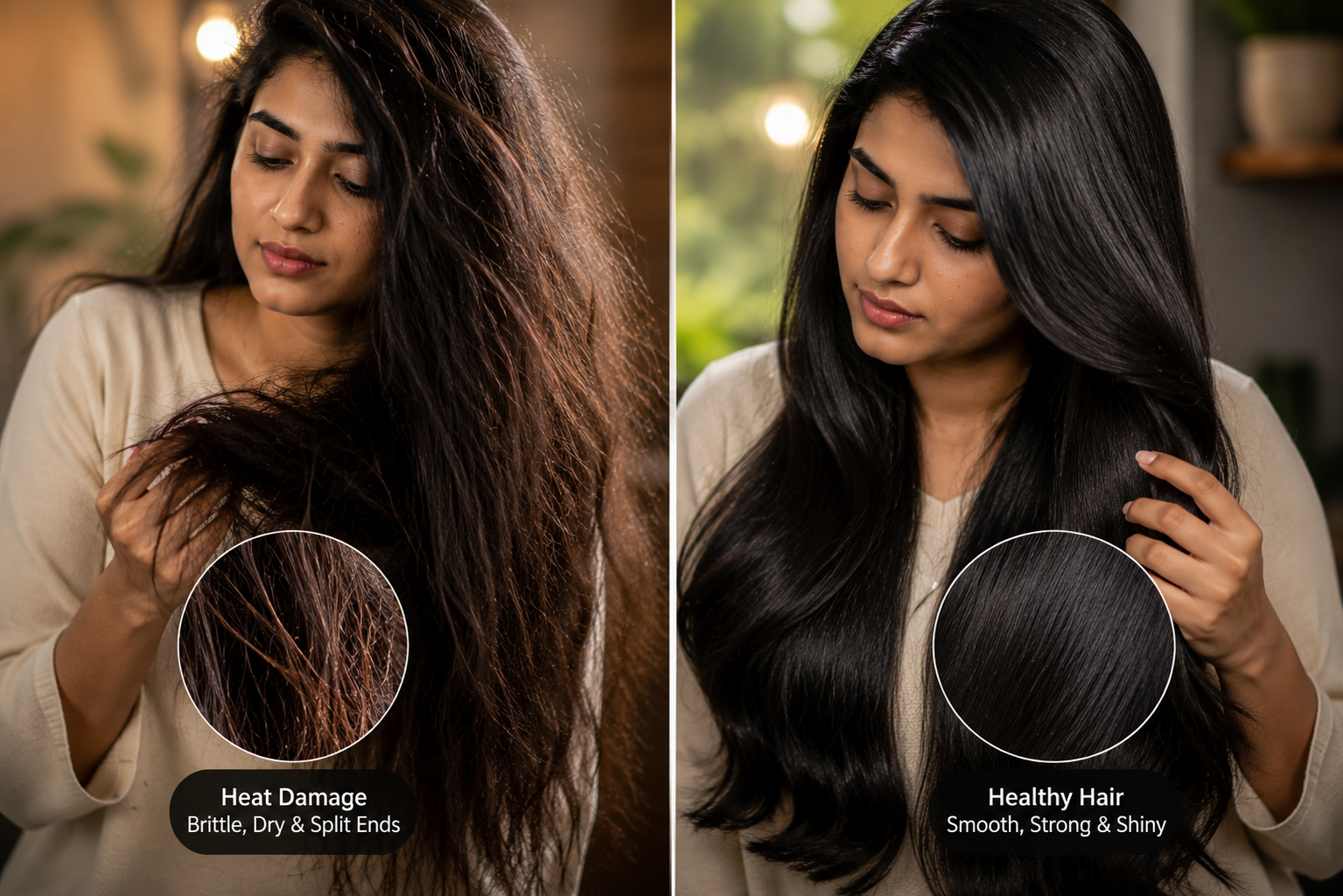
This is the one most women know but don’t want to hear. Straighteners, blow dryers, and curling irons at high heat break down the protein structure of hair permanently. Each heat session causes microscopic damage that accumulates into visible breakage and thinning.
Practical reduction (not elimination):
- Air dry whenever possible — even just 70% air dry before blow drying at low heat
- Use heat protectant spray before any heat tool — this is non-negotiable
- Lower heat setting: 180°C instead of 220°C makes a significant difference
- Limit straightening to 2 times per week maximum
What to expect: Within 3–4 months of reduced heat, the “problem area” of the hair — usually mid-lengths to ends — visibly improves in texture and strength.
12. Consistency Over Any Single Remedy
Here’s the honest truth: the women with long, thick hair are rarely doing one magical thing. They’re doing several basic things, consistently, for years.
Nadia oils once a week. She doesn’t skip. She doesn’t over-wash. She eats daal. She trims her ends. She’s been doing this for 12 years and her hair shows it.
The mistake most women make is trying 7 things simultaneously for 2 weeks, seeing no dramatic change, and giving up. Hair growth is measured in months and years — not days.
Done right: Pick 3–4 strategies from this list. Do them consistently for 3 months before evaluating. That’s how long hair actually needs to show meaningful change.

Common Mistakes That Stop Hair Growth
Mistake 1 — Tying hair too tightly: Constant tight ponytails and braids cause traction alopecia — gradual follicle damage from tension. Alternate between tight and loose styles.
Mistake 2 — Applying oil to dirty scalp: Oil traps existing dirt and product buildup, clogging follicles. Oil on a clean scalp, or oil before washing — never oil applied to hair that hasn’t been washed in days.
Mistake 3 — Expecting results in 2 weeks: Hair has a 3-month growth cycle. Any internal change (diet, supplements, scalp treatments) takes minimum 3 months to show at the hair shaft level.
Mistake 4 — Expensive products over consistency: The Rs. 3,000 shampoo you use twice a week will never outperform the Rs. 50 oiling habit you maintain every week for a year.
Mistake 5 — Rubbing hair dry with a towel: Wet hair is extremely fragile. Rubbing causes massive breakage. Pat gently, or wrap loosely in a soft cloth.
Comparison Table — Hair Growth Methods
| Method | Cost | Time to Results | Difficulty | Best For |
|---|---|---|---|---|
| Scalp Massage | Free | 4–6 months | Very Easy | Thickness, density |
| Rosemary Oil | Rs. 400–700 | 3–6 months | Easy | Growth rate, thinning |
| Castor Oil Mix | Rs. 300 | 3–4 months | Easy | Thickness, dry scalp |
| Egg Protein Mask | Rs. 50 | 2–3 months | Easy | Strength, breakage |
| Diet Changes | Rs. 0 | 3–4 months | Medium | Root cause treatment |
| Rice Water Rinse | Rs. 0 | 4–6 weeks | Very Easy | Breakage, elasticity |
| Onion Juice | Rs. 0 | 6 weeks | Easy | Regrowth, follicles |
| Stop Over-Washing | Rs. 0 | 2–3 weeks | Medium | Oiliness, breakage |
| Trimming Ends | Rs. 200–500 | 2–3 months | Very Easy | Length retention |
Also Read: How to Stop Hair Fall Naturally at Home (10 Proven Tips)
When to See a Doctor
Home remedies work beautifully for general hair growth and thickness. Please consult a doctor if:
- Hair loss is sudden, patchy, or accompanied by scalp inflammation
- You are losing more than 150–200 hairs daily consistently
- Hair thinning appeared after pregnancy and hasn’t improved after 6 months
- You have symptoms of thyroid issues, PCOS, or significant hormonal changes
- You are experiencing hair loss alongside fatigue, irregular periods, or unusual weight change
A blood test checking ferritin, thyroid, vitamin D, and zinc levels can identify common deficiencies that home remedies cannot address. Please consult your doctor — don’t delay if the loss feels significant.

FAQ
Q: How fast can hair really grow at home with natural remedies? Hair grows approximately 1–1.5 cm per month biologically. Natural remedies cannot significantly change this rate. What they can do is reduce breakage (so you retain more length), improve scalp health (so follicles function optimally), and strengthen each strand (so hair appears thicker). Expect visible improvement in 3–4 months of consistent effort.
Q: Does oiling hair actually help it grow faster? Oiling doesn’t directly accelerate growth rate, but it reduces protein loss and breakage, moisturizes the scalp, and improves follicle health — all of which contribute to longer, thicker hair over time. The scalp massage during oiling may be the most beneficial part. Use oils consistently: once or twice per week is enough.
Q: Is biotin supplement good for hair growth? Biotin supports hair growth only if you are actually biotin-deficient. Taking biotin when your levels are already normal produces minimal to no benefit. A blood test can confirm deficiency. If you are deficient, supplementation helps significantly. If not, the money is better spent on iron or vitamin D testing, which are far more commonly deficient in Pakistani women.
Q: Which oil is best for long and thick hair? For growth: rosemary oil (most research-backed, mix with carrier oil). For thickness and scalp nourishment: castor oil mixed with coconut oil. For general conditioning and protein protection: coconut oil alone. Using them in combination — rosemary in coconut, or adding castor to your regular oiling routine — covers multiple benefits.
Q: Can stress cause hair to stop growing? Yes — chronic stress triggers telogen effluvium, a condition where hair follicles prematurely enter the resting phase, causing hair fall 2–3 months after the stressful period. This is reversible once stress is managed. Many women notice significant hair fall after major life events (childbirth, illness, loss) — this is normal and recovers with time and proper nutrition.
Q: How long does it take to grow 6 inches of hair? At 1–1.5 cm per month, 6 inches (approximately 15 cm) takes 10–15 months. With optimal scalp health, nutrition, and minimal breakage, you may be on the faster end of this range. This is why retention — keeping the hair you grow — is as important as growth itself.
Q: Is egg mask good for hair growth? Egg masks strengthen existing hair through protein — reducing breakage significantly. Less breakage means more retained length over time. They don’t directly accelerate growth rate, but their impact on hair strength and thickness is noticeable and research-supported. Use monthly for best results.
Q: What foods make hair grow faster? Foods highest in hair-growth nutrients: eggs (biotin + protein), daal (protein + zinc + iron), spinach (iron + folate), chickpeas (zinc + protein), almonds (Vitamin E), fish (omega-3 + protein), and plain dahi (protein + probiotics for gut health). A diet consistently rich in these foods produces measurable hair improvement in 3–4 months.
Q: How can I make thin hair look thicker immediately? Immediately: volumizing dry shampoo at roots, blow dry upside down, or a blunt trim that removes thin, damaged ends. Over time: scalp massage daily, castor oil weekly, protein masks monthly, and diet improvements. The combination of immediate styling techniques with consistent long-term habits gives both quick confidence and real results.
Q: Does rice water actually grow hair? Rice water contains inositol, which penetrates damaged hair and reduces breakage — this is research-confirmed. It improves hair elasticity and surface strength. It doesn’t directly stimulate new follicle activity, but by dramatically reducing breakage, it helps hair grow longer than it otherwise would. Use as a weekly rinse for best results.
Q: Can I speed up hair growth with diet alone? Diet is one of the most powerful tools for hair growth — particularly for women with nutritional deficiencies. Iron, ferritin, zinc, vitamin D, and protein are the most critical. If your diet has been consistently low in any of these, improving it can produce dramatic hair improvement in 3–6 months. Combined with scalp massage and reduced breakage, dietary changes alone can transform hair.
Q: When should I expect to see results from hair growth remedies? Scalp massage: 4–6 weeks for fullness; 4–6 months for thickness. Oils: 2–3 months for texture; 4–6 months for measurable growth impact. Diet changes: 3–4 months (hair takes time to reflect internal changes). Egg masks: immediate texture improvement; 2–3 months for strength. Commit to any approach for at least 3 months before evaluating.
People Also Ask
❓ What makes hair grow faster naturally? → Consistent scalp massage (4 minutes daily increases blood flow and follicle activity), rosemary oil applied 3–4 times weekly, adequate protein and iron intake, and protecting hair from breakage. Hair grows at a fixed biological rate — these methods optimize that rate and reduce the breakage that prevents length retention.
❓ How can I grow 2 inches of hair in a month? → Biologically, hair grows 1–1.5 cm per month — approximately 0.5–0.6 inches. No natural remedy changes this biological maximum. What you can do is reduce breakage so every centimeter grown is retained, making progress visible. Be cautious of products claiming faster growth — most are marketing claims.
❓ Is coconut oil good for hair growth? → Coconut oil is excellent for reducing protein loss from hair shafts — this means less breakage and stronger hair over time. Research from the Journal of Cosmetic Science confirms coconut oil penetrates the hair shaft more effectively than mineral oil or sunflower oil. It supports retention and strength more than directly accelerating growth.
❓ What vitamin deficiency causes hair thinning? → Iron/ferritin deficiency is the most common in South Asian women. Vitamin D deficiency is extremely prevalent in Pakistan despite sun exposure (SPF use and indoor lifestyles reduce absorption). Zinc and biotin deficiencies also cause thinning. A simple blood test confirms which, if any, apply to you — self-supplementing without testing can sometimes cause harm.
Quick Summary — How to Get Long and Thick Hair Fast
━━━━━━━━━━━━━━━━━━━━━━━━━━━━━━ ✅ Best daily habit: 4–5 minute scalp massage (free, research-backed) ✅ Best oil for growth: Rosemary oil in coconut oil base (3–4x per week) ✅ Best monthly treatment: Egg protein mask (reduces breakage significantly) ✅ Most underrated change: Eat more daal, eggs, and spinach consistently ⏱ Realistic timeline: Visible improvement in 8–12 weeks; significant change in 4–6 months 💰 Most budget-friendly combo: Scalp massage + castor-coconut oil + egg mask (under Rs. 400 total) ⚠️ Avoid: Tight daily ponytails, daily heat styling, rubbing wet hair with towel 👩⚕️ See a doctor if: Sudden patchy loss, loss after pregnancy beyond 6 months, suspected thyroid or PCOS 📌 Top tip: Retention beats growth rate — stop breakage and hair gets longer automatically.
Closing
Two years after I changed my approach, my hair is past my shoulder blades for the first time in my adult life. I didn’t use expensive products. I used rosemary oil in coconut oil three times a week, started eating eggs every morning, and stopped washing my hair daily.
Nadia still oils every Thursday. Her hair is still the kind women stop to ask about. Some things work because they’ve always worked — not because they’re complicated.
Start with scalp massage tonight. Four minutes. Free. No products needed. That one habit, done daily for six months, produces measurable results — the research is there.
Small consistent habits beat dramatic treatments. Always.

Leave a Comment
Share your thoughts or questions about this article!