How to Remove Blackheads from Nose at Home? Quick Answer:
The most effective way to remove blackheads from your nose at home is to use a salicylic acid (BHA) cleanser 2–3 times per week combined with a weekly clay mask. Steam your face for 5 minutes beforehand to soften pores. Avoid squeezing — it causes scarring. Results typically appear within 2–4 weeks of consistent use.
I remember the exact moment I decided enough was enough. It was a Friday evening — I was getting ready for a friend’s dinner — and I caught myself standing about three inches from my bathroom mirror, squinting at my nose under the harsh light. Those tiny dark dots, clustered right across the bridge and down both sides, had been sitting there for what felt like forever. I’d tried squeezing them with my fingernails (bad idea). I’d peeled pore strips off so aggressively my eyes watered. I’d scrubbed until my nose was red and angry. And every single time, within five days, they were back. Exactly where they’d started, as if nothing had happened.
I later found out I was far from alone. According to the American Academy of Dermatology (2024), acne — which includes blackheads — affects nearly 50 million Americans every year, making it the most common skin condition in the United States. And the nose? Ground zero — it packs more oil glands into one small patch than almost anywhere else on your face.
What changed everything for me wasn’t one miracle product. It was understanding what blackheads actually are — and stopping the aggressive approaches that were making my skin worse. Here are the methods I’ve collected through years of trial, error, and too much money wasted on things that didn’t work: what actually works, what’s completely overhyped, and how to finally see real results.
What Blackheads on Your Nose Actually Mean (And What Most People Get Wrong)
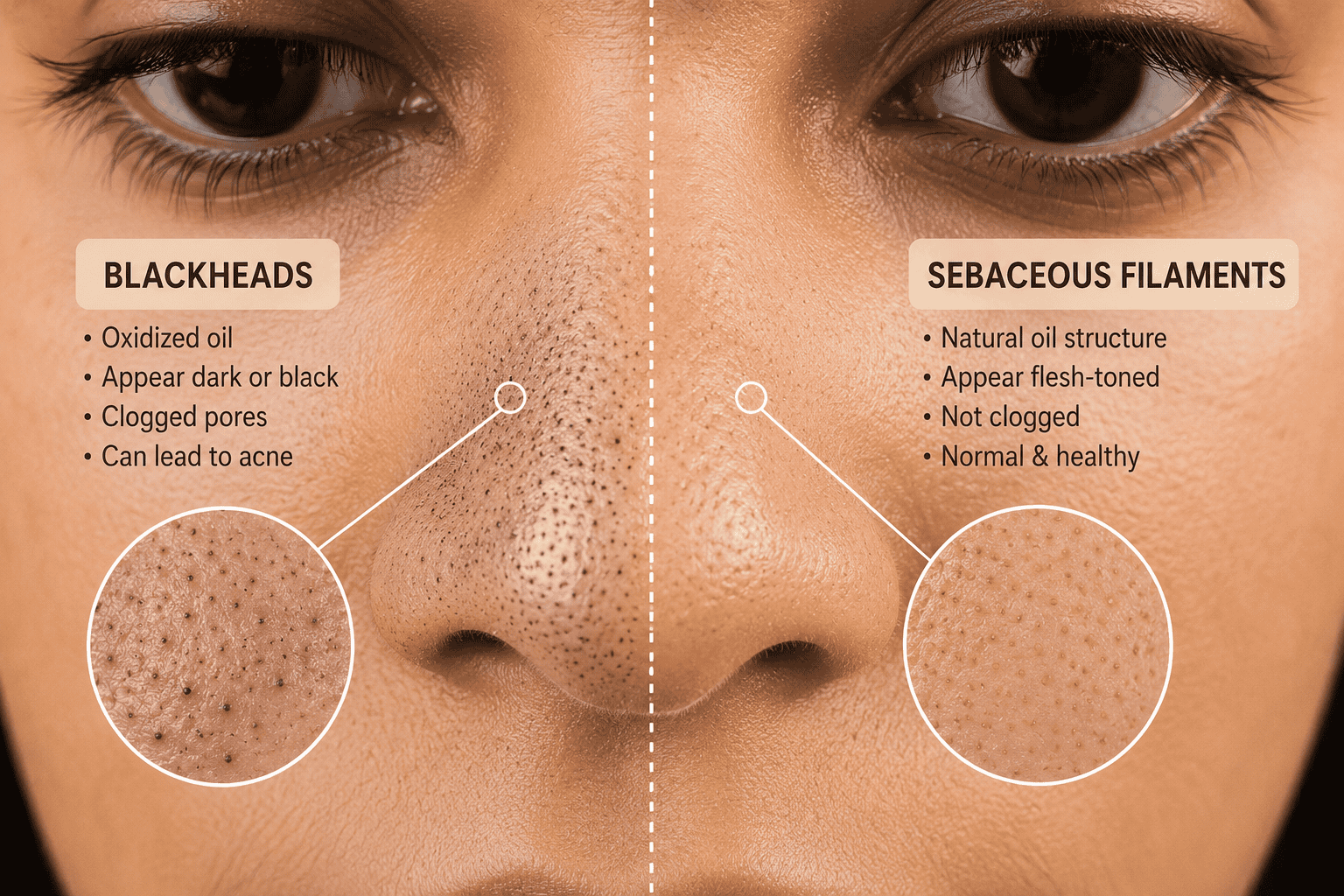
Let me save you from the mistake I made for two solid years: blackheads are not dirt. They are not proof that you’re not washing your face properly. A blackhead — medically known as an open comedone — forms when a hair follicle gets clogged with a mixture of dead skin cells and excess oil (sebum). When that clog reaches the skin surface and gets exposed to air, it oxidizes and turns dark. That’s the black color. Not dirt. Oxidation. According to a 2024 review, approximately 10–20% of adults experience blackheads regardless of age.
What blackheads ARE:
- Clogged pores where oil and dead skin have oxidized at the surface
- A mild form of acne that can happen at any age — not just teenagers
- More common on the nose because that area has a higher concentration of sebaceous (oil) glands
- Often worsened by hormonal fluctuations, stress, and pore-clogging skincare products
What blackheads ARE NOT:
- A sign of poor hygiene (worth saying twice — the shame around this is very real)
- Something that disappears by washing your face more aggressively
- Always actually blackheads — those tiny grey dots on your nose are often sebaceous filaments, a completely normal part of skin anatomy that cannot be permanently removed
- Removable permanently with any single treatment
The trick is this: you can’t scrub or squeeze your way to a blackhead-free nose. The root cause is oil overproduction combined with dead skin cell buildup inside the pore. Treat that consistently and gently, and the blackheads improve. Attack aggressively — and your skin produces even more oil in response. I learned this the hard way over two frustrating years.
Does Steaming Your Face Actually Help Remove Nose Blackheads?
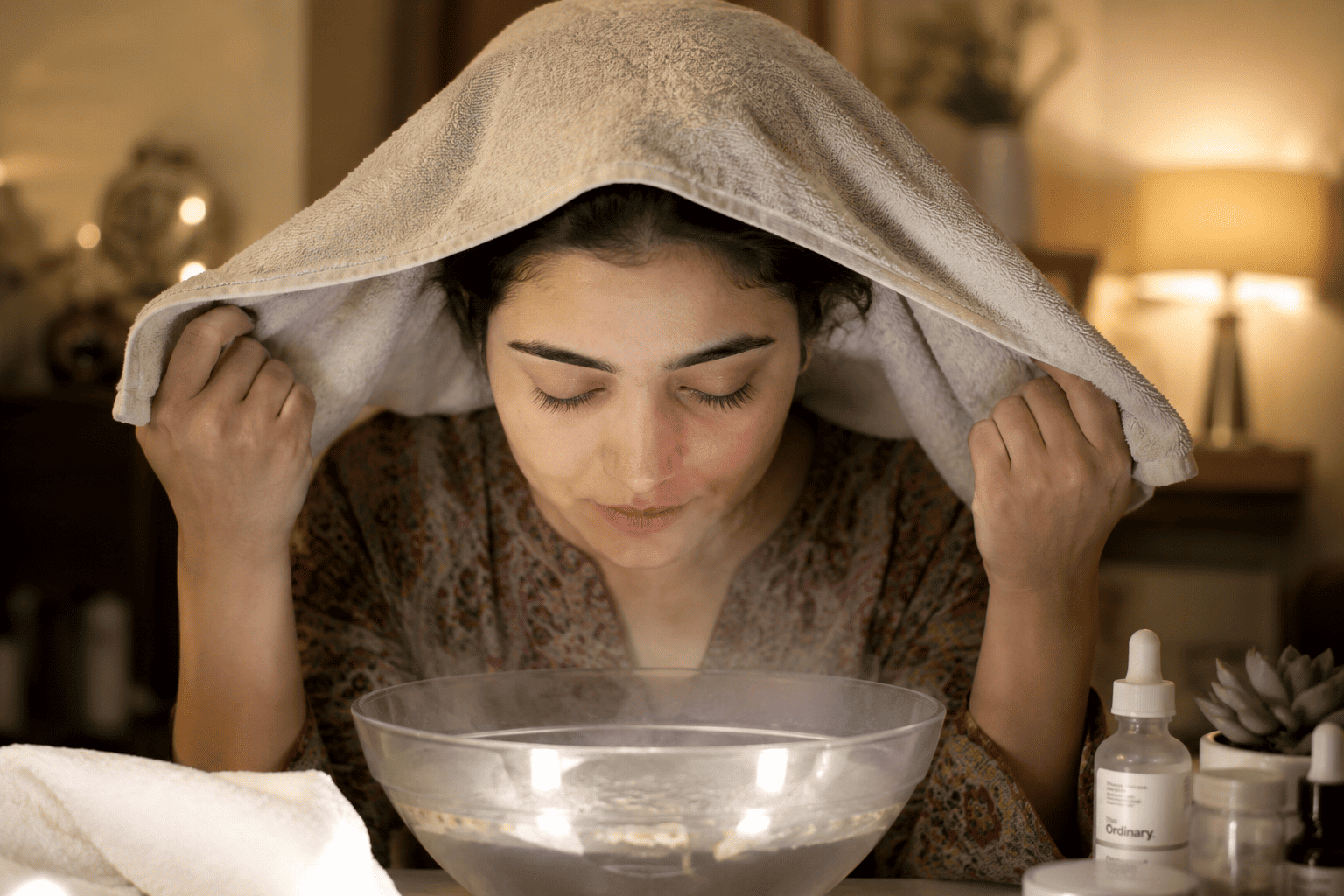
Yes — but not the way most people use it. Steaming alone doesn’t extract blackheads. What it does is soften the hardened sebum plug inside the pore, making every subsequent treatment significantly more effective. When I added 5 minutes of steam before my clay mask, results improved noticeably.
How to do it:
- Boil water, pour into a large bowl, drape a clean towel over your head
- Keep your face at least 30cm from the water surface
- Steam for 5–8 minutes, then apply your chosen treatment immediately
- Or: press a warm damp washcloth to your nose for 3–5 minutes — works just as well
Best for: All skin types | All ages | Mild to severe blackheads
Cost: Free
Honest note: Skip if you have rosacea — heat triggers flare-ups. Never steam with your face directly over boiling water.
What Is the Most Effective Home Treatment for Nose Blackheads?
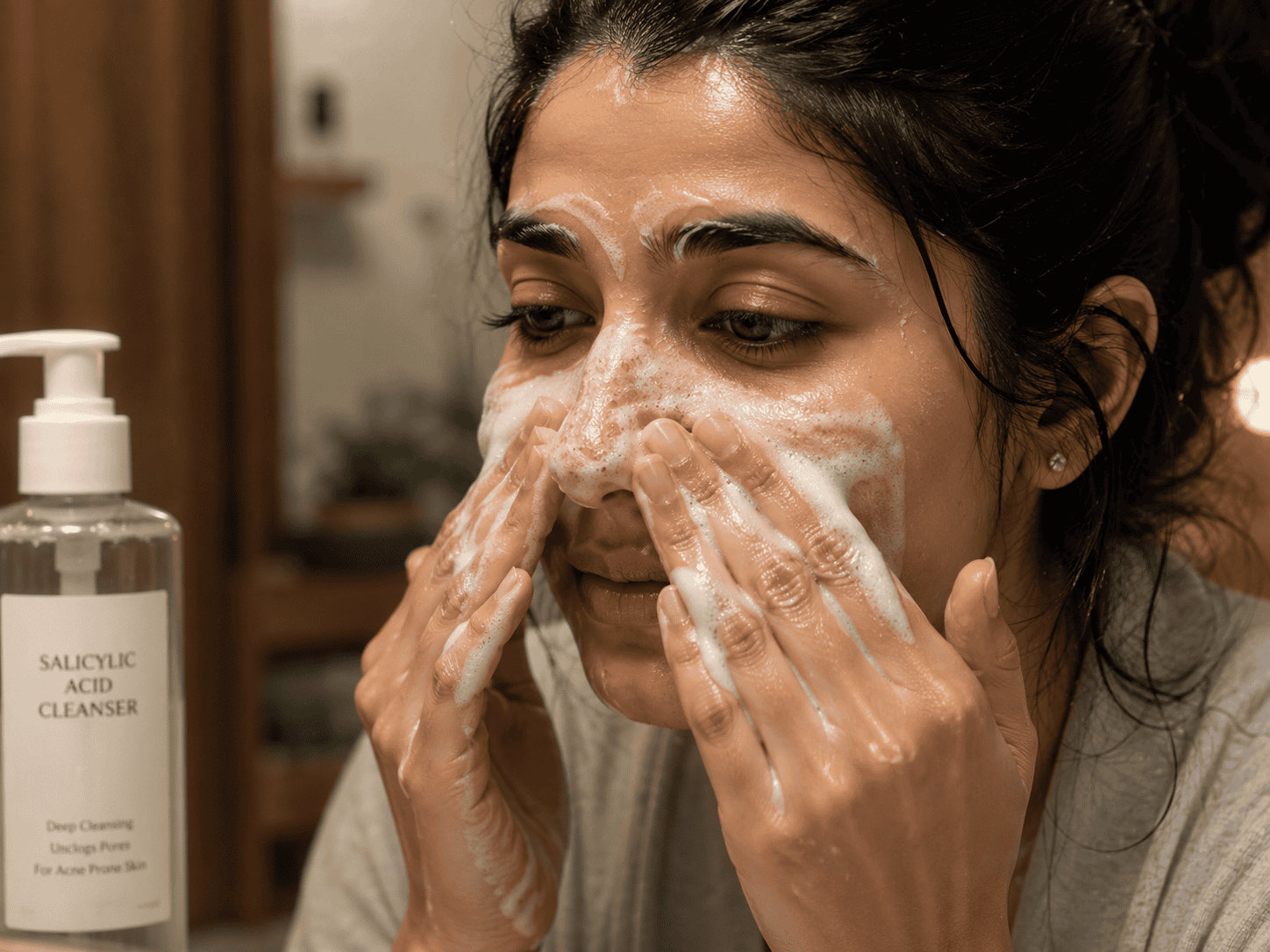
Here’s what actually works, and I wish someone had told me this five years earlier: salicylic acid (BHA — beta hydroxy acid) is the single most dermatologist-recommended ingredient for nose blackheads. According to the Cleveland Clinic (2024), salicylic acid is one of the most effective over-the-counter treatments for preventing and clearing blackheads.
Unlike most cleansers that work only on the skin surface, salicylic acid is oil-soluble — it penetrates inside the pore, dissolves the keratin plug, and clears it from the inside out. Nothing else on this list does that.
The first week of using a salicylic acid cleanser, my nose felt a little dry and tight. I almost stopped. By week three, I noticed my nose looking noticeably cleaner in the mirror for the first time in years.
How to use it:
- Use a salicylic acid face wash (0.5%–2% concentration) morning or evening
- Massage gently onto nose and T-zone for 60 seconds before rinsing
- Start 2–3 times per week, build up as your skin adjusts
- Always follow with a non-comedogenic moisturizer
Budget picks: Neutrogena Oil-Free Acne Wash (~$8), CeraVe Renewing SA Cleanser (~$12)
What to expect: Visible improvement in 2–4 weeks with consistent use
Best for: Oily and combination skin | Ages 15+ | Moderate to stubborn blackheads
Cost: $8–$15 per bottle
Honest note: If pregnant or breastfeeding, consult your doctor before using salicylic acid. Do not apply to broken or irritated skin.
Clay Mask for Nose Blackheads — Does It Really Work?
Nadia got me started on clay masks. Her mother used to make them with multani mitti — fuller’s earth clay — mixed with rosewater. Every Friday evening, she’d apply it to her T-zone, let it dry completely, wash it off. Nadia grew up watching this routine, started doing it herself as a teenager, and her skin has been consistently clear ever since. “Meri ammi ka nuskha,” she always says — my mother’s remedy.
The first time I tried it myself, I was skeptical. Three weeks later, I bought my own bag.
Clay works by drawing excess oil and impurities out of pores. It doesn’t dissolve the plug the way salicylic acid does, but it significantly reduces the sebum that keeps pores clogging. Think of it as weekly maintenance.
Nadia’s mother’s recipe:
- 1 tablespoon multani mitti (fuller’s earth) or bentonite clay
- Enough rosewater to form a smooth paste (roughly 2–3 teaspoons)
- Apply to nose and T-zone, leave 10–15 minutes, rinse with warm water
- Moisturize immediately — non-negotiable
Store alternatives: Aztec Secret Indian Healing Clay (~$10), Queen Helene Mint Julep Masque (~$6)
What to expect: Less shine and reduced blackhead appearance in 1–2 weeks
Best for: Oily skin | T-zone blackheads | Ages 15+
Cost: $0–$10

Honey and Cinnamon Mask — Gentle Option for Sensitive Skin
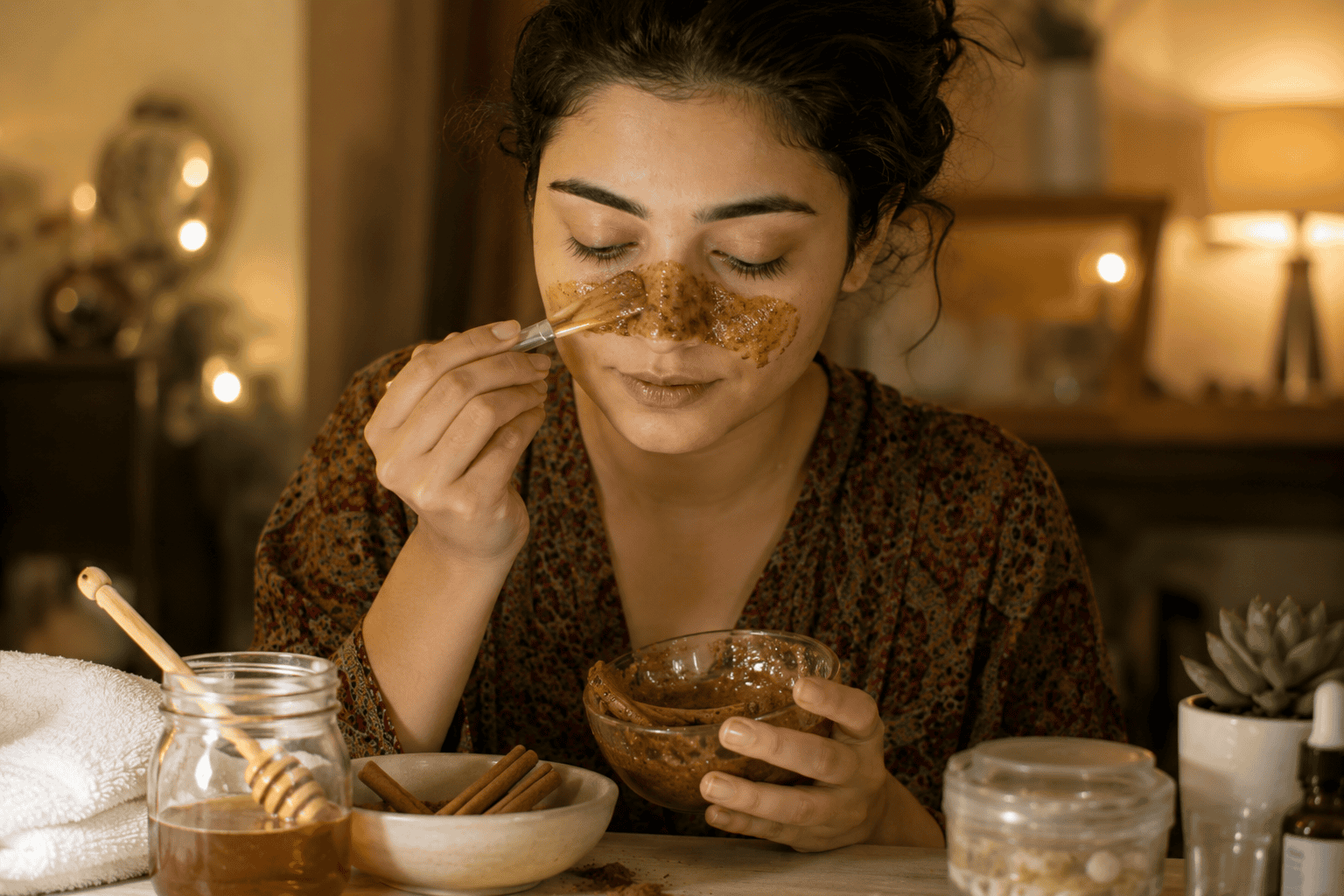
Raw honey is naturally antibacterial and a humectant; cinnamon has anti-inflammatory and antimicrobial properties. Together they gently reduce bacteria contributing to blackhead formation — without the dryness of acids or clay. I tried this expecting nothing. After two weeks used twice a week, the inflammation around my nose blackheads was noticeably calmer.
Recipe:
- 1 tablespoon raw honey + ½ teaspoon ground cinnamon
- Mix, apply to clean nose and T-zone for 10–15 minutes, rinse with lukewarm water
How often: 2–3 times per week
Best for: Sensitive and dry skin | Mild blackheads | Ages 13+
Cost: Under $3
Honest note: Test cinnamon on your inner wrist first — it can irritate sensitive skin in high amounts. If it stings, reduce to ¼ teaspoon or use honey alone.
Brown Sugar + Honey + Lemon Scrub — Budget Exfoliation
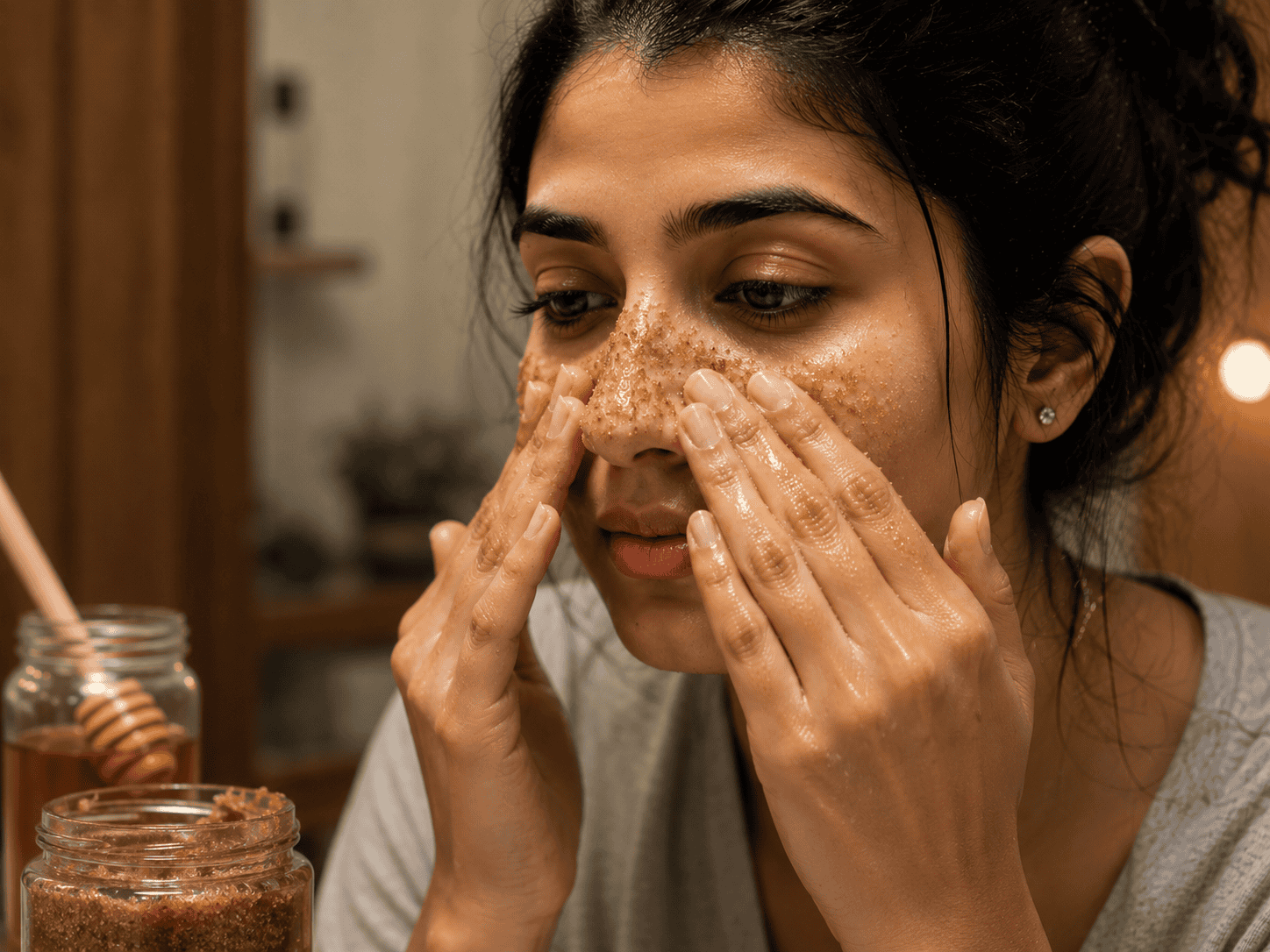
The mistake most women make with scrubs is using ones that are too aggressive — walnut shells, coarse salt, rotating brush heads. These create micro-tears in the skin. Brown sugar granules are small, rounded, and dissolve as you work — gentle exfoliation that actually helps rather than irritates. I learned this the hard way after two months with an apricot scrub that left my nose redder than before.
Recipe:
- 1 tablespoon brown sugar + 1 tablespoon raw honey + 2 tablespoons fresh lemon juice
- Apply to damp nose in gentle circular motions for 3–5 minutes
- Leave 3 more minutes, rinse thoroughly, moisturize immediately
How often: 2 times per week
Best for: Normal to oily skin | Mild to moderate blackheads | Ages 15+
Cost: Under $2
Honest note: Never use lemon before sun exposure — citric acid causes photosensitivity and dark patches on medium to deep skin tones. I learned this the hard way. Use at night only, wear SPF the next morning without fail.
Tea Tree Oil — Targeted Bacteria Fighter
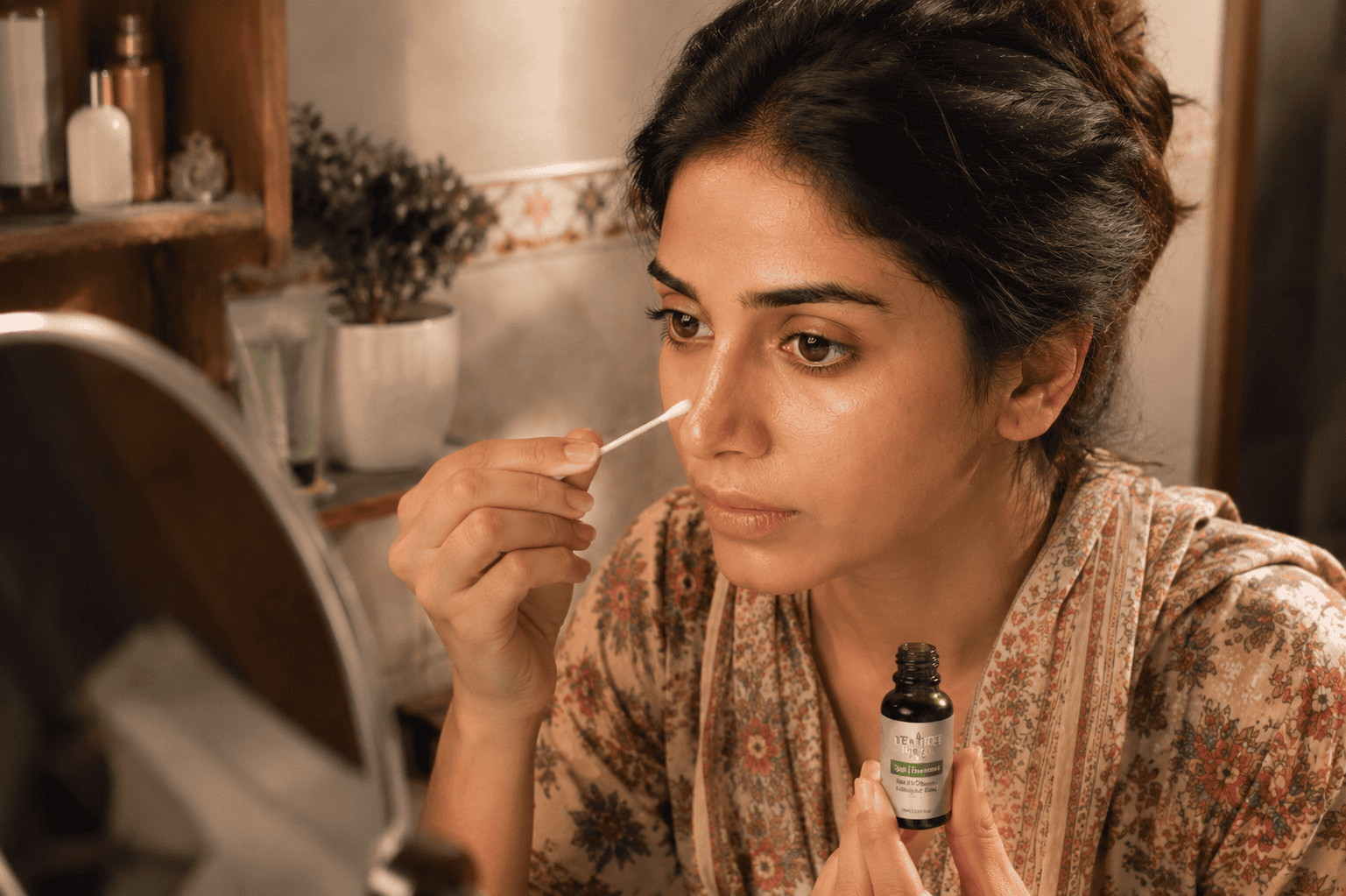
Multiple studies confirm tea tree oil reduces acne-causing bacteria on the skin surface. For inflamed or raised nose blackheads, it makes a noticeable difference — but only when properly diluted.
How to use:
- 1–2 drops tea tree oil + 1 teaspoon jojoba or coconut oil
- Apply with cotton swab directly to blackhead areas
- Leave 30 minutes or overnight, rinse in the morning
How often: 3–4 times per week
Best for: Oily, acne-prone skin | Inflamed blackheads | Ages 15+
Cost: $5–$10 for a bottle that lasts months
Honest note: Never apply undiluted — this causes chemical burns. Dilute every single time, without exception.
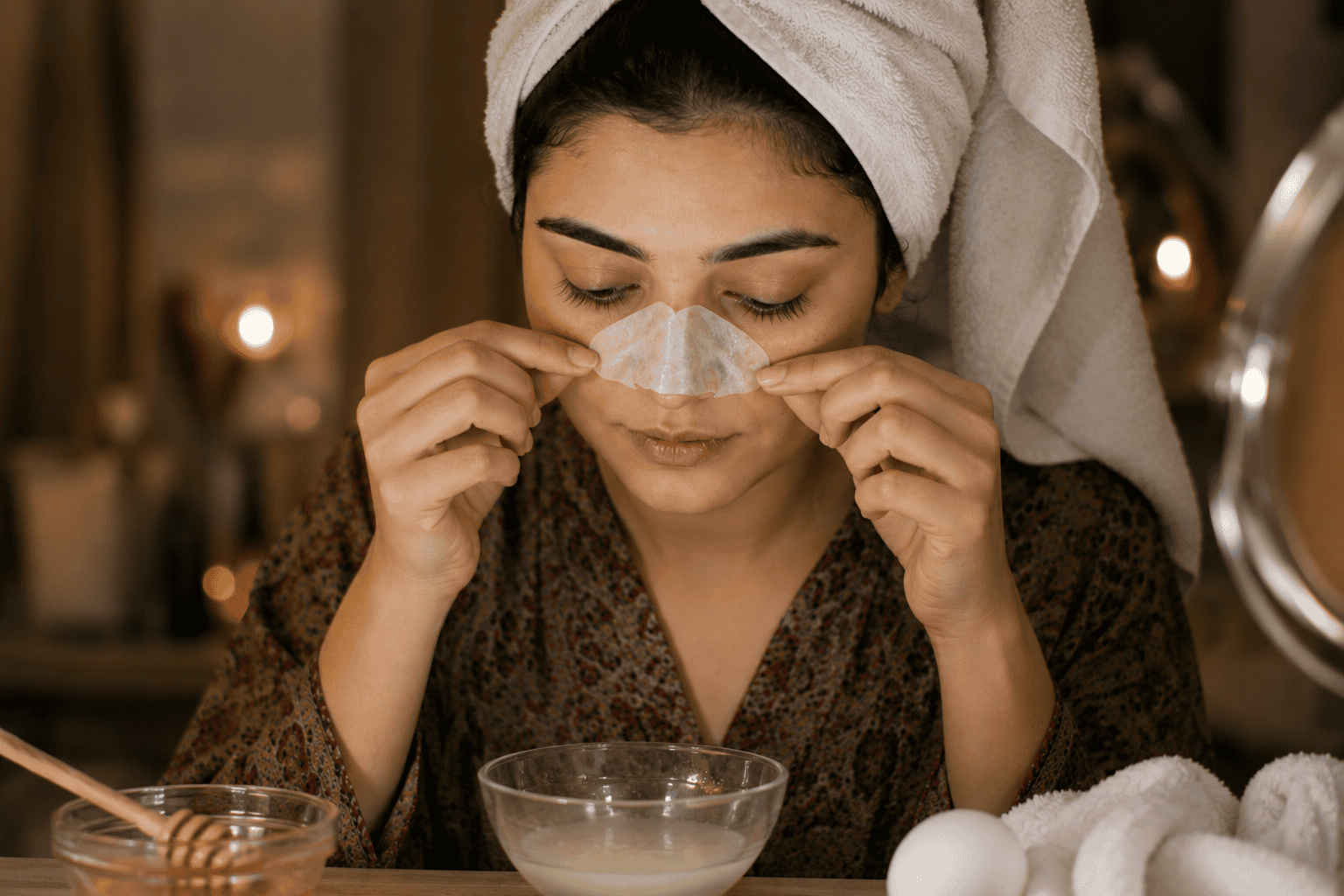
DIY Egg White Pore Strip — Budget Alternative to Commercial Strips
Egg whites contain albumin protein that tightens skin as the mask dries and creates a mild pulling effect. The tissue layer creates the strip structure — same satisfaction as commercial strips at $0.10 per use versus $2–$3 for store versions.
How to use:
- Whisk 1 egg white until frothy
- Apply thin layer to clean nose → press tissue paper on top → apply second layer of egg white
- Let dry completely (~15 minutes) → peel gently from edges inward
Best for: Normal, combination, oily skin | Surface blackheads | Ages 15+
Cost: Under $1. Skip if you have any egg allergy.
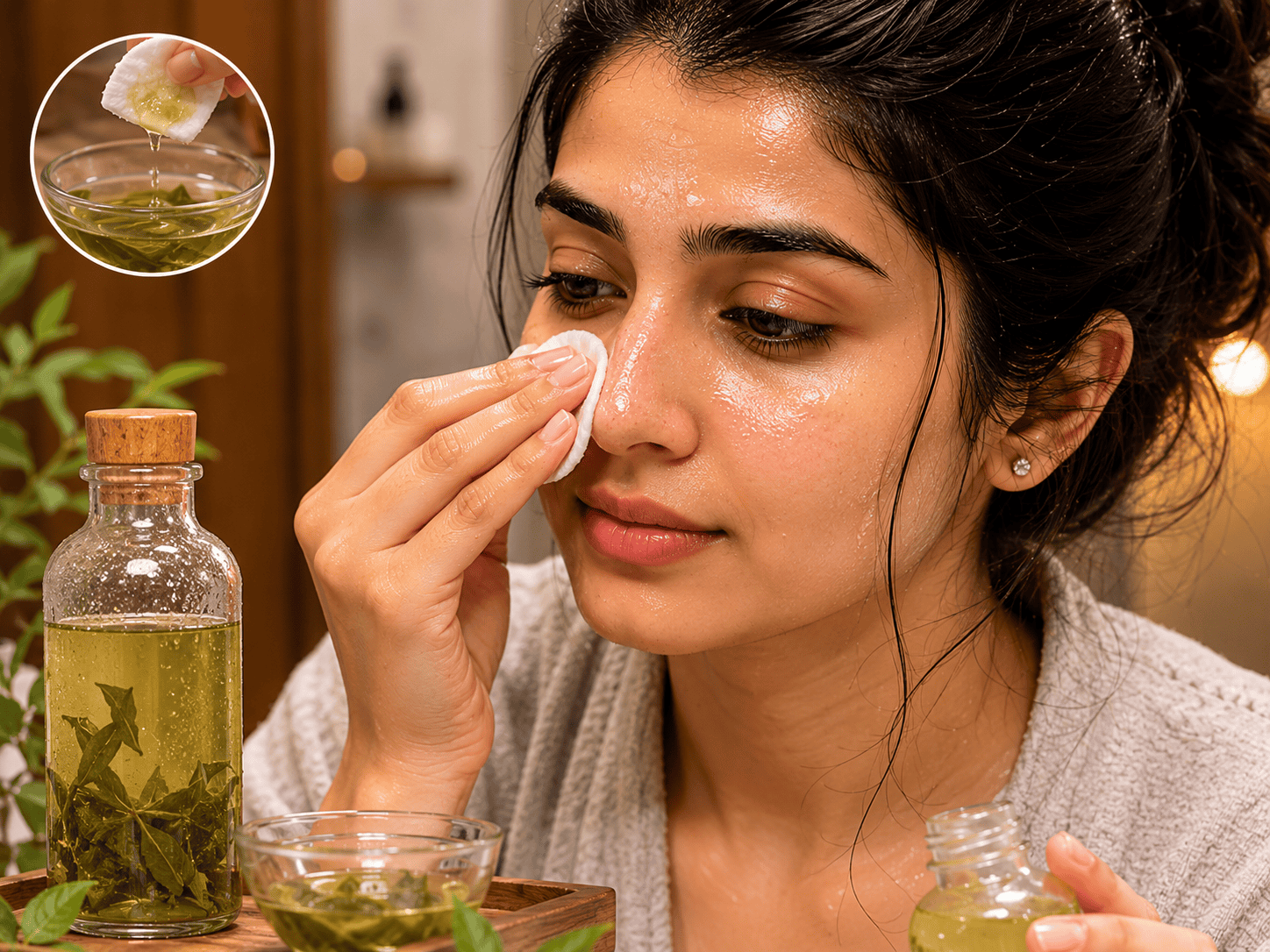
Green Tea Toner — Long-Term Oil Control
Green tea’s EGCG antioxidant may help reduce sebum production over time. Used daily as a toner after cleansing, it gradually reduces the oiliness feeding blackhead formation — gentle enough for even reactive skin.
DIY: Brew 1 teabag in 1 cup hot water, cool completely, apply with cotton pad after cleansing. Use daily.
Best for: All skin types | Blackhead prevention | Ages 13+
Cost: Under $1 per week
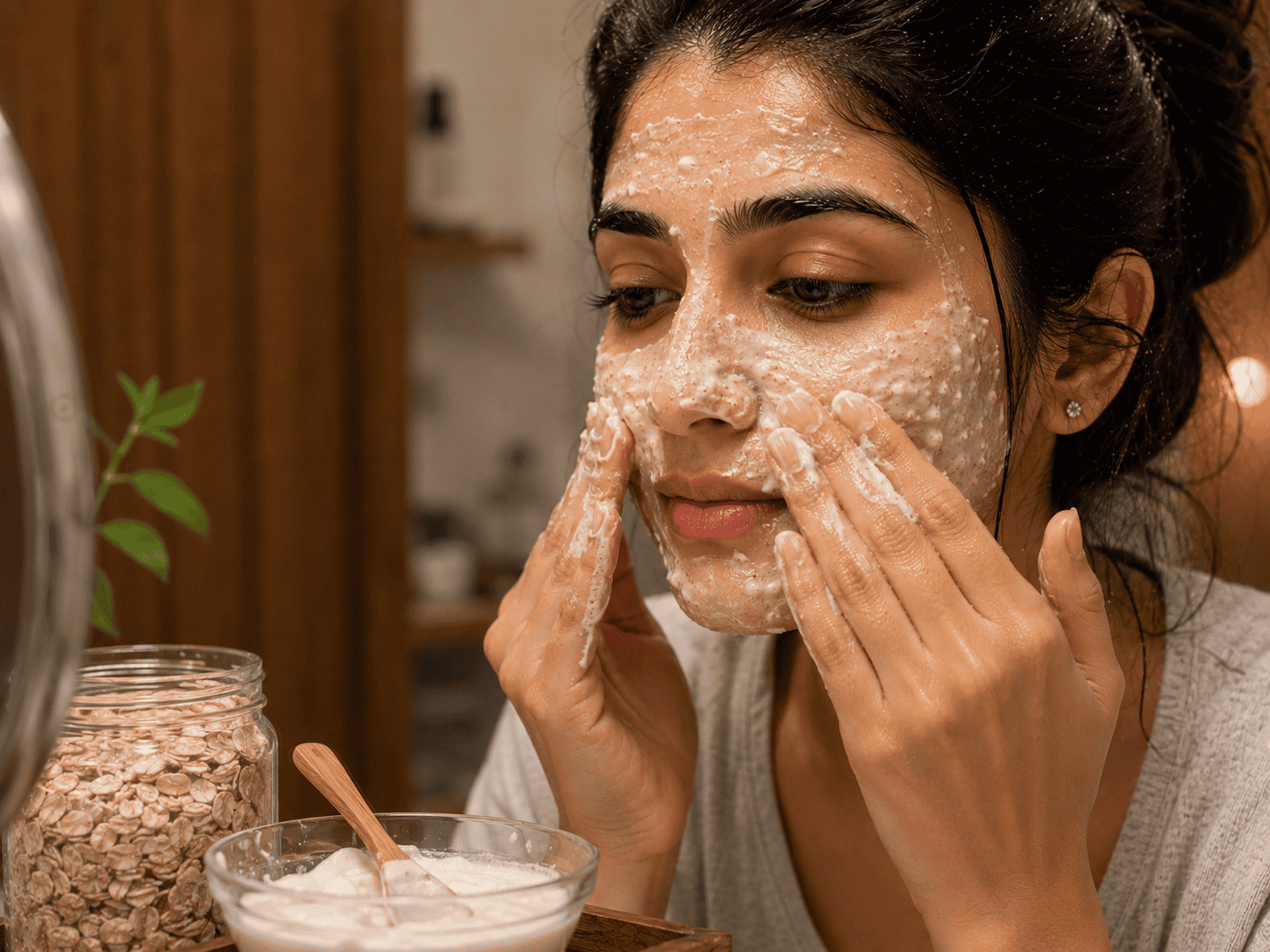
Oatmeal + Yogurt Mask — For Skin That Reacts to Everything Else
Oatmeal saponins cleanse pores gently; yogurt’s lactic acid provides mild exfoliation. No stripping, no irritation — the ideal starting point for sensitive or reactive skin.
Recipe:
- 2 tablespoons cooled cooked oatmeal + 3 tablespoons plain yogurt
- Apply for 15 minutes, rinse with cool water, 2–3 times per week
Best for: Sensitive, dry, mature skin | Mild blackheads | Ages 13+
Cost: Under $2
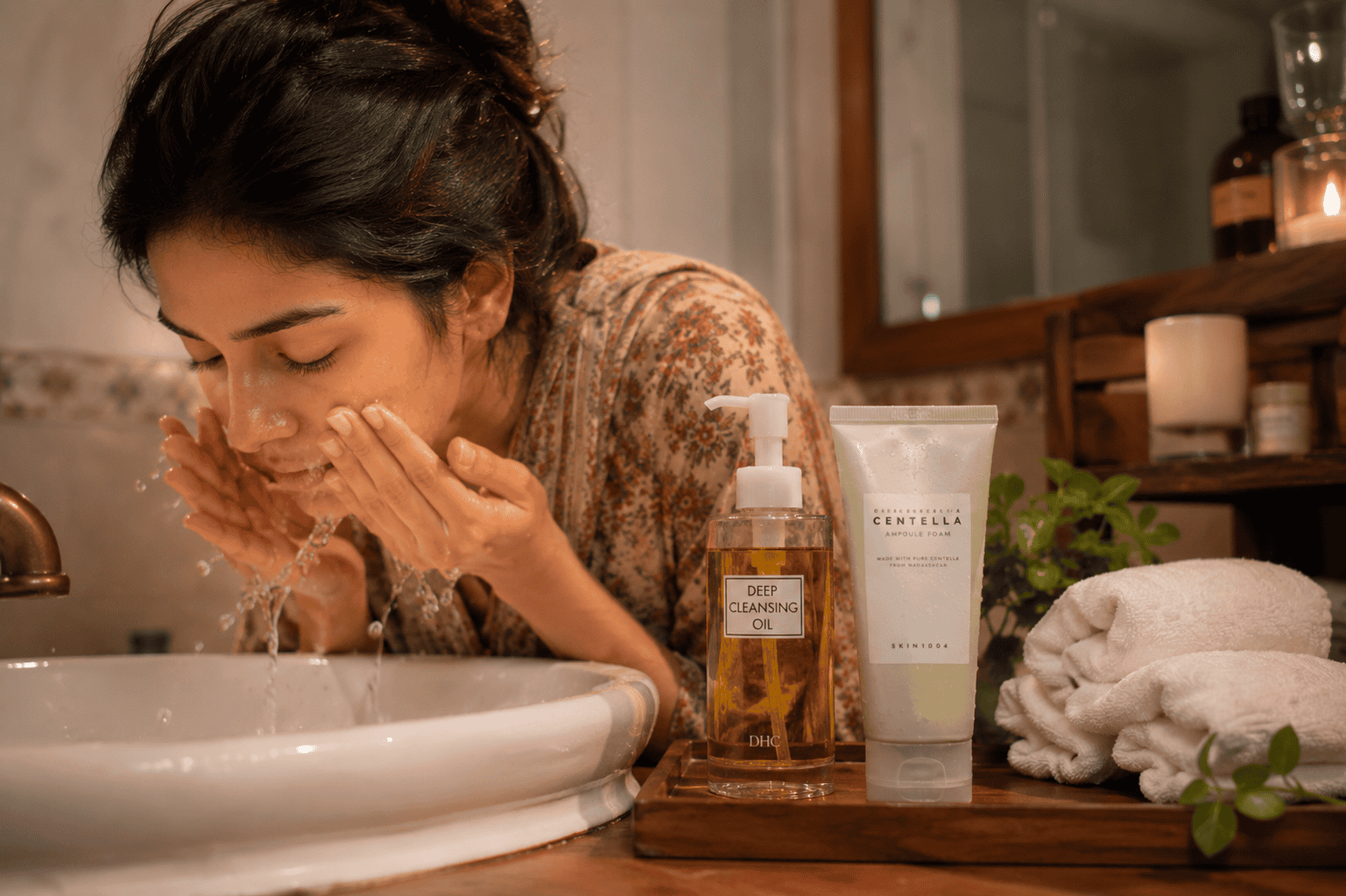
Double Cleansing — The Prevention Method Most Women Skip
Oil-based cleansers remove what water-based cleansers can’t: dissolved sunscreen, sebum, and makeup residue. That residue left overnight becomes tomorrow’s blackheads. Done right, this one evening habit prevents more blackheads than most treatments.
How to do it (evenings only):
- Massage cleansing oil onto dry skin for 60 seconds → add water to emulsify → rinse
- Follow with your salicylic acid cleanser or gentle foam wash
- Morning: water-based cleanser only
Best for: All skin types | Blackhead prevention | Anyone who wears sunscreen
Cost: $15–$20 combined
Witch Hazel Toner — Natural Oil Control
Witch hazel temporarily tightens pores and removes excess surface oil after cleansing. Its tannins provide mild antibacterial action — a simple, affordable step between cleansing and moisturizing.
How to use: Swipe with cotton pad across nose after cleansing, let dry, then moisturize.
Product: Thayers Alcohol-Free Witch Hazel Toner (~$10)
Best for: Oily skin | Daily use | Ages 15+
Cost: $8–$12 per bottle
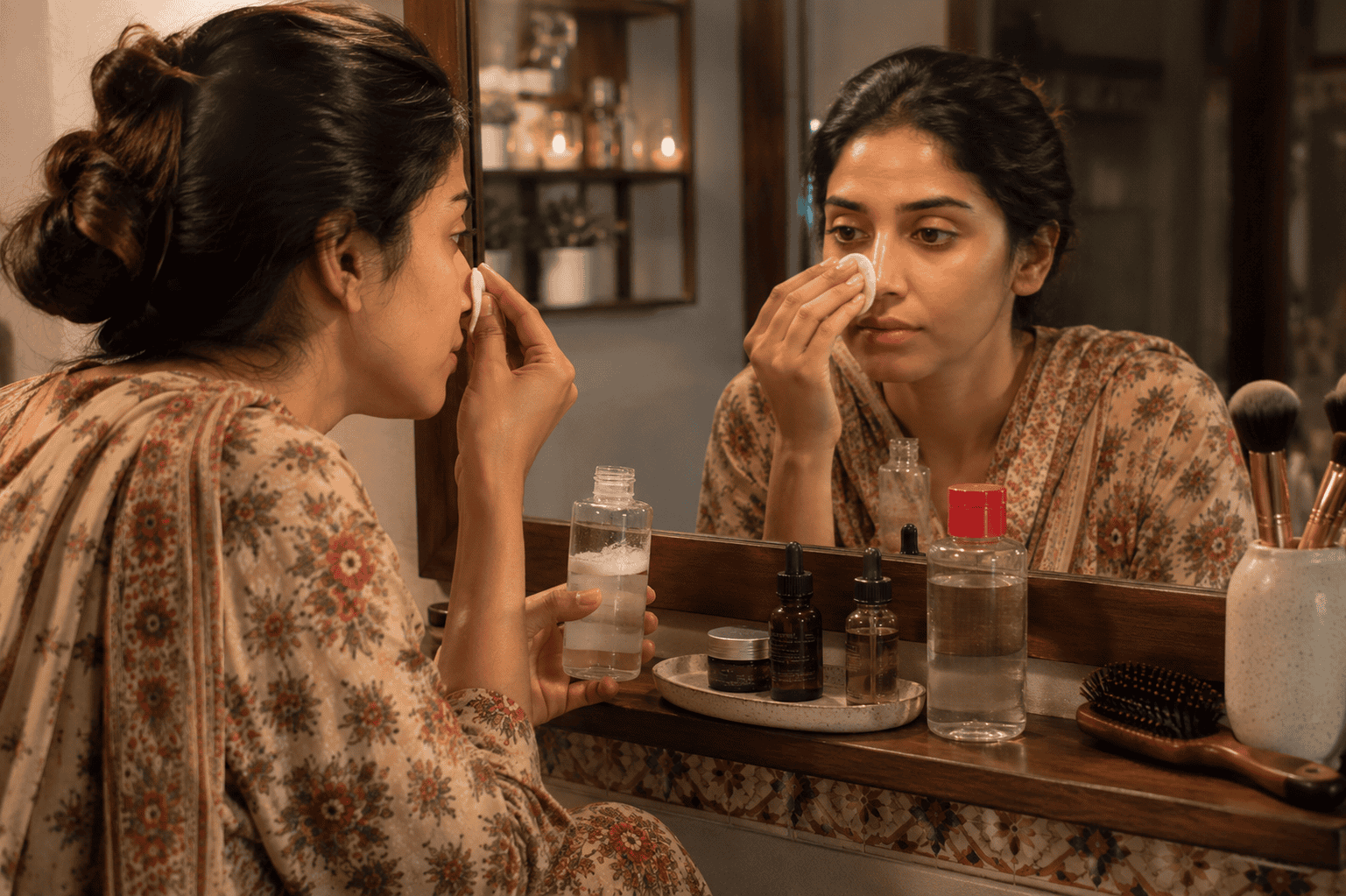
Adapalene (Differin Gel) — The Long-Term Solution for Recurring Blackheads
If home remedies haven’t resolved your blackheads after consistent effort, adapalene is the over-the-counter retinoid worth knowing about. According to dermatologists, it’s the most effective long-term blackhead prevention available without a prescription. It speeds up skin cell turnover — preventing dead cells from building up inside pores at the source.
How to use:
- Pea-sized amount to nose at night, 2–3 times per week to start
- Always use SPF the next morning
- Expect 4–6 weeks adjustment period — real results at 8–12 weeks
- Do not use on the same night as salicylic acid; alternate them
Product: Differin Adapalene Gel 0.1% (~$15)
Best for: Ages 20+ | Persistent recurring blackheads | Oily skin
Cost: $12–$20 per tube
Honest note: Do not use if pregnant or nursing. Consult your doctor before starting a retinoid routine.
Comparison Table: Home Remedies for Nose Blackheads
| Method | Cost | Time to Results | Difficulty | Best For |
|---|---|---|---|---|
| Salicylic Acid Cleanser | $8–$15 | 2–4 weeks | Easy | Oily/Combo skin, moderate blackheads |
| Clay Mask (Multani Mitti) | $0–$10 | 1–2 weeks | Easy | Oily skin, T-zone blackheads |
| Steam + Warm Compress | Free | Immediate (prep) | Easy | All skin types |
| Honey + Cinnamon Mask | Under $3 | 3–4 weeks | Easy | Sensitive/dry skin |
| Brown Sugar + Honey + Lemon | Under $2 | 1–2 weeks | Easy | Normal to oily skin |
| Tea Tree Oil (Diluted) | $5–$10 | 2–4 weeks | Easy | Oily, acne-prone skin |
| DIY Egg White Strip | Under $1 | Immediate | Medium | Surface blackheads |
| Double Cleansing | $15–$20 | 3–4 weeks | Easy | Prevention, all types |
| Adapalene (Differin) | $12–$20 | 8–12 weeks | Medium | Recurring blackheads, 20+ |
| Green Tea Toner | Under $1/wk | 3–4 weeks | Easy | Sensitive, all types |
| Witch Hazel Toner | $8–$12 | 2–3 weeks | Easy | Oily skin |
| Oatmeal + Yogurt Mask | Under $2 | 2–3 weeks | Easy | Sensitive/dry skin |
Also Read: Best Home Remedies for Pimples and Acne — 15 Remedies
Common Mistakes That Make Nose Blackheads Worse
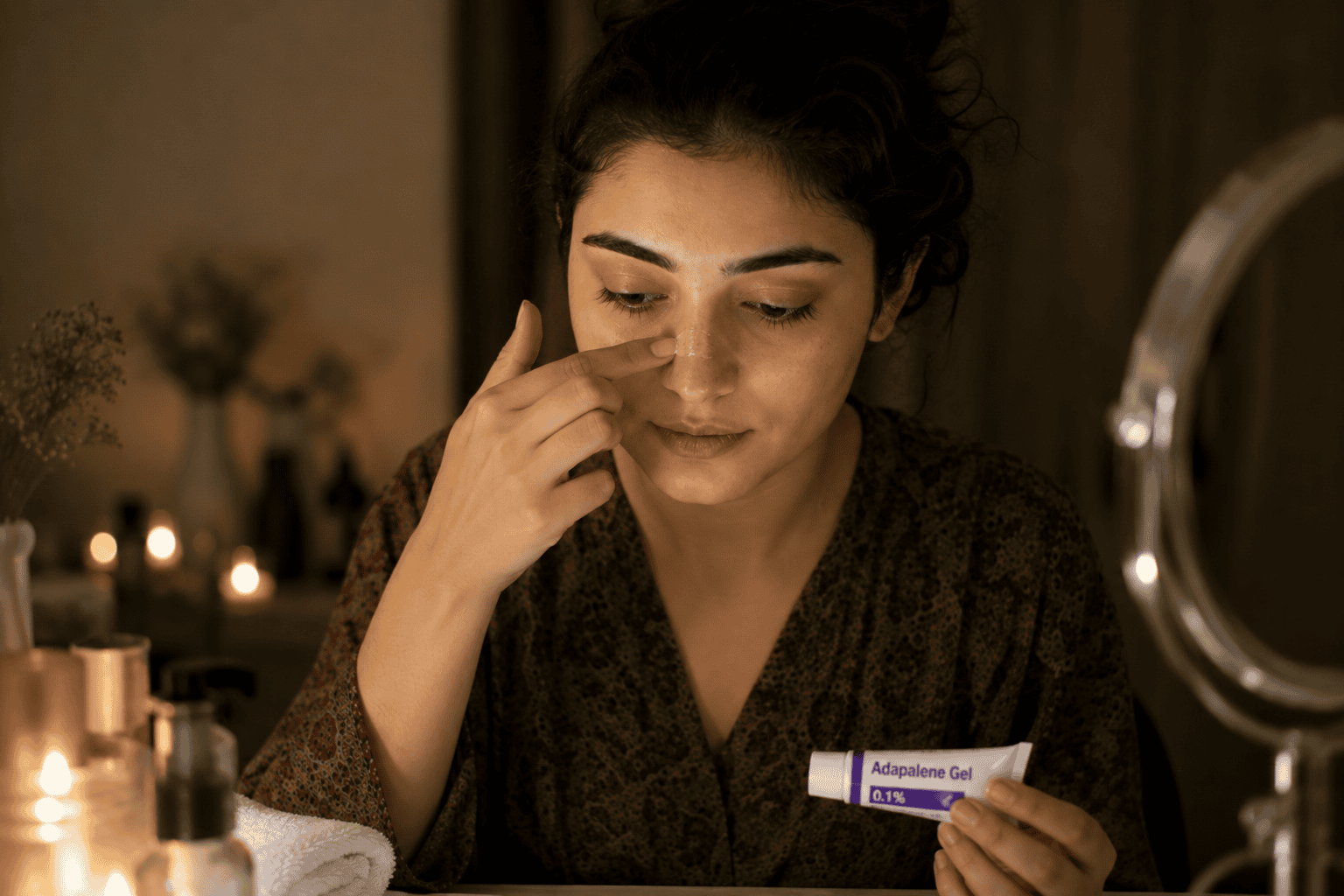
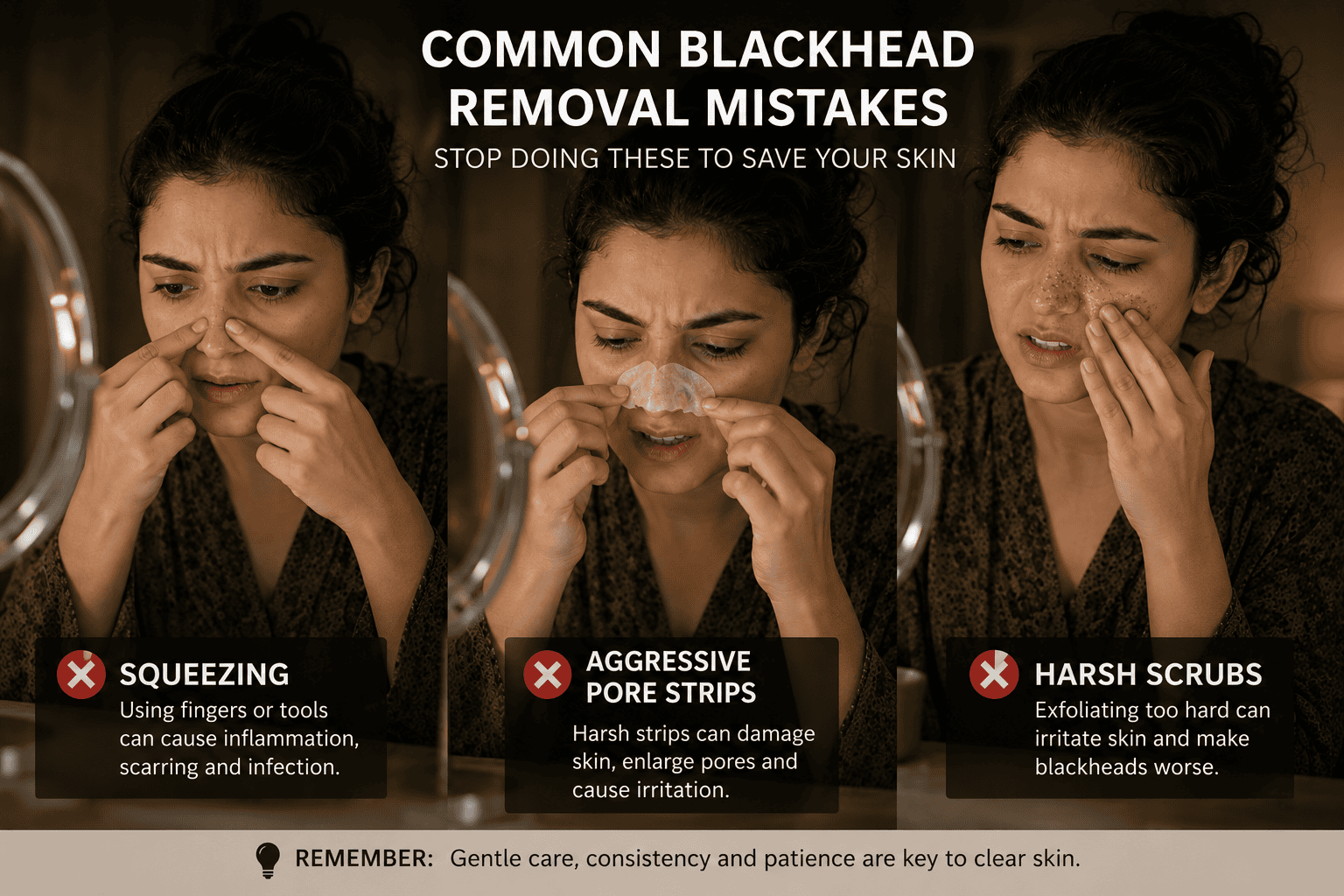
The biggest mistake most women make is treating blackheads aggressively. I understand the impulse — you want them gone immediately. But here’s what actually happens when you go too hard:
- Squeezing with bare fingers pushes the clog deeper, introduces bacteria, and causes scarring and dark marks that outlast the original blackhead by months
- Daily pore strips stretch pore walls over time — making pores more visible, not less
- Over-exfoliating damages the skin barrier and triggers more oil production in response
- Lemon juice before sun exposure causes photosensitivity and dark patches — I have the hyperpigmentation to prove this
- Skipping moisturizer on oily skin causes the skin to overcompensate with more sebum
- Baking soda used daily disrupts your skin’s natural pH (4.5–5.5) and damages the barrier
- Undiluted tea tree oil causes burns and severe irritation
Done right, blackhead removal is gentle, consistent, and patient. Done wrong — it’s expensive and counterproductive every time.
When Should You See a Doctor for Nose Blackheads?
Home remedies work well for most cases. Consult a dermatologist if:
- After 2–3 months of consistent home treatment, blackheads are spreading or worsening
- Blackheads are becoming inflamed, red, or turning into painful nodules — this may indicate cystic acne
- You notice significant scarring from extractions
- You have PCOS or a hormonal imbalance
- You’re pregnant and unsure which products are safe
A dermatologist can offer professional extraction, prescription retinoids, or chemical peels that go beyond what home treatment achieves. There is no shame in needing professional support. Consult your doctor if symptoms persist despite consistent home treatment.
People Also Ask
❓ What is the fastest way to remove blackheads from nose at home?
Steam your face for 5 minutes to prime the pores, then apply a clay mask for 10–15 minutes and rinse. This gives the fastest same-day visible result. The DIY egg white tissue strip also gives immediate feedback upon peeling. For lasting removal, 2–4 weeks of consistent salicylic acid use is what actually works.
❓ Why do blackheads keep coming back on my nose?
Because the root cause — excess oil production and dead skin cell buildup — hasn’t been addressed. Pore strips and squeezing only remove the visible plug temporarily. A routine that includes a BHA cleanser and weekly clay mask targets both causes at once, which is why results last longer with those methods.
❓ Do pore strips work for nose blackheads or are they a waste?
They provide temporary visible improvement but don’t prevent blackheads from returning. According to dermatologists, pore strips don’t regulate oil production — the underlying cause. Regular use can also stretch pore walls over time. They’re an occasional quick-fix, not a long-term solution.
❓ Is it better to squeeze blackheads or leave them?
Neither is ideal. Squeezing risks pushing the clog deeper, causing inflammation and scarring that lasts far longer than the blackhead itself. The better option: treat consistently with a BHA cleanser and clay mask so they clear gradually without damage.
❓ What home ingredient removes nose blackheads most effectively?
Salicylic acid (BHA) is the most dermatologist-recommended and consistently effective option — available in drugstore cleansers for $8–$15. For purely natural alternatives, bentonite clay or fuller’s earth mixed with rosewater is the most evidence-supported home remedy.
FAQ — How to Remove Blackheads from Nose at Home
Q: Do blackheads go away on their own if you leave them alone?
Very mild surface blackheads may improve with basic skincare, but deep established ones don’t disappear without targeted treatment. Without something to regulate oil and remove dead skin — like a BHA cleanser — most nose blackheads persist or worsen over time.
Q: Is it safe to squeeze blackheads out at home?
Dermatologists strongly advise against it. Squeezing risks pushing the clog deeper, introducing bacteria, causing inflammation, and creating scarring or post-inflammatory hyperpigmentation that lasts far longer than the original blackhead. Consult your doctor if unsure about safe extraction.
Q: How long does it take for home remedies to remove blackheads from the nose?
Quick visual results can come from a clay mask or egg white strip the same day. Lasting reduction requires 2–6 weeks of consistent treatment. Salicylic acid shows real results in 2–4 weeks; adapalene takes 8–12 weeks. Patience is part of the process.
Q: Why do I keep getting blackheads on my nose no matter what I do?
Usually one of three causes: your skin genetically produces more oil, you’re using comedogenic (pore-clogging) products, or dead skin cells aren’t being removed consistently enough. Sometimes what you’re seeing are sebaceous filaments — normal skin structures that resemble blackheads but cannot be eliminated. Check that your moisturizer, sunscreen, and makeup are labelled “non-comedogenic.”
Q: Are those dark spots on my nose actually blackheads or just my pores?
Sebaceous filaments are tiny grey or light-brown dots naturally visible on the nose — completely normal and cannot be permanently removed. True blackheads are darker, slightly raised, and vary more in size. If gentle pressure produces a soft waxy plug, it was a blackhead. If nothing comes out easily, it’s likely a sebaceous filament.
Q: Do pore strips really work for nose blackheads?
They temporarily remove surface blackheads but don’t prevent them from returning. Regular use can stretch pore walls over time, making pores appear more prominent. They’re an occasional quick-fix — not a long-term strategy. A consistent BHA routine delivers far better sustained results.
Q: Can toothpaste remove blackheads from the nose?
No — and please don’t try it. Toothpaste contains fluoride, sodium lauryl sulfate, and flavoring agents formulated for teeth, not facial skin. Applying it to your nose can cause irritation, redness, and contact dermatitis. It’s a persistent social media myth with zero dermatological backing.
Q: What is the fastest home remedy to remove nose blackheads?
Steam for 5 minutes, apply a clay mask for 10–15 minutes, rinse. You’ll see noticeably cleaner pores the same day. The DIY egg white tissue strip also gives immediate visible results. For lasting removal, 4–6 weeks of consistent salicylic acid use is what actually works long-term.
Q: Can I use baking soda on my nose for blackheads every day?
Definitely not. Baking soda has a pH of around 9, while healthy skin sits at 4.5–5.5. Daily use disrupts this balance, damages the skin barrier, and triggers more oil production. Limit to once a week maximum — and always moisturize immediately afterward.
Q: Is salicylic acid safe for sensitive skin?
At lower concentrations (0.5%–1%), it can work for sensitive skin — start with twice a week and build up gradually. If significant redness or peeling occurs, switch to the oatmeal-yogurt mask instead. Always patch test on your inner wrist first, and consult your doctor if you have concerns.
Q: Why does my nose look dirty even after washing?
You’re most likely seeing sebaceous filaments — naturally occurring grey dots that are part of normal skin anatomy. They’re not dirt and cannot be fully eliminated by cleansing. Consistent oil control (BHA cleanser, clay masks) can minimize their appearance, but they won’t disappear entirely.
Q: What foods cause blackheads to get worse?
Research suggests high-glycemic foods (white bread, sugary drinks, processed carbohydrates) and dairy — particularly skim milk — may increase sebum production in some people. If your blackheads flare consistently after certain foods, a brief diary may reveal personal triggers. Consult your doctor if you suspect a hormonal or dietary link.
Q: How do I prevent blackheads from coming back after removing them?
Prevention requires: salicylic acid cleanser 2–3x per week, weekly clay mask, non-comedogenic moisturizer daily, SPF every morning, and double cleansing every evening. This addresses all three root causes — excess oil, dead skin, and pore-clogging residue. Consistency matters far more than any individual product.
Q: Can blackheads turn into pimples if left untreated?
Yes — if bacteria multiply inside a clogged pore and the immune system responds, the open comedone can become an inflamed papule or pustule. This is more likely if you pick or squeeze. Regular gentle treatment prevents this progression in most cases.
Q: Is it safe to use multiple blackhead remedies at once?
Not always. Mixing salicylic acid with retinoids on the same night causes over-exfoliation. Keep it simple: one active ingredient per step, with moisturizer between. Start with one remedy, give it 4 weeks, then add a second if needed.
Quick Summary — How to Remove Blackheads from Nose at Home
✅ Best remedy: Salicylic acid cleanser (BHA) 2–3x per week
⏱ Time to results: 2–4 weeks (salicylic acid); 1–2 weeks (clay mask)
💰 Budget option: Bentonite clay / multani mitti — under $5
🏆 Best combo: Steam → Clay mask + BHA cleanser routine
⚠️ Avoid if: Pregnant (salicylic acid, retinoids); Rosacea (steaming)
👩⚕️ See a doctor if: No improvement after 3 months, inflamed blackheads, PCOS suspected
📌 Top tip: Consistency beats intensity — gentle routine daily beats aggressive treatment once a week

Closing
The night I almost skipped that dinner, I thought there was something fundamentally broken about my skin. Turns out, there wasn’t. I was just approaching it the wrong way — too aggressively, too impatiently, with too many products and not nearly enough consistency.
What actually works is almost boring: a gentle salicylic acid cleanser three times a week, a clay mask on Sunday evenings, moisturizer every single day even when my skin feels oily, and SPF every morning. It took six weeks before I noticed a real difference. When I did, I called Nadia first. “Finally,” she said, laughing. “Meri ammi ka nuskha — my mother always said consistent beats dramatic. Every time.”
You don’t need a dermatologist’s budget or a ten-step routine. You need the right two or three steps done consistently, and the patience to let your skin respond. Consult your doctor if things don’t improve after a couple of months of honest effort — sometimes professional support is simply the right next step, and that’s completely okay.
Your nose doesn’t have to feel like a problem you’re constantly fighting. Start with one method, give it four honest weeks, and trust the process.
Leave a Comment
Share your thoughts or questions about this article!