This article is based on published research and real-world testing. All recommendations are for informational purposes only.
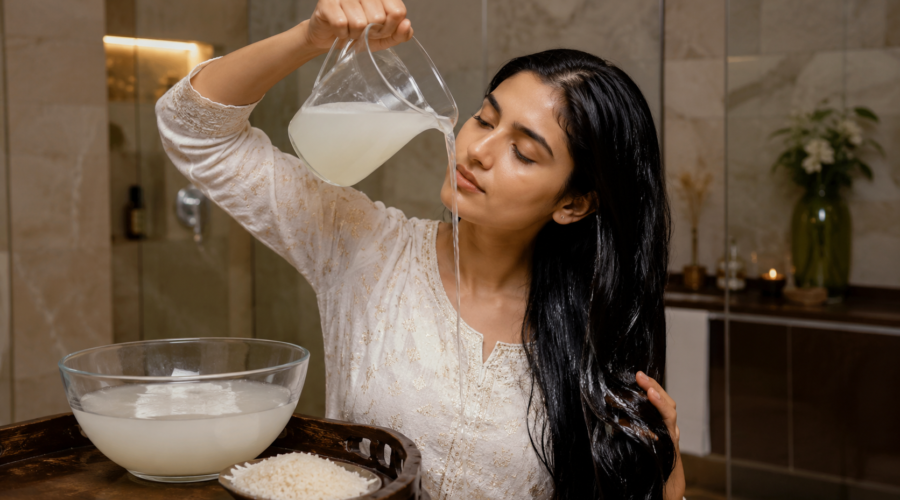
Rice Water for Hair Growth — Quick Answer Rice water — the starchy liquid left after soaking or boiling rice — contains inositol, amino acids, and vitamins that may strengthen hair, reduce breakage, and support growth. Use it as a rinse after shampooing: soak ½ cup rice in 2 cups water for 30 minutes to 24 hours, strain, and apply to scalp and hair for 5–20 minutes. Results are typically noticeable in 4–6 weeks of weekly use.
The first time Nadia suggested I rinse my hair with rice water, I looked at her like she’d just told me to wash my face with dishwater. Rice water. The cloudy liquid that most people pour down the drain after cooking. She was completely serious — and slightly offended that I was laughing.
“My dadi used to do this,” she said. “Every week. Her hair was past her waist until she was sixty-two.”
I tried it mostly to prove her wrong. Three weeks later, I noticed something that genuinely surprised me: the ends of my hair felt stronger. Less snapping when I detangled. Less breakage in my brush. My hair had a different weight to it — not heavy, but substantial. Nadia, of course, said nothing except raised her eyebrows in a way that was deeply smug.
Here’s what I’ve since learned about why this works, how to do it correctly, and what to realistically expect.

What Makes Rice Water Beneficial for Hair?
Rice water isn’t a new discovery — it’s a centuries-old beauty secret from East and Southeast Asia. The Yao women of Huangluo, China, are perhaps the most documented example: their hair averages 1.4 to 1.8 metres in length, and they attribute it largely to rice water use.
Modern science has begun to validate what these communities have known for generations. A 2010 study in the International Journal of Cosmetic Science identified inositol as the key active compound — a carbohydrate that can penetrate damaged hair and remain inside after rinsing, continuing to repair and protect.
What rice water contains:
- Inositol: strengthens hair shaft, reduces friction, improves elasticity
- Amino acids: building blocks of protein that reinforce the cuticle
- Vitamins B and E: support scalp health and cell turnover
- Ferulic acid: antioxidant that protects against environmental damage
- Starch: adds weight and smoothness temporarily
What rice water IS:
- A gentle protein treatment that strengthens and smooths
- An effective scalp rinse that may support follicle environment
- A real, research-backed remedy with measurable results
What it ISN’T:
- A replacement for a nutritious diet or medical hair treatment
- Effective if used incorrectly (contact time and dilution matter)
- A cure for hormonal or genetic hair loss

Also Read: How to Get Long and Thick Hair Fast — 12 Tips That Actually Work (2026)
Plain vs Fermented Rice Water — What’s the Difference?
This is the question I got wrong for the first month. I was using plain soaked rice water — which works — but fermented rice water is significantly more potent.
During fermentation, the pH of rice water lowers and pitera (a fermentation by-product rich in vitamins, minerals, and amino acids) is produced. The lower pH helps close the hair cuticle more effectively, and the additional compounds may increase the treatment’s strengthening effect.
Plain rice water: Milder, better for sensitive scalps or fine hair. Good for beginners. Fermented rice water: Stronger, more effective for thick, coarse, or significantly damaged hair. Start with a 5-minute application and work up, as too much protein can make hair stiff.
How to Make Plain Rice Water (Quick Method)
What you need:
- ½ cup white rice (plain — not instant, not brown)
- 2 cups of water
- A bowl and strainer
Method:
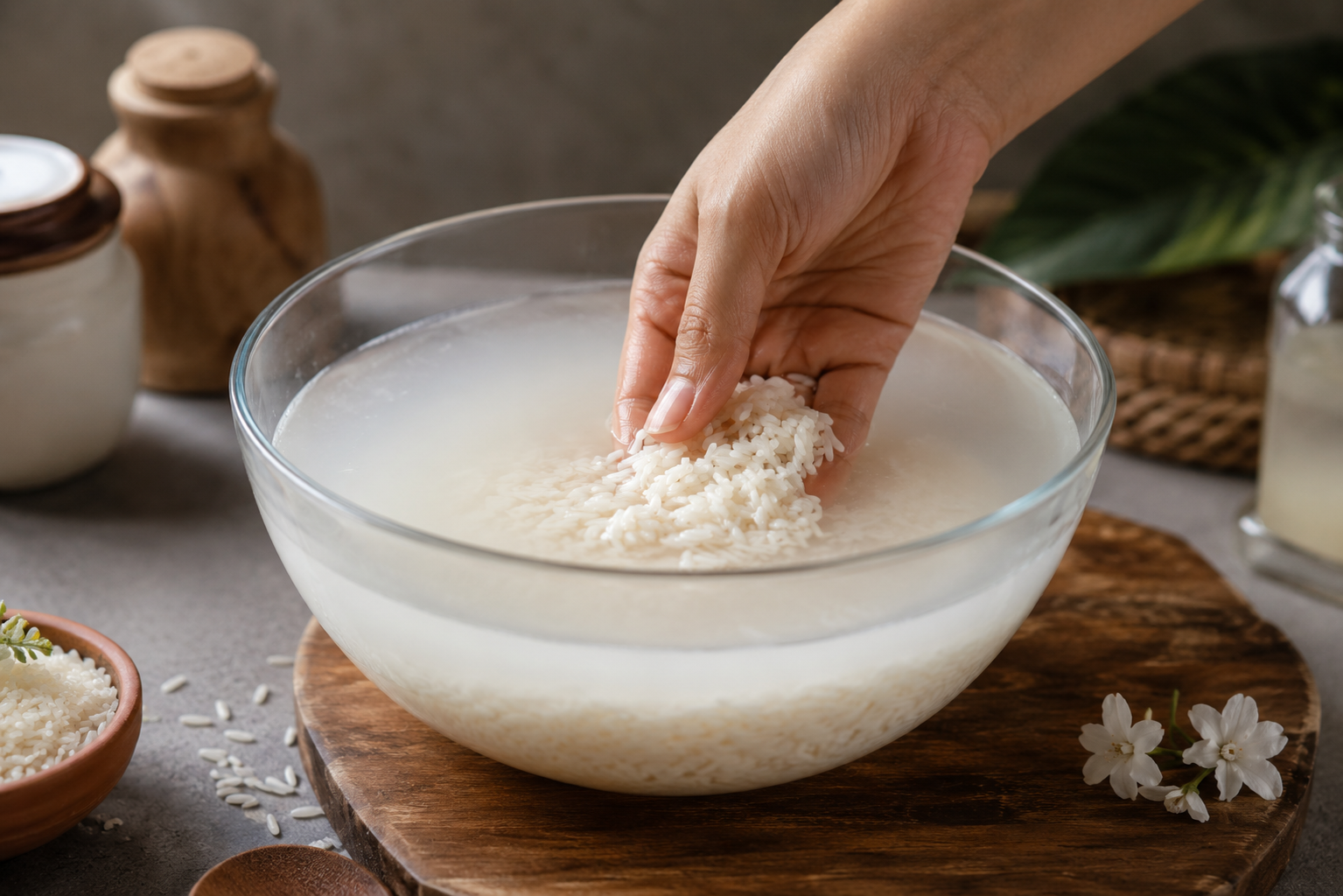
- Rinse the rice once to remove surface dust
- Add rice to 2 cups of water and stir for 2–3 minutes until the water turns cloudy and white
- Strain out the rice
- You have plain rice water — use immediately or refrigerate for up to 3 days
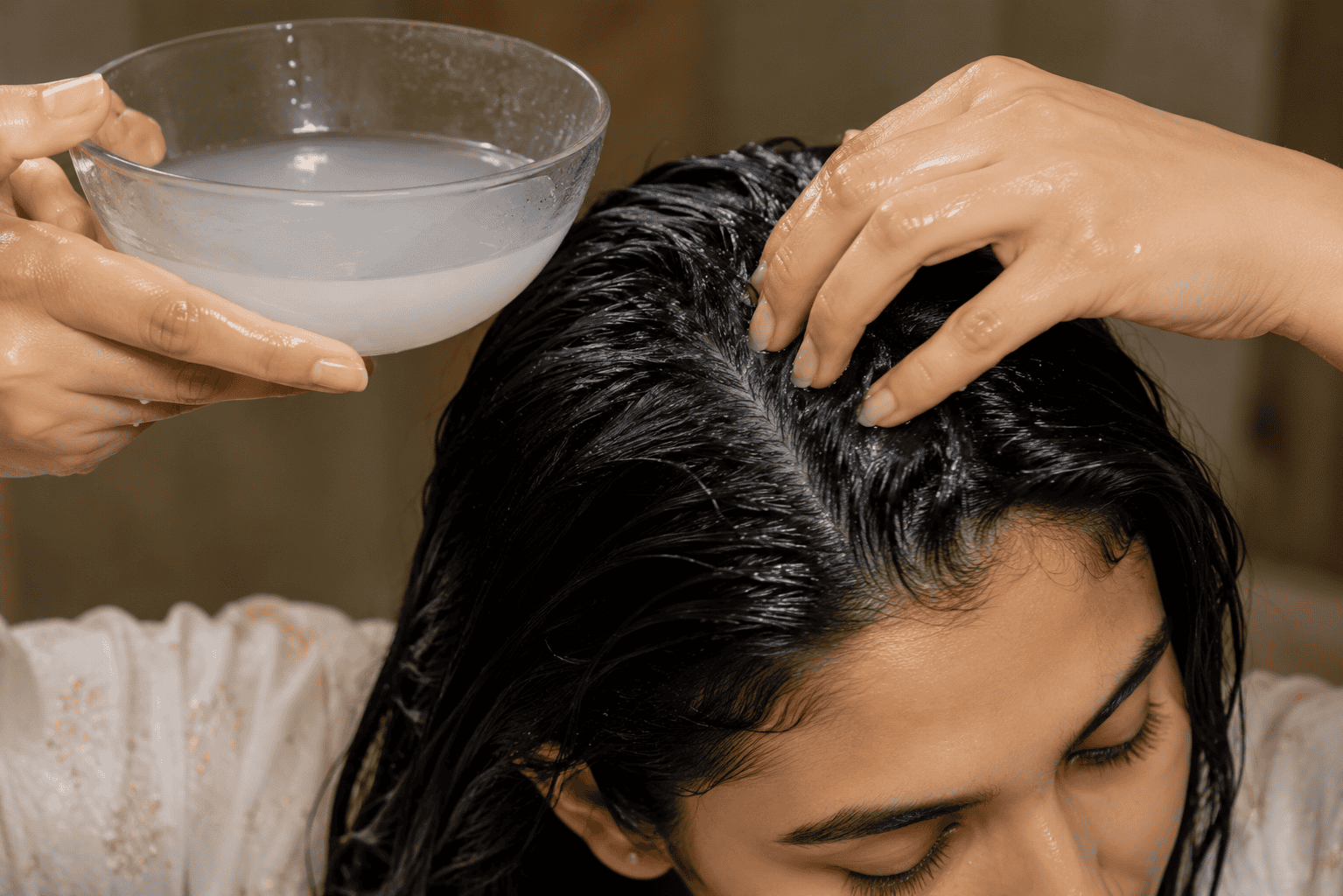
Application: After shampooing, pour rice water over hair from roots to tips. Massage into scalp for 2–3 minutes. Leave for 5–10 minutes. Rinse thoroughly with cool water. Follow with a lightweight conditioner.
Cost: Free — you’re using rice you already cook. Best for: All hair types. Beginners, fine hair, or sensitive scalp.
💡 Pro Tip: Don’t use the full bowl of rice water all at once — pour it slowly and work it in section by section. You want coverage, not flooding.
How to Make Fermented Rice Water (The More Effective Version)
Method:
- Rinse ½ cup rice
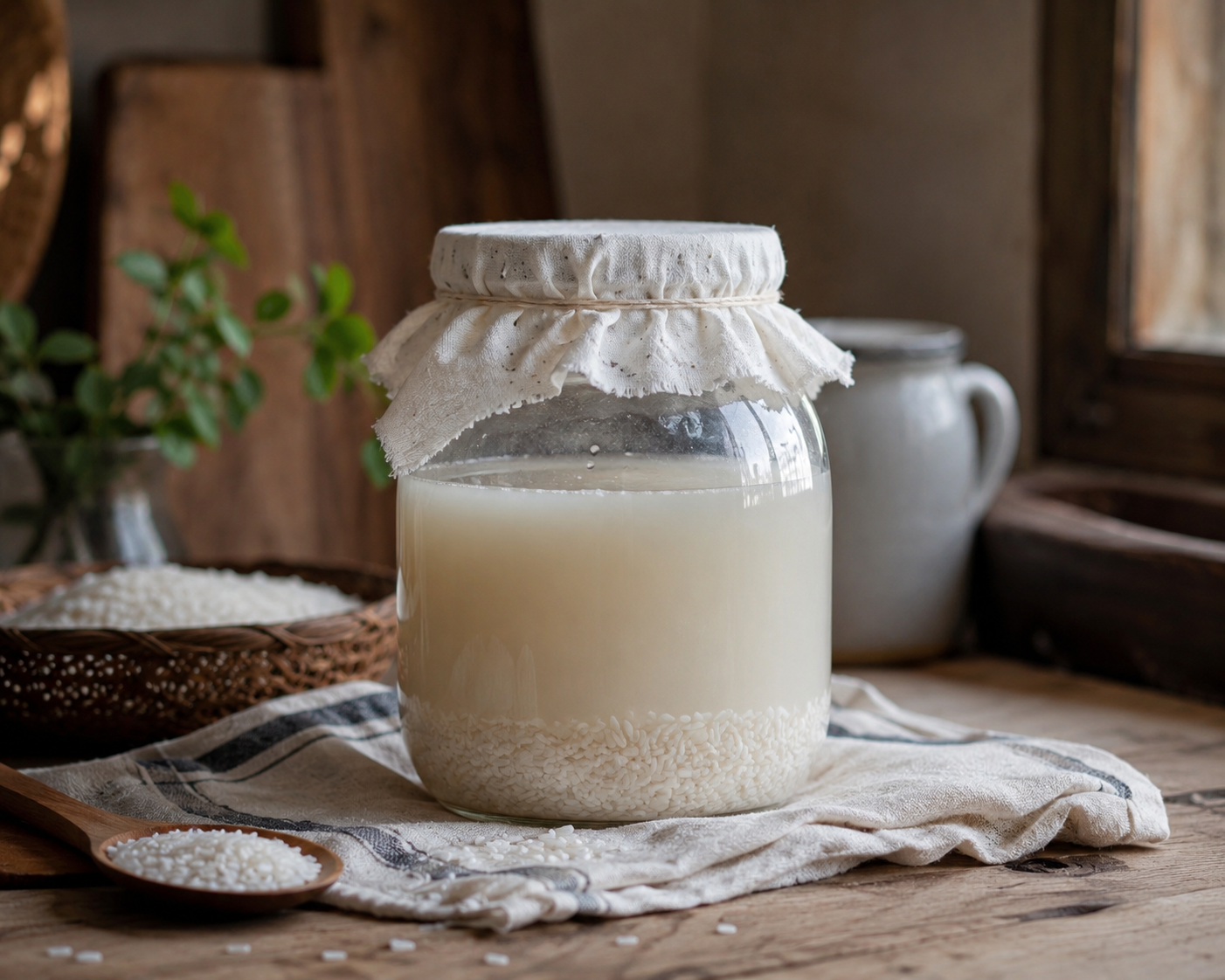
- Soak in 2 cups of water at room temperature for 12–24 hours (covered with a loose cloth — it needs air to ferment slightly)
- The water will develop a slightly sour, yeasty smell — this is normal and means fermentation is working
- Strain out rice
- The fermented water is very concentrated — dilute with 1 cup of plain water before using
Application: Apply to scalp and hair after shampooing. Start with 5 minutes contact time. Work up to 15–20 minutes over several weeks as your hair adjusts to the protein level.
Frequency: Once a week maximum. Overuse causes protein overload — hair feels stiff, snappy, or wiry.
Storage: Refrigerate for up to 5–7 days.
Best for: Thick, coarse, high-porosity, or damaged hair. Women dealing with significant breakage. Ages 18–50.
Does Rice Water Really Help Hair Grow Faster?
Here’s the honest answer: rice water primarily reduces breakage — which can result in hair appearing to grow faster because less is falling off the ends. It’s unlikely to dramatically speed up the rate at which follicles produce new hair. What it does do well:
- Strengthens existing strands — hair breaks less, so length is retained
- Improves elasticity — hair stretches before breaking (less snapping during styling)
- May support scalp health — the vitamins and amino acids create a healthier follicle environment
A 2013 study in Bioscience, Biotechnology, and Biochemistry found that fermented rice extract had significant antioxidant and anti-inflammatory effects — both of which support scalp health and may indirectly benefit the follicle environment.
The Yao women of China see results partly because they use rice water consistently for decades alongside protective hairstyles and a largely stress-free relationship with their hair. It’s the accumulation of good habits, not one magic rinse.
Realistic expectations: Less breakage within 2–3 weeks. Noticeable texture improvement in 4–6 weeks. Possible retention of length over 2–3 months of consistent use.
Rice Water Scalp Treatment for Hair Growth
Beyond a rinse, rice water can be used as a targeted scalp treatment:
The scalp massage method:
- Make fermented rice water (diluted)
- Part hair into 4–6 sections
- Apply rice water directly to the scalp using a dropper bottle or cotton pad
- Massage scalp firmly for 5 minutes — stimulate circulation
- Wrap hair in a shower cap
- Leave for 20 minutes
- Rinse thoroughly, shampoo once, condition
The massage component is important — scalp stimulation independently supports circulation and follicle activity, regardless of what’s being massaged in.
Best for: Women with slow growth, postpartum thinning, or patchy regrowth. Frequency: Once a week.
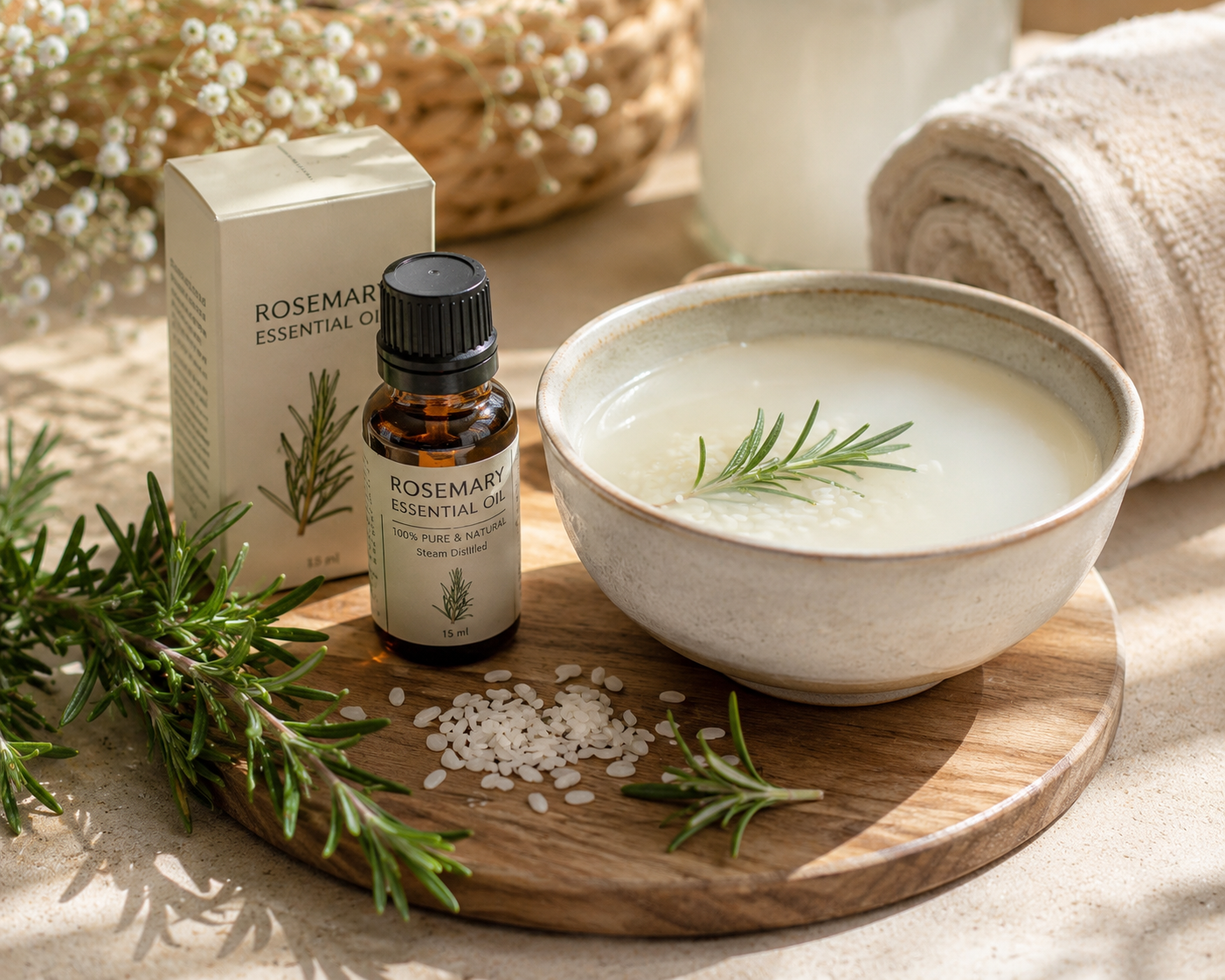
💡 Pro Tip: Add 3–4 drops of rosemary essential oil to your rice water before applying. Rosemary independently supports hair growth (2015 study showed results comparable to minoxidil 2%) — combining it with rice water gives you a double benefit.
Signs of Protein Overload — When Rice Water is Backfiring
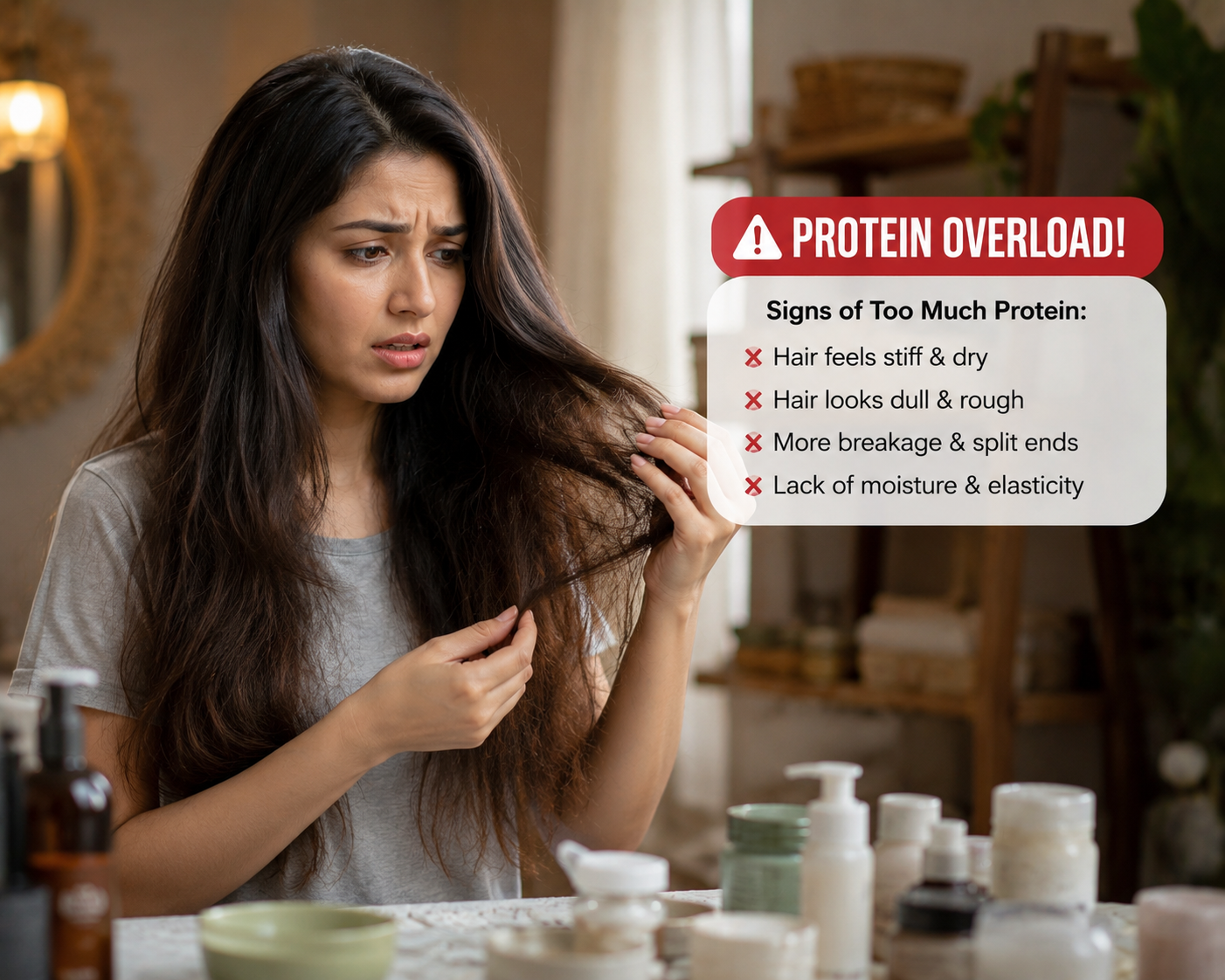
The most common rice water mistake is overuse. Your hair can have too much protein — and when it does, it becomes rigid, dry-feeling, and snaps easily.
Signs of protein overload:
- Hair feels stiff, wiry, or like straw even when wet
- Lots of shedding and breakage after rice water use
- Hair doesn’t feel moisturised even after conditioning
- Elasticity is gone — strands snap instead of stretching slightly
If this happens: stop rice water for 2–3 weeks. Do a deep moisture treatment (avocado mask, coconut oil, or heavy conditioner) instead. Then reintroduce rice water at lower frequency and shorter contact time.
Rice Water vs Other Hair Growth Rinses
| Rinse | Key Compound | Effect | Frequency | Best For |
|---|---|---|---|---|
| Fermented Rice Water | Inositol, amino acids | Strengthens, reduces breakage | Weekly | Thick, damaged, breaking hair |
| Plain Rice Water | Starch, vitamins | Smooths, adds shine | 1–2x/week | All hair types, fine hair |
| ACV Rinse | Acetic acid | Closes cuticle, removes buildup | Weekly | Dull, hard-water damaged |
| Onion Juice | Sulfur, quercetin | Stimulates follicles | 3x/week | Shedding, patchy loss |
| Green Tea Rinse | EGCG antioxidants | Scalp health, DHT blocking | 2x/week | Hormonal thinning |
| Aloe Vera Rinse | Proteolytic enzymes | Soothes scalp, smooths cuticle | Weekly | Irritated, dry scalp |
Common Mistakes with Rice Water
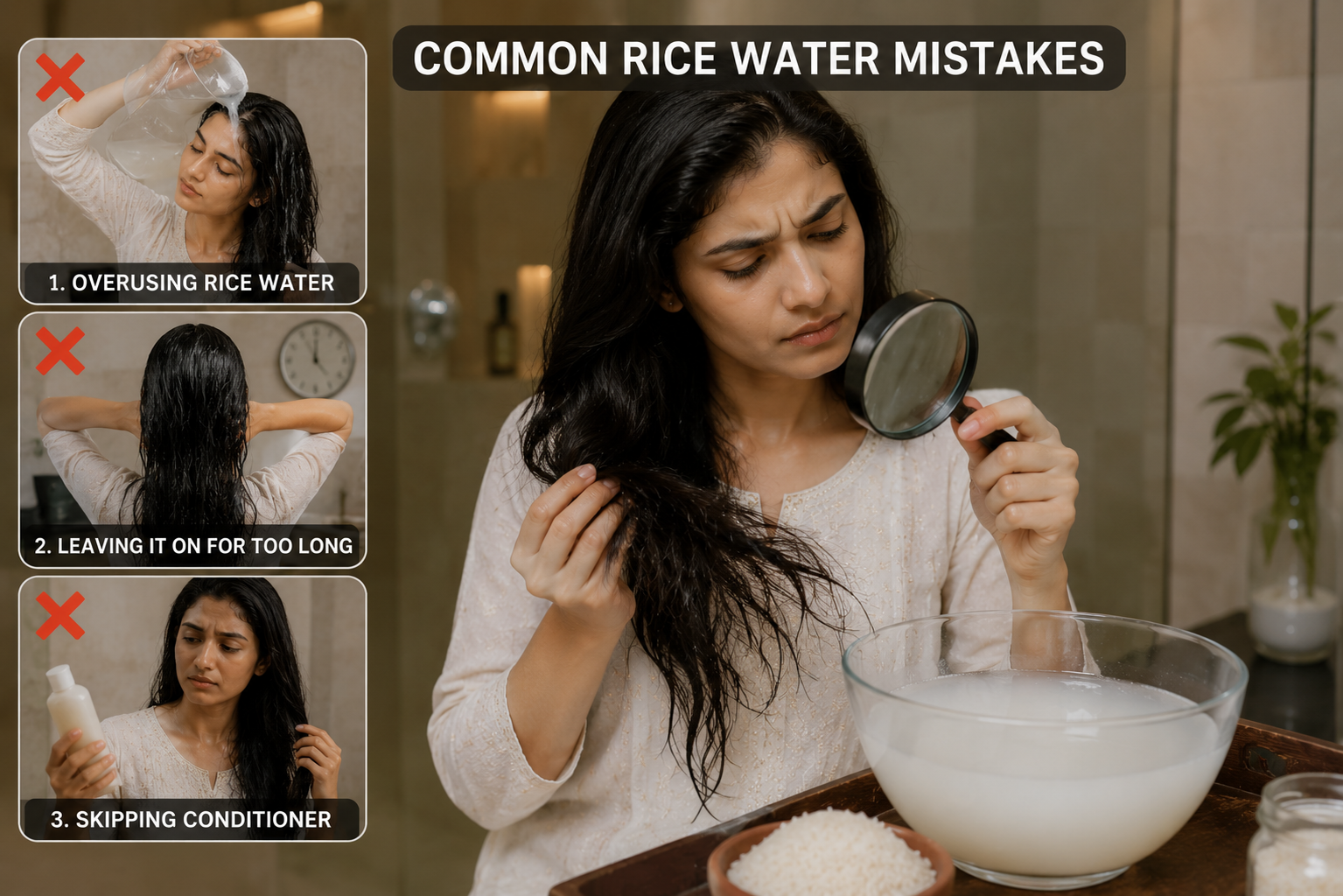
- Using it too often: Once a week is the maximum. More = protein overload.
- Not diluting fermented water: Fermented rice water is concentrated. Always dilute before applying.
- Skipping conditioner: Rice water is a protein treatment. Always follow with a moisturising conditioner to balance.
- Leaving it on for hours: 5–20 minutes is enough. Longer doesn’t improve results and increases protein overload risk.
- Using brown rice: Brown rice has a rougher starch profile that’s harder on hair. Stick to plain white rice.
- Expecting hair growth from breakage: If your hair is already at shoulder length and breaking, rice water will help retain length. Don’t expect dramatic new growth from follicles.
When to See a Doctor
Rice water is a very gentle, low-risk treatment for most women. However, consult your doctor if:
- Hair loss is sudden, dramatic, or in patches — this needs evaluation beyond home remedies
- Scalp is persistently itchy, flaking, or irritated (rice water fermentation may aggravate sensitive scalps)
- You notice hair loss alongside other symptoms like fatigue, weight changes, or irregular periods
- Three months of consistent rice water use shows no reduction in breakage (a nutritional or hormonal issue may be the underlying cause)
As with all hair treatments, please consult your doctor if you’re pregnant before trying new routines, particularly with fermented products.
FAQ: Rice Water for Hair Growth
Q: How long should I leave rice water in my hair? 5–20 minutes is the recommended range. Start with 5 minutes for your first few applications, particularly with fermented water, and gradually increase as your hair adjusts. Leaving it on too long can cause protein overload.
Q: Can I use rice water every day? No — once a week is the maximum for fermented rice water. Daily use will lead to protein overload, making hair stiff, brittle, and prone to breakage. Plain rice water can be used 1–2 times per week as a quick rinse.
Q: Does rice water work on all hair types? It works on most hair types, but results vary. Thick, coarse, and high-porosity hair benefits most. Fine hair may find fermented rice water too heavy — start with plain and shorter contact time. Low porosity hair may absorb it less effectively.
Q: Can rice water help with postpartum hair loss? It may help by reducing breakage during the shedding period, but postpartum hair loss (telogen effluvium) is primarily hormonal and typically resolves on its own within 6–12 months. Rice water won’t stop the hormonal shedding cycle, but it can protect the strands that remain.
Q: Is rice water good for dry scalp? Plain rice water is gentle enough for dry or sensitive scalp. Fermented rice water is more potent and may cause further dryness if overused on an already dry scalp. Always follow with a conditioner and use sparingly if your scalp tends toward dryness.
Q: Can I mix rice water with other ingredients? Yes — popular additions include aloe vera gel (2 tablespoons per cup for soothing), rosemary essential oil (3–4 drops per cup for growth support), or hibiscus extract (for scalp stimulation). Avoid mixing with heavy oils, as they can block the starchy compounds from reaching the hair shaft.
Q: What type of rice is best for rice water? Plain white rice gives the cleanest, most predictable results. Jasmine and basmati rice also work well. Avoid instant rice (processed and stripped of nutrients) and brown rice (rougher starch composition). Organic rice is ideal but not essential.
Q: How do I know if rice water is working? Watch for: less breakage in your brush or during detangling, strands that stretch slightly before snapping (improved elasticity), hair that feels stronger when you pull a strand gently, and visible reduction in split ends over 6–8 weeks.
Q: Does rice water grow new hair or just retain existing hair? Primarily the latter — rice water strengthens existing strands and reduces breakage, which helps retain length. Its effect on actually stimulating new follicle activity is less proven. For follicle stimulation, combine rice water with a scalp massage using rosemary oil.
Q: Can rice water cause hair to fall out? Not directly — but protein overload from overuse can cause breakage that looks like increased shedding. If you notice more hair in your brush after starting rice water, reduce frequency and add a deep moisturising treatment.
Q: How long does rice water last in the fridge? Plain rice water: 3 days. Fermented rice water: 5–7 days. Keep in a sealed glass jar. Discard if the smell becomes very strong or unpleasant (beyond mild sourness) or if you see any mould.
Q: Should I shampoo before or after rice water? Always shampoo first, then apply rice water to clean hair. This allows the active compounds to penetrate without competing with product buildup or oils. Follow rice water with conditioner to balance the protein.
People Also Ask
❓ Does rice water actually make your hair grow faster? → Rice water primarily reduces breakage rather than speeding up follicle production. This means hair retains length better, which can create the impression of faster growth. The Yao women of China — famous for extremely long hair — have used rice water for generations as a key part of their hair care ritual.
❓ How long does it take to see results from rice water? → Most women notice less breakage and improved texture within 2–3 weeks of weekly use. Length retention improvements take 1–3 months to become clearly visible. Consistency is the determining factor.
❓ Is fermented rice water better than plain rice water? → Fermented rice water is more potent due to the production of pitera and its lower pH, which is more effective at closing the hair cuticle. However, it requires more care to avoid protein overload. Plain rice water is a good starting point for most women.
❓ Can rice water thicken hair? → Rice water may make individual strands feel thicker and more substantial due to the protein coating effect. It doesn’t permanently change follicle size, but reduced breakage means more strands survive to full length, increasing overall hair density over time.
━━━━━━━━━━━━━━━━━━━━━━━━━━━━━ Quick Summary — Rice Water for Hair Growth ✅ Best method: Fermented rice water rinse, once weekly, 10–15 min ⏱ Time to results: 2–3 weeks (less breakage), 4–8 weeks (texture) 💰 Budget option: Completely free — use leftover rice water from cooking ⚠️ Avoid if: Signs of protein overload (stiff, snappy hair) — take a 2-week break 👩⚕️ See a doctor if: Sudden or patchy hair loss that isn’t responding to home care 📌 Top tip: Add 3 drops rosemary oil to your rice water for double the growth support.


Leave a Comment
Share your thoughts or questions about this article!