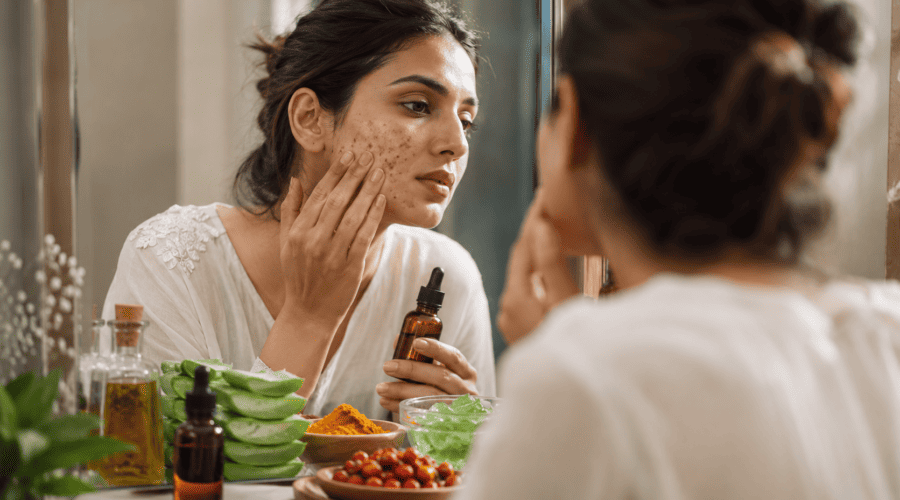
How to Remove Dark Spots from Face Naturally – Quick Answer: To remove dark spots from face naturally, use ingredients like vitamin C (lemon juice, rosehip oil), niacinamide (found in many serums), turmeric, aloe vera, and apple cider vinegar consistently over 6–12 weeks. The key is identifying the cause of your dark spots first — sun damage, acne scars, and hormonal pigmentation each respond differently to natural treatments.
The dark spot on my left cheek appeared the summer after my worst acne year. I’d managed to clear up the acne, and then — as if to leave a parting gift — it left a flat brown mark that seemed to catch every unflattering light. I tried everything. Vitamin C serums that burned. Lemon juice straight, which made things worse before they got better. A £35 “dark spot corrector” that did absolutely nothing except look impressive on my bathroom shelf.
Nadia sat with me one afternoon, studied my face with the calm authority of someone who has spent years paying attention to these things, and said: “The problem is you’re treating all dark spots the same. They’re not the same.”
She was right. And that one insight — that the type of dark spot determines the treatment — changed everything. Here’s what I’ve learned since, what the research actually supports, and the natural remedies that genuinely work versus the ones that are all hype and no results.
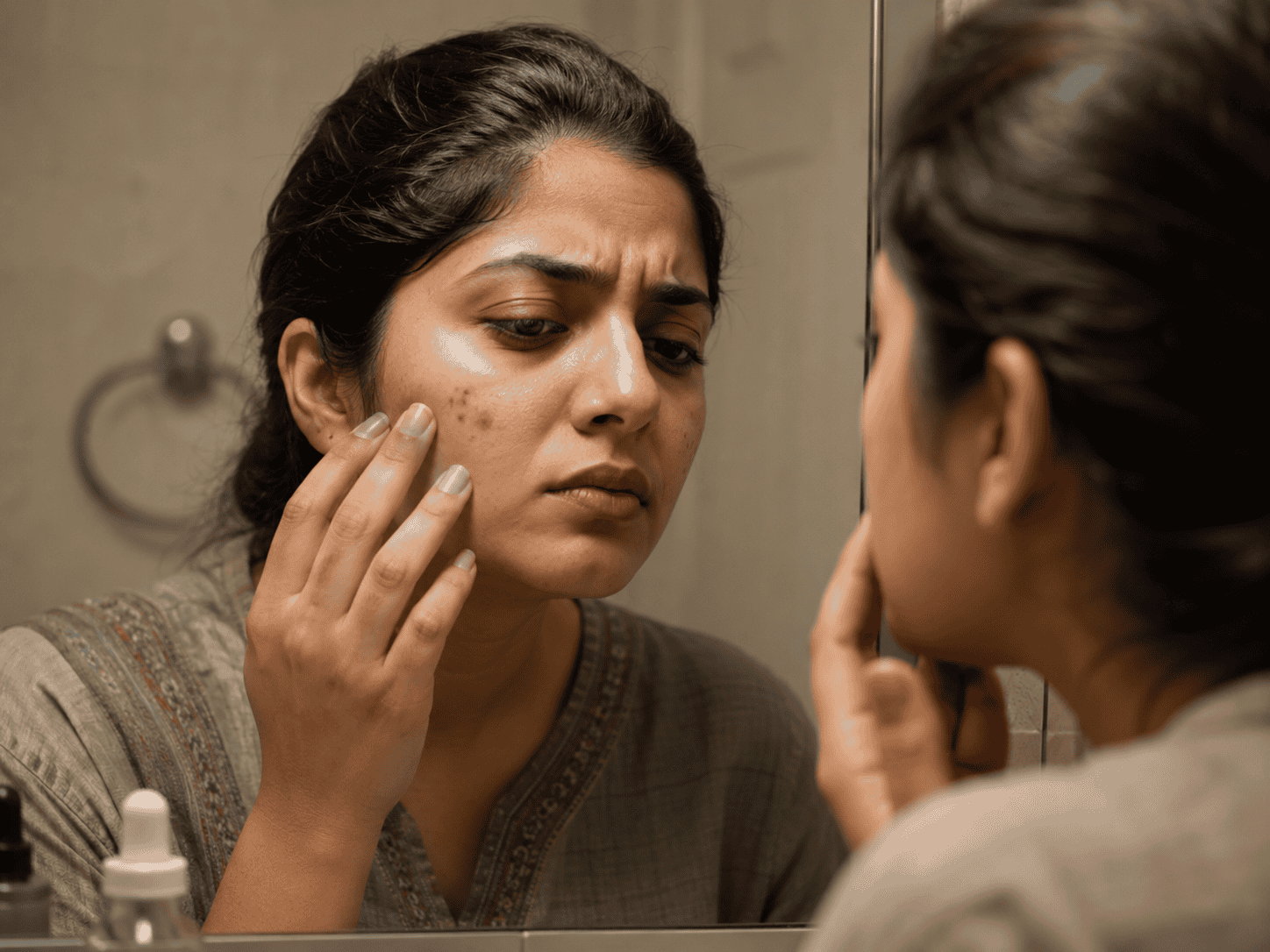
What Type of Dark Spots Do You Have? (This Changes Everything)
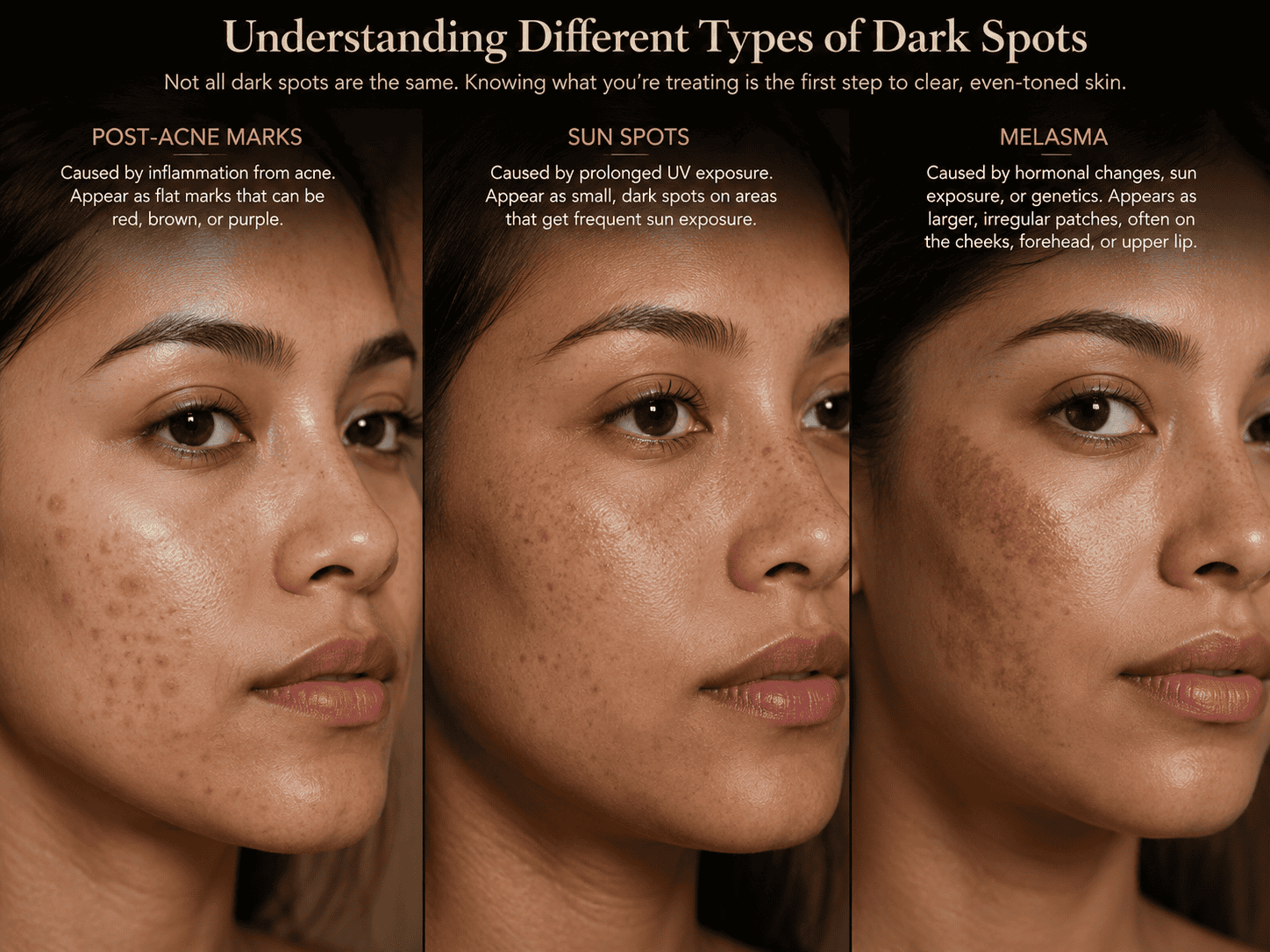
Before any treatment, you need to identify what you’re dealing with. Treating the wrong type the wrong way can make spots darker, not lighter.
Post-Inflammatory Hyperpigmentation (PIH)
- Appears after acne, ingrown hairs, insect bites, or skin trauma
- Usually brown or reddish-brown, matches the shape of the original blemish
- Most common in medium to deep skin tones (South Asian, Black, Middle Eastern skin)
- Responds well to: vitamin C, niacinamide, aloe vera, turmeric
- Timeline: 3–6 months with consistent treatment
Sun Damage (Solar Lentigines)
- Flat, brown, well-defined spots from UV exposure
- Most common on cheeks, forehead, nose — areas that get the most sun
- Responds well to: vitamin C, alpha arbutin, AHAs (lactic acid)
- Timeline: 6–12 months; prevention (daily SPF) is critical alongside treatment
Also Read: How to Do a Facial at Home Step by Step
Melasma
- Larger, irregular patches — not isolated spots — often triggered by hormones, pregnancy, or birth control
- Symmetrical, usually across cheeks, forehead, upper lip
- Responds partially to natural treatments but often needs professional help for complete resolution
- If you suspect melasma, consult your doctor — natural remedies help maintain results but may not be sufficient alone
The trick: Look at your spots in natural light. PIH is usually linked to a past blemish you remember. Sun spots are flat and uniform. Melasma is patchy and widespread. If you’re unsure, a dermatologist can confirm.
Remove Dark Spots from Face Naturally – Does Vitamin C Really Remove Dark Spots Naturally?
Yes — and this is one of the most well-researched natural brightening ingredients available. Vitamin C (ascorbic acid) inhibits tyrosinase, the enzyme responsible for melanin production, while also neutralising free radicals from UV damage.
According to a 2020 review in the Journal of Clinical and Aesthetic Dermatology, topical vitamin C demonstrated significant improvement in skin brightness and hyperpigmentation in multiple clinical trials.
The catch is stability and concentration. Vitamin C degrades quickly when exposed to air, light, or heat. This is why many cheap “vitamin C serums” are essentially useless by the time you buy them.
Best natural sources of topical vitamin C:
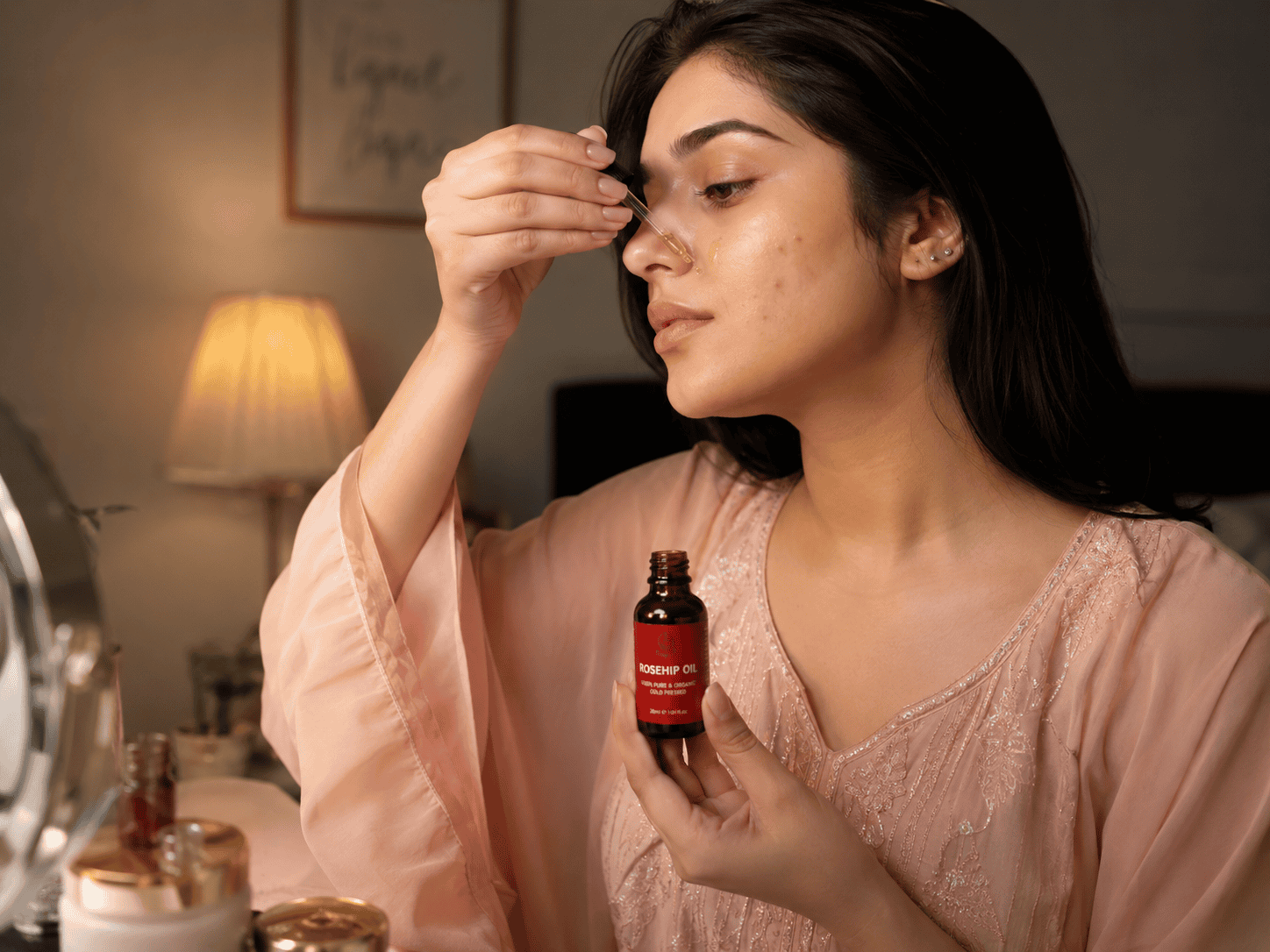
- Rosehip oil: Contains natural vitamin C in a stable, oil-soluble form. More gentle than pure ascorbic acid.
- Lemon juice: High vitamin C content but also very acidic — must be diluted
- Kakadu plum extract: One of the highest natural vitamin C concentrations; available in some serums
- Fresh papaya: Contains papain enzyme + vitamin C — used as a mask
DIY Vitamin C Face Treatment:
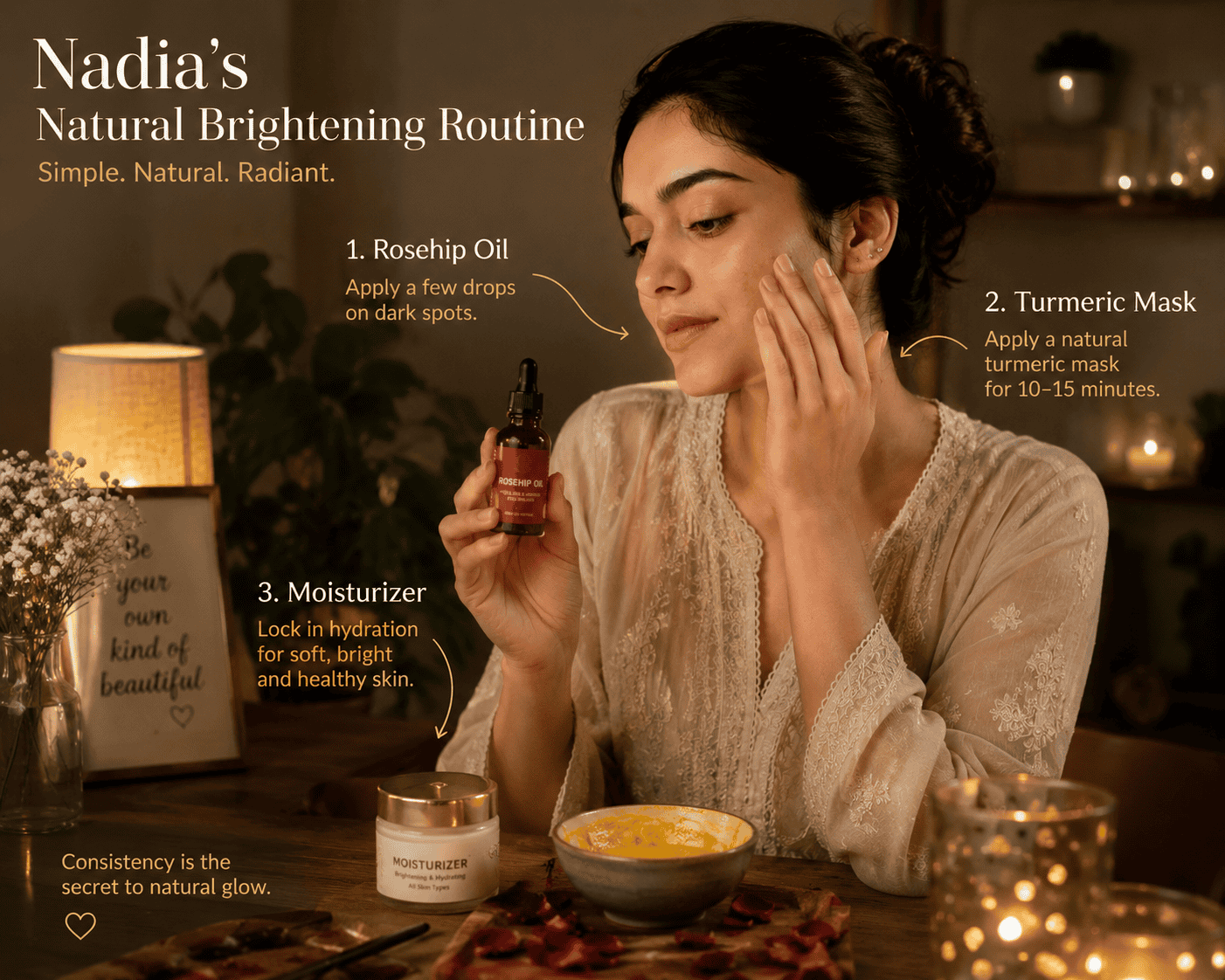
- Apply a few drops of cold-pressed rosehip oil to dark spots each night before moisturiser
- Cost: $10–20 for a bottle that lasts months
- Time to results: 8–12 weeks of nightly use
- Best for: Sun spots, PIH, any skin tone
💡 Pro Tip: Store rosehip oil in the fridge. Vitamin C-rich oils oxidise quickly at room temperature — refrigeration extends their effectiveness significantly.
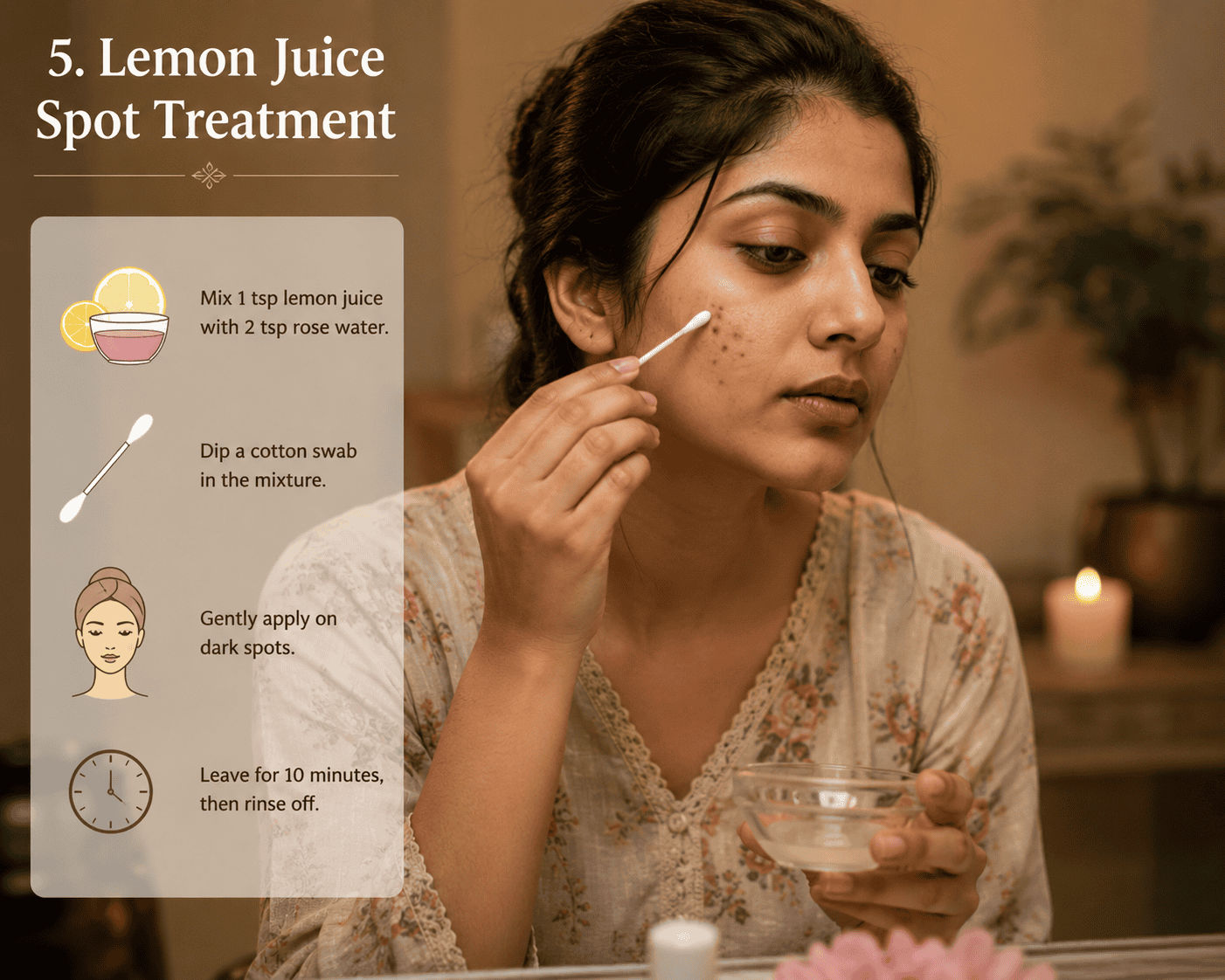
How to Use Lemon Juice for Dark Spots (The Right Way)
Lemon juice is one of the most searched-for dark spot treatments, and it does work — but almost everyone uses it incorrectly, making things worse.
The mistake is applying undiluted lemon juice directly to skin and then going outside. Lemon is phototoxic — UV rays react with the compounds in lemon juice and can cause chemical burns and worse hyperpigmentation. I made this mistake once. The mark it left took months to fade.
The correct way to use lemon juice:
- Dilute: mix equal parts fresh lemon juice and rose water or aloe vera gel
- Apply only to dark spots using a cotton swab — not all over the face
- Leave for 10–15 minutes maximum
- Rinse completely with cool water
- Apply ONLY at night, never before sun exposure
- Follow with a gentle moisturiser
Best for: Post-acne marks, mild sun spots, even skin tone Avoid if: Sensitive skin, open skin, currently using retinol or AHAs Cost: Under $1 per use Time to results: 8–10 weeks of consistent, careful use
⚠️ Important: Always wear SPF 30+ the following morning whenever you use any vitamin C or acidic treatment the night before.
Aloe Vera for Dark Spots — What It Actually Does
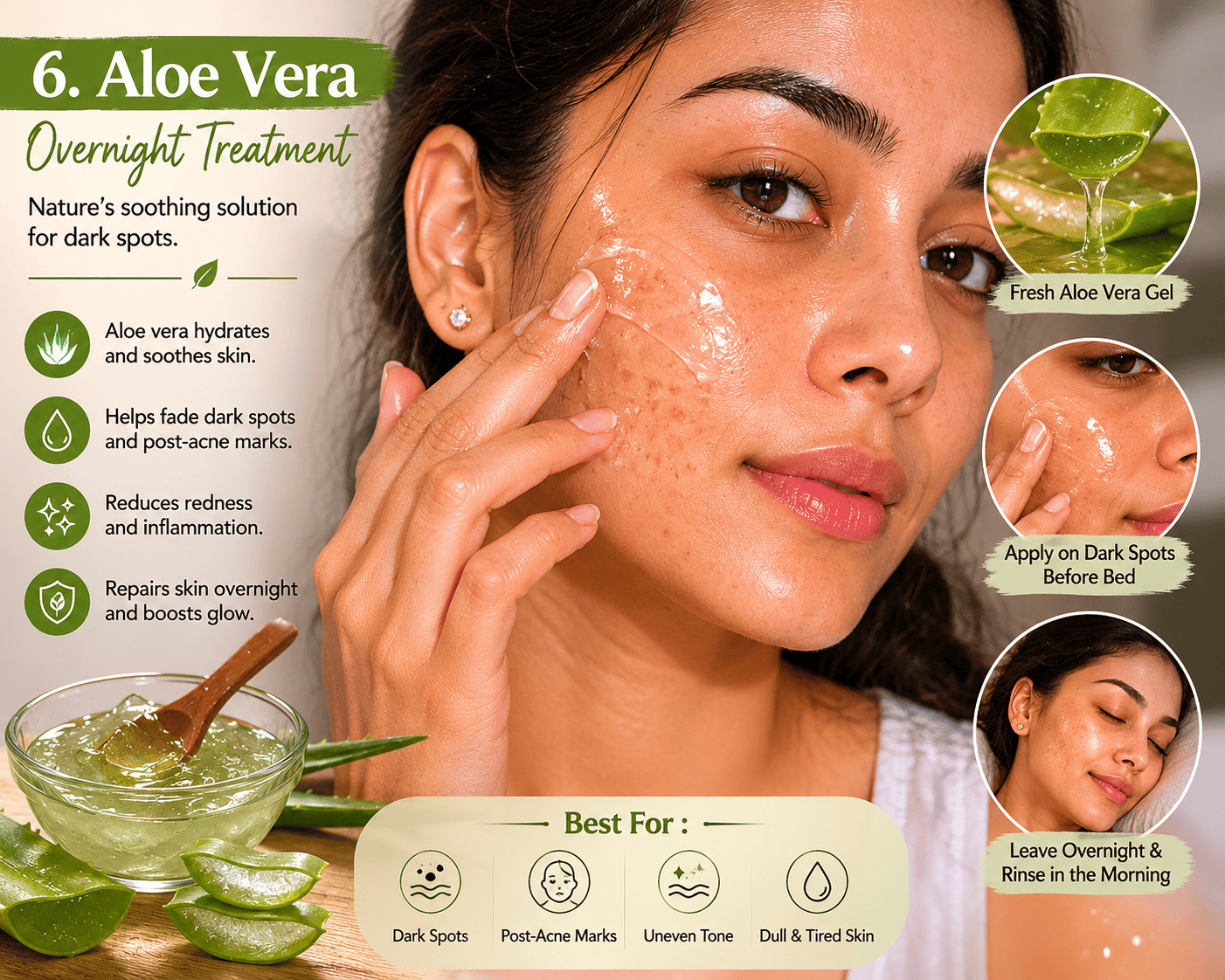
Aloe vera’s aloin compound is a natural depigmenting agent — it gently inhibits the enzyme responsible for melanin overproduction. More importantly, aloe vera supports overall skin health in a way that creates the ideal environment for dark spots to fade.
A 2012 study published in Phytotherapy Research found that topical aloe vera gel significantly reduced the appearance of hyperpigmentation compared to a placebo group after 4 weeks.
How to use aloe vera for dark spots:
- Apply pure aloe gel directly to dark spots as an overnight treatment
- For enhanced results: mix 1 tablespoon aloe gel with 1 teaspoon freshly squeezed lemon juice (nighttime only) and apply with a cotton swab to spots specifically
Best for: PIH, post-acne marks, mild hyperpigmentation Cost: $0 (if growing own plant) to $10 (bottled) Time to results: 6–8 weeks consistent use
Apple Cider Vinegar for Dark Spots — Does It Work?
Let’s be honest: the evidence here is much weaker than TikTok suggests. Apple cider vinegar contains acetic acid, which acts as a mild chemical exfoliant that might gradually fade superficial dark spots. However, it’s also acidic enough to cause burns and irritation if used incorrectly.
Some research suggests ACV may have mild depigmenting properties, but there are no robust clinical trials specifically on dark spot reduction.
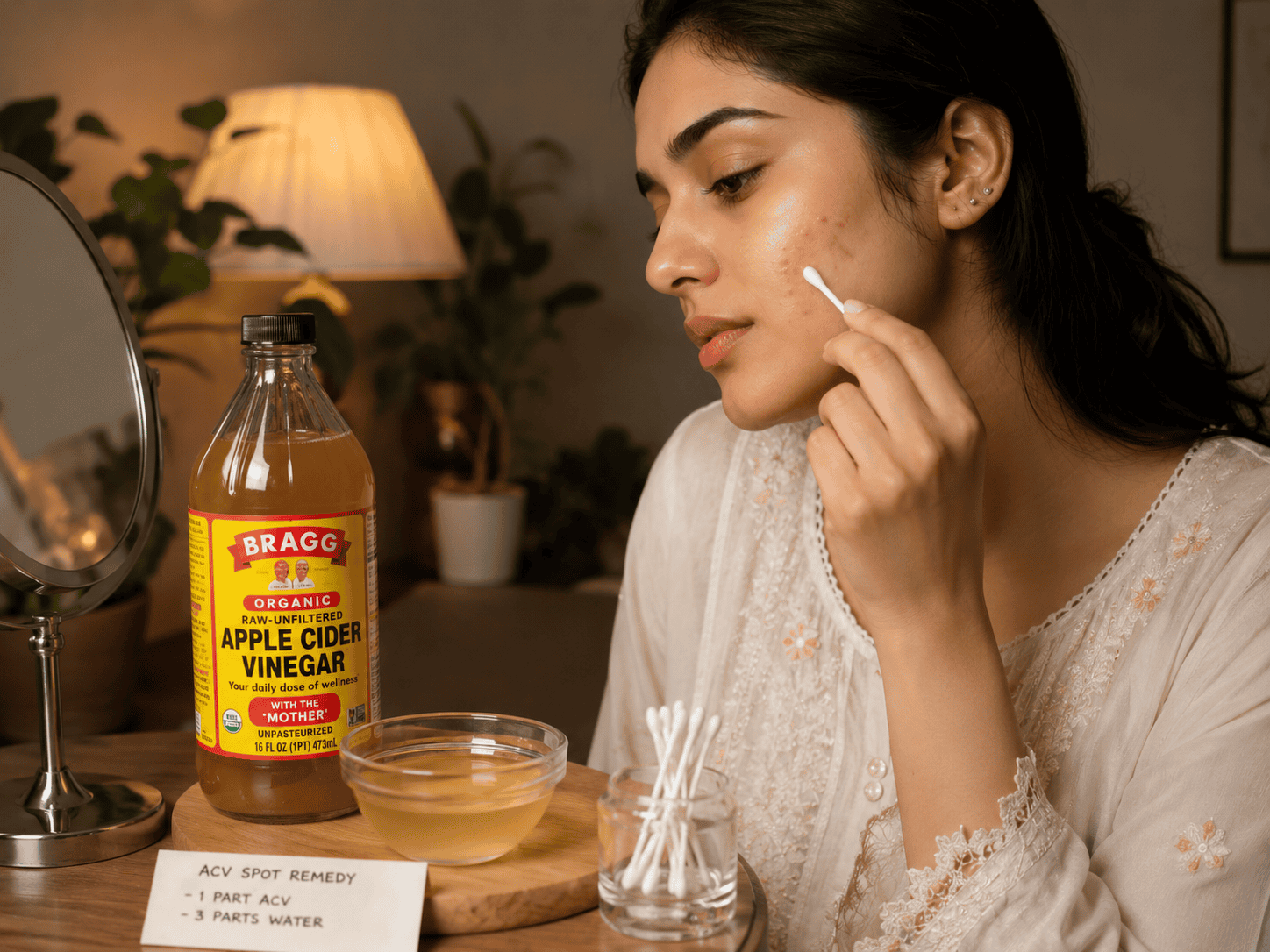
If you want to try it:
- Dilute heavily: 1 part ACV to 4 parts water
- Apply to dark spots only (not all over face) with a cotton swab
- Leave no more than 2–3 minutes, then rinse
- Start with once weekly and assess your skin’s reaction
Honest assessment: Diluted ACV is low-risk when used carefully, but I’d rate it 4/10 for dark spot removal compared to rosehip oil (7/10) or consistent vitamin C serum (8/10). It’s not my first recommendation.
Avoid entirely if: You have sensitive, reactive, or dry skin.
Turmeric for Dark Spots — The 8-Week Method
I’ve covered turmeric extensively in the face pack article, but for dark spots specifically, there’s a targeted approach that’s more effective than a general face mask.
Curcumin (turmeric’s active compound) inhibits tyrosinase — the same enzyme targeted by many pharmaceutical depigmenting creams — via a different mechanism. A 2016 randomised controlled trial found that a curcumin-containing formulation reduced facial hyperpigmentation by 14% after 4 weeks compared to vehicle control.
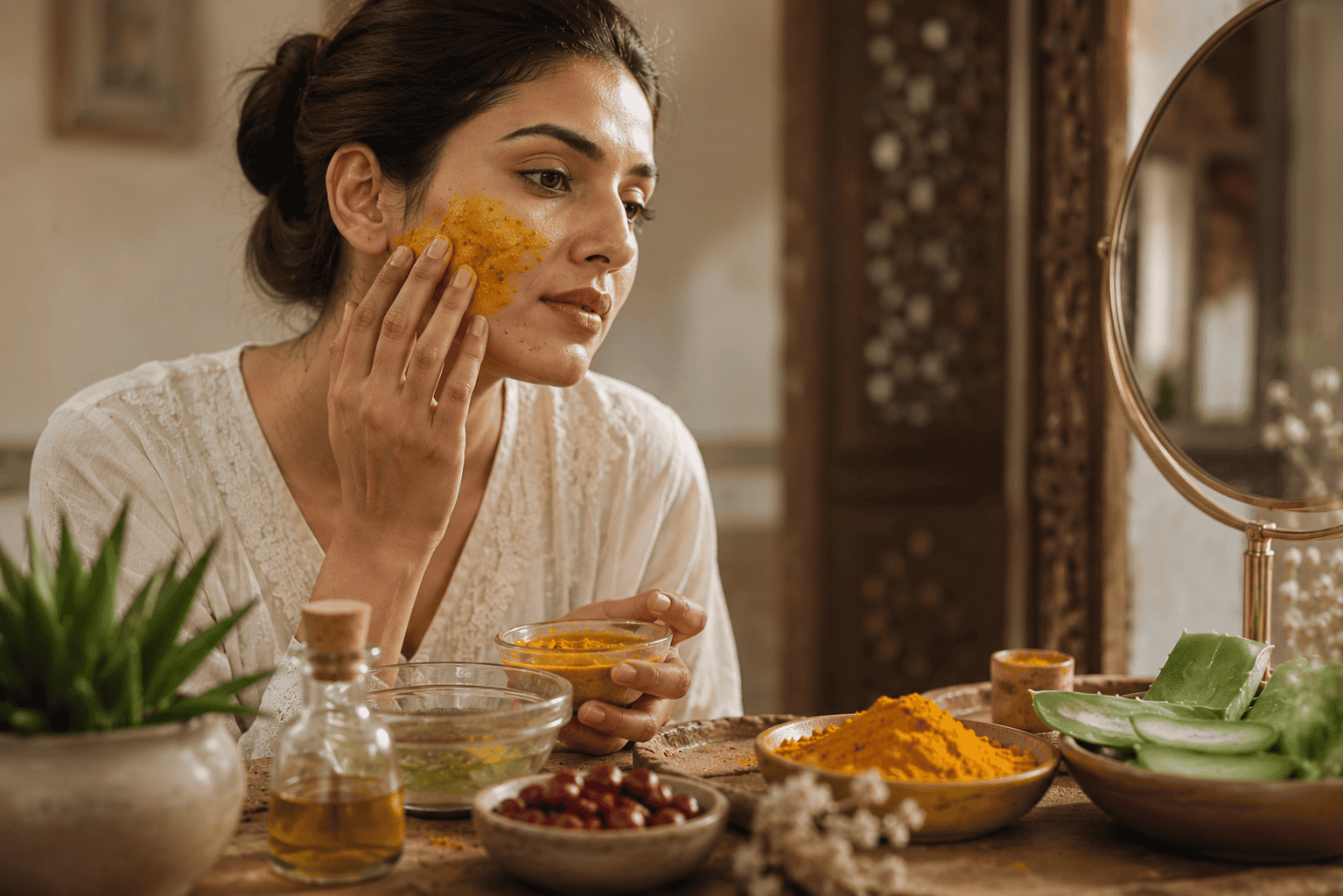
Dark Spot Turmeric Serum:
- ¼ teaspoon turmeric powder
- 1 tablespoon aloe vera gel
- ½ teaspoon almond oil
- Mix into a smooth paste; store in a small sealed jar in the fridge
Apply a tiny amount to dark spots only, using a cotton swab, each evening. Leave overnight, rinse in the morning. Use 4–5 nights per week.
Best for: PIH from acne, uneven patches, all skin tones (especially South Asian skin tones prone to PIH) Cost: Under $2 for a week’s supply Time to results: 6–8 weeks
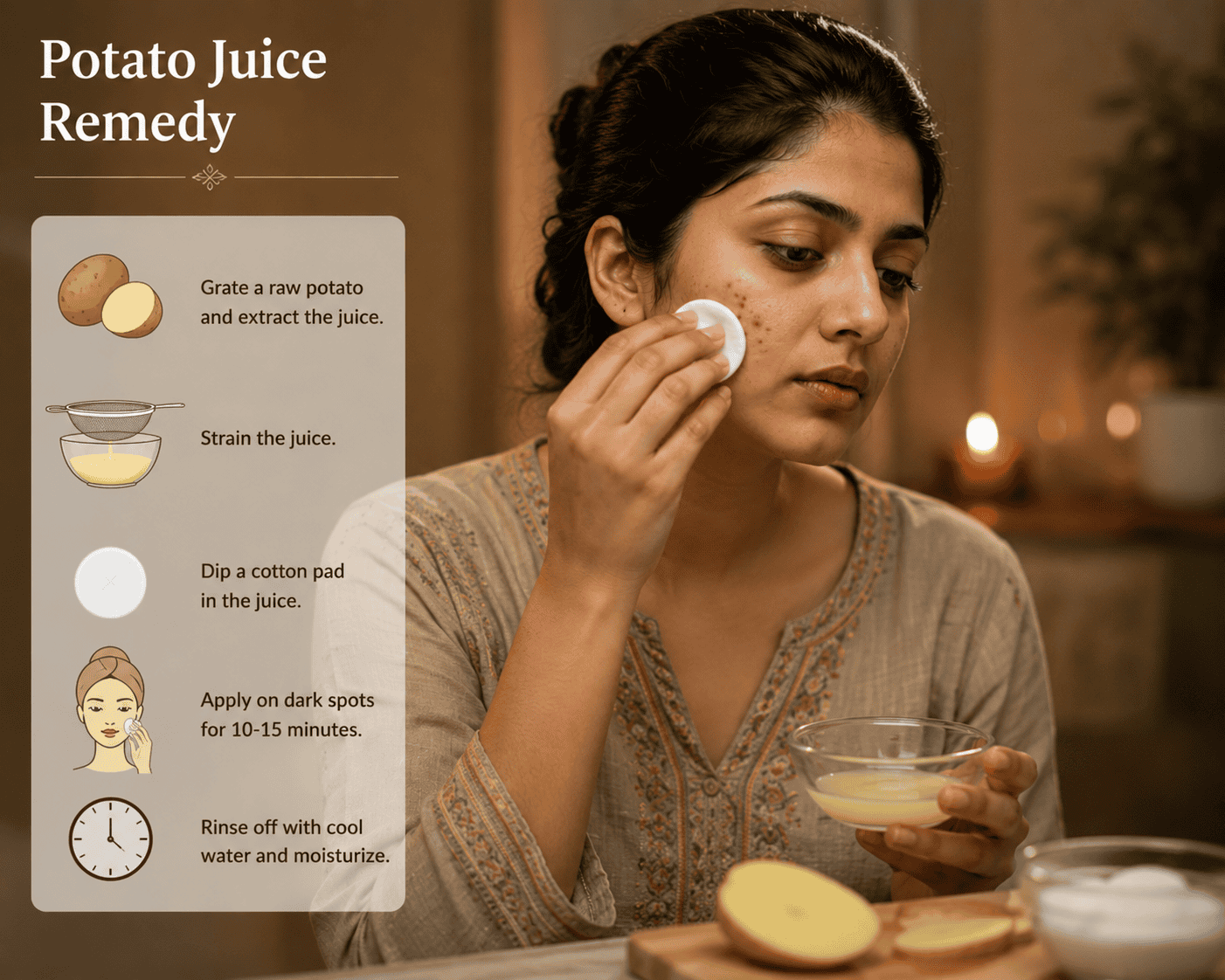
Potato Juice for Dark Spots — Underrated Remedy
This one surprised me when Nadia first suggested it. Potato juice contains catecholase, an enzyme with mild skin-brightening properties. It’s been used in traditional skincare long before anyone called it “natural skincare.”
While large-scale clinical studies are limited, catecholase has demonstrated tyrosinase inhibition in laboratory settings, and many women report noticeable fading of dark spots with consistent use.
How to use:
- Grate a raw potato and squeeze out the juice using a muslin cloth
- Apply to dark spots with a cotton pad
- Leave for 20 minutes, rinse
- Use daily — this is one of the most gentle options available
Best for: PIH, mild sun spots, all skin tones Cost: Under $0.50 per use Effectiveness rating: 5/10 — gentle and very safe, but slower results than vitamin C options
Green Tea for Hyperpigmentation
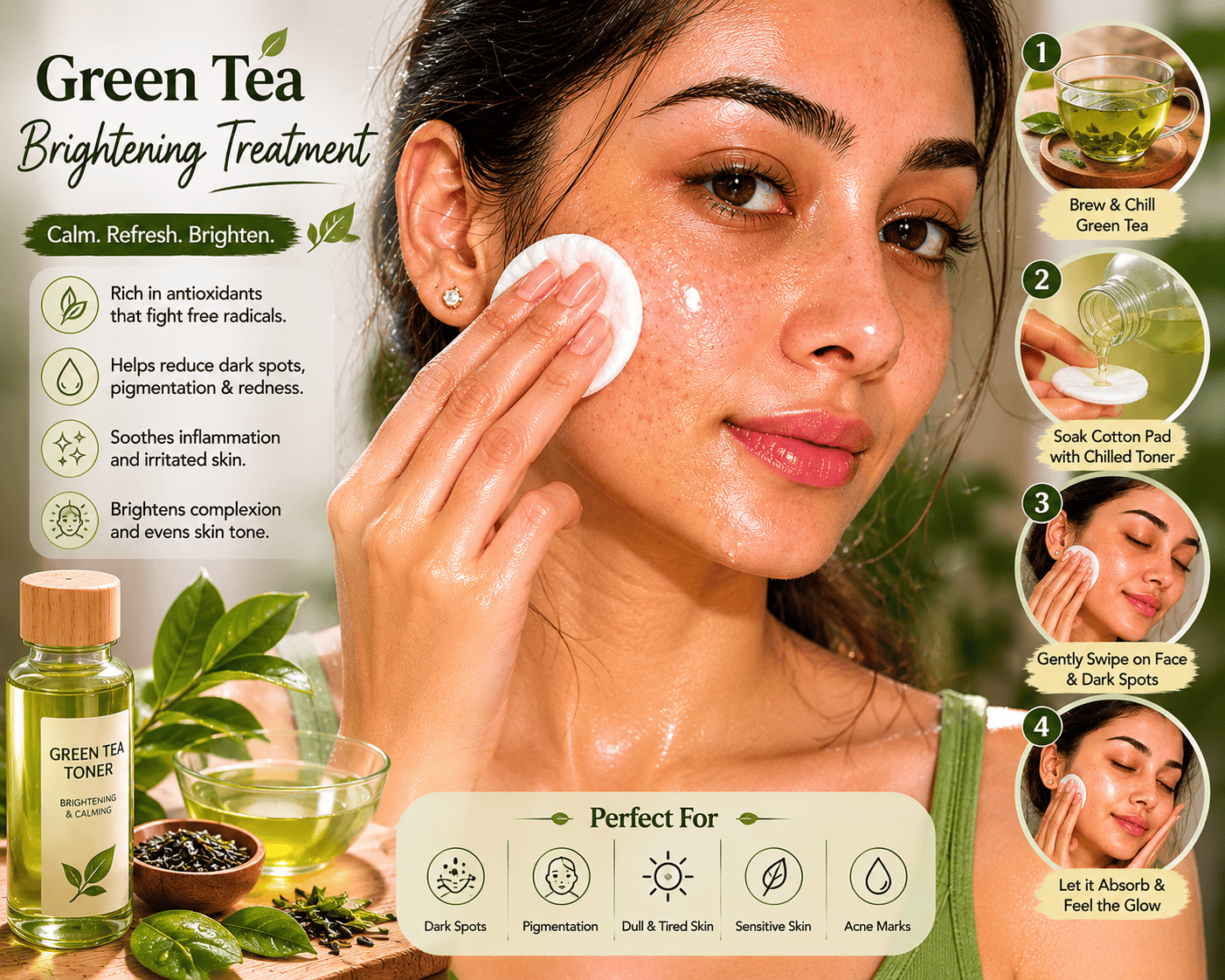
Green tea contains EGCG (epigallocatechin gallate), a powerful antioxidant that may reduce melanin synthesis and protect against further UV damage. A 2015 study in the Journal of Investigative Dermatology found that EGCG inhibited melanin production in UV-irradiated cells.
How to use:
- Brew a strong cup of green tea, allow to cool completely, then refrigerate
- Apply chilled green tea to dark spots with a cotton pad each morning
- Leave on — no need to rinse
- Alternatively: place used (cooled) green tea bags directly on spots for 10 minutes
Best for: Sun damage, prevention of new spots, antioxidant protection Cost: Under $0.50 per use Best used as: A supporting treatment alongside your main dark spot remedy
The SPF Rule That Changes Everything
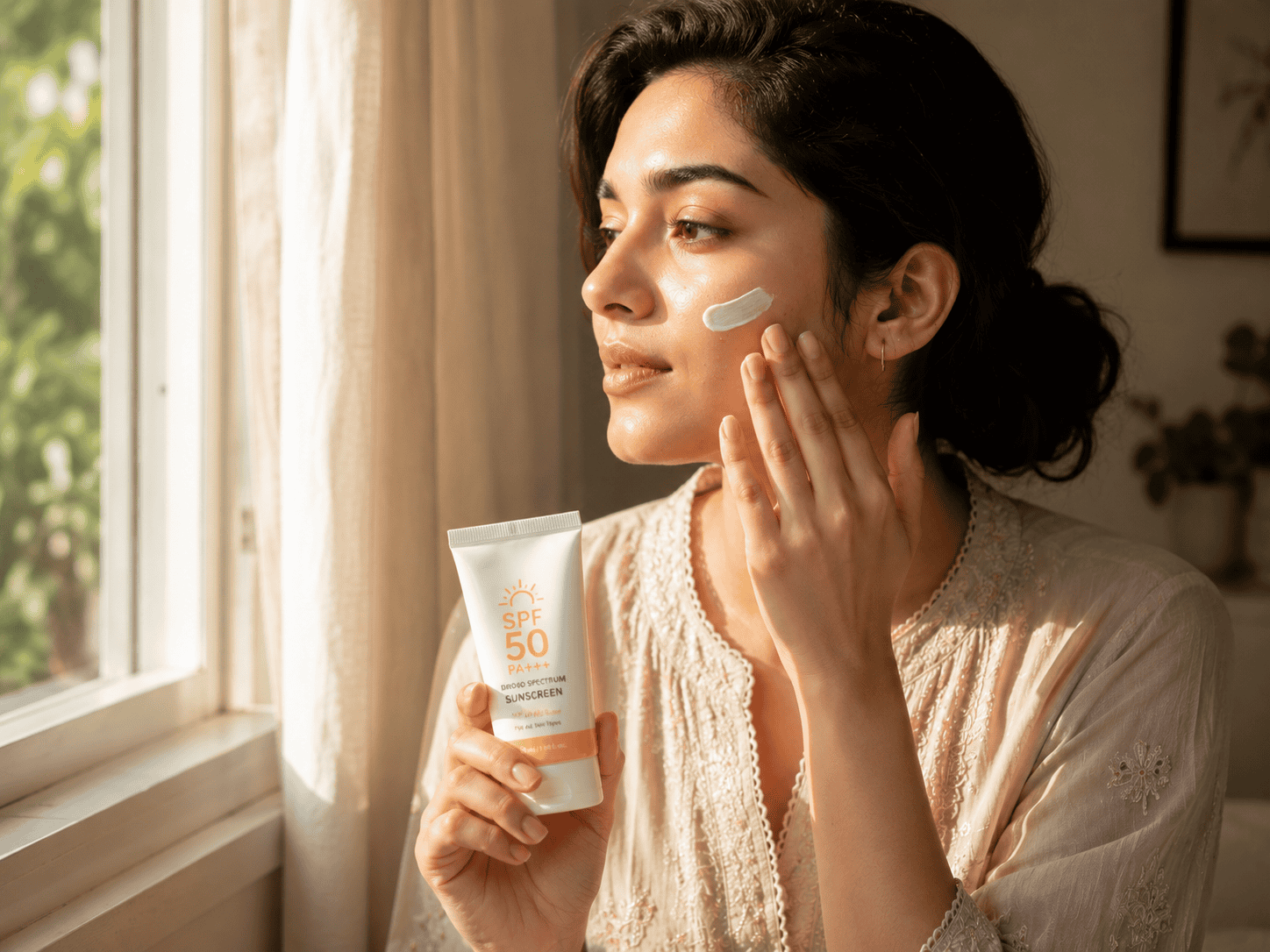
I want to say this as clearly as possible: if you’re not wearing SPF every day, nothing else in this article will work properly.
Sun exposure triggers melanin production. If you’re using brightening treatments at night but exposing dark spots to UV rays during the day without protection, you are essentially undoing your evening progress every single morning.
According to the American Academy of Dermatology, UV exposure is the leading cause of hyperpigmentation and significantly slows the fading of existing dark spots.
What to use:
- SPF 30 minimum, SPF 50 preferred
- Apply every single morning, regardless of whether it’s cloudy (UV rays penetrate clouds)
- Reapply every 2 hours if spending extended time outdoors
This single habit will have more impact on your dark spots than any natural remedy I’ve listed. The remedies fade what’s there; SPF prevents new ones and stops old ones from getting darker.
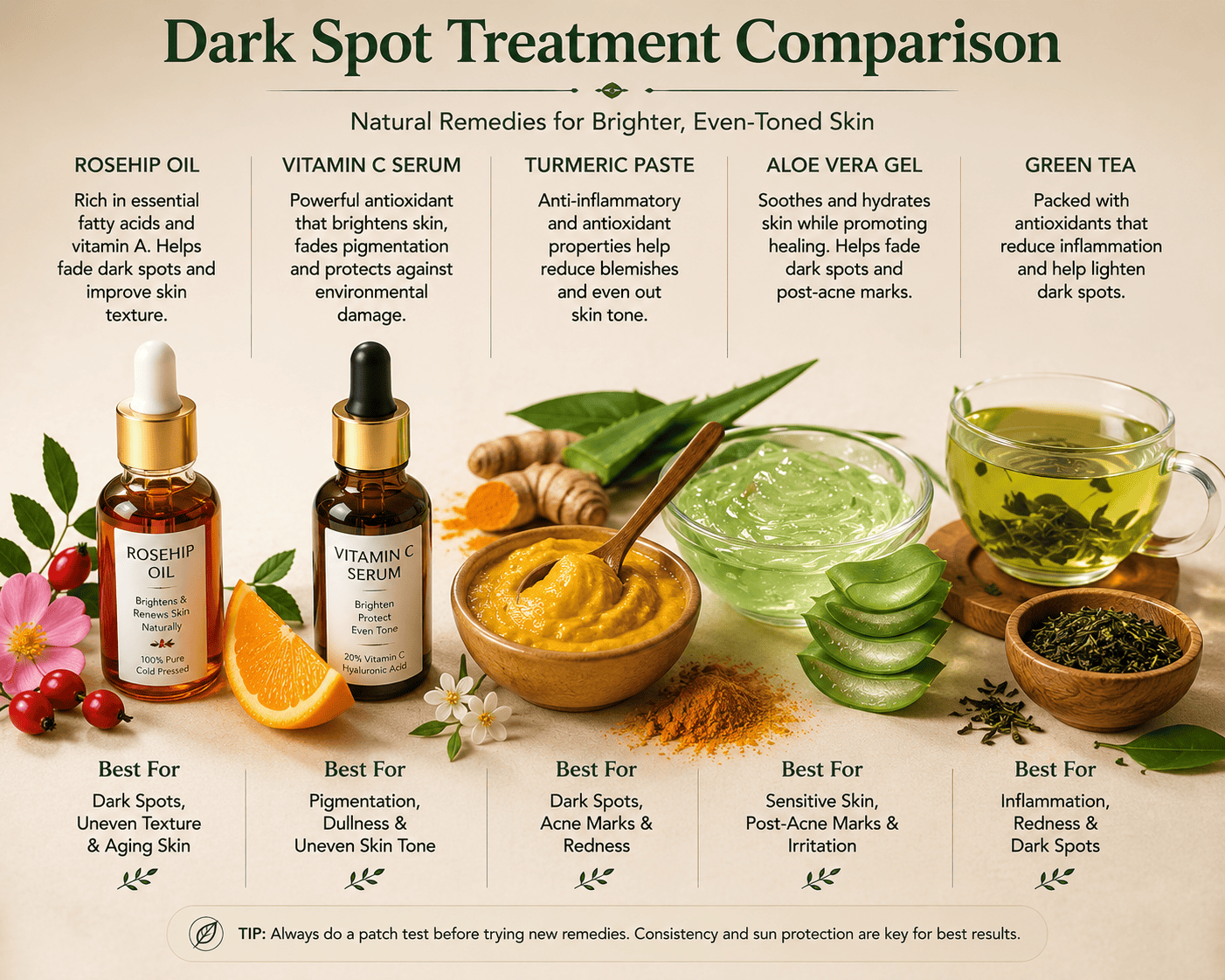
Comparison Table: Natural Dark Spot Treatments
| Treatment | Best For | Cost/Week | Difficulty | Time to Results | Effectiveness |
|---|---|---|---|---|---|
| Rosehip oil | All types | $2–4 | Easy | 8–12 weeks | 7/10 |
| Vitamin C serum | Sun spots, PIH | $3–8 | Easy | 8–12 weeks | 8/10 |
| Lemon + rose water | PIH, mild sun spots | Under $1 | Medium | 8–10 weeks | 6/10 |
| Aloe vera gel | PIH, post-acne | Under $1 | Easy | 6–8 weeks | 6/10 |
| Turmeric paste | PIH, uneven tone | Under $1 | Easy | 6–8 weeks | 7/10 |
| Apple cider vinegar | Mild PIH only | Under $1 | Medium | 10–12 weeks | 4/10 |
| Potato juice | PIH, gentle option | Under $1 | Easy | 8–12 weeks | 5/10 |
| Green tea | Sun protection support | Under $1 | Easy | Supporting role | 5/10 |
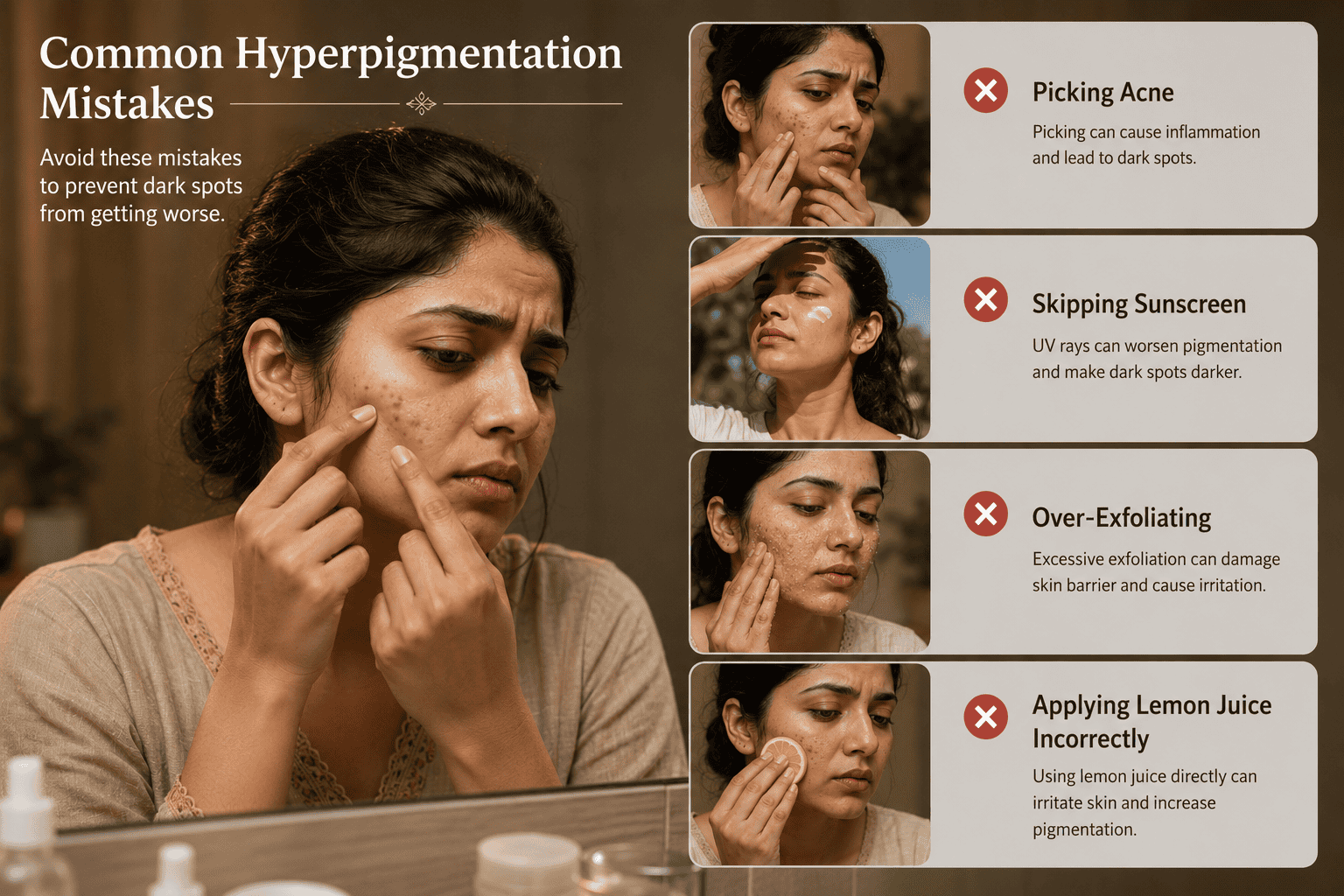
Common Mistakes Women Make When Trying to Remove Dark Spots
The biggest mistake most women make is switching treatments too quickly. Dark spot removal is measured in months, not days. I’ve seen women try rosehip oil for 10 days, see no dramatic change, and switch to something else — never giving any single treatment long enough to show results.
Other common mistakes:
- Applying lemon juice undiluted or before sun exposure (this causes chemical burns and worsens pigmentation)
- Using too many brightening treatments at once — layering vitamin C, AHA, and retinol simultaneously causes severe irritation
- Skipping SPF — the single most counter-productive thing you can do while trying to fade dark spots
- Picking at blemishes — this is how most PIH starts; resist the urge
- Exfoliating aggressively in an attempt to “scrub off” dark spots — pigmentation is in the deeper layers of skin, not on the surface
Done right: One or two targeted treatments, consistent use, daily SPF, patience for 8–12 weeks. Done wrong: Five different remedies at once, daily exfoliation, no SPF, and abandonment after two weeks.
When to See a Doctor
Natural remedies work well for mild to moderate hyperpigmentation, but some situations require professional assessment.
See a dermatologist if:
- Dark spots are growing in size, changing shape, or have irregular borders — this must be evaluated
- You suspect melasma (large, irregular, symmetrical patches) — prescription treatments like azelaic acid, kojic acid, or hydroquinone under medical supervision are often needed
- Spots have appeared suddenly in large numbers without obvious cause
- You’ve used natural treatments consistently for 3+ months with no improvement
- You want faster results — a dermatologist can offer chemical peels, laser treatment, or prescription-strength topicals that work significantly faster
Please consult your doctor before starting any skin treatment if you are pregnant, breastfeeding, or have a diagnosed skin condition. Consult your doctor if you develop any irritation, burning, or worsening of pigmentation.
People Also Ask
❓ How long does it take to remove dark spots naturally? → With consistent use of natural ingredients like rosehip oil, vitamin C, or turmeric, most women see noticeable fading in 6–12 weeks. Sun damage spots tend to be slower (10–12 weeks); post-acne marks often respond faster (6–8 weeks). Daily SPF use alongside your treatment is essential.
❓ What removes dark spots fastest naturally? → Vitamin C (rosehip oil or a stabilised vitamin C serum) combined with niacinamide shows the fastest natural results in most skin types. Applied nightly with SPF every morning, most women notice improvement within 8 weeks. For faster results, a dermatologist can offer prescription-strength options.
❓ Can dark spots be removed permanently? → Post-acne marks often fade completely over 3–6 months with proper treatment. Sun spots may fade significantly but can return with continued unprotected sun exposure. Melasma is the hardest — it fades with treatment but commonly returns, especially with hormonal triggers like sun exposure or hormonal contraception.
❓ Is lemon juice safe for dark spots on face? → Only when used correctly: diluted with equal parts rose water, applied at night only to spots specifically, and rinsed off before morning. Never apply undiluted, and never go in the sun after applying — lemon is phototoxic and can worsen pigmentation if used improperly.
❓ Do natural remedies really work for dark spots, or should I just see a dermatologist? → Natural remedies work well for mild to moderate PIH and mild sun spots with patience and consistency. They’re not as fast as prescription treatments. If spots are severe, widespread, or haven’t improved after 12 weeks of natural treatment, a dermatologist can offer significantly more powerful options.
FAQ
What is the best natural ingredient for dark spots? Vitamin C is the most research-supported natural dark spot treatment. In practical terms, rosehip oil (which provides stable, natural vitamin C) used nightly is one of the most accessible and effective options for most skin types.
Can I use multiple natural treatments together? Yes, but carefully. A good combination is: aloe vera gel (as a base), rosehip oil (vitamin C), and daily SPF. Avoid combining acidic ingredients (lemon, ACV) with each other or with retinol on the same night — you risk irritation and sensitisation.
Does niacinamide remove dark spots? Yes — niacinamide (vitamin B3) is one of the most effective dark spot treatments available, including at over-the-counter concentrations. It works differently from vitamin C (it interferes with melanin transfer between cells rather than production). Many women see good results using a niacinamide serum alongside natural remedies.
Will my dark spots come back after they fade? They can, especially with ongoing sun exposure. Once you’ve faded spots, maintaining SPF 30+ every single day is the most effective way to prevent them returning. Sun damage is cumulative — even cloudy days contribute.
Is coconut oil good for dark spots? No — there’s no evidence that coconut oil fades dark spots, and it’s highly comedogenic (pore-clogging), which can trigger new acne and therefore new PIH. Skip coconut oil for this purpose.
Can I remove dark spots in one week naturally? No — any product or remedy claiming to remove dark spots in one week is misleading you. Pigmentation is formed in the deeper layers of skin and fades gradually as the skin renews itself (a process that takes approximately 28–40 days on its own). Natural treatments speed this up, but always over weeks, not days.
Does drinking water help with dark spots? Staying hydrated supports overall skin health and cell turnover, which may slightly support fading. But hydration alone won’t remove dark spots — topical treatment and SPF are what make the real difference.
Are dark spots the same as freckles? No. Freckles are genetic, flat, and often fade in winter — they’re a normal variation in skin. Dark spots (hyperpigmentation) are caused by excess melanin triggered by sun damage, inflammation, or hormones. The treatment approach differs.
Can turmeric remove old dark spots? Yes, turmeric’s curcumin can help fade even old dark spots over time, though older spots generally take longer than newer ones. Consistent use of a turmeric-aloe spot treatment nightly over 8–12 weeks shows gradual improvement for many women.
Should I exfoliate to get rid of dark spots faster? Gentle exfoliation 1–2 times per week (with lactic acid or a mild physical exfoliant) can support cell turnover and improve the penetration of your brightening treatments. However, over-exfoliating will damage the skin barrier and worsen pigmentation. More is not better here.
What makes dark spots worse? The main culprits are unprotected sun exposure, picking at blemishes or spots, using irritating skincare products that cause inflammation, and hormonal changes (pregnancy, contraception). Addressing these causes while treating spots is essential for lasting results.
Is there a natural alternative to hydroquinone? Several natural ingredients inhibit tyrosinase similarly to hydroquinone: kojic acid (from fermented rice), arbutin (bearberry extract), turmeric, and vitamin C. These are gentler and lower-risk than prescription hydroquinone, though they work more slowly. For severe hyperpigmentation, consult your doctor about prescription options.
Closing
Dark spots are one of the most common skin concerns I hear about — and one of the most frustrating, precisely because they require patience in a world that markets overnight solutions. I remember the moment I stopped chasing quick fixes and committed to a simple, consistent routine: rosehip oil every night, SPF every morning, and a turmeric mask twice a week. Three months later, the spot on my left cheek had faded to the point where I stopped thinking about it every time I looked in the mirror.
Nadia, who knows about these things, told me once: “The fastest way to remove a dark spot is to not create a new one.” She meant wear SPF. She was right.
You don’t need an expensive brightening serum to see results. You need the right ingredients, the right routine, and — most importantly — the patience to let your skin do its work.
Start tonight. Choose one treatment from this list, commit to it for eight weeks, and wear SPF every single morning. That’s the real formula.
Quick Summary — Removing Dark Spots Naturally ✅ Best treatment: Rosehip oil (nightly) + daily SPF 30+ ⏱ Time to results: 6–8 weeks (PIH); 10–12 weeks (sun spots) 💰 Budget option: Diluted lemon juice + aloe vera spot treatment — under $1/week ⚠️ Avoid: Undiluted lemon in the sun; over-exfoliating; coconut oil 👩⚕️ See a doctor if: Spots are growing, changing shape, or haven’t improved after 12 weeks 📌 Top tip: SPF every single morning is more important than any brightening treatment you use at night


Leave a Comment
Share your thoughts or questions about this article!